
Safer homes, specialist measures: specifying for problem surfaces
View the Toupret entry on BPindex
Regulation in UK housing has tightened considerably in recent years. Awaab’s Law now sets strict timescales for dealing with damp and mould and, since the Grenfell Tower tragedy, fire safety measures have been strengthened, right down to specifying the correct vents and non-combustible cladding. For specifiers and architects, that raises the bar at every stage of a project, including preparation. Choosing the right specialist products before decoration can nip potential problems in the bud, so the finished surface meets the standard the building demands.
Since 27 October 2025, Awaab’s Law has required social landlords in England to investigate and fix significant damp and mould hazards within set timescales. From 30 November 2026, Phase 2 covers a wider range of hazards, and a third phase is expected in 2027. The Renters’ Rights Act also gives government the power to extend the same rules to private landlords.
Repairing & Preventing Moisture Damage
Damp, even after you deal with the source, can leave residual moisture in the substrate. Toupret Anti-Damp Render is an example of a product that, when used in the preparation stage, could resolve the issue permanently.
On exterior walls, Anti-Damp Render operates as a damp proof filler, which blocks water penetrating the surface. On interior walls, Anti-Damp Render forms a barrier to prevent water ingress but allows water vapour to pass.
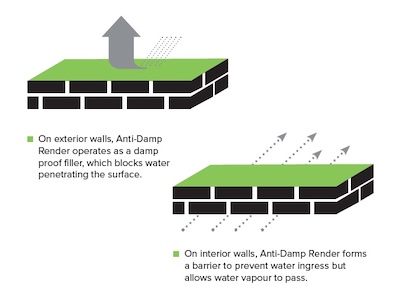
For localised damp, Anti-Damp Treatment seals damp patches before filling or decorating.
Repairing & Preventing Reoccurring Cracks
Surfaces prone to movement will often crack due to expansion and contraction as temperatures rise and fall at junctions where two materials meet, such as door frames and skirting, or in areas of vibration or high traffic. A rigid filler with no flexibility may crack again, because the surface is still moving. For a lasting job, the work has to accommodate movement, not just conceal it.
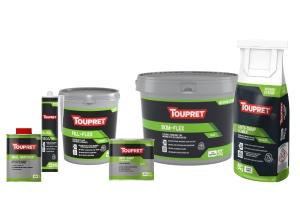 Fill-Flex, a flexible filler, and Skim-Flex, a skimcoat that stays flexible once dry, are designed to move with the substrate rather than resist it. Skim-Flex is also breathable and moisture resistant, which makes it suitable for kitchens and bathrooms.
The common thread is diagnosis before specification. Identifying whether a defect is driven by moisture or movement decides which product will hold, and whether the repair stands up beyond handover.
The Toupret Problem Surfaces leaflet sets out the science behind each of these failures, including how vapour-permeable systems manage moisture in both directions.
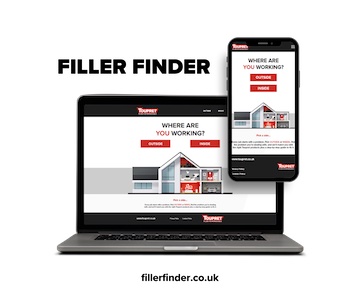
To find the right filler for your problem surface, try the Filler Finder.