Skip to content
BPindex — The Largest Building Products Directory in the UK

PVC-U

Setting the record straight on PVC-U’s sustainability credentials

Building Products Index Ltd Doors, PVC-U, PVC-U, Windows Leave a Comment

View the Eurocell entry on BPindex

Visit the Eurocell website

Sustainability e-Book imageWith so much negative press around plastic dominating the headlines, there is a risk that all plastic gets tarred with the same brush. This assumption that all plastics are as bad for the environment as single use ones runs the risk of opportunities for a more sustainable future being missed. Because putting it simply, not all plastics are made equal.

This is particularly true when it comes to PVC-U, which is used as a durable building product for everything from window frames to conservatories. The common misconception is that like many plastics, PVC-U is non-recyclable. However this couldn’t be further from the truth.

In fact, PVC-U is actually a construction material that can have its lifetime significantly extended to help reduce waste. But, no doubt you are wondering, how can this be possible when everything you hear about plastic is so negative? The answer to this can be found in science.

Getting to know PVC-U

PVC-U is made of two core ingredients; polyvinyl chloride and ethylene. The polyvinyl chloride comes directly from salt while ethylene is a by-product of oil. This is unplasticized, meaning that it doesn’t contain plasticized chemicals. Instead, to make it hard and durable, impact modifiers and filers are used.

As a result of these modifiers, the scientific behaviour of the plastic changes, meaning that for the first 4-5 times PVC-U is recycled, it actually gets stronger by up to 6%.

This means that PVC-U can be re-processed and used to manufacture products of equal quality, creating an ‘upstream’ recycling process. This recycling process is one that every PVC-U product can go through up to ten times, meaning that the lifespan of the average PVC-U product can be extended from 35 years to 350.

Not all plastics are equal

As a result of this recyclability, tarnishing PVC-U with the same brush as the single-use plastics that pollute our oceans, is likely to undermine attempts to improve sustainability across the construction sector. And by dispelling this myth we will be better positioned to ensure that the 5.6million PVC-U window frames that end up in landfill every year are recycled instead!

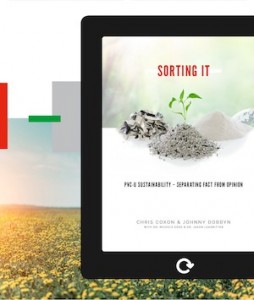
To find out more about PVC-U’s sustainability credentials you can download our latest eBook: ‘Sorting It: A guide to PVC-U Sustainability – Separating fact from fiction’ here.

Style, Strength and Aesthetics – The Case for Eurocell and PVC-U

Building Products Index Ltd Doors, Windows Leave a Comment

View the Eurocell entry on BPi

Visit the Eurocell website

eurocell-5Despite the PVC-U market having been mature for some time now, early myths still persist. Chris Coxon, Head of Marketing at Eurocell, counters some of the more negative claims made against these cost-effective and high-performing systems.

PVC-U windows lack strength – and making them stronger just adds bulk.

The structural integrity and aesthetic of PVC-U windows were ‘disconnected’ years ago – modern, multi-chamber profiles, featuring the latest in reinforcement materials; are easily strong enough for the majority of developments.

The welding and jointing methods used in manufacturing PVC-U window manufacture lead to poor, unsightly finishes.

eurocell-3All windows have visible jointing – and whether or not finishing is poor is a function of the fabricator or joiner. It’s a QA issue, not a material one. That said, the latest mechanically jointed flush sash casement windows combine modern materials with a truly authentic traditional appearance. Precision-engineered mouldings inside the frame remove the need for diagonal corner welds. This results in a product with the look of timber, while offering all the performance benefits of PVC-U.

PVC-U windows have unattractive – and even unequal – sightlines.

eurocell-2Flush sashes, an increasingly desirable style option for discerning customers, offer a superb aesthetic compared to any and all traditional materials; while other contemporary systems have ‘slimmed’ down considerably in the 50 years PVC-U have been installed in the UK. Take the opportunity to view a Modus S window at eurocell.co.uk/modus-s and judge for yourself.

‘Unequal sightlines’ are a function of traditional window design on older properties – not PVC per se. Where opening sashes are fitted, there will inevitably be a smaller area of glass. Where frames are fixed, glass areas are larger – potentially creating the sightline issue. Fitting dummy sashes solves this.

PVC-U degrades and has a shorter life ‘expectancy’ than other materials.

PVC-U windows have been given a minimum reference service life (RSL) of 35 years by the BRE, with minimal maintenance during this period. First generation PVC-U windows – now 50 years old – are still performing strongly well beyond this. Glazing units, the most expensive part of a PVC-U window, will fail long before the frame.

PVC-U windows need regular maintenance

It’s surprising that we still bump into this objection. While PVC-U windows aren’t eurocell-1maintenance free – they will still need to be cleaned, and hardware and other items looked after; they are incredibly low maintenance and the cost-in-use burden is significantly less than other materials.

Consisting of 50% post-consumer recycled PVC-U as standard, the Eurocell range of doors and windows demonstrates sustainable use of materials and a smaller carbon footprint than products made or recycled outside of the UK. The company’s extrusion technology layers recycled and ‘virgin’ material simultaneously, so the recycled material is concentrated in the core of the profiles where it cannot be seen once installed.

Coming with a 12-year guarantee (white profiles only), Eurocell systems come in a wide range solid and woodgrain-effect colours, all available with white internal finishes. A further range of more than 25 solid and woodgrain effect finishes is available to special order.

To find out why Eurocell offers the systems of choice for specifiers, call the customer services team on 0800 988 7300 or visit eurocell.co.uk/objectionsanswers

Eurocell Modus doors and windows get BBA quality backing

Building Products Index Ltd Doors Leave a Comment

View the Eurocell entry on BPI

Visit the Eurocell Website
eurocell-imageAfter a rigorous testing programme, the BBA has given its backing to the market-leading Modus system of PVC-U doors and windows by Eurocell – the UK’s leading manufacturer, distributor and recycler of window, door, conservatory and roofline products.

The BBA considered key product features, including: thermal performance, weathertightness, ventilation, resistance to intrusion, access and durability. Its tests concluded that the PVC-U profiles would function satisfactorily for more than 35 years and confirmed a U-value across the Modus ranges of 1.2W/m²K using 4/20/4mm sealed double-glazed units.

bp-index-sept-eurocell-modus-bba-2The BBA Agrément Certificate covers Modus Single Leaf and Double Leaf Door System, glazed in white, cream or woodgrain finishes, for use in replacement and new-build applications, for external use as primary and secondary access doors in walls of domestic and non-domestic buildings.

bp-index-sept-eurocell-eden-girls-school-modus-case-study-3It also certified the Modus Fully Reversible System, plus the Outward Opening and Tilt and Turn Systems, in white, cream or woodgrain finish, for use in replacement and new-build applications in dwellings, light commercial premises or similar habitable applications.

The effective thermal performance is due to the system’s 75mm six-chamber profile which enables the range to achieve a U-value as low as 0.7 when installed with krypton gas-filled triple-glazed units. Modus has also become one of the very first systems to achieve the BRFC Window Energy Rating (WER) of A++. This is only awarded to windows with an energy index value equal to or greater than +20; and Modus A++ designs achieve this for casement, reversible and tilt and turn windows.

bp-index-sept-eurocell-modus-bba-1Consisting of 50% post-consumer recycled PVC-U as standard, the Modus range of doors and windows demonstrates sustainable use of materials and a smaller carbon footprint than products made or recycled outside of the UK. Eurocell optimises material usage by employing its dual material extrusion technology (DMET) that layers post-consumer recycled and ‘virgin’ material simultaneously, so the recycled material is concentrated in the central core of the profiles where it cannot be seen once the door or window is installed.

bp-index-sept-eurocell-eden-girls-school-modus-case-study-2Coming with a 12-year guarantee (white profiles only), the Modus system is available in nine solid and woodgrain-effect colours, all of which are available with white internal finishes to create a light and airy living environment. A further range of more than 25 solid and woodgrain effect finishes is available to special order, including colour both sides.

To find out why Modus is a system of choice for specifiers, call the Eurocell customer services team on 0800 988 7300 or visit modus75.co.uk/bpi.