
View the Maccaferri entry on BPindex
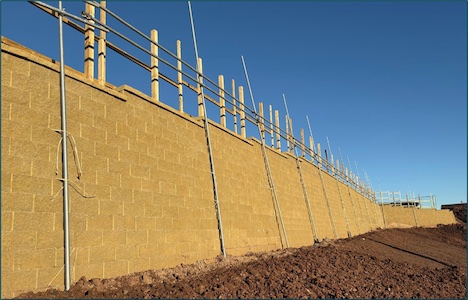 The use of dry-laid modular concrete block-faced reinforced soil retaining walls in the construction sector is no longer new news or seen as innovative. They have been used successfully for the last 4 decades to bring value to the civil engineering community from private housing developments through to major infrastructure projects. A lot has already been published on the monetary cost savings this technology brings when compared to more historical methods of forming retaining walls, like precast concrete, for example. But additional value to all parties is brought by the considerable reduction in the carbon footprint and often a large saving in time. Clients, contractors and consulting engineers all benefit from the value they bring.
Maccaferri have been successfully using their MacWall system for over 25 years in the UK and Ireland construction sectors. So, what have we learned, and what is important when considering specifying or building one?
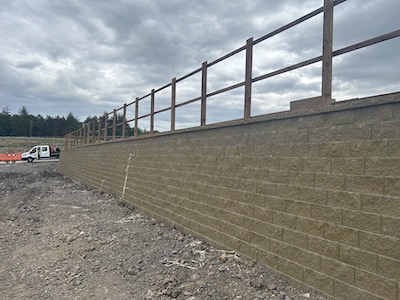 Experience. Being able to draw on over 70 years of experience, hundreds [possibly thousands] of projects in Infrastructure, housing and other sectors, plus tens of thousands of m² of wall face give Maccaferri a unique insight into providing the right solution for that given project
Independent certification and testing. Specifiers and clients can take comfort in knowing that the chosen retaining wall system has been independently tested and certified as fit for use. The MacWall reinforced soil retaining wall can be supplied with its own system BBA HAPAS certificate
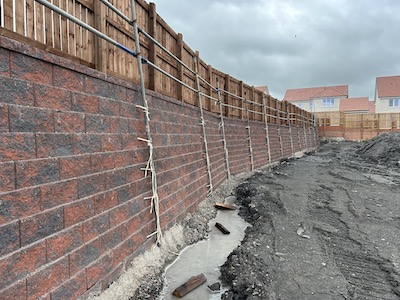 Sound design principles backed up by relevant insurances is important. A retaining wall is only as good as its design and installation. Understanding the project-specific geotechnical challenges, water conditions, and loading criteria is a must for a safe design to be carried out. Maccaferri invest in its own professional indemnity insurance as part of its committed technical backup and support. This backs up Maccaferri, providing a design and supply service in-house by taking element design responsibility for the retaining wall system; this service is often used by housebuilders and civil engineering contractors. Maccaferri can also offer technical support to consultants wishing to design themselves. i.e. we are tailoring our offer to meet the market needs.
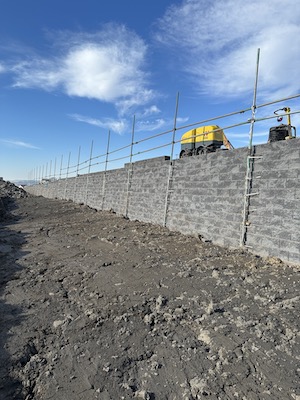 Project cost savings. Clients and contractors alike want to use this technology to save money from their bottom line. Reinforced soil retaining walls and the MacWall system give considerable monetary gains when compared to RC walls, independent published papers show this to be as much as a 70% saving. But as well as this, and probably offering a greater saving to them, is the potential use of ‘non-standard’ fills within the retaining wall itself. The potential to switch away from carbon-intensive quarried aggregates that may need to be shipped large distances, to the potential use of suitable site won fills or industry waste products offer vast monetary [ and carbon!] savings. Each project Maccaferri has worked on had its own unique challenges. If the MacWall system supported a highway, a traditional specification for the fill materials was adopted to satisfy the adopting authority and the appropriate design method, but if project criteria were less stringent, say for a housing development, and the asset owner is on board, then non-standard fills should be considered.
Concluding, the versatility of using a modular block reinforced soil retaining wall system has been giving added value to stakeholders in the construction industry for many years, as covered above, and I expect for many more years to come. This technology is no longer new or unknown but is now part of everyday civil engineering use. The specifier, the contractor and the client need to have confidence in the system they chose and use and in turn, the value it brings will benefit them. Maccaferri’s MacWall system has all these plus more and will continue to be a leader in the retaining wall market.