Skip to content
BPindex — The Largest Building Products Directory in the UK

Maccaferri

Designing for erosion on slopes: what the new ISO/TR 18228-8:2026 means for building and site development

Building Products Index Ltd Soil erosion Leave a Comment

View the Maccaferri entry on BPindex

Visit the Maccaferri website

Oct 9, 2026 · @Matthew Showan

Surface erosion rarely makes headlines on its own, but it is often where problems on a development site begin. Rills and gullies forming on a freshly cut batter, scour where a swale or downpipe discharges, or topsoil washing off a regraded slope before grass has established can each lead to silted drainage, sediment leaving the site, damaged landscaping and pavements, and in time a shallow slip that encroaches on a yard, car park or building platform.

That risk is growing. To deliver a larger building footprint, more parking or bigger hardstands, sites are increasingly cut back and regraded to steeper batters, while rainfall intensity continues to rise. Yet the choice of erosion control mat or blanket is still often made by habit or product marketing rather than by calculation. The publication of the new ISO/TR 18228-8:2026 gives designers and specifiers an opportunity to change that.

What the new Technical Report sets out

ISO/TR 18228-8:2026, published in June 2026 by ISO/TC 221, is the eighth part of the ISO/TR 18228 series on design using geosynthetics. It gives guidance on designing geosynthetics for surface erosion control on slopes and on river or channel banks. It deliberately excludes overall slope stability and coastal protection, which are treated elsewhere.

As a Technical Report it is guidance rather than a normative standard. Its value lies in bringing together, in one internationally agreed document, a calculation-based route that many designers have known about but rarely applied.

For rainfall-driven erosion on slopes, the approach is built on the Revised Universal Soil Loss Equation (RUSLE), which estimates average annual soil loss as:

A = R . K . LS . C . P

Here R is rainfall erosivity, K soil erodibility, LS the combined slope length and steepness factor, C the cover factor and P the support practice factor. Bare soil has C = 1; a protective cover reduces it. The report links a product’s C value to full-scale rainfall simulation testing of the type described in ASTM D6459, so the cover factor becomes a measured product property rather than a judgement.

For stormwater channels, swales, ditches and other conveyance features that carry flow intermittently, the design is checked against two limit criteria: permissible flow velocity and permissible shear stress. Erosion control geosynthetics are typically applied where velocities reach about 3 m/s for sustained periods, or up to 6 m/s for short durations.

From method to design calculation

The RUSLE approach is not new, but in practice it has been awkward to apply. Each factor draws on different data: regional rainfall records for R, particle size distribution or soil texture for K, survey geometry for LS, and test data for C. Bringing these together by hand for every batter on a site, let alone every site in a development programme, is time-consuming, and it is easy to see why designers have tended to default to a familiar product.
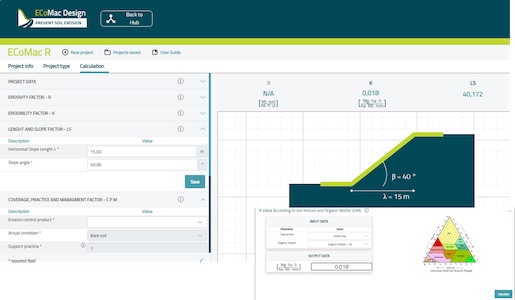
Maccaferri’s EcoMac software, available free through the company’s eDesign platform, follows the same calculation framework as the Technical Report. It has three modules, each mapped to a distinct design check:

Module Design check Typical building-site application
EcoMac R Annual soil loss on a slope by RUSLE, unprotected and protected Cut-back and regraded batters, fill slopes around building platforms, landscaped embankments
EcoMac S Required geomat tensile strength and pin spacing on slopes Steeper or longer batters behind warehouses, yards and car parks, where installation loads govern
EcoMac B Anchorage of geomats on channel banks against flow-induced shear Stormwater channels and swales, detention basin batters, culvert and pipe outfalls

The value of the tool is less in any single calculation than in making the design traceable. Each input is recorded, each factor can be checked against the Technical Report, and the client, certifier or local authority reviewer can see why a given product was selected.

Matching the product to the site

The real benefit of a calculated approach is that it lets the designer specify enough protection, rather than the most protection. Erosion conditions vary widely between sites, and often within one: a gentle landscaped bank in sandy soil on a housing scheme presents a very different problem from a long, steep cut in clay behind a distribution warehouse on an exposed, high-rainfall site. A single standard specification will be over-designed on some slopes and possibly inadequate on others.
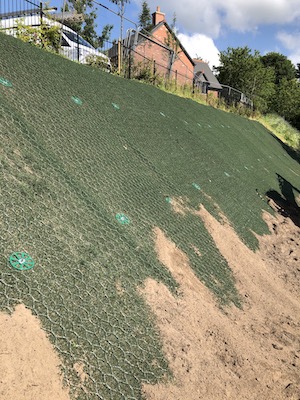
Working through RUSLE makes the drivers explicit. A worked example published by Maccaferri engineers considered a 100 m long clay loam slope at 33°. Unprotected, the calculated soil loss was about 506 t/ha per year; with a reinforced geomat of C = 0.043, it fell to about 22 t/ha per year, a reduction of roughly 95%. Most building-site batters are shorter than this, which is precisely the point: on a shorter, flatter slope, or one in less erodible soil, the same target loss might be met by a lighter, cheaper mat or by a biodegradable blanket alone.

The cover factor itself is also not a fixed number. Test data for one geomat show C rising from about 0.003 at 50 mm/h rainfall intensity to about 0.012 at 150 mm/h. Designing against a realistic local intensity, rather than a worst case applied everywhere, avoids paying for performance the site will not need.

Installation design offers a second lever. In the same study, increasing pin spacing from 1.5 m to 2.0 m raised the required characteristic tensile strength of the geomat from 55 kN/m to 60 kN/m, while cutting pin frequency from 0.40 to 0.30 per m². On a large regrading scheme that is a 25% reduction in pins and the labour to install them, set against a modest increase in product strength. Which combination is cheaper depends on local material and labour rates, and EcoMac S allows those options to be compared directly.

None of this produces a dramatic headline saving on every job. What it does is remove the hidden margin that comes from specifying by habit, and across a large site, or a developer’s pipeline of projects, those margins add up.
Practical points for designers

A calculation is only as good as its inputs, and several deserve care on building projects.

  • Rainfall erosivity. Many published R-factor relationships are regional and were derived outside the UK. Designers should be clear which data set they have used and whether it reflects current and projected rainfall intensity.
  • Soil data. Cut slopes often expose variable or weathered material, and imported or site-won fill used to build up platforms may differ from what the site investigation found. The K factor should reflect what will actually be at the surface.
  • Product C values. These should come from full-scale rainfall testing, and the test intensity should be stated. A C value quoted without its test conditions is of limited use.
  • The Technical Report addresses surface erosion only. It does not replace a stability assessment of cut and fill slopes, retaining structures or the building platform, and erosion protection should not be relied upon to address deeper instability or poor drainage.
  • Construction phase. On building sites the highest erosion risk is often the period between bulk earthworks and final landscaping, when slopes are bare and drainage is incomplete. Temporary protection and sediment control for this stage, which may be required by planning conditions or environmental permits, should be designed alongside the permanent solution.
  • Most erosion control products are intended to protect the slope until vegetation establishes. Programme, seeding, watering and access for landscape maintenance remain part of the design, particularly where slopes will be handed over to an owner or facilities manager.

Software makes the method quicker to apply, but it does not remove the need for engineering judgement on these points.

Graded range of products

Maccaferri has a range of erosion control products from biodegradable mats with a short design life to support vegetation establishment (BioMac Coir and Jute blankets) to man-made reinforced mats to provide longer term surface stabilisation (MacMat R, MacMat R-Bio).

Conclusion

ISO/TR 18228-8:2026 gives the industry a common, internationally recognised basis for designing surface erosion control, replacing rules of thumb with a calculation that can be checked. For developers and building owners, that means specifications that can be justified slope by slope; for designers and specifiers, a clearer audit trail; and for the project, more confidence in using steeper batters to make the most of the available land.

Tools such as EcoMac lower the effort needed to follow the method, which is what will make it routine rather than occasional. The likely outcome is not a revolution in erosion control, but steadier, better-targeted specification, with protection matched to the risk and cost matched to the protection.

Sources

Retaining Wall Value – What matters?

Building Products Index Ltd retaining walls Leave a Comment

View the Maccaferri entry on BPindex

Visit the Maccaferri website

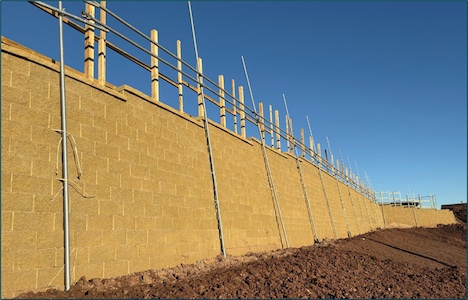
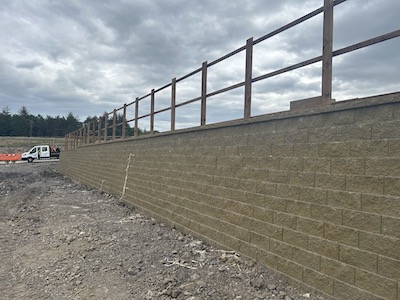
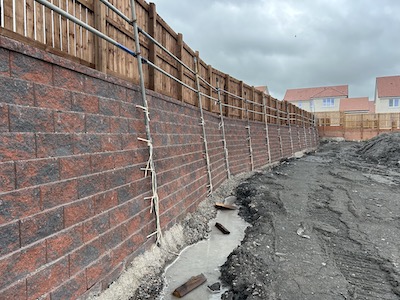
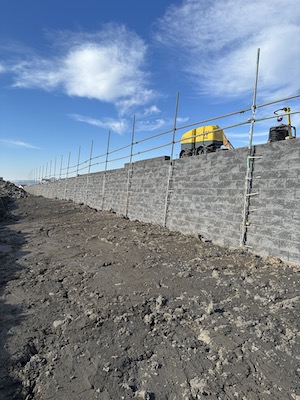
The use of dry-laid modular concrete block-faced reinforced soil retaining walls in the construction sector is no longer new news or seen as innovative. They have been used successfully for the last 4 decades to bring value to the civil engineering community from private housing developments through to major infrastructure projects. A lot has already been published on the monetary cost savings this technology brings when compared to more historical methods of forming retaining walls, like precast concrete, for example. But additional value to all parties is brought by the considerable reduction in the carbon footprint and often a large saving in time. Clients, contractors and consulting engineers all benefit from the value they bring.

Maccaferri have been successfully using their MacWall system for over 25 years in the UK and Ireland construction sectors. So, what have we learned, and what is important when considering specifying or building one?

Experience. Being able to draw on over 70 years of experience, hundreds [possibly thousands] of projects in Infrastructure, housing and other sectors, plus tens of thousands of m² of wall face give Maccaferri a unique insight into providing the right solution for that given project

Independent certification and testing. Specifiers and clients can take comfort in knowing that the chosen retaining wall system has been independently tested and certified as fit for use. The MacWall reinforced soil retaining wall can be supplied with its own system BBA HAPAS certificate

Sound design principles backed up by relevant insurances is important. A retaining wall is only as good as its design and installation. Understanding the project-specific geotechnical challenges, water conditions, and loading criteria is a must for a safe design to be carried out. Maccaferri invest in its own professional indemnity insurance as part of its committed technical backup and support. This backs up Maccaferri, providing a design and supply service in-house by taking element design responsibility for the retaining wall system; this service is often used by housebuilders and civil engineering contractors. Maccaferri can also offer technical support to consultants wishing to design themselves. i.e. we are tailoring our offer to meet the market needs.

Project cost savings. Clients and contractors alike want to use this technology to save money from their bottom line. Reinforced soil retaining walls and the MacWall system give considerable monetary gains when compared to RC walls, independent published papers show this to be as much as a 70% saving. But as well as this, and probably offering a greater saving to them, is the potential use of ‘non-standard’ fills within the retaining wall itself. The potential to switch away from carbon-intensive quarried aggregates that may need to be shipped large distances, to the potential use of suitable site won fills or industry waste products offer vast monetary [ and carbon!] savings. Each project Maccaferri has worked on had its own unique challenges. If the MacWall system supported a highway, a traditional specification for the fill materials was adopted to satisfy the adopting authority and the appropriate design method, but if project criteria were less stringent, say for a housing development, and the asset owner is on board, then non-standard fills should be considered.

Concluding, the versatility of using a modular block reinforced soil retaining wall system has been giving added value to stakeholders in the construction industry for many years, as covered above, and I expect for many more years to come. This technology is no longer new or unknown but is now part of everyday civil engineering use. The specifier, the contractor and the client need to have confidence in the system they chose and use and in turn, the value it brings will benefit them. Maccaferri’s MacWall system has all these plus more and will continue to be a leader in the retaining wall market.

UK Launch of Hellomac Geo

Building Products Index Ltd natural hazard protection Leave a Comment

View the Maccaferri entry on BPindex

Visit the Maccaferri website


Maccaferri Ltd Completes First UK Installation of Hellomac Geo

Maccaferri Ltd is proud to announce the successful installation of Hellomac Geo, a pioneering real-time monitoring and alert system, in the United Kingdom. With numerous installations already operating worldwide, the UK is now the latest market to benefit from Hellomac Geo’s proven technology.

Natural hazard and rockfall protection systems are widely used across the UK to safeguard people, infrastructure, and critical assets from potentially catastrophic events. However, their effectiveness depends on frequent inspections to confirm whether impacts have occurred, an approach that is both time-consuming and costly.

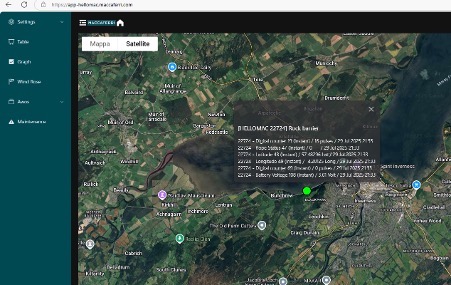
Hellomac Geo transforms these systems into “smart” solutions. Powered by Internet of Things (IoT) technology, it provides real-time monitoring and instant alerts to asset managers when an event exceeds the system’s serviceability threshold. This targeted approach ensures that inspections and maintenance are only carried out when truly necessary, delivering significant cost and operational efficiencies.

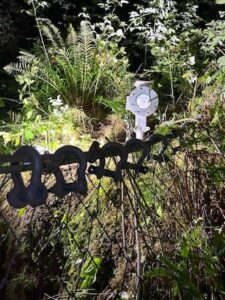
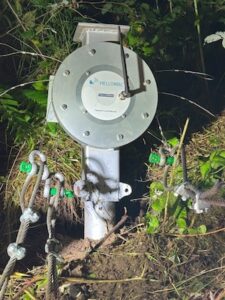
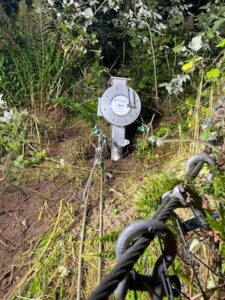
In July 2025, Maccaferri, in partnership with Network Rail and Amco Giffen, installed the UK’s first Hellomac Geo system at Delmore, Inverness. The system was deployed on a chain link debris flow barrier designed to protect the Inverness–Wick railway line from hillside debris. Historically, this site required monthly inspections, often involving disruptive railway line blocks. With Hellomac Geo, successfully deployed in major rail and infrastructure projects around the world, Network Rail asset managers will now be alerted only when debris levels reach a critical point, allowing maintenance to be planned proactively and efficiently; minimising disruption to rail services.

Key Benefits of Hellomac Geo:

  • Real-time, remote monitoring with instant impact alerts
  • Fully wireless design — no mains power required
  • Guaranteed coverage via roaming GSM or satellite connectivity
  • Free desktop and mobile app monitoring software
  • Data integration via API into existing asset management platforms
  • Lightweight, quick installation — even in remote locations
  • Cost-effective, 24/7 monitoring without routine on-site inspections

Hellomac Geo marks a major step forward in the digitisation of natural hazard protection systems in the UK, offering infrastructure owners and operators a smarter, more sustainable approach to safety and asset management.

Connor Gillan, Network Rail Scotland’s Works Delivery Project Manager, made the following comments following the successful installation:

“Network Rail Scotland worked with Maccaferri Ltd and Amco Giffen on the first installation of HELLOMAC Geo in the UK at Delmore on the Inverness to Wick line. This site has often needed regular inspections because of debris building up in the interceptor barriers, with the risk of it reaching the track and affecting services.

HELLOMAC Geo now gives us an early warning system that alerts us when debris builds up to a critical level. This means we can act quickly when needed and cut down on unnecessary inspections. At a remote location like Delmore, that saves both time and costs and avoids line blocks that can disrupt train services.

The system also helps us take a more proactive approach to asset monitoring. We can plan maintenance only when it’s needed, making better use of resources and improving the resilience of the railway in Scotland. HELLOMAC Geo shows how new technology can support the way we manage earthwork and rockfall risk across the network.”

“The arrival of Hellomac Geo in the UK marks a significant step forward in our mission to digitise natural hazard protection systems worldwide”, said Matt Showan Managing Director at Maccaferri Ltd. “Already adopted in a wide range of international projects, the technology combines real-time monitoring with cost-effective efficiency, transforming the way asset managers respond to risk. By working with Network Rail on this first UK deployment, we are showing how global innovation can directly strengthen national infrastructure, improve safety and reduce operational costs.”

EcoMac Design: Revolutionising Erosion Control Design Software

Building Products Index Ltd Gabions Leave a Comment

View the Maccaferri entry on BPindex

Visit the Maccaferri website

EcoMac Design is an advanced suite of specialised tools created to empower engineers and professionals in developing state-of-the-art erosion control solutions. Whether you are managing slopes, channel banks, or other critical areas prone to soil erosion, EcoMac provides the tools needed to design effective, sustainable, and environmentally compliant systems.

Precision and Efficiency in Erosion Control

Selecting an appropriate and efficient erosion control solution that prevents soil loss from slopes, has long been a challenge for engineers and stakeholders given the complexity of input parameters and design methods. The EcoMac design suite dramatically simplifies this process.

The EcoMac Suite: Three Powerful Tools

EcoMac is comprised of three core tools, each tailored to tackle specific erosion control challenges:

  • EcoMac R: Utilising the Revised Universal Soil Loss Equation (R.U.S.L.E), this tool accurately estimates soil loss and evaluates erosion risks on unprotected slopes. It offers recommendations for optimal solutions, including the use of reinforced geomats. EcoMac R enables you to assess risks and design solutions that mitigate soil erosion effectively.
  • EcoMac S: Focused on stabilising soils on slopes, this tool calculates the required tensile strength of geomats and determines appropriate anchorage spacing. By simplifying complex calculations, EcoMac S ensures your designs optimise stability and reliability.
  • EcoMac B: Specially developed for channel bank protection, this tool provides customised anchorage solutions to prevent soil erosion along waterways. EcoMac B enhances the durability and longevity of your designs in dynamic hydraulic environments.

Seamless Integration with Maccaferri’s eDesign Platform

EcoMac is part of eDesign, Maccaferri’s online project design platform. This integration delivers a streamlined and efficient user experience, enabling professionals to:

  • Conduct detailed analyses of erosion risks and structural requirements.
  • Select the most suitable products and materials for their project.
  • Optimise designs for cost-efficiency and sustainability.

The eDesign platform includes a suite of free, cloud-based, user-friendly design tools for professionals in civil, geotechnical, and hydraulic engineering. With EcoMac embedded in eDesign, users benefit from an all-in-one solution that simplifies project planning and execution.

Why Choose EcoMac?

EcoMac is an indispensable resource for engineers and professionals seeking innovative erosion control solutions. Key advantages include:

  • Enhanced Accuracy: Advanced algorithms ensure precise calculations for soil loss, tensile strength, and anchorage requirements.
  • Time Efficiency: By automating complex computations, EcoMac significantly reduces design and analysis time.
  • Environmental Compliance: EcoMac ensures helps designers comply with environmental regulations and sustainability objectives.
  • Tailored Solutions: Each tool in the suite addresses specific challenges of soil loss from slopes to channel banks
  • User-Friendly Interface: With an intuitive design and integration with eDesign, EcoMac simplifies the design process for both seasoned engineers and newcomers.

Explore Maccaferri’s Comprehensive Portfolio

Maccaferri’s commitment to innovation extends far beyond EcoMac. Visit our website to explore a wide range of erosion control solutions. From cutting-edge design software to high-quality materials, Maccaferri provides everything you need to ensure the success of your projects.

Ready to elevate your next project with cutting-edge technology and expertise? Access the eDesign platform today to unlock the full potential of EcoMac. Discover how our advanced tools can streamline your workflow and deliver outstanding results in erosion control design.

Maccaferri Renews Environmental Product Declarations (EPDs) for Key Products through KIWA Certification

Building Products Index Ltd Gabions, Landscaping Leave a Comment

View the Maccaferri entry on BPindex

Visit the Maccaferri website

Maccaferri, a global leader in civil engineering solutions, proudly announces the renewal of Environmental Product Declarations (EPDs) for a selection of its innovative products, certified by KIWA, a leading international certification body. This significant achievement underscores Maccaferri’s commitment to sustainability and transparency in environmental performance.

The renewed certified products include:

Gabions, MacDrain® M, MacDrain® W, ParaGrid®, ParaDrain®, ParaLink®, ParaWeb®, MacMat®, MacMat® R, MacMat® R1, Maccaferri Netting, Terramesh® Family

EPDs provide detailed and verified information on the environmental impact of products throughout their life cycle, from raw material extraction to disposal. This certification by KIWA affirms Maccaferri’s dedication to producing environmentally responsible solutions and meeting the growing demand for sustainable construction materials.

Key Benefits of Our EPD-Certified Products:

Enhanced Environmental Transparency: Customers can make informed decisions based on reliable data regarding the environmental impact of Maccaferri products.

Sustainable Construction Practices: Our EPD-certified products contribute to achieving sustainability targets and green building certifications such as LEED and BREEAM.

Life Cycle Assessment (LCA): Comprehensive life cycle assessments highlight areas for potential improvement, promoting continuous innovation in product development.

About the Products:

Gabions: Renowned for their flexibility and strength, our gabions are used in retaining structures, erosion control, and architectural applications.

MacDrain M and W:Advanced drainage systems designed to manage subsurface water in various construction and civil engineering projects.

ParaGrid, ParaDrain, ParaLink, and ParaWeb: High-performance geogrids and geocomposites for soil reinforcement, stabilisation, and drainage.

MacMat, MacMat R, and MacMat R1: Erosion control mats that protect slopes and surfaces from erosion while promoting vegetation growth.

Maccaferri Netting: Versatile netting solutions for rockfall protection, slope stabilisation, and other applications.

Terramesh Family: Integrated solutions combining soil reinforcement and facing elements for constructing durable and aesthetic retaining structures.

The certified products span a wide range of applications, from erosion control and soil reinforcement to drainage systems and structural support. Each product has been rigorously evaluated for its environmental impact, ensuring that Maccaferri’s solutions contribute to a more sustainable built environment.

About Kiwa:

KIWA is an internationally recognised organisation specialising in testing, inspection, and certification services. With a strong commitment to quality and safety, KIWA supports companies worldwide in achieving and demonstrating compliance with various standards.

About Maccaferri:

Maccaferri is a world leader in the design and manufacture of advanced solutions for the civil engineering and construction sectors. With over 140 years of experience, Maccaferri’s expertise spans geotechnical engineering, rockfall protection, hydraulic works, and more. The company is dedicated to developing innovative products that address environmental challenges and contribute to the sustainable development of infrastructure worldwide.

For more information about Maccaferri and our certified products, please visit www.maccaferri.com/epd or contact: info.uk@maccaferri.com

Pre-Assembled Earth Retaining Systems: The Terramesh Family

Building Products Index Ltd Gabions, Landscaping Leave a Comment

View the Maccaferri entry on BPindex

Visit the Maccaferri website

Register here for the Maccaferri introductory webinar

Maccaferri Terramesh® Family includes different facing options to build Mechanically Stabilized Earth (MSE) structures and Reinforced Soil Slopes (RSS). It consists of pre-assembled units of double-twist wire mesh (8×10 type) ready to be assembled when they reach the job site. The geogrid reinforcement, fascia and lid are all one continuous panel of mesh, requiring no cuts operations on site. Terramesh® units are fabricated from high-quality steel wire plus an additional polymer coated (Polimac) to ensure 120 years of design life. PoliMac is a revolutionary coating that can withstand the most aggressive environmental conditions, leading to a great performance upgrade. PoliMac ensures:10x resistance to abrasion2x resistance to chemical aggressions4x performance in cold weather4x resistance to UV rays

Terramesh® units are produced in our factories around the world. The management and production system in many of our factories is certified in compliance with ISO 9001. There are three different facing options: gabion (Terramesh® System), vegetated (Green Terramesh®) or architectural (Mineral Terramesh®).Terramesh® System is a modular system used to form a gabion-faced MSE wall. The facing section of the unit is formed by connecting a back panel and diaphragms to the main fascia unit, thus creating the rectangular-shaped cells used for stone confinement. The geogrid reinforcement, fascia and lid are all one continuous panel of mesh. Terramesh® System units are supplied in standard lengths, requiring no cuts on site. Following assembly on site, the fascia unit is filled with suitable gabion stone fill. Structural backfill is then placed upon the soil reinforcement geogrids and compacted. Green Terramesh® is an environmentally friendly modular system used to form vegetated (green) faced soil-reinforced slopes (RSS) and embankments.

It has been used globally on some of the most significant infrastructure schemes. It consists of pre-fabricated units of double twisted wire mesh (8×10 type) lined with an erosion control blanket and stiffened with a welded mesh panel. Two pre-formed steel braces are supplied to be connected at the job site to maintain the unit to the required slope angle. The angled front face and the erosion control blanket are designed to facilitate the establishment of natural vegetation of the units; an important requirement of Green Terramesh®. As all components are factory fitted, Green Terramesh® is more rapid to install than competitor-reinforced soil systems.

The unit is simply erected on site, the bracing angles support the face at the designated angle without the need for any external formwork or shuttering. Structural backfill is placed upon the soil reinforcement geogrids, and a suitable fill is placed immediately behind the front face. For example, on a revegetating ‘Earth Type’ unit, good quality topsoil would be placed immediately behind the front face to promote the rapid vegetation of the slope. Mineral Terramesh® is a unique and simple-to-install soil reinforcement system with a sloping rock face finish. It is ideal for use where a modern, clean-faced aesthetic is preferred. Mineral Terramesh® components are factory-fitted preassembled units ready for rapid erection on site with a design life of 120 years. The installation is simple with no connection requirement between Geogrid and the assembled unit. The Mineral Terramesh® units do not need any form of the external framework due to the heavily galvanised welded mesh panels and bracing struts which hold the face at the correct angle during construction.

Please contact Maccaferri UK  for details on the compliance and certification in your area.

Geotechnical Engineering Webinars with our experts in 2021

Building Products Index Ltd Gabions Leave a Comment

View the Maccaferri entry on BPindex

Visit the Maccaferri website

Our technical specialists will be presenting live webinars throughout the year. 

Join them to learn and gain a CPD certificate

PrintThroughout this year Maccaferri will be conducting live technical webinars on specific topics. Each one will be 45 minutes of concentrated learning and you’ll be able to ask questions and you will gain a CPD certificate.

The topics for 2021 are as follows – (a link for each webinar will be available nearer to the time of the webinar)

Fri March 12th – More resilient infrastructure: Pavement improvement and ground stabilisation – Mike Horton (Technical Manager & geotechnical specialist)

Fri April 23rd – Cost effective and green reinforced soil slopes – Blake Williamson (Area Engineer)

Fri 28th May – Design of reinforced soil slopes and walls using MacSTARS software – Aaron Laing (Contracts Engineer)

Fri 18th June – Overcoming soft soils in infrastructure; Basal reinforcement and embankment stabilisation – Scott Harvey (UK & Ireland Sales manager)

Fri 16th July – Natural hazard mitigation for infrastructure – Dr David Cheer (Rockfall and slope protection specialist)

Mon 16th August – Cost effective and resilient infrastructure; Retaining walls, embankments and cuttings – Craig Burrows (Technical engineer)

Thurs 16th Sept – Design of rockfall protection and slope stabilisation measures using MacRO software – Dr David Cheer (Rockfall and slope protection specialist)

Fri 15th Oct – Greener construction: Erosion protection and river bank works – Pete Richardson (Area Engineer)

Wed 17th Nov – Greener construction; Introduction to geosynthetics and their uses – Scott Harvey (UK & Ireland Sales Manager)

Fri 10th Dec – Reinforcement or Stabilisation? The different uses for geogrids and geocomposites in construction – Nathan Jackson (Area Engineer)

If you would like to arrange a specific webinar exclusively for your own company, please contact us here. We can host a webinar on the topic of your choice.

All these webinars will be advertised well before they are due in order that you can register your attendance. 

To keep up to date, please join our newsletter here. You will receive the information direct to your mailbox.

Our newsletter is purely for information on technical updates, webinars, new products and project updates. All the information is relevant to the geotechnical industry and we do not send spam nor will we ever transfer your data to other companies.

Thank you for reading and we hope you enjoy our free, live webinars

Maccaferri Ltd