
View the Cedral entry on BPindex
We anticipate that advancements in sustainable construction will continue at a rapid pace, transforming home design.
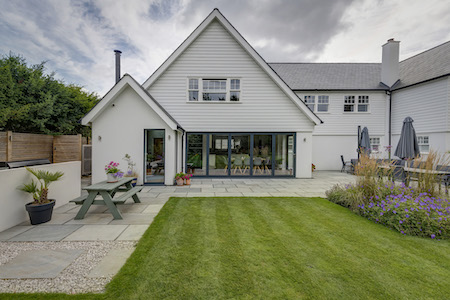
Cedral’s survey of 250 architects and installers for its recent White paper, ‘Building the Future’ examines how the increasing focus on sustainability and climate resilience has brought about a shift towards eco-friendly materials. The majority (96%) of respondents say climate change is affecting facade design and specification choices in one or more ways. Nearly a third of the architects say they anticipate more retrofit projects over the next three years.
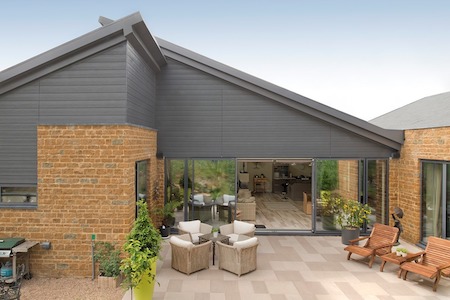
The study also reports on the rise of durable, non-combustible cladding to enhance energy efficiency and climate resilience. Upgrading tired timber facades to fibre cement cladding is becoming an increasingly common retrofit choice across the UK. Retrofitting from timber to fibre cement is more than a cosmetic upgrade. Cladding can preserve the life of older buildings by providing a stylish contemporary update for unsightly faded paintwork or render. A ventilated facade, where the cladding doesn’t sit directly against the insulation, improves energy efficiency, enabling the rapid drying of external walls, reducing condensation and humidity. Download the full report here.
Why choose Cedral
Sustainable building products are more important than ever for as architects and developers seek to ensure that their projects are responsibly designed, resourced and built. The innovations in fibre cement technology are creating high performing materials which are lighter, thinner and ultimately stronger. Fibre cement which is made of cement, water, cellulose, textile fibres and air can help improve circularity and carbonation impact. A strong, versatile and sustainable material, it uses fewer raw materials and less energy in its manufacture and produces less waste than some traditional building materials.
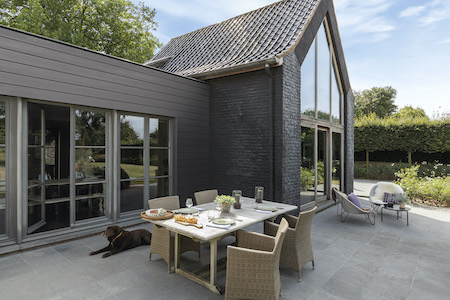
Cedral, part of Etex, has a deep-rooted history and heritage of over 100 years’ experience, perfecting the manufacturing of fibre cement building materials.
Cedral is committed to continuously improving existing materials and to driving innovation. Whether it’s for a new build or a renovation project, Cedral has a range of products for facades and roofs of exceptional quality and high performance.
Features of Cedral include:
• Fire Performance Classification: Cedral products are Class 0 and EN 13501-1 fire performance classified to A2-s1, d0 which is one of the best classification ratings that can be achieved.
• Low maintenance, resistant to rot and warping: Fibre cement doesn’t rot or rust and lasts longer than traditional cladding materials. Thanks to its thermal stability it will not warp or crack under high temperatures.
• Stands up to the harshest weather conditions: Fibre cement can withstand severe frosts, torrential rain, high heat and direct sunlight and has a minimum life expectancy of 50 years.
• Light-weight building material: With the layered production and fibre matrix supporting the cement, fibre cement roof tiles are thinner than concrete, but have the same performance benefits.
• Style and creativity for a home’s exterior: Cedral cladding is available in a wide variety of finishes and colour choices. Boards can be mounted vertically or horizontally to create a contemporary aesthetic or a more traditional look.