
View the Honeywell Gent entry on BPindex
Visit the Honeywell Gent website
Honeywell Gent Self-Test brings a smarter, safer way to test fire detection systems. By automating both smoke and heat sensor testing, it helps reduce the need for manual access while supporting more consistent maintenance, stronger compliance, and greater confidence that detectors are ready to respond when needed. Designed to make routine testing simpler and more efficient, Self-Test helps engineers save time on site while maintaining high standards of life safety protection.
KEY SELF-TEST & CLSS FEATURES
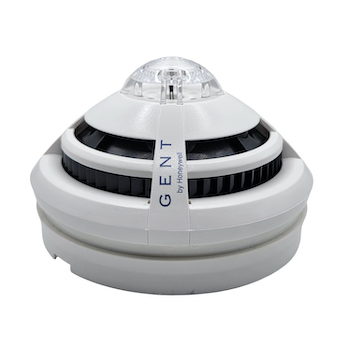
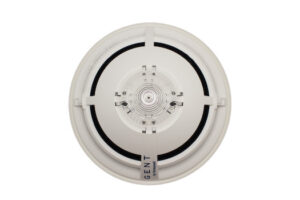
- Anti-masking/blockage check – Confirms that smoke entry points are not obstructed as part of the same automated cycle. Gent S-QUAD Sensor with Audio and Visual Warning includes self-test functionality, automating the functional test of both the smoke and heat sensors while checking that the smoke entry points are clear from blockage with an anti-masking test.
- Access to hard-to-reach detectors – Removes the need for ladders, poles, or physical access in voids, high ceilings, and locked rooms. The Self-Test range of detectors eliminates many of the physical barriers associated with testing and maintenance, such as locked rooms, voids, high ceilings, and other hard-to-access spaces. These are all areas that may go untested and can ultimately put buildings at risk.
- Bluetooth-verified visual inspection – Still meets BS 5839-1 visual check requirements by confirming that a technician was in range via a Bluetooth beacon, even where full manual access is not possible. Visual inspections are completed by verifying that the technician has been within visual inspection range of the Bluetooth beacon placed within the device.
- CLSS integration for remote diagnostics – Self-Test devices connect to the Connected Life Safety Services cloud platform, providing real-time visibility and enabling engineers to test and troubleshoot remotely via the CLSS app. The award-winning Self-Test feature allows both the heat and optical sensors within the device to be tested using the CLSS app, and the CLSS platform gives technicians and facility managers real-time insights into the fire system. This enables maintenance engineers to proactively identify and address potential issues, leading to enhanced first-time fix rates and minimising time spent on site.
- Compliance and efficiency gains – A single engineer can run a building-wide test with a full electronic audit trail, improving compliance and reducing time spent on site. With the ability to test both optical and heat sensors and verify that the smoke entry points are free from obstruction, a single maintenance engineer can initiate a building-wide test, improving compliance with an end-to-end electronic audit trail and saving much-needed time.