Skip to content
BPindex — The Largest Building Products Directory in the UK

Honeywell Gent

Honeywell Gent Self-Test Revolutionising Fire Detection

Building Products Index Ltd Fire detectors, Fire Protection Leave a Comment

View the Honeywell Gent entry on BPindex

Visit the Honeywell Gent website

Honeywell Gent Self-Test brings a smarter, safer way to test fire detection systems. By automating both smoke and heat sensor testing, it helps reduce the need for manual access while supporting more consistent maintenance, stronger compliance, and greater confidence that detectors are ready to respond when needed. Designed to make routine testing simpler and more efficient, Self-Test helps engineers save time on site while maintaining high standards of life safety protection.

KEY SELF-TEST & CLSS FEATURES

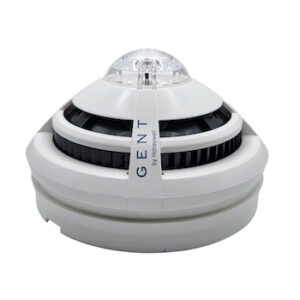
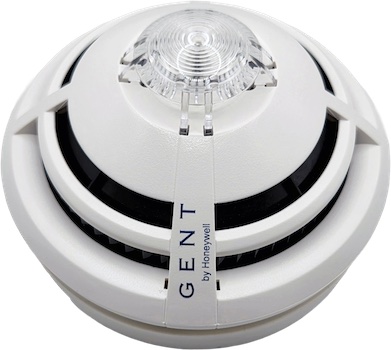
  1. Anti-masking/blockage check – Confirms that smoke entry points are not obstructed as part of the same automated cycle. Gent S-QUAD Sensor with Audio and Visual Warning includes self-test functionality, automating the functional test of both the smoke and heat sensors while checking that the smoke entry points are clear from blockage with an anti-masking test.

  1. Access to hard-to-reach detectors – Removes the need for ladders, poles, or physical access in voids, high ceilings, and locked rooms. The Self-Test range of detectors eliminates many of the physical barriers associated with testing and maintenance, such as locked rooms, voids, high ceilings, and other hard-to-access spaces. These are all areas that may go untested and can ultimately put buildings at risk.

  1. Bluetooth-verified visual inspection – Still meets BS 5839-1 visual check requirements by confirming that a technician was in range via a Bluetooth beacon, even where full manual access is not possible. Visual inspections are completed by verifying that the technician has been within visual inspection range of the Bluetooth beacon placed within the device.

  1. CLSS integration for remote diagnostics – Self-Test devices connect to the Connected Life Safety Services cloud platform, providing real-time visibility and enabling engineers to test and troubleshoot remotely via the CLSS app. The award-winning Self-Test feature allows both the heat and optical sensors within the device to be tested using the CLSS app, and the CLSS platform gives technicians and facility managers real-time insights into the fire system. This enables maintenance engineers to proactively identify and address potential issues, leading to enhanced first-time fix rates and minimising time spent on site.

  1. Compliance and efficiency gains – A single engineer can run a building-wide test with a full electronic audit trail, improving compliance and reducing time spent on site. With the ability to test both optical and heat sensors and verify that the smoke entry points are free from obstruction, a single maintenance engineer can initiate a building-wide test, improving compliance with an end-to-end electronic audit trail and saving much-needed time.

Elevate Your Safety with GENT S-Quad Self-Test: A Sustainable Fire Solution!

Building Products Index Ltd Fire detectors, Fire Protection Leave a Comment

View the Honeywell Gent entry on BPindex

Visit the Honeywell Gent website

The Environmental Product Declaration (EPD) for Honeywell’s GENT S-Quad Self-Test fire detectors showcases their commitment to sustainability and efficiency. Featuring patented self-testing technology, these detectors minimize carbon emissions and reduce maintenance hours. Designed for a 12-year lifecycle, they offer multi-sensor capabilities, visual alarms, and sounder/voice options.

For more details, visit the GENT Self-Test webpage

AFTER GRENFELL – EMPOWERING DIGITAL FIRE SAFETY

Building Products Index Ltd Fire Protection Leave a Comment

View the Honeywell entry on BPindex

Visit the Honeywell website

Why is BS 8644-1 Crucial for Business Owners and Facility Managers?

THE ROLE OF GRENFELL IN CHANGING FIRE SAFETY STANDARDS

The Grenfell Tower fire disaster in 2017, which claimed 72 lives, marked a turning point in UK fire safety standards1. This prolific event highlighted critical gaps in fire safety management, leading to comprehensive reforms aimed at improving accountability and transparency. One significant outcome was the introduction of BS 8644-1 in 2022, a standard that emphasises the digital management of fire safety information throughout a building’s lifecycle. By promoting accurate, accessible, and consistent data, BS 8644-1 supports more robust safety practices and enhances compliance across the built environment.

WHO IS RESPONSIBLE FOR FIRE SAFETY?

Under the Fire Safety Act 2021, building owners, managers, and designated Responsible Persons (RPs) are required to:

  • Ensure a fire risk assessment is completed by a competent person
  • Ensure fire safety systems are maintained by a competent person
  • Inform occupants about evacuation procedures

HOW DOES BS 8644-1 HELP?

BS 8644-13 outlines best practices for the digital management of fire safety information across all stages of a building’s lifecycle.

Following the Grenfell Tower fire, Dame Judith Hackitt’s independent review identified widespread issues with the creation, maintenance, and handover of critical safety records, calling for a unified approach known as the “golden thread”. This concept ensures that essential fire safety data remains accurate, accessible, and relevant from design through to a building’s end of life, fostering greater accountability and transparency.

The standard addresses longstanding concerns, such as inadequate record-keeping and unclear accountability, by mandating consistent digital documentation to support safer building operations. UK business owners and facility managers must recognise that this standard is not just about regulatory compliance – it’s about safeguarding lives and protecting assets.

WHAT IS THE COST OF FIRE DETECTION SYSTEM FAILURES?

False alarm incidents continue to be a major challenge, with UK Government statistics reporting 254,000 cases in the year ending September 2024, the highest number since 2011. These disruptions burden emergency services, impact businesses and may cause people to become less responsive to real fire emergencies.

Common causes include:

  • Poor detector placement or incorrect device selection
  • Inadequate maintenance or testing
  • Deliberate tampering or power failures

Faulty equipment accounted for 118,115 false alarms, marking a 20% increase over five years. These figures underscore the importance of proper system maintenance, effective design, and compliance with fire safety standards to mitigate risks and ensure reliable operation.

HOW DOES THE DIGITAL SHIFT ENHANCE FIRE SAFETY COMPLIANCE?

Technology, such as Honeywell’s cloud-based maintenance app (CLSS) and automated fire detectors (Self-Test), provide a transformative, digital approach to managing fire safety:

  • Remote Monitoring & Real-Time Alerts: These solutions offer instant insights into fire system status and performance, reducing downtime and false alarms.
  • Automated Functional Testing: Self-Test detectors allow for regular, accurate checks that consistently meet BS 5839-1 standards.
  • Digital Documentation: Cloud-based record-keeping establishes a continuous “golden thread” that documents every stage of the building lifecycle.

HOW DO CONNECTED SOLUTIONS SUPPORT THE BS 8644-1 BUILDING LIFECYCLE?

BS 8644-1 recommends digital management at every stage of a building’s life. Honeywell’s connected solutions integrate seamlessly into each phase.

Briefing and Design

Fire risk assessment and strategy should be at the core of every fire system design. Yet, long-term compliance and daily challenges are often overlooked. Daily issues such as accessibility for testing, fire monitoring during testing, and regular reporting and compliance updates are common. The pressure to cut initial installation costs may lead to choosing lower-specification non-connected devices, increasing long-term maintenance costs.

Construction

Construction projects frequently limit the time allocated for proper fire system commissioning. Honeywell’s Self-Test detectors automate testing even in challenging environments, ensuring that systems are fully compliant before handover. Digital logs capture every test and adjustment, providing an auditable trail that supports both compliance and operational efficiency.

Asset Handover

Asset handover involves demonstrating the functionality of the system to the relevant stakeholders, including building owners, regulatory authorities or their representatives. Accurate documentation, including test results, commentary and pictures of fire devices and their locations, help capture the condition of the system that is being handed over – creating a digital timestamp and a baseline for future maintenance. The asset handover should ensure clear accountability across all phases of a building’s lifecycle.

Asset in Use

For operational buildings, continuous system monitoring is critical. Honeywell’s cloud‑based solutions provide real‑time oversight and automated functional testing to identify any changes or degradation in system performance. This continuous monitoring reduces the risk of system failures and minimises disruption to building occupants.

Asset End of Life

Fire safety systems eventually require replacement or upgrading. Connected solutions enable predictive maintenance by providing alerts when components approach the end of their effective life. This proactive strategy ensures timely upgrades, prevents sudden failures, and helps maintain continuous compliance – all while supporting long-term budget planning.

HOW CAN YOU FUTUREPROOF YOUR FIRE SAFETY STRATEGY?

Protecting buildings and their occupants is non-negotiable. Digital fire safety isn’t optional; it’s a strategic priority. Honeywell continually invests in new technologies designed to meet the real-world challenges faced by UK businesses. By adopting new innovations, such as Honeywell CLSS and Self-Test, UK business owners and facility managers can:

  • Reduce Operational Risks: Implement continuous monitoring and maintenance of fire safety systems.
  • Meet & Exceed Compliance: Maintain a complete, digital audit trail that meets and exceeds the latest regulatory standards.
  • Secure Long-Term Savings: Avoid the financial and reputational costs associated with outdated, manual systems.
  • Enhance Safety: Real-time alerts and digital record-keeping protect both occupants and assets.

TAKE THE NEXT STEPS IN SAFEGUARDING YOUR BUILDING

BS 8644-1 sets a new standard for fire safety management through digital innovation. By integrating connected technologies, organisations can achieve greater safety, compliance, and operational efficiency. Digital transformation effectively addresses the challenges identified from previous shortcomings, paving the way for a more resilient, accountable fire safety landscape.

Connect with Honeywell for a free consultation about the impact of BS 8644-1 on your buildings, and how you can not only meet these standards, but exceed them.

The Honeywell Self-Test Revolution

Building Products Index Ltd Fire Protection Leave a Comment

View the Honeywell Gent entry on BPindex

Visit the Honeywell Gent website

How is Honeywell revolutionising fire system testing and maintenance with innovative technology?

Building developers and building owners face many responsibilities and challenges when it comes to fire safety, particularly in multi-occupied settings. Advancements in fire safety technology are constantly evolving to meet these challenges and Honeywell Self-Test is the ground-breaking innovation that is revolutionising fire system maintenance.

In complex buildings and facilities, how can you prove that your fire system is compliant and that every single detector has been functionally tested, even in lift shafts, stairwells, and inaccessible rooms?

Traditional fire testing with a smoke pole and cup can be labor-intensive, while fire maintenance frequently disrupts daytime operations or incurs costly out-of-hours activities. Both scenarios are prone to inaccuracies due to access issues in complex buildings and the requirement to isolate the fire panel during testing, introducing additional risk.

Self-Test automates fire system maintenance and does not require physical access to locked rooms to perform functional fire tests. Self-Test eliminates the need for ladders, scaffolding, and scissor lifts to reach hard-to-access detectors, avoiding potential safety hazards, and reduces the need for out-of-hours testing. By automating functional fire testing, competent engineers can focus more time on thorough visual inspections to remain compliant.

How does Honeywell Self-Test work?

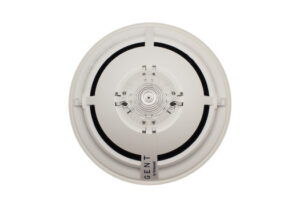
Self-Test detectors feature an internal module that generates smoke, allowing for functional testing of the optical sensor. A small fan expels the smoke through designated entry points, ensuring unobstructed detection in the event of a real fire. Additionally, the system includes an internal thermistor for safe heat sensor testing.

With the integration of an internal Bluetooth Low Energy Emitter (BLE), detectors seamlessly connect to a mobile app, enabling engineers to efficiently locate and inspect devices throughout a building while ensuring a discreet and non-invasive on-site presence.

With Self-Test, building owners can now prove that their fire detection systems undergo multiple tests a year, exceeding the prescribed once-a-year testing requirement by British Standard BS 5839-1.

The intuitive Honeywell Connected Life Safety Services (CLSS) app offers a wide range of testing options tailored to specific building needs, emphasising efficiency and speed. Capture essential events, test results, and visual inspection information – enabling engineers to identify necessary corrective actions more effectively.

Traditionally, fire testing documentation relied on printed results, leaving room for dispute. The CLSS app captures all Self-Test activities, including the manual testing and visual inspection commentary with accompanying photographs. CLSS also records daily events, creating a comprehensive digital logbook stored securely in the cloud. This digital logbook ensures no information is lost, providing invaluable historical records for fault investigation and false alarm analysis.

DID YOU KNOW?

Self-Test is capable of functionally testing any size fire system in 35 minutes or less

Paving the way for digital transformation

As the sector continues to evolve, the need for digital solutions and streamlined fire safety maintenance processes increases. Honeywell’s Self-Test technology represents a forward-looking approach to fire safety, offering a future-proof solution for maintaining compliance and ensuring life safety in commercial and institutional settings.

Find out more: https://buildings.honeywell.com/gb/en/brands/our-brands/gent/solutions/gent-self-test