Skip to content
BPindex — The Largest Building Products Directory in the UK

fire safety

Fire Safety Without Compromise: Why Mineral Paints Are Becoming Essential in Modern UK Construction

Building Products Index Ltd Paint Leave a Comment

View the KEIM entry on BPindex

Visit the KEIM website

As fire safety continues to shape the specification of building materials across the UK, architects, contractors, and building owners are increasingly looking beyond structural components to ensure every element of the building envelope contributes to occupant safety. One area receiving greater attention is decorative coatings, where mineral paint technology is offering significant advantages over conventional organic paint systems.

How is KEIM different?

KEIM Mineral Paints, manufactured using naturally occurring mineral ingredients and silicate technology, provide an inherently non-combustible finish that does not contribute to fire growth. Unlike traditional petrochemical based coatings, mineral paints contain no petrochemical binders that can fuel a fire, making them an increasingly attractive choice for projects where fire performance is a critical specification requirement.
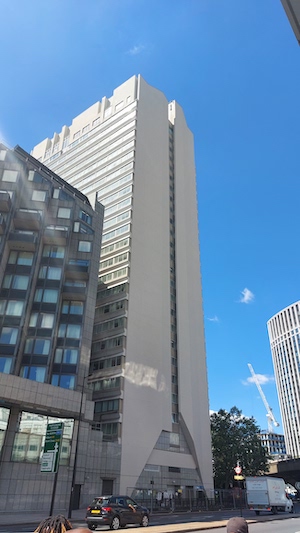
KEIM’s interior and exterior paint systems have been independently tested to the European fire classification standard EN 13501-1 and achieve an A2-s1, d0 classification. This indicates limited combustibility, very limited smoke production and no flaming droplets during fire exposure — key characteristics that help support safer building design. These credentials are essential for residential buildings over 11 metres in height, where external materials are subject to increasingly stringent fire performance requirements in the UK.

However, fire resistance is only one part of the story. KEIM’s mineral paint chemically bonds with mineral substrates through a process known as silicification, creating a finish that becomes an integral part of the surface rather than forming a film. This results in exceptional durability, outstanding colour stability and high resistance to UV degradation, helping to extend redecoration cycles and reduce whole-life costs.

How it works
The paints are highly vapour permeable, allowing buildings to ‘breathe’ naturally while helping to reduce trapped moisture that can contribute to substrate deterioration. Combined with their water-based formulation, absence of solvents and extremely low emissions, KEIM coatings support healthier indoor environments alongside long-term environmental performance.

For specifiers, the combination of verified fire performance, durability and sustainability makes mineral paints an increasingly compelling option across education, healthcare, transport infrastructure, commercial developments and high-rise residential projects. As building regulations continue to evolve, selecting materials that offer proven performance without compromising safety, aesthetics or longevity is becoming more important than ever.

In an industry where every specification decision matters, fire-resistant mineral paints are demonstrating that decorative finishes can play a valuable role in delivering safer, more resilient buildings.

Advantages of KEIM mineral paints and renders;

  • Environmentally friendly ISO 14001
  • High vapour permeability
  • Provides durable, colour stable protection
  • Fire resistant to A2- s1, d0
  • UV stable
  • Increases light reflectivity

What we recommend

Before you start your next painting project, take a moment to read the product label and safety data sheets. They contain essential information about technical performance, ingredients, application guidance, and fire resistance, helping you choose the right product for your project. Understanding what’s in your paint and how it performs ensures better results, safer use, and greater confidence that your chosen coating meets the requirements of your project.

Nature Plus and Cradle to Cradle Certified.

Interested to find out more?

View KEIM’s profile on Bpi – https://www.bpindex.co.uk/supplier/4136/keim-mineral-paints-ltd/

Find out more https://www.keim.com/en-gb/company/fire-resistance/

Tel: 01952 231 250

Web:  https://www.keim.com/en-gb/

Email: sales@keimpaints.co.uk.

Social Links:

Instagram https://www.instagram.com/keim_uk/

Pinterest https://in.pinterest.com/KEIMMineralPaints/

LinkedIn https://www.linkedin.com/company/keim-mineral-paints-ltd/

Project examples include:

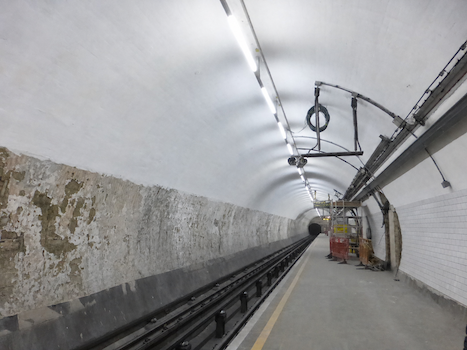
Holland Park Underground Station, London – KEIM Soldalit
AFTER GRENFELL – EMPOWERING DIGITAL FIRE SAFETY

Building Products Index Ltd Fire Protection Leave a Comment

View the Honeywell entry on BPindex

Visit the Honeywell website

Why is BS 8644-1 Crucial for Business Owners and Facility Managers?

THE ROLE OF GRENFELL IN CHANGING FIRE SAFETY STANDARDS

The Grenfell Tower fire disaster in 2017, which claimed 72 lives, marked a turning point in UK fire safety standards1. This prolific event highlighted critical gaps in fire safety management, leading to comprehensive reforms aimed at improving accountability and transparency. One significant outcome was the introduction of BS 8644-1 in 2022, a standard that emphasises the digital management of fire safety information throughout a building’s lifecycle. By promoting accurate, accessible, and consistent data, BS 8644-1 supports more robust safety practices and enhances compliance across the built environment.

WHO IS RESPONSIBLE FOR FIRE SAFETY?

Under the Fire Safety Act 2021, building owners, managers, and designated Responsible Persons (RPs) are required to:

  • Ensure a fire risk assessment is completed by a competent person
  • Ensure fire safety systems are maintained by a competent person
  • Inform occupants about evacuation procedures

HOW DOES BS 8644-1 HELP?

BS 8644-13 outlines best practices for the digital management of fire safety information across all stages of a building’s lifecycle.

Following the Grenfell Tower fire, Dame Judith Hackitt’s independent review identified widespread issues with the creation, maintenance, and handover of critical safety records, calling for a unified approach known as the “golden thread”. This concept ensures that essential fire safety data remains accurate, accessible, and relevant from design through to a building’s end of life, fostering greater accountability and transparency.

The standard addresses longstanding concerns, such as inadequate record-keeping and unclear accountability, by mandating consistent digital documentation to support safer building operations. UK business owners and facility managers must recognise that this standard is not just about regulatory compliance – it’s about safeguarding lives and protecting assets.

WHAT IS THE COST OF FIRE DETECTION SYSTEM FAILURES?

False alarm incidents continue to be a major challenge, with UK Government statistics reporting 254,000 cases in the year ending September 2024, the highest number since 2011. These disruptions burden emergency services, impact businesses and may cause people to become less responsive to real fire emergencies.

Common causes include:

  • Poor detector placement or incorrect device selection
  • Inadequate maintenance or testing
  • Deliberate tampering or power failures

Faulty equipment accounted for 118,115 false alarms, marking a 20% increase over five years. These figures underscore the importance of proper system maintenance, effective design, and compliance with fire safety standards to mitigate risks and ensure reliable operation.

HOW DOES THE DIGITAL SHIFT ENHANCE FIRE SAFETY COMPLIANCE?

Technology, such as Honeywell’s cloud-based maintenance app (CLSS) and automated fire detectors (Self-Test), provide a transformative, digital approach to managing fire safety:

  • Remote Monitoring & Real-Time Alerts: These solutions offer instant insights into fire system status and performance, reducing downtime and false alarms.
  • Automated Functional Testing: Self-Test detectors allow for regular, accurate checks that consistently meet BS 5839-1 standards.
  • Digital Documentation: Cloud-based record-keeping establishes a continuous “golden thread” that documents every stage of the building lifecycle.

HOW DO CONNECTED SOLUTIONS SUPPORT THE BS 8644-1 BUILDING LIFECYCLE?

BS 8644-1 recommends digital management at every stage of a building’s life. Honeywell’s connected solutions integrate seamlessly into each phase.

Briefing and Design

Fire risk assessment and strategy should be at the core of every fire system design. Yet, long-term compliance and daily challenges are often overlooked. Daily issues such as accessibility for testing, fire monitoring during testing, and regular reporting and compliance updates are common. The pressure to cut initial installation costs may lead to choosing lower-specification non-connected devices, increasing long-term maintenance costs.

Construction

Construction projects frequently limit the time allocated for proper fire system commissioning. Honeywell’s Self-Test detectors automate testing even in challenging environments, ensuring that systems are fully compliant before handover. Digital logs capture every test and adjustment, providing an auditable trail that supports both compliance and operational efficiency.

Asset Handover

Asset handover involves demonstrating the functionality of the system to the relevant stakeholders, including building owners, regulatory authorities or their representatives. Accurate documentation, including test results, commentary and pictures of fire devices and their locations, help capture the condition of the system that is being handed over – creating a digital timestamp and a baseline for future maintenance. The asset handover should ensure clear accountability across all phases of a building’s lifecycle.

Asset in Use

For operational buildings, continuous system monitoring is critical. Honeywell’s cloud‑based solutions provide real‑time oversight and automated functional testing to identify any changes or degradation in system performance. This continuous monitoring reduces the risk of system failures and minimises disruption to building occupants.

Asset End of Life

Fire safety systems eventually require replacement or upgrading. Connected solutions enable predictive maintenance by providing alerts when components approach the end of their effective life. This proactive strategy ensures timely upgrades, prevents sudden failures, and helps maintain continuous compliance – all while supporting long-term budget planning.

HOW CAN YOU FUTUREPROOF YOUR FIRE SAFETY STRATEGY?

Protecting buildings and their occupants is non-negotiable. Digital fire safety isn’t optional; it’s a strategic priority. Honeywell continually invests in new technologies designed to meet the real-world challenges faced by UK businesses. By adopting new innovations, such as Honeywell CLSS and Self-Test, UK business owners and facility managers can:

  • Reduce Operational Risks: Implement continuous monitoring and maintenance of fire safety systems.
  • Meet & Exceed Compliance: Maintain a complete, digital audit trail that meets and exceeds the latest regulatory standards.
  • Secure Long-Term Savings: Avoid the financial and reputational costs associated with outdated, manual systems.
  • Enhance Safety: Real-time alerts and digital record-keeping protect both occupants and assets.

TAKE THE NEXT STEPS IN SAFEGUARDING YOUR BUILDING

BS 8644-1 sets a new standard for fire safety management through digital innovation. By integrating connected technologies, organisations can achieve greater safety, compliance, and operational efficiency. Digital transformation effectively addresses the challenges identified from previous shortcomings, paving the way for a more resilient, accountable fire safety landscape.

Connect with Honeywell for a free consultation about the impact of BS 8644-1 on your buildings, and how you can not only meet these standards, but exceed them.

MARLEY ACHIEVES BBA CERTIFICATION FOR ITS SOLARTILE® RANGE

Building Products Index Ltd Roofing, Tiles Leave a Comment

View the Marley entry on BPindex

Visit the Marley website

Leading roof systems manufacturer, Marley has been awarded with a British Board of Agrément (BBA) certification for its innovative SolarTile® 410W range, which includes flashing kits and integrated solar panels. This certification uniquely confirms that Marley SolarTile® meets stringent standards for electricity generation from sunlight on pitched roofs between 20° and 60° on both domestic and non-domestic buildings.

The BBA certification validates the performance, safety and sustainability of Marley’s SolarTile®, confirming its full compliance with building regulations, technical specifications and design considerations. It also reflects the outcome of rigorous assessment in areas such as mechanical resistance, fire safety, hygiene, environmental impact, energy efficiency, and durability.

Assessment criteria

In response to a significant uplift in the use of solar PV, the NHBC announced more stringent requirements in the 2024 Technical Standards update. As roof integrated solar systems are classified as products that perform critical fire-resistance and weatherproofing functions. The new standards now include the requirement to demonstrate an acceptable level of durability, and that the life expectancy should be confirmed by an independent technical approvals authority.

This BBA certification included an assessment of the durability of the complete solar system and confirms the lifetime of the product is equivalent to the roof structure with which it is applied.

Key areas evaluated included:

  • Mechanical resistance and stability: Ensuring the system can withstand wind loads, physical impacts and other stresses.
  • Safety in case of fire: Verifying the system’s fire resistance, to protect building occupants.
  • Hygiene, health and environmental safety: Ensuring the range has no harmful impact on building occupants or the environment.
  • Energy economy and heat retention: Demonstrating the system’s ability to generate energy efficiently and contribute to heat retention.
  • Durability: Assessing the system’s long-term performance and lifespan.

In addition to product evaluation, the BBA’s review also included an assessment of Marley’s manufacturing processes, delivery, handling, storage, and maintenance protocols. The company’s commitment to regular production assessments and formal 3-yearly reviews ensures quality controls remain consistent throughout the system’s lifecycle.

Future-ready roofing
The BBA certification provides housebuilders and specifiers with confidence in the performance and reliability of Marley’s SolarTile® system solution for pitched roofing applications. Whether for new builds or roof refurbishments, this solar energy solution is designed to integrate seamlessly within the roof, offering a sleek, unobtrusive aesthetic whilst generating electricity from sunlight.

Marley’s SolarTile® brings together cutting-edge solar technology with a traditional roof aesthetic, whilst a system that is fully compliant with current building regulations.

Daniel Redfern, Head of Marketing Communications at Marley, commented: “Achieving BBA certification for our SolarTile® 410W system further reinforces our commitment to delivering high-performance, durable roofing solutions. The certification assures customers that Marley’s SolarTile® 410 panels and associated fixings and flashings, meets stringent standards for safety, durability and efficiency, providing a reliable choice for those seeking to incorporate solar energy into their building projects.”

For more information, visit Marley’s website.

Ensuring fire safety in high rise buildings: The essential role of access panels

Building Products Index Ltd Access Panels Leave a Comment

View the Profab Access entry on BPindex

Visit the Profab Access website

In the dynamic environment of commercial and industrial buildings, facilities managers are tasked with the responsibility of maintaining a safe environment for building occupants and crucial to that is minimising fire risks.

Following the Grenfell Tower fire in 2017, The Golden Thread concept was introduced as part of the Building Safety Act, which highlights the need for better documentation, transparency and accountability in the context of building safety and management.

Naturally, facilities management professionals are some of those with the greatest responsibility for ensuring that the Golden Thread of building safety information is maintained, accessible and up-to-date.

This requires the accurate documentation of any changes, upgrades or maintenance work carried out, which contributes to recording the overall building safety and regulatory compliance.

Commercial and industrial buildings will house numerous complex systems, including fire suppression systems, electrical installations and HVAC infrastructure; all of which require routine inspections and maintenance to ensure their efficiency and compliance with safety regulations.

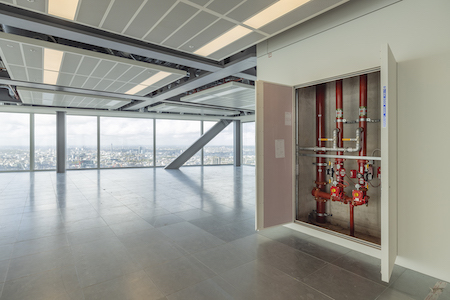
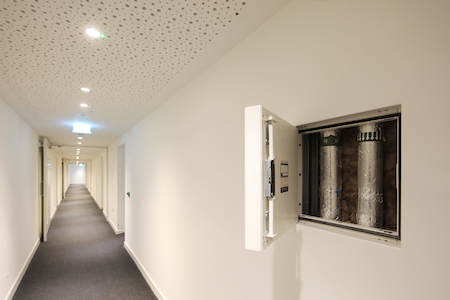
One critical component that facilitates this maintenance is access panels. Beyond their functional purpose of providing access for maintenance personnel to inspect, service and repair systems, access panels play a significant yet often overlooked role when it comes to fire safety.

During the building’s initial construction, major contractors should seek to install fire rated access panels where third-party certification can be supplied.

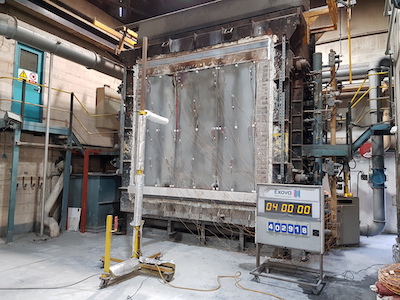
An example of this third-party certification is the Certifire scheme, which ensures the quality and reliability of fire protection products, thus guaranteeing that these have been rigorously tested and comply with relevant safety standards within the Building Safety Act.

Certifire accredited access panels can ensure the highest standards of safety and protection against the spread of flames and smoke in the event of a fire through swift containment, which in turn, can minimise property damage and save lives.

The installation of these panels will ensure that facilities managers will always be able to provide third party certification for these products at the time of installation, which provides them peace of mind within the buildings they maintain, and ensures that adherence to the Golden Thread and legal compliance is achieved.

In order to achieve this, facilities managers should maintain an up-to-date record of access panel locations, which clearly specifies their purpose.

This information – which will be proactively shared by conscientious suppliers – helps in identifying access points which provide crucial entry to fire suppression systems, allowing easy inspection, repair and maintenance, as well as enabling emergency responders quick and efficient access during the event of a fire.

In addition, any modifications made to access panels, such as installations, maintenance, relocations or upgrades, should be promptly recorded. This documentation aids in tracking the history and condition of access panels, ensuring that maintenance is conducted timely and potential fire safety risks are swiftly addressed.

Finally, irrespective of the industry, compliance with fire safety regulations is essential.

Accurate documentation of access panels assists facility managers in demonstrating compliance to regulatory authorities during building inspections and audits. Outdated or inadequate documentation can lead to compliance issues, costly penalties, or in worst case scenarios, compromised fire safety.

Third-party Certifire tested and accredited access panels can ensure the highest standards of safety and protection against the spread of flames and smoke in the event of a fire through swift containment, which in turn, can minimise property damage and save lives.

Access panels stand as vital components in the broader framework of fire safety within commercial and industrial buildings, through facilitating routine inspections, efficient maintenance, and swift access during firefighting efforts in the event of an emergency.

The relationship between fire rated access panels and the Golden Thread highlights the necessity of meticulous record-keeping throughout the building’s lifecycle, which not only helps in maintaining regulatory compliance, but also enhances the overall fire safety management of the building.

By prioritising this, facilities managers can plan an essential role in fortifying the building’s fire safety resilience, create a safer environment for occupants and ensure that fire safety obligations are met.

For further information on Profab Access and its range of riser doors, access panels, and steel doors, call +44(0)1827 718 222 or visit www.profabaccess.com.

PAM Building – Ensign Agilium

Building Products Index Ltd Building Drainage, Drainage Leave a Comment

View the PAM Building entry on BPindex

Visit the PAM Building website

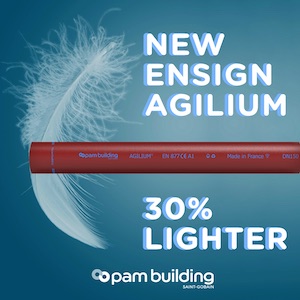
What does choosing Ensign Agilium mean for your drainage project?

Less environmental impact

Ensign Agilium® cast iron is made of 99 % recycled material and 100 % recyclable. Product design and manufacturing innovations have reduced CO2e emissions by 20% compared to our Ensign Soil range.

Durability

Due to their exceptional mechanical properties, cast iron drainage systems prevent the need for costly and time-consuming repairs.

Fire safety

Ensign Agilium® cast iron is a non-combustible, A1-rated material that is fire resistant for up to 2 hours protecting people and property.

Acoustic comfort

Our cast iron systems easily meet the industry guidelines. Ensign Agilium® produces airborne noise of 46 dB(A) and structure-borne noise of 13dB(A) according to EN14366, for a discharge rate of 2 l/s (with the use of our anti-vibration collars and acoustic dampeners).

Minimising the total cost of installation

We are convinced that the total cost of installation of Ensign Agilium® is lower than many plastic systems. The thinner walled pipes are now much quicker to cut, the system requires no costly accessories such as fire collars or expansion joints and far fewer brackets are required. Why not do the comparison and find out for yourself?

Available in diameters 100-300 with a range of fittings. Ensign Agilium is 100% compatible with our Ensign Soil range (and vice versa) with all the same benefits in terms of fire safety, acoustic performance, and longevity, just with more time, environmental and space-saving qualities. You can also save up to 60% of your time on-site by opting for our pre-assembly range.

For more information visit: https://www.pambuilding.co.uk/Ensign-Agilium

Ensuring fire safety in high rise buildings: The essential role of access panels

Building Products Index Ltd Access Panels Leave a Comment

View the Profab Access entry on BPindex

Visit the Profab Access website

In the dynamic environment of commercial and industrial buildings, facilities managers are tasked with the responsibility of maintaining a safe environment for building occupants and crucial to that is minimising fire risks.

Following the Grenfell Tower fire in 2017, The Golden Thread concept was introduced as part of the Building Safety Act, which highlights the need for better documentation, transparency and accountability in the context of building safety and management.

Naturally, facilities management professionals are some of those with the greatest responsibility for ensuring that the Golden Thread of building safety information is maintained, accessible and up-to-date.

This requires the accurate documentation of any changes, upgrades or maintenance work carried out, which contributes to recording the overall building safety and regulatory compliance.

Commercial and industrial buildings will house numerous complex systems, including fire suppression systems, electrical installations and HVAC infrastructure; all of which require routine inspections and maintenance to ensure their efficiency and compliance with safety regulations.

One critical component that facilitates this maintenance is access panels. Beyond their functional purpose of providing access for maintenance personnel to inspect, service and repair systems, access panels play a significant yet often overlooked role when it comes to fire safety.

During the building’s initial construction, major contractors should seek to install fire rated access panels where third-party certification can be supplied.

An example of this third-party certification is the Certifire scheme, which ensures the quality and reliability of fire protection products, thus guaranteeing that these have been rigorously tested and comply with relevant safety standards within the Building Safety Act.

Certifire accredited access panels can ensure the highest standards of safety and protection against the spread of flames and smoke in the event of a fire through swift containment, which in turn, can minimise property damage and save lives.

The installation of these panels will ensure that facilities managers will always be able to provide third party certification for these products at the time of installation, which provides them peace of mind within the buildings they maintain, and ensures that adherence to the Golden Thread and legal compliance is achieved.

In order to achieve this, facilities managers should maintain an up-to-date record of access panel locations, which clearly specifies their purpose.

This information – which will be proactively shared by conscientious suppliers – helps in identifying access points which provide crucial entry to fire suppression systems, allowing easy inspection, repair and maintenance, as well as enabling emergency responders quick and efficient access during the event of a fire.

In addition, any modifications made to access panels, such as installations, maintenance, relocations or upgrades, should be promptly recorded. This documentation aids in tracking the history and condition of access panels, ensuring that maintenance is conducted timely and potential fire safety risks are swiftly addressed.

Finally, irrespective of the industry, compliance with fire safety regulations is essential.

Accurate documentation of access panels assists facility managers in demonstrating compliance to regulatory authorities during building inspections and audits. Outdated or inadequate documentation can lead to compliance issues, costly penalties, or in worst case scenarios, compromised fire safety.

Third-party Certifire tested and accredited access panels can ensure the highest standards of safety and protection against the spread of flames and smoke in the event of a fire through swift containment, which in turn, can minimise property damage and save lives.

Access panels stand as vital components in the broader framework of fire safety within commercial and industrial buildings, through facilitating routine inspections, efficient maintenance, and swift access during firefighting efforts in the event of an emergency.

The relationship between fire rated access panels and the Golden Thread highlights the necessity of meticulous record-keeping throughout the building’s lifecycle, which not only helps in maintaining regulatory compliance, but also enhances the overall fire safety management of the building.

By prioritising this, facilities managers can plan an essential role in fortifying the building’s fire safety resilience, create a safer environment for occupants and ensure that fire safety obligations are met.

For further information on Profab Access and its range of riser doors, access panels, and steel doors, call +44(0)1827 718 222 or visit www.profabaccess.com.

Fire Safety on high-rise or high-risk buildings

Building Products Index Ltd Cladding Leave a Comment

View the Rockpanel entry on BPindex

Visit the Rockpanel website

View the Rockpanel safety comes first video

When it comes to fire safety, two types of buildings need some extra attention: high-rise and high-risk buildings. What do these terms exactly mean? And what should you bear in mind to ensure optimum safety?

High-rise buildings

What is a high-rise building?

20190205 RW-RP PHO 00495Height is an important factor in fire safety. The definition of what constitutes a high-rise building differs per European country. In Germany, the limit for high-rise buildings is 22 metres and above, in the UK it’s 18 metres and above, in Belgium it’s 25 metres and above etc. No matter what the exact limit is, it remains indisputable that risks increase when the height of a building is at a certain level.

Fire safety risks in high-rise buildings

Escaping from tall buildings is more complicated and takes more time compared to a single-family house with only one floor. Not only do high-rises have more inhabitants or people that work in them, normal houses also have more escape routes (windows, doors) and are therefore easier to escape when a fire occurs.

Using combustiblematerials on a building that is, for instance, 15 metres tall and thus not generally recognised as a high-rise, greatly enlarges the risks in the event of a fire and can have a catastrophic outcome.

New regulations for fire safety

Often high-rise limits are based upon possibilities for fire fighters to reach the fire via ladders or other equipment. With the rapid changes in the building environment, these methods cannot always be applied and by this the limits are part of the debate in defining new regulations for fire safety.

Design out the risk in high-rise and high-risk buildings. Just to be sure.

High-risk buildings

What is a high-risk building?

Senior female woman patient in wheelchair sitting in hospital corridor with Asian Indian male doctor and female nurse colleagues; Shutterstock ID 181449284

A high-risk building is a building where the impact of a fire can be catastrophic. Hospitals, nursing homes, schools, hotels, student housing: all of these and similar buildings fall under the definition of high-risk. These are buildings where a lot of people live, sleep, are in need of care and/or cannot escape quickly or easily in case of a fire emergency. The risks of losing lives due to a fire are high within this category of buildings. Also, the loss of property and the decreasing economic value of a high-risk building are aspects of attention here.

Future use of buildings

It is also important to keep in mind the future use of a building. A structure that today is not considered a high-risk building, could be one in ten years from now if the usage of it changes. For example, from an office building to an elderly care home.

Therefore, keeping in mind the lifetime safety of a building and its users is always the best way to go when dealing with fire safety. Using non-combustibleis the only way to design out the potential dangers involved with current or future high-risk buildings.