Skip to content
BPindex — The Largest Building Products Directory in the UK

Fire Protection

FIREFLY® Creates protected zone in Manchester hospital rebuild

Building Products Index Ltd Fire Protection, Uncategorized Leave a Comment

View the FIREFLY® entry on BPindex

Visit the FIREFLY® website

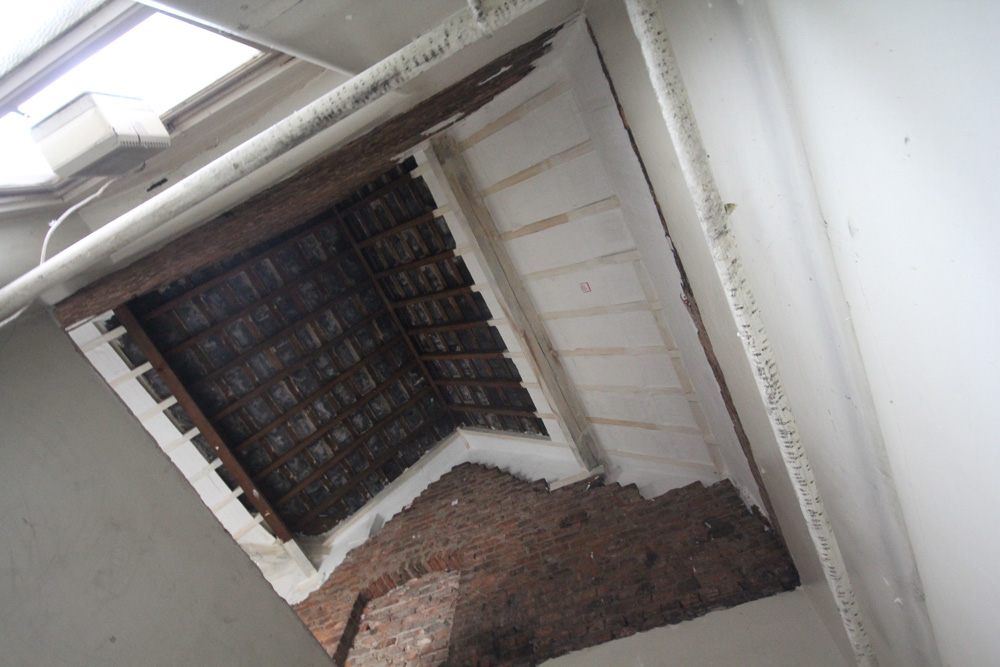
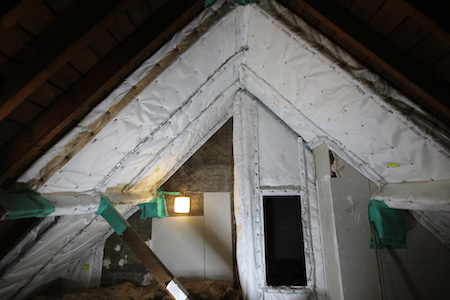
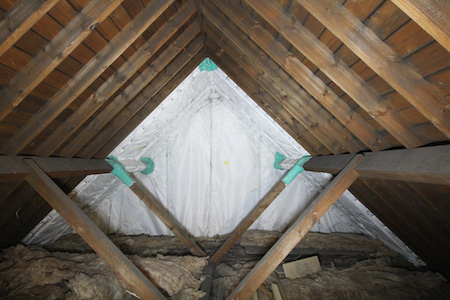
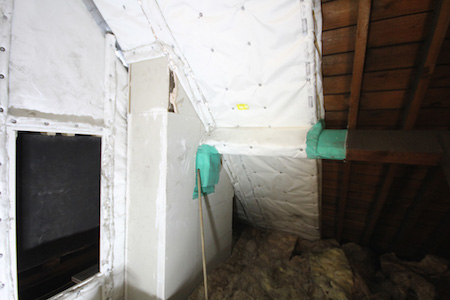
A continuing collaboration between FIREFLY® and a Manchester based installation specialist has seen the manufacturer provide site specific details and inspections at one of the Manchester University NHS Foundation Trust’s campuses to enable an ageing tiled roof structure to be brought up to contemporary standards as part of the £54M modernisation programme currently in progress.

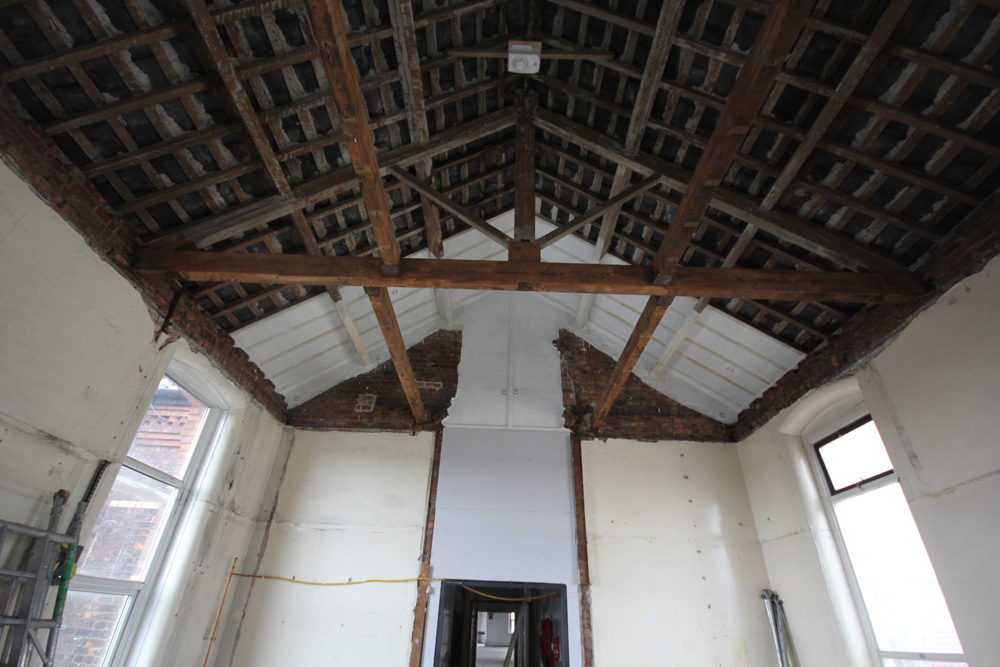
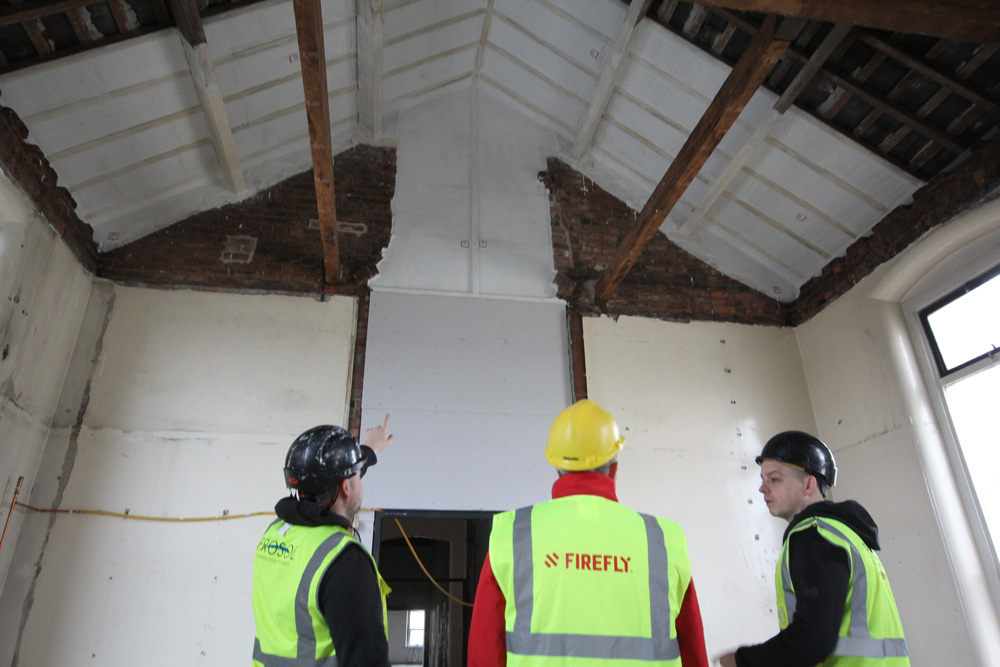
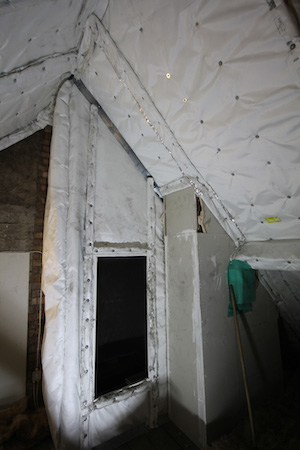
The work at North Manchester General Hospital is being led by Hive Projects along with Sheppard Robson Architects to deliver a new Acute Hospital as well as a mental health unit, well-being hub and other modern facilities. In one of the few buildings being refurbished, Prosol UK is undertaking an exacting sub-contract to City Build Ltd, where the need to upgrade the existing roof and wall areas to create a ‘Protected Zone’ above a retained stairwell required a bespoke specification offering.

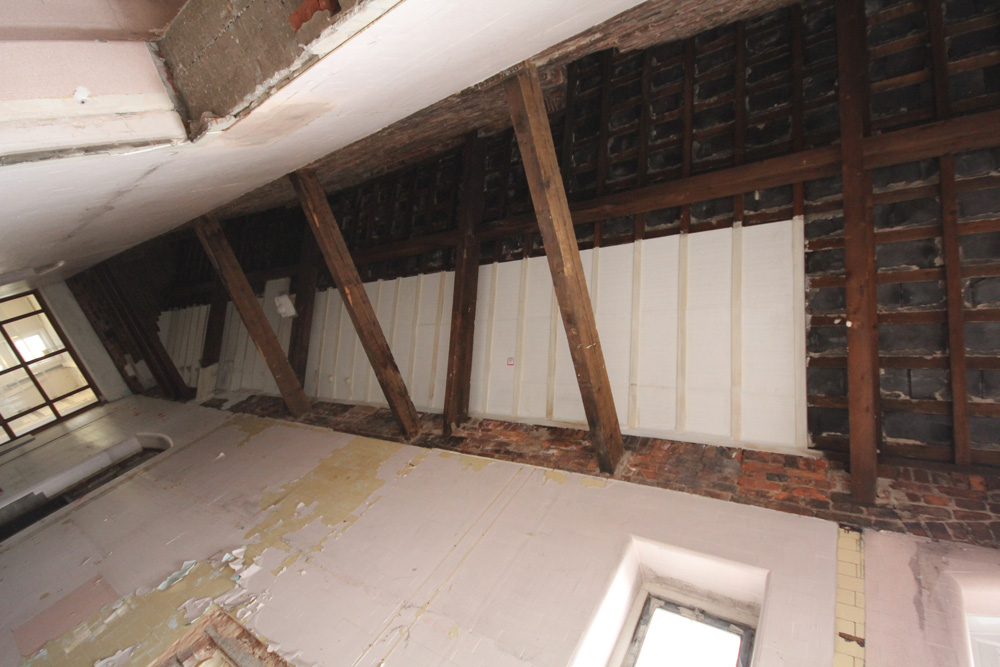
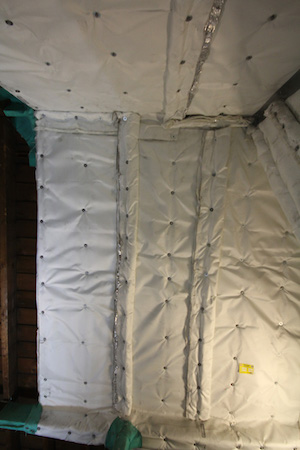
The Technical Manager for FIREFLY®, Chris Boam commented: “This had to be treated as a Protected Zone due to the nature of the roof construction: where the compartment wall terminates beneath a traditional tiled roof, with no roofing membrane present – leaving an open void at the head of the wall. This therefore creates a route where fire could bypass the compartment line and spread into the adjacent space.  Approved Document B directs that where it is not possible to close the compartment line directly to the underside of the roof covering, a protected zone should be formed to maintain compartmentation: typically extending to 1.5 metres either side of the wall.  Using the FB180 system allowed the compartmentation line to be continued within the roof void, with additional protection measures applied to the surrounding timber elements.”

The Senior Fire Officer for Manchester University Foundation NHS Trust; Gary Brown is responsible for approving all fire protection measures on the project. He added: “Our team was at the Fire Safety Event in Manchester when I first saw Batt for use between wooden joists, so I was aware of the performance potential, when someone proposed using the Titan barrier curtain for the current work at North Manchester, so I made the contractor and other parties aware of what was a cheaper and more practical alternative in the circumstances. Crucially, FIREFLY® has carried out all the testing and so the product ticked all the boxes.”

The 1200 x 600mm sheets are 60 mm thick and feature the specially formulated ablative coating on both sizes of the layered, non-combustible mineral fibre which has a density of 180 kg/m3. The product is tested in accordance with BS EN 1363-1 2022 and BS EN 1364-2 while offering 90 minutes integrity and one hour’s insulation.


FIREFLY® Zeus Specified To Protect Peabody Apartment Blocks

Building Products Index Ltd Fire Protection Leave a Comment

View the FIREFLY® entry on BPindex

Visit the FIREFLY® website

A total of 20 traditionally built apartment blocks belonging to the Peabody Trust in North-West London have been brought up to the current requirements of the Building Regulations using products from the FIREFLY® range of high-performance barriers.

The work to the properties is being led by LMAC Group with Essex based T and R Fire Protection being the specialist installer of the Zeus 90-30, Zeus 60-30 Horizontal and ancillary products like FIREFLY® Collaroll and intumescent adhesive. Zeus Horizontal 60-30 was utilised to create ‘protected zones’ within the roof spaces.

The Site Manager for T & R Fire Protection, Tom Port-Smith, added: “So far, we have completed three of the blocks and are now waiting for Building Control to confirm they are happy with the work before our scheduled three teams tackle the rest of the buildings. Peabody required us to use FIREFLY® Zeus 90-30 on this contract we do tend to favour the manufacturer’s product range for our compartmentation work, due to the ease of installation and the dependability of performance…

…while the lightness and flexibility of the barriers make them ideal for working in relatively confined spaces like this, we always get good technical support from the company’s Technical Manager, Andy Greenwood and his team, whenever we need special details.”

Manufactured from woven and non-woven glass, the FIREFLY® range is designed to optimise resistance to flame and smoke as well as offer heat protection in a wide range of scenarios.

FIREFLY® Technical Sales Manager, Andrew Greenwood commented: “I’ve had the opportunity to inspect a number of projects completed by T & R Fire, including installations of Firefly Zeus Lite fire curtains, and I’ve consistently been impressed with the quality of their work. They have always demonstrated a strong commitment to achieving a high standard of installation, backed up by excellent technical knowledge and professionalism.

Their installers regularly undertake direct training with TBA Firefly, helping to ensure they remain up to date with the latest manufacturer details, specifications and installation requirements. From my experience, T & R Fire combine quality workmanship with a genuine understanding of the importance of installing passive fire protection systems correctly. They set a very high standard, and it’s always reassuring to see their work on site.

FIREFLY® barriers are manufactured and designed for installation horizontally, alongside a complete range of FIREFLY® ancillary products, to ensure a fully tested and certified installed system.  As one of the manufacturer’s most widely used products, Zeus has been designed and certified to achieve compartmentation in large, concealed spaces including roof voids, helping to restrict heat transfer as well as the spread of flames while its certificated performance exceeds the requirements of Building Regulations Part B.

Images shown are taken during installation and some sections of the installation might be incomplete.

Honeywell Gent Self-Test Revolutionising Fire Detection

Building Products Index Ltd Fire detectors, Fire Protection Leave a Comment

View the Honeywell Gent entry on BPindex

Visit the Honeywell Gent website

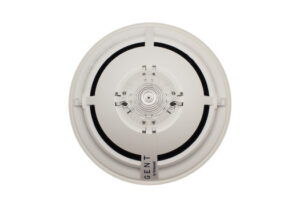
Honeywell Gent Self-Test brings a smarter, safer way to test fire detection systems. By automating both smoke and heat sensor testing, it helps reduce the need for manual access while supporting more consistent maintenance, stronger compliance, and greater confidence that detectors are ready to respond when needed. Designed to make routine testing simpler and more efficient, Self-Test helps engineers save time on site while maintaining high standards of life safety protection.

KEY SELF-TEST & CLSS FEATURES

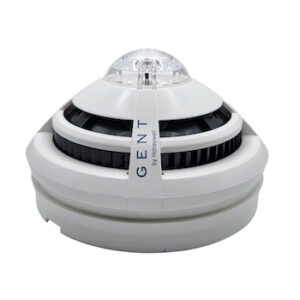
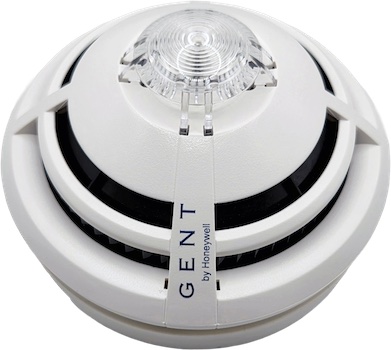
  1. Anti-masking/blockage check – Confirms that smoke entry points are not obstructed as part of the same automated cycle. Gent S-QUAD Sensor with Audio and Visual Warning includes self-test functionality, automating the functional test of both the smoke and heat sensors while checking that the smoke entry points are clear from blockage with an anti-masking test.

  1. Access to hard-to-reach detectors – Removes the need for ladders, poles, or physical access in voids, high ceilings, and locked rooms. The Self-Test range of detectors eliminates many of the physical barriers associated with testing and maintenance, such as locked rooms, voids, high ceilings, and other hard-to-access spaces. These are all areas that may go untested and can ultimately put buildings at risk.

  1. Bluetooth-verified visual inspection – Still meets BS 5839-1 visual check requirements by confirming that a technician was in range via a Bluetooth beacon, even where full manual access is not possible. Visual inspections are completed by verifying that the technician has been within visual inspection range of the Bluetooth beacon placed within the device.

  1. CLSS integration for remote diagnostics – Self-Test devices connect to the Connected Life Safety Services cloud platform, providing real-time visibility and enabling engineers to test and troubleshoot remotely via the CLSS app. The award-winning Self-Test feature allows both the heat and optical sensors within the device to be tested using the CLSS app, and the CLSS platform gives technicians and facility managers real-time insights into the fire system. This enables maintenance engineers to proactively identify and address potential issues, leading to enhanced first-time fix rates and minimising time spent on site.

  1. Compliance and efficiency gains – A single engineer can run a building-wide test with a full electronic audit trail, improving compliance and reducing time spent on site. With the ability to test both optical and heat sensors and verify that the smoke entry points are free from obstruction, a single maintenance engineer can initiate a building-wide test, improving compliance with an end-to-end electronic audit trail and saving much-needed time.

The importance of choosing a fire alarm cable that complies with the BS 5839 standard (with the benefits of TOXFREE®)

Building Products Index Ltd Fire alarm Cables, Fire Protection Leave a Comment

View the Top Cable entry on BPindex

Visit the Top Cable website

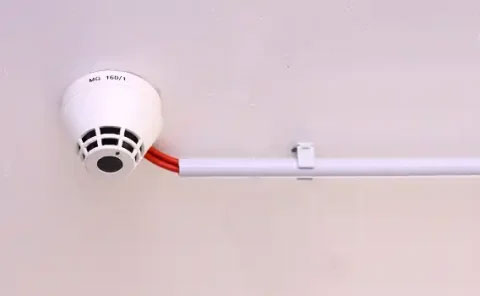
All UK public and commercial buildings must have a method of detecting fires and alerting people on-site. Choosing the best fire alarm cable for BS 5839 compliance -and EN 50525- means integrating standards, performance, and safety. This cable is designed to comply with the regulations of Fire Detection and Alarm systems, and it is highly recommended to be installed in public places such as hospitals, datacentres, airports, high rise buildings and similar. 

What is a fire alarm cable?   

Fire alarm cables are specially designed for fire alarms and safety systems. These systems safeguard buildings by constantly monitoring for fire risks, ensuring rapid alerts so people can act quickly in a fire emergency.

The fire alarm cable reliably transmits signals from sensors and manual pull stations to the control panel and notification devices, enabling fast system response during a fire. These cables typically feature copper conductors with LSZH insulation and fire-retardant outer sheath for fire, toxic gases, smoke, and droplets resistance.

The cable screen ensures reliable signal transmission, which is crucial in critical applications. This screen safeguards against EMI and RFI, making these conductors ideal for environments where electronic interference is prevalent.

What are the types of fire alarm cables? 

For fire alarm systems, you can select between standard fire alarm cable and enhanced fire-resistant cable, both designed for compliance with relevant safety standards. The choice depends on specific application needs and the required level of circuit integrity during a fire event.

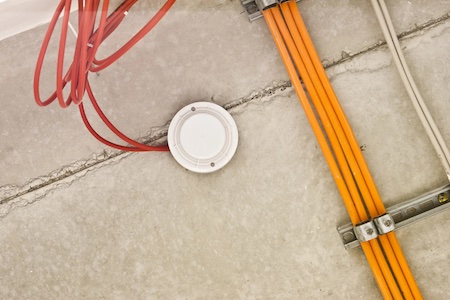
Used mostly in low-voltage settings, fire alarm cables are often supplied as two-core cables, with popular sizes including 2×1,5 mm2 and 2×2,5 mm2. Distinct red insulation helps easy identification and compliant installation.

Fire alarm cables: a comparison table

Each fire alarm cable in this comparison table will help you select the optimal solution for your safety requirements.

TOXFREE® FIRE ALARMS
Z1OZ1-K
TOXFREE® FIRE ALARMS
Z1OZ1-KZ1OZ1-K (AS+)
Enhanced Fire-Resistant
Typical standard fire
alarm cable
Compliance BS 5839, EN 50575,
CPR Cca
BS 5839, EN 50575,
CPR Cca
BS 5839, lower CPR
Voltage rating 300/500 V 300/500 V 300/500 V
Fire grade Standard Enhanced (PH120) Standard
Smoke/Acidity/Droplets / light transmittance LSZH: Cca s1a, d1, a1
Light transmittance >80%
LSZH: Cca s1a, d1, a1
Light transmittance >80%
Basic LSZH or PVC
Cable conductor Copper Class 5 ( flexible) Copper Class 5 ( flexible) Copper Class 2
Copper Class 5 (flexible)
Cable insulation LSZH special polyolefin Mica tape + LSZH special polyolefin PVC or LSZH insulation
Cable screen Overlapping aluminium polyester tape screen 100% coverage + tinned copper drain wire Overlapping aluminium polyester tape screen 100% coverage + tinned copper drain wire Sometimes none
Cable outer sheath LSZH fire retardant polyolefin LSZH fire retardant polyolefin PVC or LSZH outer sheath
Cable  colour Red Red Red or white
Mínimum bending radius 10x cable diameter 10x cable diameter 6x cable diameter
Max Temp 70°C operation, 160°C short-circuit, -40º minimum service 70°C operation, 160°C short-circuit, -40º minimum service 70°C operation
Special Benefits Flexible, easy to install, EMI interference, meter marking Fire resistant cable, flexible, easy to install, EMI interference, meter marking Basic compliance
Application Fire alarms/detection Emergency circuits, high-risk
Fire alarms/detection

How to choose the right fire alarm cable?

Consider cable specifications based on the requirements of the fire alarm system, including: conductor size, insulation, screen and outher sheath (PVC or LSZH), fire resistance CPR rating and the cable flexibility, specially in tight spaces. Lastly, ensure that the cable meets relevant testing and certification standards.

Cable selection checklist

  • Select cable with certified LSZH insulation and outer sheath.
  • Confirm CPR rating (minimum Cca-s1a, d1, a1).
  • Check conductor size (minimum 2 mm² copper, preferably class 5 flexible for easy installation).
  • Choose fire-resistant enhanced grade for hospitals, data centres, airports, multi-storey, or phased evacuation buildings.
  • Use screened cable for signal reliability.
  • Only install with certified fire-resistant supports/junction boxes.
  • Keep fire alarm cable segregated from non-fire alarm circuits.
  • Ensure meter-by-meter marking for traceability.

Top cable, the best manufacturer and supplier for fire alarm cables

If you want to achieve the long-term performance of your alarm systems with reliable fire alarm cables, Top Cable is your preferred choice.

Contact Top Cable today for a Request for Quote for TOXFREE® FIRE ALARMS Z1OZ1-K or Fire-resistant  TOXFREE® FIRE ALARMS Z1OZ1-K (AS+) cable.

Elevate Your Safety with GENT S-Quad Self-Test: A Sustainable Fire Solution!

Building Products Index Ltd Fire detectors, Fire Protection Leave a Comment

View the Honeywell Gent entry on BPindex

Visit the Honeywell Gent website

The Environmental Product Declaration (EPD) for Honeywell’s GENT S-Quad Self-Test fire detectors showcases their commitment to sustainability and efficiency. Featuring patented self-testing technology, these detectors minimize carbon emissions and reduce maintenance hours. Designed for a 12-year lifecycle, they offer multi-sensor capabilities, visual alarms, and sounder/voice options.

For more details, visit the GENT Self-Test webpage

AFTER GRENFELL – EMPOWERING DIGITAL FIRE SAFETY

Building Products Index Ltd Fire Protection Leave a Comment

View the Honeywell entry on BPindex

Visit the Honeywell website

Why is BS 8644-1 Crucial for Business Owners and Facility Managers?

THE ROLE OF GRENFELL IN CHANGING FIRE SAFETY STANDARDS

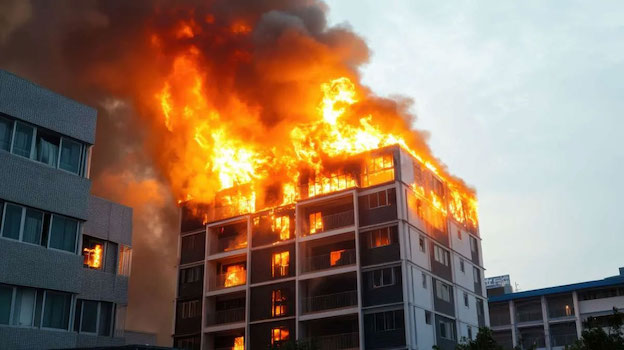
The Grenfell Tower fire disaster in 2017, which claimed 72 lives, marked a turning point in UK fire safety standards1. This prolific event highlighted critical gaps in fire safety management, leading to comprehensive reforms aimed at improving accountability and transparency. One significant outcome was the introduction of BS 8644-1 in 2022, a standard that emphasises the digital management of fire safety information throughout a building’s lifecycle. By promoting accurate, accessible, and consistent data, BS 8644-1 supports more robust safety practices and enhances compliance across the built environment.

WHO IS RESPONSIBLE FOR FIRE SAFETY?

Under the Fire Safety Act 2021, building owners, managers, and designated Responsible Persons (RPs) are required to:

  • Ensure a fire risk assessment is completed by a competent person
  • Ensure fire safety systems are maintained by a competent person
  • Inform occupants about evacuation procedures

HOW DOES BS 8644-1 HELP?

BS 8644-13 outlines best practices for the digital management of fire safety information across all stages of a building’s lifecycle.

Following the Grenfell Tower fire, Dame Judith Hackitt’s independent review identified widespread issues with the creation, maintenance, and handover of critical safety records, calling for a unified approach known as the “golden thread”. This concept ensures that essential fire safety data remains accurate, accessible, and relevant from design through to a building’s end of life, fostering greater accountability and transparency.

The standard addresses longstanding concerns, such as inadequate record-keeping and unclear accountability, by mandating consistent digital documentation to support safer building operations. UK business owners and facility managers must recognise that this standard is not just about regulatory compliance – it’s about safeguarding lives and protecting assets.

WHAT IS THE COST OF FIRE DETECTION SYSTEM FAILURES?

False alarm incidents continue to be a major challenge, with UK Government statistics reporting 254,000 cases in the year ending September 2024, the highest number since 2011. These disruptions burden emergency services, impact businesses and may cause people to become less responsive to real fire emergencies.

Common causes include:

  • Poor detector placement or incorrect device selection
  • Inadequate maintenance or testing
  • Deliberate tampering or power failures

Faulty equipment accounted for 118,115 false alarms, marking a 20% increase over five years. These figures underscore the importance of proper system maintenance, effective design, and compliance with fire safety standards to mitigate risks and ensure reliable operation.

HOW DOES THE DIGITAL SHIFT ENHANCE FIRE SAFETY COMPLIANCE?

Technology, such as Honeywell’s cloud-based maintenance app (CLSS) and automated fire detectors (Self-Test), provide a transformative, digital approach to managing fire safety:

  • Remote Monitoring & Real-Time Alerts: These solutions offer instant insights into fire system status and performance, reducing downtime and false alarms.
  • Automated Functional Testing: Self-Test detectors allow for regular, accurate checks that consistently meet BS 5839-1 standards.
  • Digital Documentation: Cloud-based record-keeping establishes a continuous “golden thread” that documents every stage of the building lifecycle.

HOW DO CONNECTED SOLUTIONS SUPPORT THE BS 8644-1 BUILDING LIFECYCLE?

BS 8644-1 recommends digital management at every stage of a building’s life. Honeywell’s connected solutions integrate seamlessly into each phase.

Briefing and Design

Fire risk assessment and strategy should be at the core of every fire system design. Yet, long-term compliance and daily challenges are often overlooked. Daily issues such as accessibility for testing, fire monitoring during testing, and regular reporting and compliance updates are common. The pressure to cut initial installation costs may lead to choosing lower-specification non-connected devices, increasing long-term maintenance costs.

Construction

Construction projects frequently limit the time allocated for proper fire system commissioning. Honeywell’s Self-Test detectors automate testing even in challenging environments, ensuring that systems are fully compliant before handover. Digital logs capture every test and adjustment, providing an auditable trail that supports both compliance and operational efficiency.

Asset Handover

Asset handover involves demonstrating the functionality of the system to the relevant stakeholders, including building owners, regulatory authorities or their representatives. Accurate documentation, including test results, commentary and pictures of fire devices and their locations, help capture the condition of the system that is being handed over – creating a digital timestamp and a baseline for future maintenance. The asset handover should ensure clear accountability across all phases of a building’s lifecycle.

Asset in Use

For operational buildings, continuous system monitoring is critical. Honeywell’s cloud‑based solutions provide real‑time oversight and automated functional testing to identify any changes or degradation in system performance. This continuous monitoring reduces the risk of system failures and minimises disruption to building occupants.

Asset End of Life

Fire safety systems eventually require replacement or upgrading. Connected solutions enable predictive maintenance by providing alerts when components approach the end of their effective life. This proactive strategy ensures timely upgrades, prevents sudden failures, and helps maintain continuous compliance – all while supporting long-term budget planning.

HOW CAN YOU FUTUREPROOF YOUR FIRE SAFETY STRATEGY?

Protecting buildings and their occupants is non-negotiable. Digital fire safety isn’t optional; it’s a strategic priority. Honeywell continually invests in new technologies designed to meet the real-world challenges faced by UK businesses. By adopting new innovations, such as Honeywell CLSS and Self-Test, UK business owners and facility managers can:

  • Reduce Operational Risks: Implement continuous monitoring and maintenance of fire safety systems.
  • Meet & Exceed Compliance: Maintain a complete, digital audit trail that meets and exceeds the latest regulatory standards.
  • Secure Long-Term Savings: Avoid the financial and reputational costs associated with outdated, manual systems.
  • Enhance Safety: Real-time alerts and digital record-keeping protect both occupants and assets.

TAKE THE NEXT STEPS IN SAFEGUARDING YOUR BUILDING

BS 8644-1 sets a new standard for fire safety management through digital innovation. By integrating connected technologies, organisations can achieve greater safety, compliance, and operational efficiency. Digital transformation effectively addresses the challenges identified from previous shortcomings, paving the way for a more resilient, accountable fire safety landscape.

Connect with Honeywell for a free consultation about the impact of BS 8644-1 on your buildings, and how you can not only meet these standards, but exceed them.


NEW FIREFLY® Fire Collars (FCR) now available…

Building Products Index Ltd Fire Protection Leave a Comment

View the FIREFLY® entry on BPindex

Visit the FIREFLY® website

FIREFLY® Fire Collar (FCR) is a penetration sealing device that contains our manufactured flexible intumescent high-performance graphite, housed in a corrosion resistant powder coated steel shell. It is designed to provide high volume expansion and create a pressure seal during fire to combustible pipes that passes through floors and walls. To be used in conjunction with Firefly flexible barriers and the FB180 Batt Wall and Floor system.

To watch a video of FCR160 Fire Collar being installed onto FB180 Batt Wall System, click here.

FIREFLY® Fire Collar (FCR)’s primary purpose is to protect combustible pipes and maintain fire resistance as part of a tested and approved passive fire protection system. Available in 6 sizes 50mm to 160mm.To watch a video of FCR160 being installed onto FB180 Batt Wall System, click here.

KEY BENEFITS…

  • Provides fire resistance up to 4 hours
  • Tested to BS EN 1366-3:2021 fire resistance penetration seals
  • Retro fit with our flexible fire barriers, FB180 Wall and Floor Batt Systems
  • Easy to install

Available in sizes from 50mm to 160mm diameter

More Info.

TBA Protective Technologies, Unit 3 Transpennine Trading Estate, Gorrels Way, Rochdale, Lancashire OL11 2PX, UK, 01706 758 817

The Honeywell Self-Test Revolution

Building Products Index Ltd Fire Protection Leave a Comment

View the Honeywell Gent entry on BPindex

Visit the Honeywell Gent website

How is Honeywell revolutionising fire system testing and maintenance with innovative technology?

Building developers and building owners face many responsibilities and challenges when it comes to fire safety, particularly in multi-occupied settings. Advancements in fire safety technology are constantly evolving to meet these challenges and Honeywell Self-Test is the ground-breaking innovation that is revolutionising fire system maintenance.

In complex buildings and facilities, how can you prove that your fire system is compliant and that every single detector has been functionally tested, even in lift shafts, stairwells, and inaccessible rooms?

Traditional fire testing with a smoke pole and cup can be labor-intensive, while fire maintenance frequently disrupts daytime operations or incurs costly out-of-hours activities. Both scenarios are prone to inaccuracies due to access issues in complex buildings and the requirement to isolate the fire panel during testing, introducing additional risk.

Self-Test automates fire system maintenance and does not require physical access to locked rooms to perform functional fire tests. Self-Test eliminates the need for ladders, scaffolding, and scissor lifts to reach hard-to-access detectors, avoiding potential safety hazards, and reduces the need for out-of-hours testing. By automating functional fire testing, competent engineers can focus more time on thorough visual inspections to remain compliant.

How does Honeywell Self-Test work?

Self-Test detectors feature an internal module that generates smoke, allowing for functional testing of the optical sensor. A small fan expels the smoke through designated entry points, ensuring unobstructed detection in the event of a real fire. Additionally, the system includes an internal thermistor for safe heat sensor testing.

With the integration of an internal Bluetooth Low Energy Emitter (BLE), detectors seamlessly connect to a mobile app, enabling engineers to efficiently locate and inspect devices throughout a building while ensuring a discreet and non-invasive on-site presence.

With Self-Test, building owners can now prove that their fire detection systems undergo multiple tests a year, exceeding the prescribed once-a-year testing requirement by British Standard BS 5839-1.

The intuitive Honeywell Connected Life Safety Services (CLSS) app offers a wide range of testing options tailored to specific building needs, emphasising efficiency and speed. Capture essential events, test results, and visual inspection information – enabling engineers to identify necessary corrective actions more effectively.

Traditionally, fire testing documentation relied on printed results, leaving room for dispute. The CLSS app captures all Self-Test activities, including the manual testing and visual inspection commentary with accompanying photographs. CLSS also records daily events, creating a comprehensive digital logbook stored securely in the cloud. This digital logbook ensures no information is lost, providing invaluable historical records for fault investigation and false alarm analysis.

DID YOU KNOW?

Self-Test is capable of functionally testing any size fire system in 35 minutes or less

Paving the way for digital transformation

As the sector continues to evolve, the need for digital solutions and streamlined fire safety maintenance processes increases. Honeywell’s Self-Test technology represents a forward-looking approach to fire safety, offering a future-proof solution for maintaining compliance and ensuring life safety in commercial and institutional settings.

Find out more: https://buildings.honeywell.com/gb/en/brands/our-brands/gent/solutions/gent-self-test

FIREFLY® FB180 Batt System Features in Glasgow Central Station Redevelopment

Building Products Index Ltd Fire Protection Leave a Comment

View the FIREFLY® on BPindex

Visit the FIREFLY® website

The first phase of a £5million investment by Network Rail in Scotland’s busiest station, has completed with the opening of Avanti West Coast’s new first-class lounge and ticket office. The first phase of the project involved the historic Caledonian Chambers area of the station which is on the east side of the concourse. Caledonian Chambers is a Category B Listed Building designed by Glaswegian architect, James Miller, and was completed in 1903. It was built for the Caledonian Railway Company.

Modifications and improvements were led by Network Rail and included the upgrading of the fire protection for the historic main structure, which required the creation of bespoke as well as standard encasement details for large steel beams by sector specialist, FIREFLY®. Originally opened in 1879, the first phase of this multi-million-pound property project included the creation of Avanti West Coast’s new ticket office and first-class lounge and a brand-new step-free Network Rail station reception on the concourse level. The wider project will see existing tenants relocate, new retail units created, and office accommodation refurbished.  Such has been the extent of past adaptations that when the project began last November, the design team was unclear as to the nature of the roof deck’s construction, until demolition of a fast-food restaurant revealed the I-beams up to 900mm deep.

Details originally developed by FIREFLY® parent company in Australia have been adapted to the requirements of the Building Standards (Scotland) and the Building Regulations, enabling the easy to cut and shape non-combustible FB180 batts to infill the web to different sized steel beams. The addition of fireproof mastic and additional layers and the special Ablative Coating complete an encasement which is able to offer 60 minutes or longer integrity and insulation.  The installation work within the station, which has remained operational throughout, has been carried out by Glasgow based QualiFire Passive Fire Protection, with SIG being the merchant stockist supplying all the FIREFLY® materials.

Active across Scotland and the North of England, QualiFire was set up by Joe Stewart in 2019 as a specialist in passive fire protection solutions for clients in the education, healthcare and local authority as well as other sectors, but has been using FIREFLY® products for the first time on the Glasgow project.

Joe commented: “The lounge and surrounding area is currently being fitted out, while our team continues to work elsewhere within the station. The FIREFLY® system was recommended by the project architects – IDP – and the client, as they had previously been unable to find a manufacturer offering a solution which could be guaranteed to protect beams, which could be a 100years old, in this sort of situation. Initially the fire curtains were considered but then it was decided to use FIREFLY® FB180 batts. I have had very good feedback from our installers, regarding the ease of cutting and fitting them, with very little waste generated compared to other similar products. We have used both the FIREFLY® intumescent mastic and the Ablative Coating across the entire surface. Overall, it was very flexible and effective, and we have had lots of positive comments about the work, not just from the client and consultants, but also the merchant, SIG whose manager has taken an interest.  We work on big public contracts like this as far down as London if required and I can see a big potential for the system.”   

FIREFLY® Technical Sales Manager for Scotland and Ireland, Daniel Gordon, explained: “There has been enormous focus on improving the fire performance of both private residential and public buildings in the past few years, both here in Scotland and across the rest of the UK – with specifiers urgently wanting to ensure compliance for the projects they are involved with. One result of this we have seen is the widespread use being made of our FB180 batt system as a much more dependable alternative to spraying structural steel beams with intumescent coatings: the thickness and quality of which is far more difficult to ascertain.”

Back at the outset of the project, the scheme project manager at Network Rail, Conor Mclaughlin, reported: “We are excited to be making this multi-million-pound investment to benefit passengers at Glasgow Central. We are changing the layout and occupation of several existing retail units on the station concourse which involves relocating tenants, creating new retail units, making some units larger and refurbishing office accommodation and we hope to create a broader range of retail for passengers and station users, thereby improving the experience at the station.”

FIREFLY® CPD’s get RIBA’s official seal of approval

Building Products Index Ltd Fire Protection Leave a Comment

View the FIREFLY® entry on BPindex

Visit the FIREFLY® website

We’re delighted to say that our FIREFLY® CPD have now been awarded RIBA approval for our ‘Design & Understanding of Passive Fire Barriers & Compartmentation’ CPD. Access is available via NBS and the RIBA platforms so you can build your own understanding of the importance of Passive Fire Barriers within construction.

At FIREFLY®, we know that architects and specifiers rely on CPD’s to stay at the forefront of their field and that in the construction industry, RIBA-approved CPD content is the gold standard, carrying extra credibility and value. Our RIBA-approved CPD on Passive Fire Barriers will count towards your mandatory learning.

Chris Worby, Head of Sales at FIREFLY®, said: “We’re fully committed to providing the highest quality CPD materials to architects and all those involved in the development of specifications for Passive Fire Protection systems within the construction industry. As part of this continuously developing offering, we are very pleased to announce the RIBA approval of our latest addition “Design & Understanding of Passive Fire Protection & Compartmentation” I would encourage anyone interested in more information, or to book their CPD delivery slot to reach out to any member of our commercial or specification team.”

The core focus and learning objectives of our RIBA approved CPD are:

  • Understanding ‘Fire Behaviour’
  • The need for Safe Compartments
  • The progression of fire standards and regulations
  • Understanding passive fire protection (PFP)
  • Options & passive fire protection material types available
  • Meeting performance requirements & detailing
  • Installation of passive fire barriers – a full system approach
  • Case studies

If you’d like to sign up for our FIREFLY® RIBA approved CPD training session, please click here to visit our website, or email us at cpd@tbafirefly.com


1 2