
Skip to content
BPindex — The Largest Building Products Directory in the UK

Honeywell Self-Test fire system

Honeywell Gent Self-Test Revolutionising Fire Detection

Building Products Index Ltd Fire detectors, Fire Protection Leave a Comment

View the Honeywell Gent entry on BPindex

Visit the Honeywell Gent website

Honeywell Gent Self-Test brings a smarter, safer way to test fire detection systems. By automating both smoke and heat sensor testing, it helps reduce the need for manual access while supporting more consistent maintenance, stronger compliance, and greater confidence that detectors are ready to respond when needed. Designed to make routine testing simpler and more efficient, Self-Test helps engineers save time on site while maintaining high standards of life safety protection.
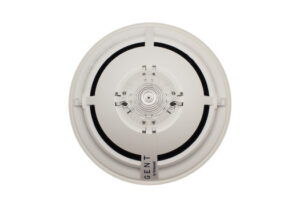
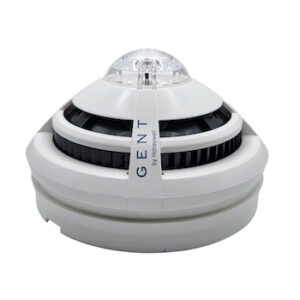
KEY SELF-TEST & CLSS FEATURES

  1. Anti-masking/blockage check – Confirms that smoke entry points are not obstructed as part of the same automated cycle. Gent S-QUAD Sensor with Audio and Visual Warning includes self-test functionality, automating the functional test of both the smoke and heat sensors while checking that the smoke entry points are clear from blockage with an anti-masking test.

  1. Access to hard-to-reach detectors – Removes the need for ladders, poles, or physical access in voids, high ceilings, and locked rooms. The Self-Test range of detectors eliminates many of the physical barriers associated with testing and maintenance, such as locked rooms, voids, high ceilings, and other hard-to-access spaces. These are all areas that may go untested and can ultimately put buildings at risk.

  1. Bluetooth-verified visual inspection – Still meets BS 5839-1 visual check requirements by confirming that a technician was in range via a Bluetooth beacon, even where full manual access is not possible. Visual inspections are completed by verifying that the technician has been within visual inspection range of the Bluetooth beacon placed within the device.

  1. CLSS integration for remote diagnostics – Self-Test devices connect to the Connected Life Safety Services cloud platform, providing real-time visibility and enabling engineers to test and troubleshoot remotely via the CLSS app. The award-winning Self-Test feature allows both the heat and optical sensors within the device to be tested using the CLSS app, and the CLSS platform gives technicians and facility managers real-time insights into the fire system. This enables maintenance engineers to proactively identify and address potential issues, leading to enhanced first-time fix rates and minimising time spent on site.

  1. Compliance and efficiency gains – A single engineer can run a building-wide test with a full electronic audit trail, improving compliance and reducing time spent on site. With the ability to test both optical and heat sensors and verify that the smoke entry points are free from obstruction, a single maintenance engineer can initiate a building-wide test, improving compliance with an end-to-end electronic audit trail and saving much-needed time.

The Honeywell Self-Test Revolution

Building Products Index Ltd Fire Protection Leave a Comment

View the Honeywell Gent entry on BPindex

Visit the Honeywell Gent website

How is Honeywell revolutionising fire system testing and maintenance with innovative technology?

Building developers and building owners face many responsibilities and challenges when it comes to fire safety, particularly in multi-occupied settings. Advancements in fire safety technology are constantly evolving to meet these challenges and Honeywell Self-Test is the ground-breaking innovation that is revolutionising fire system maintenance.

In complex buildings and facilities, how can you prove that your fire system is compliant and that every single detector has been functionally tested, even in lift shafts, stairwells, and inaccessible rooms?

Traditional fire testing with a smoke pole and cup can be labor-intensive, while fire maintenance frequently disrupts daytime operations or incurs costly out-of-hours activities. Both scenarios are prone to inaccuracies due to access issues in complex buildings and the requirement to isolate the fire panel during testing, introducing additional risk.

Self-Test automates fire system maintenance and does not require physical access to locked rooms to perform functional fire tests. Self-Test eliminates the need for ladders, scaffolding, and scissor lifts to reach hard-to-access detectors, avoiding potential safety hazards, and reduces the need for out-of-hours testing. By automating functional fire testing, competent engineers can focus more time on thorough visual inspections to remain compliant.

How does Honeywell Self-Test work?

Self-Test detectors feature an internal module that generates smoke, allowing for functional testing of the optical sensor. A small fan expels the smoke through designated entry points, ensuring unobstructed detection in the event of a real fire. Additionally, the system includes an internal thermistor for safe heat sensor testing.

With the integration of an internal Bluetooth Low Energy Emitter (BLE), detectors seamlessly connect to a mobile app, enabling engineers to efficiently locate and inspect devices throughout a building while ensuring a discreet and non-invasive on-site presence.

With Self-Test, building owners can now prove that their fire detection systems undergo multiple tests a year, exceeding the prescribed once-a-year testing requirement by British Standard BS 5839-1.

The intuitive Honeywell Connected Life Safety Services (CLSS) app offers a wide range of testing options tailored to specific building needs, emphasising efficiency and speed. Capture essential events, test results, and visual inspection information – enabling engineers to identify necessary corrective actions more effectively.

Traditionally, fire testing documentation relied on printed results, leaving room for dispute. The CLSS app captures all Self-Test activities, including the manual testing and visual inspection commentary with accompanying photographs. CLSS also records daily events, creating a comprehensive digital logbook stored securely in the cloud. This digital logbook ensures no information is lost, providing invaluable historical records for fault investigation and false alarm analysis.

DID YOU KNOW?

Self-Test is capable of functionally testing any size fire system in 35 minutes or less

Paving the way for digital transformation

As the sector continues to evolve, the need for digital solutions and streamlined fire safety maintenance processes increases. Honeywell’s Self-Test technology represents a forward-looking approach to fire safety, offering a future-proof solution for maintaining compliance and ensuring life safety in commercial and institutional settings.

Find out more: https://buildings.honeywell.com/gb/en/brands/our-brands/gent/solutions/gent-self-test