Skip to content
BPindex — The Largest Building Products Directory in the UK

Fire resistance

Building resilient homes with aircrete

Building Products Index Ltd Blocks, Concrete Leave a Comment

View the H+H entry on BPindex

Visit the H+H website

The impact of climate change must be considered when designing homes today. They will need resilience to cope not only with hotter summers with increased risk of fire but also wetter winters.

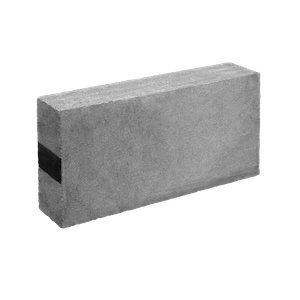
There’s a reason why around 25% of new British homes are built with H+H aircrete. As a masonry material, aircrete combines durability, thermal performance and non-combustibility. Few other building materials offer the same combination of benefits.
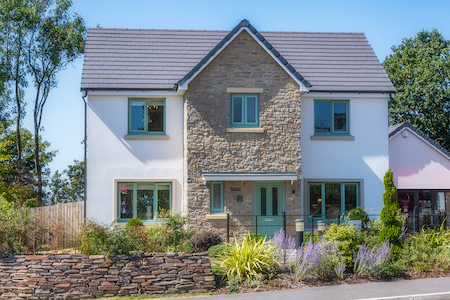
Homes built with aircrete are robust, with a design life of over a century – significantly longer than the 60-year lifespan accepted as standard within the industry. And importantly, homes built with aircrete are resilient.

When designing homes today we need to factor in the impact of climate change. This summer has brought another reminder of just how quickly our climate is changing, with a run of serious heatwaves. With hotter summers expected to continue, future-ready housing must be designed to stay cool and comfortable without excessive reliance on air conditioning.

Tackling overheating with thermal mass

Thermal mass – the ability of a material to absorb and store heat – plays a vital role in maintaining stable internal temperatures. Aircrete’s thermal mass helps absorb excess heat during the day and release it gradually at night, helping moderate internal temperature fluctuations and reduce the risk of overheating. This passive cooling effect can reduce reliance on mechanical cooling systems, helping to reduce both energy use and occupant discomfort.

Building in fire resistance

This summer we have seen a significant increase in wildfires across Britain with 1,132 reported between 1 January and 16 August 2026. Nearly 40 homes were damaged or destroyed by fires in Stourbridge in the West Midlands in August, including 19 houses that were fully destroyed.

Analysis carried out by Sky News using data from the European Forest Fire Information System shows that nearly one in five large wildfires (19%) in England and Wales came within 500m of built-up areas in 2026. It is a worrying statistic and highlights the importance of constructing homes with non-flammable materials.

Aircrete has an A1 fire classification, meaning it is classified as non-combustible. It won’t burn or contribute to the development of fire. We would argue that this attribute isn’t a ‘nice to have’ but an essential.

Preparing for increased flood risk
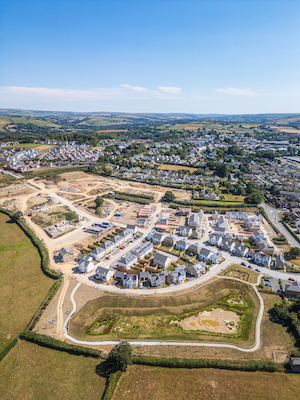
Another major climate risk is the increased frequency and severity of flooding. The Environment Agency has emphasised the importance of property-level flood resilience measures, particularly as 5.7 million properties in England are currently at risk.

Building with durable, non-degradable materials is key to reducing this risk. Masonry systems such as aircrete offer outstanding flood resilience. They don’t rot, warp or degrade over time, and their dimensional stability maintains structural soundness before, during, and after flood events. In contrast, timber construction can be more vulnerable to water damage and may require extensive replacement or remediation following flooding.

As the Mineral Products Association notes: “Masonry construction offers dimensional stability and structural integrity during and after flood events, a stable surface for waterproof membranes, fast restoration post-flood, and is a non-degradable material that doesn’t rot, rust or warp. No other construction method offers this level of resilience.”

As our climate continues to change it becomes ever more important to build resilient homes using materials that stand up to heat, flooding, and long-term environmental change. Aircrete offers a robust solution: durable, thermally efficient and fire-resistant.

Find out more and explore the H+H product range here: https://www.hplush.com/en-uk/

Fire Safety Without Compromise: Why Mineral Paints Are Becoming Essential in Modern UK Construction

Building Products Index Ltd Paint Leave a Comment

View the KEIM entry on BPindex

Visit the KEIM website

As fire safety continues to shape the specification of building materials across the UK, architects, contractors, and building owners are increasingly looking beyond structural components to ensure every element of the building envelope contributes to occupant safety. One area receiving greater attention is decorative coatings, where mineral paint technology is offering significant advantages over conventional organic paint systems.

How is KEIM different?

KEIM Mineral Paints, manufactured using naturally occurring mineral ingredients and silicate technology, provide an inherently non-combustible finish that does not contribute to fire growth. Unlike traditional petrochemical based coatings, mineral paints contain no petrochemical binders that can fuel a fire, making them an increasingly attractive choice for projects where fire performance is a critical specification requirement.

KEIM’s interior and exterior paint systems have been independently tested to the European fire classification standard EN 13501-1 and achieve an A2-s1, d0 classification. This indicates limited combustibility, very limited smoke production and no flaming droplets during fire exposure — key characteristics that help support safer building design. These credentials are essential for residential buildings over 11 metres in height, where external materials are subject to increasingly stringent fire performance requirements in the UK.

However, fire resistance is only one part of the story. KEIM’s mineral paint chemically bonds with mineral substrates through a process known as silicification, creating a finish that becomes an integral part of the surface rather than forming a film. This results in exceptional durability, outstanding colour stability and high resistance to UV degradation, helping to extend redecoration cycles and reduce whole-life costs.

How it works

The paints are highly vapour permeable, allowing buildings to ‘breathe’ naturally while helping to reduce trapped moisture that can contribute to substrate deterioration. Combined with their water-based formulation, absence of solvents and extremely low emissions, KEIM coatings support healthier indoor environments alongside long-term environmental performance.

For specifiers, the combination of verified fire performance, durability and sustainability makes mineral paints an increasingly compelling option across education, healthcare, transport infrastructure, commercial developments and high-rise residential projects. As building regulations continue to evolve, selecting materials that offer proven performance without compromising safety, aesthetics or longevity is becoming more important than ever.

In an industry where every specification decision matters, fire-resistant mineral paints are demonstrating that decorative finishes can play a valuable role in delivering safer, more resilient buildings.

Advantages of KEIM mineral paints and renders;

  • Environmentally friendly ISO 14001
  • High vapour permeability
  • Provides durable, colour stable protection
  • Fire resistant to A2- s1, d0
  • UV stable
  • Increases light reflectivity

What we recommend

Before you start your next painting project, take a moment to read the product label and safety data sheets. They contain essential information about technical performance, ingredients, application guidance, and fire resistance, helping you choose the right product for your project. Understanding what’s in your paint and how it performs ensures better results, safer use, and greater confidence that your chosen coating meets the requirements of your project.

Nature Plus and Cradle to Cradle Certified.

Interested to find out more?

View KEIM’s profile on Bpi – https://www.bpindex.co.uk/supplier/4136/keim-mineral-paints-ltd/

Find out more https://www.keim.com/en-gb/company/fire-resistance/

Tel: 01952 231 250

Web:  https://www.keim.com/en-gb/

Email: sales@keimpaints.co.uk.

Social Links:

Instagram https://www.instagram.com/keim_uk/

Pinterest https://in.pinterest.com/KEIMMineralPaints/

LinkedIn https://www.linkedin.com/company/keim-mineral-paints-ltd/

Project examples include:

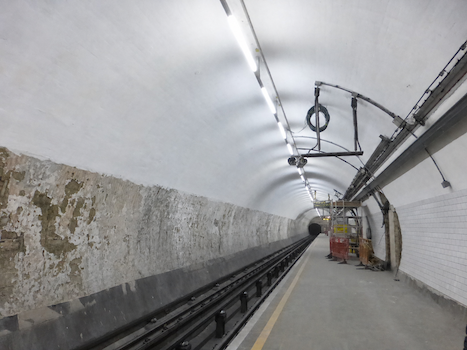
Holland Park Underground Station, London – KEIM Soldalit

Celcon Blocks play their part in Manchester Airport transformation

Building Products Index Ltd Blocks, Concrete, Uncategorized Leave a Comment

View the H+H entry on BPindex

Visit the H+H website

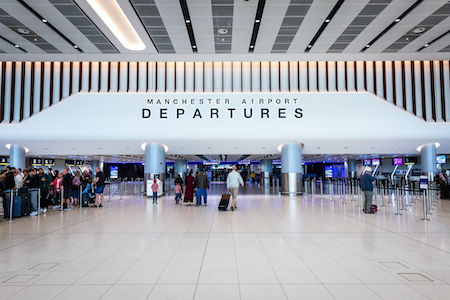
Celcon Blocks High Strength Grade were chosen for their lightweight properties and fire resistance as part of an ambitious £440 million refurbishment of Manchester Airport’s Terminal 2, one of the most complex live-airport construction projects undertaken in the UK in recent years.

The refurbishment of the original Terminal 2 building represents the final phase of Manchester Airport’s wider £1.3 billion, 10-year transformation programme, designed to modernise the airport and significantly increase its capacity.

McCrory Construction Group Ltd was appointed to deliver the builders’ work package. The scope included delivering over 1,000m² of blockwork across a wide range of locations in the terminal, all carried out in a live, high-security environment.

Product specification

Celcon Blocks High Strength Grade were specified for the project. The blocks were used across a range of applications, including extending and altering existing internal walls, infilling former doorway and window openings, extending two lift shafts, and constructing new internal blockwork walls.

Billy Douglas, Head of Operations at McCrory Construction, explains why Celcon Blocks High Strength Grade were the right choice:

“We were working inside a 40-year-old building, altering and extending existing walls, so keeping weight down was a key structural consideration. The aircrete blocks were specified because they’re robust but also lightweight – approximately two-thirds of the weight of a standard dense concrete block – which was essential for reducing the load on the existing floor slabs and structure.

“On top of that, the airport is a high-security environment with stringent fire safety requirements, and the A1 non-combustible classification of the Celcon Blocks fitted the brief.”

Manchester Airport Terminal 2 is a compelling example of the benefits Celcon Blocks can bring to demanding non-residential applications. Lightweight enough to meet stringent structural requirements, strong enough for a high-traffic airport environment, the blocks provided McCrory Construction with a reliable, high-performing solution for a complex, high-profile project.

To find out more about H+H aircrete products, visit https://www.hhcelcon.co.uk/

Cembrit Launches Windstopper Extreme in a Blaze of Glory

Building Products Index Ltd Sheathing Board Leave a Comment

View the Cembrit entry on BPi website

View the Cembrit website

Cembrit, the leading roofing and cladding specialist, is pleased to announce the UK launch of Windstopper Extreme – a new sheathing board that is ideal for a range of uses on UK construction projects. To coincide with the launch, Cembrit tested the board to BS EN 1634-1:2015 / BS 476:22 at the Building Research Establishment (BRE). Cembrit is delighted to report Windstopper Extreme passed the test achieving a one hour fire rating.

A sheathing board such as Windstopper Extreme is typically installed behind decorative rainscreen cladding to effectively  ‘seal’ the internal environment of a building. It is an excellent alternative to cement particle board and has, following the successful fire test, proven fire resistance. Simon Mayes, National Sales Manager, Cladding and Building Boards, for Cembrit is sure that the architects, specifiers and contractors will appreciate the wide range of benefits that Windstopper Extreme offers: ‘The performance and versatility of Windstopper Extreme make it a noteworthy entrant onto the UK cladding and building board scene. We were already aware of its excellent qualities as a first class sheathing board and to add the one hour fire test on top of that extends the board’s appeal and application potential.’

cembrit-windstopper-in-use-at-danfoss-universe-nordborgBuilding Regulations and other documentation require building structural elements to provide minimum periods of fire resistance, usually expressed in minutes, which are generally based on the occupancy and size of the building. BS EN 1634-1:2015 / BS 476:22 determines the fire resistance of non-loadbearing elements, such as sheathing boards, of a building construction when subjected to certain heating and pressure conditions. When subjected to a 60 minute fire test, Windstopper Extreme passed with flying colours.

Cembrit Winstopper Extreme acts as a windproof membrane for exterior walls that can absorb and release moisture without affecting the durability, strength or performance of the board.  This very low vapour transmission resistance, enables moisture generated inside a building to pass through to the outside. Insulation can be placed directly against the inner side of the board which is also resistant toward both rot and fungal growth. The Scandinavian heritage of Windstopper Extreme also ensures it can withstand considerable fluctuations in weather and climatic conditions.

For further information visit www.cembrit.co.uk, email info@cembrit.co.uk or tel: +44 (0)20 8301 8900.