Skip to content
BPindex — The Largest Building Products Directory in the UK

Sustainable drainage systems

Why it’s time for a SuDs rethink to meet new Schedule 3 requirements

View the Wavin entry on BPindex

Visit the Wavin website

In 2024, significant changes are occurring in the new build market in England. Legislation mandates the incorporation of sustainable drainage systems (SuDS) into most new developments, removing the automatic legal right to connect surface water drainage to nearby sewage infrastructure. Instead, England will adopt Schedule 3 of the Flood and Water Management Act 2010, making SuDS mandatory for developments over 100sq/m. While some developers anticipated this change, many haven’t fully considered its implications. SuDS require careful consideration and tailoring to each site, shaping the fundamental design of a development.
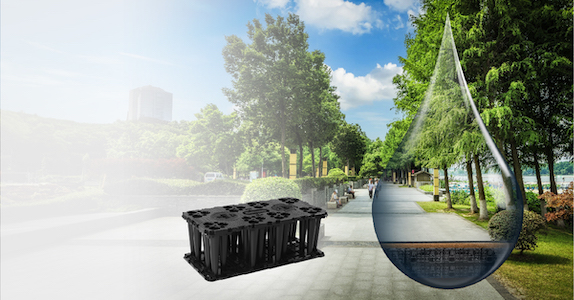
Leading developers are proactively strategizing how to implement mandatory SuDS effectively. Understanding SuDS involves minimizing the built environment’s impact on the natural water cycle. SuDS solutions aim to manage surface water runoff by mimicking natural drainage, utilizing approaches like infiltration, evaporation, and evapo-transpiration.

Developers historically favored engineered SuDS over landscaped ones due to ease of installation and cost efficiency. However, relying solely on engineered solutions might be shortsighted. Engineered SuDS efficiently manage water quantity but overlook other critical aspects, such as water quality, amenity creation, and biodiversity habitat. In contrast, landscaped SuDS go beyond managing runoff volumes, enhancing environments with green roofs, rain gardens, and constructed wetlands.

The four pillars of SuDS—managing water quantity, water quality, creating amenity, and biodiversity habitat—reflect significant public values, influencing property purchasing decisions. Buyers increasingly seek assurances regarding flood protection, water quality improvement, access to green spaces, and environmental sustainability.
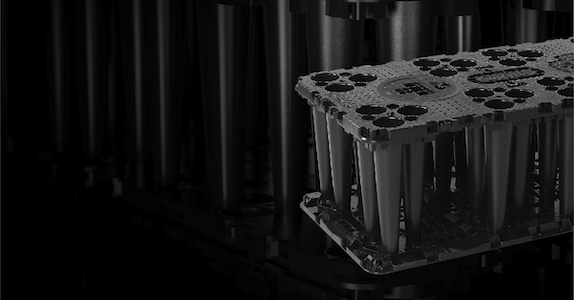
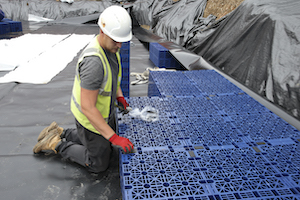
Moving forward, developers must adopt a balanced SuDS approach, integrating both engineered and landscaped solutions. Collaboration among engineers, landscape architects, and planners is essential to maximize benefits for each site. Wavin provides reliable geocellular attenuation tanks, supporting this new SuDS approach. These tanks offer modular construction, space efficiency, and easy installation, reinforcing a site’s resilience against water runoff.

Now is the time for developers to plan their SuDS strategy, leveraging both engineered and landscaped solutions to exceed Schedule 3 obligations and create sustainable, resilient, and attractive developments.

Start planning your schedule 3 strategy today.

We have a wealth of experience integrating our market-leading geocellular attenuation tanks into a landscaped SuDS concept – reinforcing a site’s ability to cope with water runoff. You can find out more about our attenuation solutions here – Wavin UK | Stormwater Management Systems.

To read the full article visit – Why it’s time for a SuDS rethink to meet new Schedule 3 requirements (wavin.com)

WAVIN LAUNCHES STORMFORCE: A SINGLE SOLUTION TO STORMWATER MANAGEMENT

Building Products Index Ltd Drainage, Stormwater Drainage Leave a Comment

View the Wavin entry on BPindex

Visit the Wavin website

Wavin, the UK’s leading manufacturer of plastic pipe systems, has launched StormForce – an innovative single-source solution to stormwater management.

Dramatic stormy dark cloudy sky over sea, natural photo background

Developed to streamline the stormwater management supply chain, StormForce will see Wavin handle the entire design, supply and installation of stormwater tanks and their associated infrastructure, from capture and attenuation to dispersal.

With StormForce, Wavin aims to simplify project management, increase efficiencies and minimise risk for developers, contractors and civil engineers when it comes to implementing quality sustainable drainage systems (SuDS) within essential infrastructure.

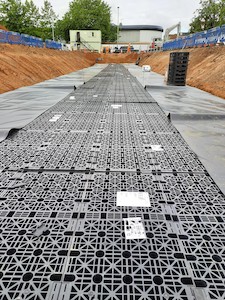
Wavin AquaCell Core 1As part of the end-to-end service, Wavin will first consult and advise on site, identifying and resolving site-specific issues and ensuring compliance with statutory and environmental regulations and best practice, before value-engineering the optimum design. The required products and components will then be manufactured by Wavin to the highest standards and then finally installed by fully trained and accredited StormForce partners. The installation will also be underpinned with a five-year warranty.

BBA-approved stormwater systems available as part of the StormForce service include Q-Bic Plus, the most accessible, inspectable and cleanable attenuation tank on the market, compliant with Ofwat’s new Design & Construction Guidance; AquaCell, the ultimate modular solution for a variety of applications, from landscaped to heavily trafficked areas; and a range of inspection chambers and accessories.

Wavin_Hatfield-7Martin Lambley, product manager for stormwater management at Wavin, said: “The industry has needed a solution like StormForce for a long time, and we’re delighted to now offer a turnkey solution for customers when it comes to stormwater management. With every detail managed by Wavin under a single contract, developers no longer need to coordinate multiple providers or worry about elements not being completed on time or to the right standard.

“By handing the responsibility over to Wavin, customers can have total confidence that the project is being taken care of by stormwater specialists, and that, from start to finish, all aspects will be taken care of efficiently, to the highest quality and in accordance with industry regulations and best practice.”

Stewart McKechnie, site agent at Nationwide Engineering, an initial StormForce client, said: “StormForce really does deliver. One-source supply and surface water management is totally sorted, so we can get on with the build. It’s fast, compliant, sustainable and top quality – what more could you want?”

To book a consultation or get a quick estimate with Wavin’s dedicated stormwater management experts, visit www.wavin.co.uk/stormforce

More planning applications held up by sustainable drainage design in England than in Wales

Building Products Index Ltd Drainage Leave a Comment

View the Wavin entry on BPindex

Visit the Wavin website

Planning applications are twice as likely to be blocked or delayed due to sustainable drainage system (SuDS) design in England than in Wales, according to a new report published today by the Institution of Civil Engineers (ICE) and Wavin.

ICE research paperBased on a representative survey, the report SuDS – perception and progress: A comparison of England and Wales has revealed that 60% of SuDS professionals in England have experienced planning applications being delayed or blocked because of refusal on the grounds of the SuDS design. This compares with only 30% of SuDS professionals in Wales experiencing the same issue.

Sustainable drainage systems aim to manage rainfall in a way similar to natural processes, making use of the landscape and natural vegetation to control surface water. They are used in both urban and rural areas to guard against surface water flooding.

England and Wales have different regulatory frameworks around SuDS, with Wales having introduced new legislation in January 2019 that makes SuDS a mandatory requirement for all new developments of more than one house or where the construction area is 100m2 or more.

According to the report, SuDS is more likely to be the preferred method of surface water management in Wales than in England. 52% of professionals in Wales consider SuDS to be the default option in all projects compared with only 39% of professionals in England holding the same view.

Nathan Baker, ICE Engineering Knowledge Director, said:

“SuDS are increasingly needed in both urban and rural developments to cope with flood risk due to climate change and changes in land use as a result of increasing population. As well as helping to protect homes and businesses from flooding, SuDS also provides benefits such as improving water quality, protecting biodiversity and increasing the amenity of developments.

“It appears that the new framework in Wales is enabling greater delivery of SuDS and potentially a smoother planning process. Delivering SuDS requires an appropriate regulatory framework and also effective collaboration between different stakeholders and professional groups. ICE is supporting SuDS professionals through appropriate knowledge and resources, helping them to tackle the challenges they face.”

Martin Lambley, Product Manager – Stormwater, Wavin said:

It is interesting to see the differences between approval of SuDS for England and Wales highlighted by this report. Wales is leading the way with SuDS with their new framework and we are watching with interest to see how the implementation goes. I hope that the findings from Wales will pave the way for further improvements to the framework and planning process in England in the near future. The benefits of SuDS are clear. They reduce the risk of flooding and can also improve water quality, biodiversity and offer benefits for local communities but without innovation, joined up thinking and a regulatory framework that is fit for purpose, they are unlikely to become mainstream. Through its Spotlight Initiative, Wavin aims to promote ‘out of the box’ thinking, innovation and collaboration around the issues of flooding and climate change. The flooding associated with extreme weather events is likely to become more frequent and more extreme. I think that we all need to start thinking more seriously about climate resilience in our built environment and prioritising SuDS as part of the solution.

The report also shows that SuDS professionals rate the framework in Wales more positively than they do in England.62% of survey respondents in Wales rated the framework good, very good, or excellent compared with only 40% of respondents in England rating their equivalent framework the same.

Go to spotlight.wavin.co.uk to find out more about SuDS and drainage