
Skip to content
BPindex — The Largest Building Products Directory in the UK

drainage system

Five Tips for Effective Blue Roof Design

Building Products Index Ltd Green Roofing, Roofing Leave a Comment

View the ACO Building Drainage entry on BPindex

Visit the ACO Building Drainage website

Stormwater management and flooding pose significant risks in urban settings.  Blue roofs have evolved as an innovative technique for storing rainwater, decreasing flood hazards and supporting sustainable development. However, misconceptions about blue roofs can cause design issues. Kevin Bohea, Manging Director of ACO Building Drainage, shares five recommendations for de-risking blue roof projects.

1.    Understand what a blue roof really is 
It should be noted that blue roofs are not actually roof waterproofing systems: they are separate attenuation systems intended to temporarily hold rainwater and slow its discharge, reducing urban flood hazards. Recognising this distinction is critical for good design and integration with modern construction methods.

2.    Separate blue and traditional roofs

A popular misconception is that blue and conventional roofs are the same system. Blue roofs are intended to hold and keep water, whereas standard roofs aim for quick water removal. Separating these systems prevents design compromises and assures compliance with British Standards and Building Regulations. ACO’s blue roof system keeps water away from the roof and off of the waterproofing layer except in extreme cases, meaning the risk of unwanted water ingress is kept to an absolute minimum.

3.    Address key design considerations early

It’s important to address the number, placement, and size of roof outlets, roof fall gradient, kind of roof construction, and time period for water retention of a roof system at the design stage. These elements are required for both the roofing and blue roof attenuation systems to function properly.4.    Mitigate risks with independent systems

Considering blue roofs and traditional roofs as independent systems means any risks associated with design compromises can be mitigated early on. This approach ensures sustainable drainage and prepares for worst-case weather scenarios, enhancing overall building resilience.

5.    Selecting the Right Attenuation System 

The biggest challenge is knowing which attenuation system to select as part of the project. It is recommended that a blue roof attenuation system, that keeps form and function distinct, should be adopted. Systems like ACO’s RoofBloxx, for example, operate independently of the roof waterproofing and drainage system, ensuring compliance with building standards. They also ensure efficient water management during extreme weather events. Given how frequent extreme weather conditions appear to be happening across the UK, this couldn’t be more important.

What’s next? 

Architects and designers have a crucial role to play in the implementation of blue roofs. From ensuring they are designed to meet the regulations, to determining the full environmental benefits when assessing any potential future impacts, architects will be pivotal in integrating these systems into infrastructure.

By following these tips, and working closely with the manufacturers themselves, architects and engineers can effectively de-risk blue roof projects and contribute to sustainable urban development.

To learn more about the Patented  ACO Blue Roof System please click here
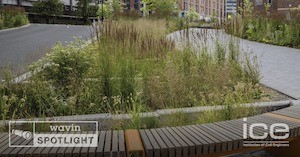
More planning applications held up by sustainable drainage design in England than in Wales

Building Products Index Ltd Drainage Leave a Comment

View the Wavin entry on BPindex

Visit the Wavin website

Planning applications are twice as likely to be blocked or delayed due to sustainable drainage system (SuDS) design in England than in Wales, according to a new report published today by the Institution of Civil Engineers (ICE) and Wavin.

ICE research paperBased on a representative survey, the report SuDS – perception and progress: A comparison of England and Wales has revealed that 60% of SuDS professionals in England have experienced planning applications being delayed or blocked because of refusal on the grounds of the SuDS design. This compares with only 30% of SuDS professionals in Wales experiencing the same issue.

Sustainable drainage systems aim to manage rainfall in a way similar to natural processes, making use of the landscape and natural vegetation to control surface water. They are used in both urban and rural areas to guard against surface water flooding.

England and Wales have different regulatory frameworks around SuDS, with Wales having introduced new legislation in January 2019 that makes SuDS a mandatory requirement for all new developments of more than one house or where the construction area is 100m2 or more.

According to the report, SuDS is more likely to be the preferred method of surface water management in Wales than in England. 52% of professionals in Wales consider SuDS to be the default option in all projects compared with only 39% of professionals in England holding the same view.

Nathan Baker, ICE Engineering Knowledge Director, said:

“SuDS are increasingly needed in both urban and rural developments to cope with flood risk due to climate change and changes in land use as a result of increasing population. As well as helping to protect homes and businesses from flooding, SuDS also provides benefits such as improving water quality, protecting biodiversity and increasing the amenity of developments.

“It appears that the new framework in Wales is enabling greater delivery of SuDS and potentially a smoother planning process. Delivering SuDS requires an appropriate regulatory framework and also effective collaboration between different stakeholders and professional groups. ICE is supporting SuDS professionals through appropriate knowledge and resources, helping them to tackle the challenges they face.”

Martin Lambley, Product Manager – Stormwater, Wavin said:

It is interesting to see the differences between approval of SuDS for England and Wales highlighted by this report. Wales is leading the way with SuDS with their new framework and we are watching with interest to see how the implementation goes. I hope that the findings from Wales will pave the way for further improvements to the framework and planning process in England in the near future. The benefits of SuDS are clear. They reduce the risk of flooding and can also improve water quality, biodiversity and offer benefits for local communities but without innovation, joined up thinking and a regulatory framework that is fit for purpose, they are unlikely to become mainstream. Through its Spotlight Initiative, Wavin aims to promote ‘out of the box’ thinking, innovation and collaboration around the issues of flooding and climate change. The flooding associated with extreme weather events is likely to become more frequent and more extreme. I think that we all need to start thinking more seriously about climate resilience in our built environment and prioritising SuDS as part of the solution.

The report also shows that SuDS professionals rate the framework in Wales more positively than they do in England.62% of survey respondents in Wales rated the framework good, very good, or excellent compared with only 40% of respondents in England rating their equivalent framework the same.

Go to spotlight.wavin.co.uk to find out more about SuDS and drainage


NEW Modular 125 + from ACO Building Drainage

Building Products Index Ltd Building Drainage Leave a Comment

View the ACO entry on BPi

Visit the ACO website

FAST FACTS ABOUT MODULAR 125+

Aco 2To mark the launch of the latest version of our Modular 125 Channel – “Modular 125+” – we give you five fast facts about one of the most popular drainage channels on the market.

Benefiting from an impressive track record of success, Modular 125 has been used in a wide range of commercial and industrial applications ranging from airports and railways stations to Aco 3food manufacturing facilities to prestigious buildings such as London City Hall.  To mark the launch of the latest version of this channel design – Modular 125+ – we give you five core reasons why Modular 125+ continues to be the popular choice for architects, engineers other specifiers and installers.

1. It’s modular!

A linear channel drainage system which is available in a wide range of off-the-shelf options including a choice of lengths, inverts and gratings, a Modular 125+ drainage system is easy to design and particularly easy to install.

2. It can be easily modified

Providing complete design flexibility, Modular 125+ can be engineered by our in-house design team to suit specific and unusual requirements of individual projects.

3. It’s manufactured from fully pickle passivated stainless steel

Manufactured in Grade 304 or Grade 316 stainless steel, Modular 125+ is – like all of our stainless steel drainage products – fully pickle passivated to enable corrosion resistance and optimum durability. In addition, all Modular 125+ channel is manufactured in ACO’s state-of-the-art facility to guarantee high quality and consistent levels of performance.

4. It’s compatible

Modular 125+ is fully compatible with our range of ACO gullies, ACO pipe, bespoke gratings and a wide range of complementary drainage products.

5. It now has NEW levelling feet!

Aco 1The latest version of Modular 125 – Modular 125+ – comes complete with newly designed levelling feet to enable even easier installation, more accurate adjustment to ensure optimum hydraulic flow and a reduction in the required installation time. This enhancement to the original Modular 125 design will ensure that the newly launched Modular 125+ range is the first choice solution for installers and specifiers.

If you would like more information about Modular 125+ or want some expert advice regarding your drainage specification, please contact a member of our in-house technical design team.  Contact details are available on this website.