Skip to content
BPindex — The Largest Building Products Directory in the UK

Wastewater

WHAT IS A LEAKY LOO AND HOW MUCH IS IT COSTING YOU?

Building Products Index Ltd Hands free flush, Uncategorized Leave a Comment

View the Cistermiser entry on BPindex

Visit the Cistermiser website

Introduction

At first glance, everything might seem fine. The toilet flushes. The floor is dry. Maintenance hasn’t raised a flag.

But behind the scenes, a silent problem could be quietly draining your budget, undermining your sustainability targets, and wasting thousands of litres of water, every single day.

Welcome to the world of the leaky loo.

What is a leaky loo?

A leaky loo is a toilet that is continuously losing water, often with no visible signs whatsoever. Unlike a burst pipe or an overflowing cistern, these leaks are entirely internal. The culprit is usually a worn fill valve, a faulty flapper, or an inefficient flushing mechanism that never quite closes properly.

The result? Water is constantly trickling from the cistern into the pan; 24 hours a day, 7 days a week, 365 days a year.

No drips. No puddles. No noise. Just ongoing, invisible water waste.

That’s precisely what makes leaky loos so costly: they’re almost impossible to detect without the right tools or expertise.

The hidden scale of the problem

A single leaking toilet can waste a lot of water:

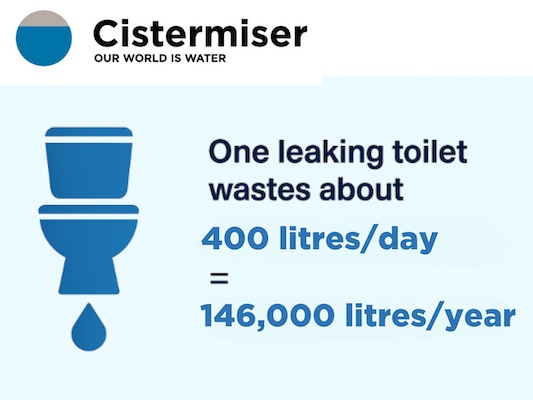
  • 400 litres of water per day
  • 146,000 litres per year

To put that into perspective, 146,000 litres is enough to fill more than 2,400 standard bathtubs. And that’s just one toilet.

Now multiply that figure across a commercial office block, a secondary school, a hospital, or a football stadium, buildings that routinely have 20, 50, or even 100+ toilets and the cumulative waste becomes staggering.

What makes this worse is the timeline. Because these leaks produce no obvious symptoms, they often go unnoticed for months, or even years. By the time they’re identified, if they’re identified at all, the damage to your water bill, and your environmental footprint, is already done.

What does that actually cost?

Water waste isn’t just an environmental concern; it’s a direct financial liability.

In the UK, water charges are typically calculated on two components: supply (the water coming in) and wastewater (the water going out). A leaking toilet contributes to both. That means every litre trickling silently into the pan is being charged twice.

For a single leaking toilet, the annual cost can reach:

  • 💸 £587 in wasted water costs
  • 🌍 0.05 tonnes of unnecessary CO₂ emissions

Now scale that up. A building with just 10 leaking toilets is haemorrhaging £5,870 per year. A site with 50? You’re looking at over £29,000 in avoidable spend, money that isn’t going toward improving your facilities, supporting your team, or meeting your net-zero commitments.

It’s no wonder facilities managers and sustainability leads are increasingly calling leaky loos one of the most overlooked inefficiencies in building management.

A simple way to think about it

If you’re responsible for a building, ask yourself three honest questions:

  1. How many toilets are on-site?
  2. When were they last properly checked for leaks?
  3. Could even a small percentage be wasting water right now?

In our experience, many buildings have never had a dedicated water leak assessment. Toilets are installed and largely forgotten, serviced only when something goes visibly wrong. But by then, the cost has already accumulated.

Even if just 10% of your toilets are leaking, the financial and environmental impact is real, measurable, and entirely avoidable.

The solution: Fix the leak, fast

Here’s the good news: this is one of the most cost-effective problems in building management to solve.

Modern sensor-operated flushing systems are engineered specifically to eliminate the conditions that cause leaky loos in the first place. They deliver precise, controlled flushes only when needed, no continuous flow, no mechanical wear from constantly cycling valves.

The benefits go beyond water savings:

  • ✅ Eliminate continuous water loss from faulty mechanisms
  • ✅ Improve hygiene with hands-free, sensor-activated operation
  • ✅ Reduce maintenance call-outs through more reliable, durable components
  • ✅ Deliver consistent flushing performance every time

Take Easyflush Direct as an example. The total outlay per unit, including installation, is approximately £523. With annual savings of £587 per toilet, you’re looking at a payback period of 11 months.

In a world where capital projects are scrutinised and ROI matters, that’s an unusually compelling case. Very few building upgrades pay for themselves within a year and deliver ongoing environmental benefits at the same time.

Why it matters more than ever

The pressure on organisations to reduce costs and meet sustainability targets has never been greater. Water efficiency is no longer a “nice to have”, it’s a measurable component of ESG reporting, procurement criteria, and operational benchmarking.

Leaky loos represent a triple problem:

  • Wasted budget that erodes operational margins
  • Missed sustainability goals that affect reporting and reputation
  • Avoidable inefficiency that reflects poorly on building management standards

The encouraging reality is that fixing them is one of the simplest, fastest, and most impactful steps you can take to improve building performance, without major disruption or capital outlay.

Not sure if you have a leaky loo?

That’s exactly where Cistermiser can help.

We offer free professional water surveys specifically designed to identify hidden leaks, quantify waste, and give you a clear picture of exactly where savings can be made, with the data to back it up.

Whether you manage a single site or a national estate, our team can help you uncover what’s really happening behind the cistern.

Ready to find out how much you could save?

If you want to:

  • Reduce water bills with evidence-based improvements
  • Improve operational efficiency across your estate
  • Hit sustainability and ESG targets with measurable water savings

 Book a free water survey with Cistermiser today and turn a hidden problem into a clear opportunity.
Why vitrified clay pipes remain a proven choice for open-cut and trenchless projects

Building Products Index Ltd Clay Pipes, Pipes Leave a Comment

View the Steinzeug-Keramo entry on BPindex

Visit the Steinzeug-Keramo website

Designed for long-term network performance

Urban infrastructure projects have never been more demanding. Traffic disruption, environmental scrutiny, rising costs and tighter programme schedules mean that material selection plays an increasingly important role in long-term network performance.

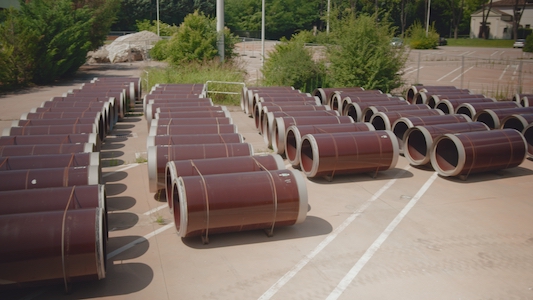
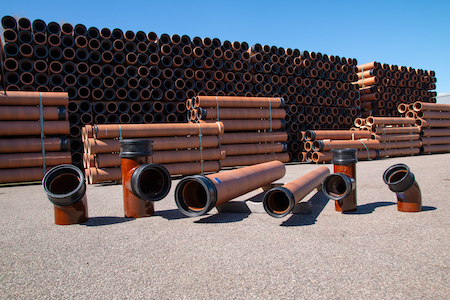
Steinzeug-Keramo vitrified clay pipes provide a proven and reliable solution for both open-cut and trenchless sewer construction.

Why vitrified clay pipes?

Vitrified clay pipes have been used in sewer and drainage systems for centuries because of their durability, structural stability and resistance to aggressive wastewater environments. Steinzeug-Keramo’s KERA system offers exceptional properties that make it uniquely suited to both trenchless and open-cut installation:

  • Resistant to chemical attacks, acids and aggressive ground conditions
  • Environmentally responsible, made from natural materials and fully recyclable
  • Built to last with lifespans exceeding 150 years
  • High load-bearing capacity ideal for heavy traffic zones
  • Low lifecycle costs offering up to 65% savings

As a rigid material, vitrified clay maintains its shape independently of surrounding soil conditions, supporting consistent gradients without deformation during or after installation.

The full KERA range is manufactured in accordance with BS EN 295.

Reliable performance in aggressive wastewater environments

Sewer and wastewater environments are among the most chemically aggressive. Steinzeug-Keramo vitrified clay pipes are chemically inert across the full pH range (0–14), delivering reliable performance over the long term.

The vitrified clay pipes are highly resistant to

  • Acidic and chemically aggressive water conditions
  • Hydrogen sulphide gases generated by organic waste decomposition
  • Industrial effluents containing heavy metals and organic solvents
  • Salt-laden environments near coastal installations

Stable hydraulic performance over time

Hydraulic efficiency is critical to the long-term effectiveness of any drainage system. Our KERA range of vitrified clay pipes deliver consistently excellent flow characteristics:

  • Smooth internal surface with low wall roughness values
  • Consistent hydraulic performance over decades – vitrified clay does not roughen due to corrosion or biological growth
  • High resistance to abrasion and surface degradation
  • Resistant to high-pressure flushing and jetting

Did you know? Independent research conducted by Project Hub 360 confirms that if the operational lifespan exceeds 40 years, which is the case with the vast majority of sewer systems, vitrified clay pipes are the best investment from an economic standpoint.

AT A GLANCE: VITRIFIED CLAY PIPE SOLUTIONS FROM STEINZEUG-KERAMO:

KERA.Base and KERA.Pro for open-cut installation

KERA.Base and KERA.Pro are Steinzeug-Keramo’s vitrified clay pipe systems for conventional open-cut sewer construction and rehabilitation.

The range is available in diameters from DN100 to DN800 and supports system consistency across new-build, extension and rehabilitation projects.

Compatible joints, fittings and system components are available throughout the range, supporting long-term performance, reduced maintenance requirements and whole-life value.

KERA.Drive for trenchless installation

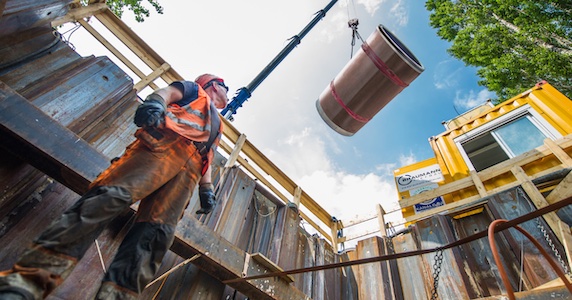
KERA.Drive is Steinzeug-Keramo’s vitrified clay jacking pipe system for trenchless installation methods.

Available in diameters from DN150 to DN600, KERA.Drive is manufactured in accordance with BS-EN 295-7.

Key features include:

  • Exceptional compressive strength: Up to 100 N/mm², providing outstanding longitudinal compression resistance during jacking
  • Leak-tight joint systems designed for safe, controlled jacking with precise alignment
  • No creep deformation under long-term loading – a rigid material that ensures dimensional stability
  • Reliable performance under jacking loads supports controlled installation conditions
  • Comprehensive accessory range – connectors, short pipes and special components for flexible on-site configuration
Did you know? Pipe jacking operations can reduce CO2 emissions by up to 75%compared with conventional open-cut methods, while also minimising surface disruption in urban environments. This makes trenchless clay pipe installations an attractive option for environmentally conscious developers and utility companies.

(Source: Pipe Jacking Association — 600 mm diameter pipeline at 500 m length x 6 m deep. CO2 saving: 367.8 tonnes)


Find Out More About the KERA system

To contact Steinzeug-Keramo, email our Country Manager UK: leon.woods@wienerberger.com or visit Steinzeug-Keramo.com to explore the full KERA range.


Why FOG management should be a high priority for commercial building design

Building Products Index Ltd Drainage, FOG Management System Leave a Comment

View the ACO entry on BPindex

Visit the ACO website

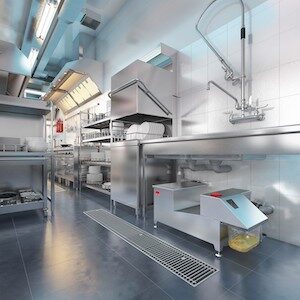
Systems for managing fats, oils and grease (FOG) must be considered for the design of commercial buildings that contain commercial kitchens. To ensure the smooth delivery of commercial building projects FOG management needs to be part of the specification. The location, type and capacity of the system needs to be taken into account, along with several other factors. Here Erik Mul, Technical Product Manager from ACO’s Building Drainage division discusses FOG management for commercial buildings.

The increase of FOG in the UK sewer network is a considerable problem for buildings that contain commercial kitchens and UK water companies. Fatbergs regularly make the headlines, even though legislation is in place intended to prevent these enormous blockages. In extreme situations, fatbergs have been known to reach as much as 400 tonnes in weight – approximately the mass of four blue whales. These are made of waste products that have been incorrectly disposed of in drains or down sinks, that bind together in the sewer, eventually becoming solid and extremely difficult to shift. It is FOG which holds fatbergs together, showing just how important it is to have correct systems in place to handle the disposal of these kitchen cooking byproducts.

Without suitable disposal methods, problems can occur in the sewers that can get backed up into homes and businesses, sewage and wastewater can cause flooding, and those responsible for the blockages can be held financially liable. Water companies are enforcing rules more than in the past due to growing environmental concerns. They are also being stricter about prosecuting those who don’t meet legal standards. Due to these reasons, some new-build commercial projects are being denied a water connection until a FOG management system is in place. In some cases, restaurants and pubs have faced significant fines due to their lack of proper FOG management.

Location, location, location

Due to the need for ongoing maintenance, access to the FOG management system must be factored in at the design stage to ensure the optimal location is chosen. Systems installed below sewer level should either have a lifting station where the separated wastewater is gathered, or a sump where all the building’s wastewater is collected before pumping it out to the sewer.

In situations like this, ACO generally recommends the use of lifting stations in commercial buildings rather than backflow preventers, as this ensures wastewater is still pumped to the sewer during a backflow event. In smaller establishments it is unlikely that large units will fit within the kitchen so external or smaller units would need to be considered – not forgetting maintenance access.

Choosing the right system for your project

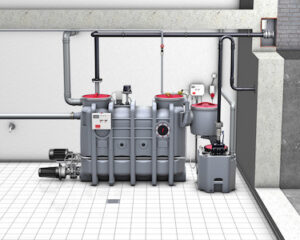
There are four main types of management systems to be aware of when it comes to dealing with FOG. These include grease separators, grease traps, grease recovery units (GRU), and bio-chemical direct dosing units. Grease traps, GRUs and separators make use of gravity to separate FOG, enabling it to be retrieved for disposal or use elsewhere, such as biofuel. The bio-chemical dosing systems partially emulsify greasy wastewater, allowing it to pass through the system. While each approach has its merits, some systems are more appropriate than others, depending on a number of factors impacting the kitchen it will be used in. The most effective system will be one that is selected specifically for the individual building and its kitchens.

Grease separators are most commonly used in large commercial buildings. They comply with BS EN 1825 and prevent most FOG deposits from entering sewer systems and have to be emptied at least once per month – either manually or automatically, depending on the model installed. Choosing these units is done by looking at the following: number of meals per day produced in the kitchens, kitchen operating hours and the space internally or externally to site a separator. How the unit will be emptied – manually or via vacuum tanker – is also an important factor, along with the access needed for installation, commissioning and maintenance (considering if the ideal site is in the basement down lots of narrow corridors or underground in a car park, etc.). Smaller kitchens may use a grease trap fitted underneath a sink where they cater for lower volumes of meals per day.

Grease recovery units come in two types: active and passive. Active units skim FOG, using rotating oleophilic drums whereas passive units use wastewater flow/pressure within the unit to move FOG into a separate container. The passive units are often heated to keep the FOG in a liquid state for easier disposal. Generally, these systems are tested to the American standard ASME 112.14.3 and 4.

There are also two kinds of bio-chemical dosing for FOG management. One uses enzymes to emulsify FOG and water prior to it entering a sewer, and the other uses bacteria to consume the FOG and release water and carbon-dioxide. The micro-organisms used in these systems are highly sensitive to their surroundings and don’t always survive long enough to be effective. In cases where FOG had been emulsified, it can still resolidify and lead to blockages further down the line.

Reasons for the regulations

The goal of FOG-related legislation is to protect public sewers as they are a vital part of infrastructure. Section 111 of the Water Industry Act 1991 states that it is an offence to impair any public sewer’s operation.[1] With the build-up of FOG considered a hazard likely to impair a sewer, it is an offence for commercial kitchens to discharge FOG improperly. Local authorities or water companies may take legal action, those responsible can face prosecution and the businesses might end up paying the costs for damage caused, including in cases where a FOG blockage causes flooding.

There are also laws in place geared towards preventing pollution from FOG. According to the Environmental Protection Act (EPA) 1990, it is illegal to dispose of FOG in a manner likely to cause pollution of the environment or harm to human health.[2] Commercial kitchens have the legal responsibility to ensure the collection and disposal of FOG or risk prosecution.

Don’t get lost in the FOG, speak to the experts

The right management and disposal of FOG is a vital part of protecting the environment from pollution, keeping fatbergs from damaging sewers, and helping kitchens run safely and smoothly without risks of prosecution and punishment. While there may be some who think that FOG management is unglamourous, it is still extremely important to the long-term running of commercial kitchens, whether that be a small café or a large hotel restaurant serving several hundred people every day.

Some water companies are becoming firmer with their rulings and refusing to connect establishments that do not have proper FOG management systems in place. To avoid this, consulting with drainage experts, such as those at ACO Building Drainage, from the early design stages will ensure all requirements and legislation are met. With their knowledge and experience, the process of identifying the right type of system for the kitchen can be done with the confidence that it will meet all relevant guidelines and regulations.

For more on fats, oils and grease management, see ACO.co.uk.

[1] https://www.legislation.gov.uk/ukpga/1991/56/part/IV/chapter/II/crossheading/provisions-protecting-sewerage-system?view=plain

[2] https://www.legislation.gov.uk/ukpga/1990/43/section/75