
Modernising or improving with structural glazing offers a sensitive and effective route to achieving net zero ambitions, improving the functionality of the building with minimal impact on the existing structure.
Structural glass specialists, Ion Glass are well-renowned experts in wholly bespoke, frameless or minimally framed glass installations with an impressive portfolio of work across a wide range of contemporary, heritage, historic and listed buildings. Their ethos is to respect the sensitivity of the building whilst working to ensure that the glass installations meet all your current requirements – including the drive towards net zero.
We asked Peter Hazeldean, MD of Ion Glass to share one of the most effective uses of structural glass to improve energy consumption and heat loss.
The benefits of frameless glass entrance doors and porches
Peter’s initial suggestion is to consider the entrance to the building. Adding a structural glass porch creates a thermal buffer zone, reducing heat loss and improving internal comfort without increasing heating output. A porch installation has the added advantage of generally falling under the planning umbrella of permitted development.
Glass can be used to infill an existing open porch; fitted internally, behind the existing door or used to construct an external structure in either single or double-glazed panels.
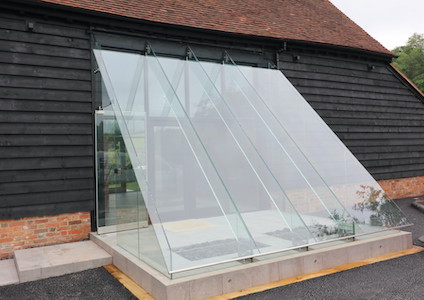 Owners of a heritage barn conversion in Reading commissioned Ion Glass to design and install an impressive, visually striking porch to the front of their new home: the unusual triangular glass porch followed the steep slope of the original barn roof. The glass porch serves to retain the heat that would otherwise have been lost via the double doors of the original barn entrance – whilst providing additional security.
Use of structural glass fins and beams to create the porch makes this a fully frameless installation with nothing to compromise the original barn structure.
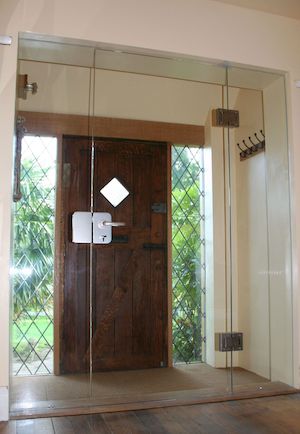 Ion designed an internal porch to a traditional 1930’s style house, upgrading a draughty front entrance with a new internal glass door set between two fixed side panels. The original timber door was re-used externally, set between two leaded, double-glazed panels to retain the look and feel of the home whilst improving internal light levels to reduce energy costs and significantly minimising heat loss.
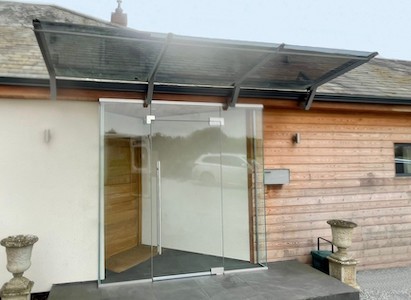 (above) This deceptively simple glass porch infills the original entrance area to create an attractive porch with a frameless glass door, offering considerable benefits for thermal retention.
Peter continued: ‘Replacing timber doors with bespoke glass can eliminate draughts and reduce heat loss whilst also improving the levels of natural light to the interior. For public buildings, an automatic opening and closing system means the door is only open as required, which improves both heat retention and security.
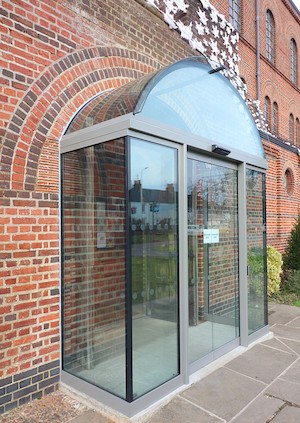 The new porch recently installed at St John the Evangelist Church at Newbury is double-glazed for maximum heat retention, with the curved double-glazed panels perfectly following the distinctive arch of bricks over the original door. The original wooden doors are now permanently fixed open allowing natural light to flood the interior (saving on lighting costs) whilst the replacement sliding glass doors are fully automatic, providing easy access as required whilst minimising heat loss.
The expert team at Ion Glass will take your bespoke structural glass design from concept to reality, providing technical advice and drawings to ensure your project meets all criteria before our fully trained and experienced installation teams achieve optimum results on site.
For more information on our frameless glass porches and doors, glass screens or other architectural glass installations visit our website www.ionglass.co.uk and book a call to discuss your project.
Call 0345 658 9988 or email info@ionglass.co.uk