Skip to content
BPindex — The Largest Building Products Directory in the UK

Radiators

Briza Net Zero to heat and cool the first delivery of homes at Hampshire’s new sustainable garden village

Building Products Index Ltd Heating, Radiators Leave a Comment

View the Jaga entry on BPindex

Visit the Jaga website

Jaga UK’s state-of-the-art Briza Net Zero heat pump radiator has been selected to heat and cool some of the first new homes at Welborne, a new generation sustainable garden village near Fareham, Hampshire.

Designed by Buckland Group, Welborne, one of the largest new community projects in the UK, is under construction and will become a place for 15,000 people to live, work and play, consisting of connected and energy efficient homes integrated with extensive publicly accessible green space. This latest announcement reinforces Welborne’s commitment to embedding sustainable solutions throughout the development.

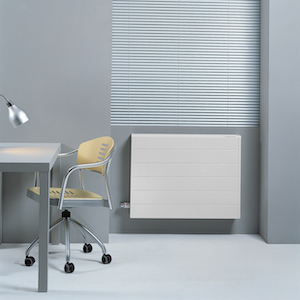
Jaga’s Briza S Net Zero model was chosen for its slimline, elegant design and exceptional energy performance. The compact yet powerful unit provides efficient heating and cooling via Welborne’s ambient water-source heat network – the largest of its kind in the UK.

Developed by Last Mile Heat in collaboration with Rendesco, the sustainable energy network supplies low-carbon heating, cooling, and hot water, helping to significantly reduce the community’s carbon footprint and deliver long-term energy savings for residents.

At the heart of the network is Portsmouth Water’s underground Hoads Hill Reservoir, which provides water at a stable temperature of approximately 10–12ºC. This water is pumped into each home’s heat pump system, where it is warmed to 45ºC before circulating through Jaga’s Briza Net Zero emitters. During the summer, the same system delivers cooling by channelling cooler water through the Briza Net Zero units, providing an efficient, climate-friendly alternative to air conditioning.

The initial phase of the project will supply heating and cooling to 700 new homes, along with commercial premises and community buildings, gradually expanding to serve all planned 6,000 homes and 15,000 residents. Notably, this sustainable energy network is projected to cut CO₂ emissions by 90% compared to gas boilers, saving over 272,000 tonnes of carbon in the first 25 years of operation and providing residents with ongoing energy savings. Recently, the Green Heat Network Fund awarded £2 million to support the network’s development, further reinforcing its positive impact on the environment and local community.

Phil Mangnall, Managing Director of Jaga UK, commented, “We’re incredibly proud to be part of this forward-thinking development that prioritises sustainability and energy efficiency. Our Briza Net Zero emitters are specifically designed to work seamlessly with renewable energy systems, delivering high heat output at lower flow temperatures. This means less energy is needed to heat the water from the reservoir, creating a highly efficient system. Their slimline, sleek design also complements the timeless architecture of the homes, adding both style and functionality. It’s exciting to see these emitters play a key role in the UK’s largest water-source heating and cooling network.”

In delivering this ambitious project, Jaga UK is collaborating with Welborne’s housebuilder partners, including Thakeham, Pye Homes and CG Fry. These developers are creating sustainable and high-quality homes to meet the needs of future generations. Jaga is also working closely with the developers’ chosen heat pump partners, NIBE and others, to provide a cohesive heating and cooling system for each development.

Welborne Garden Village is an ongoing development, and prospective residents will benefit from new schools, healthcare, sports and leisure facilities, along with a range of retailers, and a science and technology park. Taking a nature-led design approach, more than 50% of Welborne will be accessible green space woven throughout, and the garden village will be biodiversity positive with wildlife and natural habitats restored from previously intensively farmed agricultural land.

Construction on the first phase began in 2024, and Welborne will welcome its first residents early this year.


Jaga UK launches super slimline fan convector: Briza Net Zero

Building Products Index Ltd Heating, Radiators Leave a Comment

View the Jaga entry on BPindex

Visit the Jaga website

Jaga has launched a state-of-the-art range of sleek and slimline fan convectors designed to enhance the efficiency and versatility of heat pumps and low-temperature heating systems.

The Briza Net Zero range is ideal for modern buildings where both cooling and heating are essential. When paired with a heat pump, these units offer an energy-efficient and climate-friendly alternative to air conditioning, with both light and deep cooling (non-condensing and condensing) options for year-round comfort in the UK’s variable climate.

Compact and stylish, Briza Net Zero units feature a sleek design that seamlessly integrates into modern interiors. The XS model, at just 85mm deep, is one of the slimmest fan convectors on the market, making it perfect for spaces where size and aesthetics are paramount.


Recognising that heat pumps are most efficient at lower system design temperatures; the Briza Net Zero range has been optimised for this purpose. At flow and return temperatures of just 35/30°C (room temp 20°C), the Briza M Net Zero BASE-Line, Jaga’s most powerful model yet, delivers a heat output of up to 2110W and a deep cooling output of up to 2575W at 7/12°C (room temp 27°C). This makes it an ideal choice for maximising system efficiency whilst maintaining indoor comfort.

The range is versatile in both installation and control, with various sizes and colour options, and the flexibility to be wall or ceiling mounted. This adaptability makes it suitable for a wide range of projects.


Designed with sustainability in mind, the units feature a built-in EC motor for low energy consumption and an extended service life. The recyclable aluminium and copper heat exchanger, with hydrophilic coating, enhances cooling performance while minimising environmental impact.

Get in touch

To find out more, visit

https://netzero.jaga.com/uk

EFFICIENT LST RADIATORS ENABLING LOW CARBON HEAT

Building Products Index Ltd Heating, Radiators Leave a Comment

View the Jaga entry on BPindex

Find out more about Jaga’s Dynamic Boost Hybrid

View Jaga’s range of Low Surface Temperature Radiators

THE UK’S SAFEST RADIATORS

Jaga's Tempo LST Hybrid Radiator for Heating and CoolingLow Surface Temperature (LST) radiators are relied upon to provide safe, high-efficiency heating in places where safety is paramount. They are the go-to choice for facilities such as hospitals and healthcare settings, care and nursing homes, schools and nurseries, prisons and public buildings to prevent vulnerable people from burns and injuries caused by coming into contact with the radiator.

LST radiators work by convecting heat from the emitter, with a small air gap between the emitter and the surface of the radiator casing to prevent the casing ever getting hotter than 43°C.

They are designed with numerous other safety features such as antibacterial coatings, rounded corners and grilles, chamfered front and side panels, casing locks, anti-ligature grilles, pencil-proof grilles and arthritic TRV adaptors. And leading LST manufacturers, such as Jaga, ensure they are designed to conform to the NHS Estates Health Guidance on surface temperature and casing design.

But how are LST radiators keeping up with the times and the demand for high heat output at low flow temperatures?

FUTURE PROOFING FOR LOW CARBON HEAT

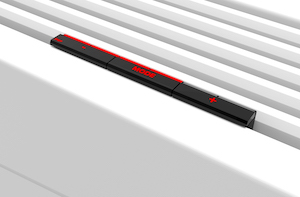
Jaga's Tempo LST Hybrid Radiator - Control Panel in Heating ModeJaga’s newest innovation for LST radiators is a key enabler for low carbon heat.

As a leading designer and manufacturer of innovative, ecologically sustainable heating, cooling and ventilation systems, Jaga has been at the forefront of the LST radiator market for many years, supplying hundreds of schools and healthcare facilities across the country with safe, powerful, energy-efficient heating.

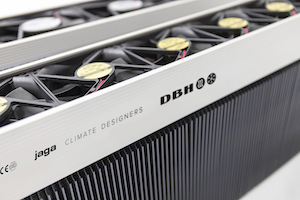
Jaga's Dynamic Boost Hybrid technology inside the radiator doubles the heat outputTo meet the rapidly increasing demand for higher heat output at lower flow temperatures, Jaga has recently launched a revolutionary innovation for radiators – Dynamic Boost Hybrid (DBH). DBH is an electric booster set that sits inside the LST radiator. It uses small, quiet thermal activators to increase airflow and boost heat output by two to three times without increasing radiator size. It means there’s no need to install large LST radiators when switching to a heat pump system. In fact, they can be even smaller.

This game-changing innovation makes Jaga LST radiators completely future proof. If a building is still being heated by a gas boiler, standard Jaga LST radiators can be installed now, and when the time comes to switch to a heat pump, DBH can easily be retrofitted, enabling the switch over to an emission-free installation at any time without having to make any changes to the radiators, heat distribution or pipes.

WHAT MAKES A HYBRID RADIATOR?

Not only do Jaga’s LST Hybrid radiators provide powerful heat with low energy consumption, they cool too. DBH can automatically switch between heating and light cooling modes, providing the heating system can supply cooling water.

This method of non-condensing cooling is much more environmentally friendly than air conditioning, using less energy and no F-gas, so it’s a perfect solution for a comfortable indoor climate all year round.

GET IN TOUCH

To find out more about Jaga’s range of safe and efficient LST Hybrid radiators, get in touch with team via their website jaga.co.uk.

ABOUT JAGA UK

Jaga are pioneers in designing innovative, ecologically sustainable heating, cooling and ventilation systems using less energy and fewer raw materials, ensuring a better indoor climate without damaging the outdoor climate.

Ready, set…EPC

Building Products Index Ltd Heating, Radiators Leave a Comment

View the Jaga entry on BPi

Visit the Jaga website

jaga-epc-20161014EPC Ratings, why does this matter? The government estimates that almost one-in-five commercial properties currently hold the lowest ratings of F or G. EPCs are legally required for all public and private buildings and assign an efficiency rating from A to G.  So, are you ready for the new rules?

The built environment has been identified by government as a major contributor to Greenhouse Gas (GHG) emissions, contributing around 34 per cent of the UK total.

Non-domestic buildings account for nearly 25 per cent of the UK’s overall carbon emissions and heat in buildings accounts for a substantial proportion of this. As more are built and refurbished, the installation of energy efficient, cost-effective products must be a top priority – especially if the UK is to meet the ambitious carbon reduction targets for 2020 and 2050.

So, are you ready for the new rules?

The regulations will first apply to new domestic and non-domestic lettings and lease renewals from April 2018, to be followed by all existing non-domestic leases by 1st April 2023.

However, savvy building managers are taking steps to not only meet this minimum standard but to exceed it in preparation for a likely future tightening of the regulations.

Here we take a look at the steps you can take to upgrade to your heating system and boost building energy efficiency ratings in the process.

New tech

 The latest heating technology can help you achieve some easy wins when it comes to energy efficiency and heat emitters should be a first port of call. When compared to other heating upgrades, such as replacing an old boiler, switching your radiators to more efficient models is relatively low cost and can be done fairly quickly.  Low-mass, low water content radiators contain a tenth of the water compared to a standard steel panel radiator, resulting in a faster response time and providing up to a 16 per cent reduction in energy costs. Buildings which are fitted with this technology also produce much lower carbon emissions due to the reduced energy used, helping designers and  engineers meet their carbon reduction targets.

Another innovative radiator technology is fan assisted DBE (Dynamic Boost Effect).

This improves airflow and boosts heat output, allowing Jaga radiators to work efficiently with sustainable low-flow temperature systems, such as heat pumps.

Heat pumps are estimated to reduce electricity use (and cost) for heating by around 50 per cent compared to electric resistance heaters. They are extremely efficient and, when utilised properly, can also provide excellent thermal comfort. With added support from the Renewable Heat Incentive (RHI) tariff payments for ground source and air source heat pumps, it seems inevitable that the uptake of these technologies will continue to grow steadily.

 Taking action now

 It can often be a challenge to keep on top of the latest energy efficiency regulations but the April deadline for MEES should be seen as a priority. Civil penalties of up to £5,000 will be imposed for breaches, with local authorities also serving compliance notices to ensure properties are brought up to standard.

Investment in a heading system upgrade will not only ensure your building remains compliant but can deliver energy cost savings that will last for years to come.


Zehnder Presents its New Radiant Conditioning CPD

Building Products Index Ltd controls, Heating, Radiators Leave a Comment

View the Zehnder entry on BPI

Visit the Zehnder Website

Radiant Conditioning_1As part of its ongoing initiative to share its knowledge and experience, Zehnder Group UK, the leading specialist in indoor climate solutions, is delighted to announce the launch of its new Radiant Conditioning CPD. Part of a range of certified Continuing Professional Development training resources offered by Zehnder that cover key technologies used to heat, cool and ventilate buildings, including Radiant Heating and Mechanical Ventilation with Heat Recovery, this new CPD will be hugely beneficial to engineers, Energy Managers, Specifiers, Facility Managers and architects.

The issue of cooling is gaining greater prominence in today’s society, as buildings experience heating issues such as humidity, overheating and solar shading, which impact on the well-being of occupants. The Zehnder Radiant Conditioning CPD looks at the different cooling solutions that are available, their limitations, capabilities and the benefits that can be gained from utilising radiant conditioning solutions.

Radiant Conditioning_2Good practice that can be adopted for system design is also discussed, as well as the application of conditioning solutions in varied environments.

Learning Objectives:

  • Understanding of cooling issues that pertain within buildings today
  • Detailing of cooling solutions that are available
  • Benefits that can be gained by radiant conditioning
  • Understanding of system design options
  • Examples of cooling solutions

To find out more about the Radiant Conditioning CPD and to arrange for Zehnder to come and present it at a location of your choice, please click here. As with all Zehnder’s CPDs, there will be no charge attached.