Skip to content
BPindex — The Largest Building Products Directory in the UK

Jaga

Briza Net Zero to heat and cool the first delivery of homes at Hampshire’s new sustainable garden village

Building Products Index Ltd Heating, Radiators Leave a Comment

View the Jaga entry on BPindex

Visit the Jaga website

Jaga UK’s state-of-the-art Briza Net Zero heat pump radiator has been selected to heat and cool some of the first new homes at Welborne, a new generation sustainable garden village near Fareham, Hampshire.

Designed by Buckland Group, Welborne, one of the largest new community projects in the UK, is under construction and will become a place for 15,000 people to live, work and play, consisting of connected and energy efficient homes integrated with extensive publicly accessible green space. This latest announcement reinforces Welborne’s commitment to embedding sustainable solutions throughout the development.

Jaga’s Briza S Net Zero model was chosen for its slimline, elegant design and exceptional energy performance. The compact yet powerful unit provides efficient heating and cooling via Welborne’s ambient water-source heat network – the largest of its kind in the UK.

Developed by Last Mile Heat in collaboration with Rendesco, the sustainable energy network supplies low-carbon heating, cooling, and hot water, helping to significantly reduce the community’s carbon footprint and deliver long-term energy savings for residents.

At the heart of the network is Portsmouth Water’s underground Hoads Hill Reservoir, which provides water at a stable temperature of approximately 10–12ºC. This water is pumped into each home’s heat pump system, where it is warmed to 45ºC before circulating through Jaga’s Briza Net Zero emitters. During the summer, the same system delivers cooling by channelling cooler water through the Briza Net Zero units, providing an efficient, climate-friendly alternative to air conditioning.

The initial phase of the project will supply heating and cooling to 700 new homes, along with commercial premises and community buildings, gradually expanding to serve all planned 6,000 homes and 15,000 residents. Notably, this sustainable energy network is projected to cut CO₂ emissions by 90% compared to gas boilers, saving over 272,000 tonnes of carbon in the first 25 years of operation and providing residents with ongoing energy savings. Recently, the Green Heat Network Fund awarded £2 million to support the network’s development, further reinforcing its positive impact on the environment and local community.

Phil Mangnall, Managing Director of Jaga UK, commented, “We’re incredibly proud to be part of this forward-thinking development that prioritises sustainability and energy efficiency. Our Briza Net Zero emitters are specifically designed to work seamlessly with renewable energy systems, delivering high heat output at lower flow temperatures. This means less energy is needed to heat the water from the reservoir, creating a highly efficient system. Their slimline, sleek design also complements the timeless architecture of the homes, adding both style and functionality. It’s exciting to see these emitters play a key role in the UK’s largest water-source heating and cooling network.”

In delivering this ambitious project, Jaga UK is collaborating with Welborne’s housebuilder partners, including Thakeham, Pye Homes and CG Fry. These developers are creating sustainable and high-quality homes to meet the needs of future generations. Jaga is also working closely with the developers’ chosen heat pump partners, NIBE and others, to provide a cohesive heating and cooling system for each development.

Welborne Garden Village is an ongoing development, and prospective residents will benefit from new schools, healthcare, sports and leisure facilities, along with a range of retailers, and a science and technology park. Taking a nature-led design approach, more than 50% of Welborne will be accessible green space woven throughout, and the garden village will be biodiversity positive with wildlife and natural habitats restored from previously intensively farmed agricultural land.

Construction on the first phase began in 2024, and Welborne will welcome its first residents early this year.


Jaga UK launches super slimline fan convector: Briza Net Zero

Building Products Index Ltd Heating, Radiators Leave a Comment

View the Jaga entry on BPindex

Visit the Jaga website

Jaga has launched a state-of-the-art range of sleek and slimline fan convectors designed to enhance the efficiency and versatility of heat pumps and low-temperature heating systems.

The Briza Net Zero range is ideal for modern buildings where both cooling and heating are essential. When paired with a heat pump, these units offer an energy-efficient and climate-friendly alternative to air conditioning, with both light and deep cooling (non-condensing and condensing) options for year-round comfort in the UK’s variable climate.

Compact and stylish, Briza Net Zero units feature a sleek design that seamlessly integrates into modern interiors. The XS model, at just 85mm deep, is one of the slimmest fan convectors on the market, making it perfect for spaces where size and aesthetics are paramount.


Recognising that heat pumps are most efficient at lower system design temperatures; the Briza Net Zero range has been optimised for this purpose. At flow and return temperatures of just 35/30°C (room temp 20°C), the Briza M Net Zero BASE-Line, Jaga’s most powerful model yet, delivers a heat output of up to 2110W and a deep cooling output of up to 2575W at 7/12°C (room temp 27°C). This makes it an ideal choice for maximising system efficiency whilst maintaining indoor comfort.

The range is versatile in both installation and control, with various sizes and colour options, and the flexibility to be wall or ceiling mounted. This adaptability makes it suitable for a wide range of projects.


Designed with sustainability in mind, the units feature a built-in EC motor for low energy consumption and an extended service life. The recyclable aluminium and copper heat exchanger, with hydrophilic coating, enhances cooling performance while minimising environmental impact.

Get in touch

To find out more, visit

https://netzero.jaga.com/uk

Jaga UK opens new low-carbon showroom and training facility in Herefordshire

Building Products Index Ltd Heating, Ventilation Leave a Comment

View the Jaga UK entry on BPindex

Visit the Jaga UK website

Jaga UK, designers and manufacturers of innovative, sustainable heating, cooling, and ventilation systems, has officially opened its new purpose-built low-carbon facility in Ledbury, Herefordshire.

The state-of-the-art facility, named ‘Kriekels House’ after the company’s founding family, was opened on 20 June with a ceremony attended by Jaga employees, customers, suppliers, and industry partners.

A Vision for Net Zero

Jan Kriekels, the CEO and visionary leader of Jaga, emphasised the company’s commitment to accelerating the decarbonisation of buildings. During his address, he highlighted the importance of achieving net-zero emissions and showcased Jaga’s role in this global initiative before cutting the ribbon to officially open the facility.

The opening marks a significant milestone for Jaga as it’s home to the company’s first state-of-the-art UK demo and training facility, where they can showcase the powerful heating and cooling capacity of their products with heat pumps, and visitors can get hands-on experience with low-carbon HVAC technologies.

Features of Kriekels House

In line with the company’s sustainability ethos, Kriekels House was designed with a fabric-first approach to maximise energy-efficiency and minimise carbon emissions. The building features:

  • Offices and warehouse space: Providing a comprehensive operational base to service UK customers.
  • Demo and training facility: The first of its kind in the UK, this space allows visitors to experience Jaga’s heat pump radiators and other low-carbon HVAC technologies in action. It will be available for hands-on training for HVAC professionals and students.
  • Heating and cooling: Provided by high-efficiency, low-temperature heat pump radiators powered by a combination of a 15kW ground source heat pump and four 16kW air source heat pumps.
  • Solar PV: Solar panels covering half the roof space generate over 120,000 kWh annually, supporting the facility’s energy needs and providing electric car charging stations for staff and visitors.
  • Advanced Building Management System: A Qbus system manages HVAC, lighting, and security, ensuring optimal performance and energy efficiency.
  • Fully accessible plant room on display: Visitors can see the full workings of a building serviced by renewable technologies.

A Hub for Learning and Innovation

Phil Mangnall, Managing Director of Jaga UK, expressed excitement about the new facility, saying,

“After 11 months of building, we’re delighted to have moved into and officially opened our new building.

Kriekels House is designed to foster learning and innovation, and embodies our company ethos – centred around sustainability, creativity and social responsibility. Powered by renewable technologies, with open workspaces and dedicated training areas, we are well-equipped to continue delivering exceptional products for our customers and we hope to play a key role in inspiring the next generation of HVAC engineers to help design the net zero buildings of the future.

We’d like to thank everyone who worked on Kriekels House, helping us make our dream sustainable facility a reality. Here’s to an exciting future in our new home.”

ABOUT JAGA UK

Jaga are pioneers in designing innovative, ecologically sustainable heating, cooling and ventilation systems using less energy and fewer raw materials, ensuring a better indoor climate without damaging the outdoor climate.

The opening of Kriekels House emphasises Jaga UK’s dedication to sustainability and innovation, positioning the company at the forefront of the green building revolution.

For more photos from the event, see Jaga UK’s Latest News

EFFICIENT LST RADIATORS ENABLING LOW CARBON HEAT

Building Products Index Ltd Heating, Radiators Leave a Comment

View the Jaga entry on BPindex

Find out more about Jaga’s Dynamic Boost Hybrid

View Jaga’s range of Low Surface Temperature Radiators

THE UK’S SAFEST RADIATORS

Jaga's Tempo LST Hybrid Radiator for Heating and CoolingLow Surface Temperature (LST) radiators are relied upon to provide safe, high-efficiency heating in places where safety is paramount. They are the go-to choice for facilities such as hospitals and healthcare settings, care and nursing homes, schools and nurseries, prisons and public buildings to prevent vulnerable people from burns and injuries caused by coming into contact with the radiator.

LST radiators work by convecting heat from the emitter, with a small air gap between the emitter and the surface of the radiator casing to prevent the casing ever getting hotter than 43°C.

They are designed with numerous other safety features such as antibacterial coatings, rounded corners and grilles, chamfered front and side panels, casing locks, anti-ligature grilles, pencil-proof grilles and arthritic TRV adaptors. And leading LST manufacturers, such as Jaga, ensure they are designed to conform to the NHS Estates Health Guidance on surface temperature and casing design.

But how are LST radiators keeping up with the times and the demand for high heat output at low flow temperatures?

FUTURE PROOFING FOR LOW CARBON HEAT

Jaga's Tempo LST Hybrid Radiator - Control Panel in Heating ModeJaga’s newest innovation for LST radiators is a key enabler for low carbon heat.

As a leading designer and manufacturer of innovative, ecologically sustainable heating, cooling and ventilation systems, Jaga has been at the forefront of the LST radiator market for many years, supplying hundreds of schools and healthcare facilities across the country with safe, powerful, energy-efficient heating.

Jaga's Dynamic Boost Hybrid technology inside the radiator doubles the heat outputTo meet the rapidly increasing demand for higher heat output at lower flow temperatures, Jaga has recently launched a revolutionary innovation for radiators – Dynamic Boost Hybrid (DBH). DBH is an electric booster set that sits inside the LST radiator. It uses small, quiet thermal activators to increase airflow and boost heat output by two to three times without increasing radiator size. It means there’s no need to install large LST radiators when switching to a heat pump system. In fact, they can be even smaller.

This game-changing innovation makes Jaga LST radiators completely future proof. If a building is still being heated by a gas boiler, standard Jaga LST radiators can be installed now, and when the time comes to switch to a heat pump, DBH can easily be retrofitted, enabling the switch over to an emission-free installation at any time without having to make any changes to the radiators, heat distribution or pipes.

WHAT MAKES A HYBRID RADIATOR?

Not only do Jaga’s LST Hybrid radiators provide powerful heat with low energy consumption, they cool too. DBH can automatically switch between heating and light cooling modes, providing the heating system can supply cooling water.

This method of non-condensing cooling is much more environmentally friendly than air conditioning, using less energy and no F-gas, so it’s a perfect solution for a comfortable indoor climate all year round.

GET IN TOUCH

To find out more about Jaga’s range of safe and efficient LST Hybrid radiators, get in touch with team via their website jaga.co.uk.

ABOUT JAGA UK

Jaga are pioneers in designing innovative, ecologically sustainable heating, cooling and ventilation systems using less energy and fewer raw materials, ensuring a better indoor climate without damaging the outdoor climate.

HEAT PUMP COMPATIBLE RADIATOR INNOVATION DOUBLES HEAT OUTPUT AND PROVIDES COOLING

Building Products Index Ltd Radiator Leave a Comment

View the Jaga entry on BPindex

Visit the Jaga website

Jaga UK, a leading manufacturer of heating, cooling and ventilation solutions designed with the environment in mind, has just launched pioneering hybrid radiator technology for the UK market.

Dynamic Boost Hybrid (DBH) has been specially developed to boost heat outputs and provide light cooling with renewable energy systems such as heat pumps and solar energy. It replaces Jaga’s well-known Dynamic Boost Effect (DBE) product.

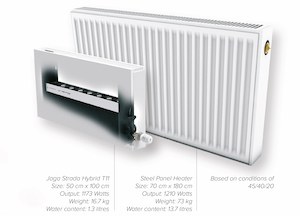
Jaga's Dynamic Boost Hybrid technology inside the radiator doubles the heat outputThe DBH technology utilises small electric thermal activators placed on top of the heat exchanger inside the Jaga Low-H2O radiator to force convection. This significantly boosts the radiator output by two to three times without increasing its size.

“When paired with a heat pump or other low flow temperature system, most emitters require a large surface area to sufficiently heat the room,” said Phil Mangnall, managing director, Jaga UK. “DBH allows you to substantially reduce the size of the radiator, freeing up valuable wall space and improving the aesthetics of the room. The system is almost inaudible and works with the majority of wall-mounted, free-standing, and trench solutions.”

Strada Hybrid ComparisonGiving users more control over individual room temperatures, DBH further reduces the need for unnecessary heating and overheating, significantly cutting energy consumption and bills. Easily installed during new construction or added during building retrofits, units can be programmed to run to their own automated schedules or set to respond to direct input. The DBH activators are triggered automatically whenever hot water flows through the heat exchanger and once the room reaches the desired temperature, water stops flowing through the heat exchanger and the DBH activators turn off, keeping energy consumption low.

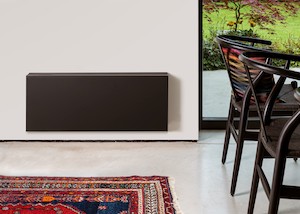
Jaga's Heat Pump Compatible Strada Hybrid Radiator GraphiteThe key point of difference between DBH and Jaga’s former DBE technology is the ability to provide light cooling (non-condensing) with any heat pump that can supply cooling water. And if there is no cooling water, Breeze mode, where with the activators operate irrespective of water temperature, offers light air movement, ideal for a UK climate.

“As the demand for cooling increases, we wanted to come up with a more environmentally friendly, energy-efficient solution that can be easily retrofitted and doesn’t cost the earth,” said Mangnall. “Updating our proven DBE system to also provide light cooling, was the obvious solution and has already proven to be a huge success in Europe and other parts of the world. We’re pleased to be able to now offer DBH to the UK market in line with the rapid rollout of renewable energy systems to help reduce the environmental footprint of buildings across the country.”

For more information, please visit www.jaga.co.uk/dbh


ABOUT JAGA UK

Jaga are pioneers in designing innovative, ecologically sustainable heating, cooling and ventilation systems using less energy and fewer raw materials.

Jaga Clima Canal allows for two additional floors in luxury high rise residential

Building Products Index Ltd Heating, Ventilation Leave a Comment

View the Jaga entry on BPindex

Visit the Jaga website

Telus 4Telus Garden is a mixed-use development located in Vancouver’s bustling downtown area. Comprising two buildings, one is home to a variety of businesses including the national headquarters of telecommunications giant Telus, and the other consists of luxury apartments. With sustainability a critical consideration, the developers needed a heating and cooling system to meet a high level of energy-efficiency. Having considered a variety of systems, including underfloor heating, specifiers struck upon a solution from Jaga which would add an additional two floors of apartments to the building.

Overview

Telus 1Telus Garden is a 22-storey, one million square foot office mixed-use redevelopment project that was designed to meet high internationally recognised standards for environmental sustainability.

The buildings have an energy-efficient heat-recovery system, solar arrays, and rooftop gardens, among other green features. Its environmental credentials were recognised when the Canada Green Building Council awarded the development the prestigious Leadership in Energy and Environmental Design (LEED) Platinum certification – the highest rating a building can receive.

With energy efficiency a key requirement, the developers needed a solution that could work with the onsite district energy system—meaning it must function at low water temperatures and high chilled water temperatures. Furthermore, a compact solution was required which could still promote lasting comfort for building occupants in the rapidly changing Vancouver climate.

After careful consideration, Jaga was chosen as the ideal partner to deliver a fast, sustainable heating and cooling solution for the building.

Solution

Telus 3To meet the multiple needs of Telus Garden, specifiers opted to install more than 1900 of Jaga’s Clima Canal Hybrid heating and cooling units throughout the building. The Clima Canals are integrated seamlessly by installing the units into a raised floor around the perimeter of the offices and the apartments. Crucially, the units work perfectly in conjunction with the onsite district energy system to help reduce overall energy consumption.

The Clima Canal Hybrid units feature a continuous aluminum grille with six millimeters of open spacing to prevent even the slimmest high heels from getting caught. Since the unit operates at low-water temperatures, it is able to react quickly to temperature changes, enabling occupants to stay comfortable regardless of internal or external heat loads.

Telus 2In conjunction with the Telus Garden onsite energy system, the Clima Canals help the building to reduce energy demand by an estimated 80 percent. Additionally, since the Clima Canal Hybrid creates a curtain of air between windows and heat generated by the radiator, overall heat loss and condensation are reduced.

Since the Clima Canal Hybrid units are built into the floor, there is no obstruction of the panoramic views of Vancouver the building offers for its occupants. The space saving design of the Clima Canal Hybrid also allows for additional furniture or conference room seating in offices. What’s more, because the developers opted for Clima, rather than underfloor heating, they were able to add an additional two floors of apartments to the building.

Quote

Cyrus Kangarloo, Jaga engineer and HVAC system advisor, said: “The heating and cooling system used in this project capitalises on the primary strength of the Clima Canal—energy efficiency. The Telus is a great example of how our products work seamlessly with other energy efficient systems.”


The demand for co-working spaces is hotting up

Building Products Index Ltd Heating, Ventilation Leave a Comment

View the Jaga entry on BPindex

Visit the Jaga website

co working space 1The demand for co-working spaces is increasing. Across Central London alone, flexible workplace providers have taken over 21% of office space in 2017, while competition in the regional cities is intensifying.

In response to such growth, industry stakeholders are rapidly examining their approach to designing and specifying equipment for modern workplaces. Unlike traditional offices, co-working spaces are not always occupied by the same amount of people, or indeed fully occupied at all. As a result, demand patterns are likely to be different, as the entire premise of flexible working centres on not having a 9-5 schedule.

So, what are the key considerations when specifying heating equipment for a co-working office?

Flexible, energy efficient heating

Co-working spaces are operationally more efficient than a typical office: facilities and staff are shared between a larger number of members, keeping overheads and other costs lower. This drives the use of more intelligent, automated technology, such as sensor-activated lighting, or smart thermostats. The advantage of such measures is that they can also decrease energy usage, reducing bills as well as environmental impact.

An aspect which is often overlooked is the technology used to emit heat. Paired with an efficient heat source and controls, the right radiators can really boost a building’s green credentials.

co working space 4Low water content radiators contain a tenth of the water compared to a standard steel panel radiator, so they waste less heat and react at least three times faster to fluctuations in ambient temperature. This means that they heat up almost immediately if the temperature falls below the set level and stop emitting heat as soon as that same level is reached. BRE tests show that a switch to low water content radiators can deliver energy savings of up to 15% compared to standard steel-panel radiators.

Another innovative, yet easily deployed, radiator technology for managers to consider is fan assisted DBE (Dynamic Boost Effect), which improves airflow and boosts heat output by drawing air over the element – increasing the efficiency of the radiator and helping to quietly circulate air around the room.

Whilst the DBE unit maintains rapid, effective and accurate room comfort conditions, it can also supply a quick boost of heat if required.

Ventilation

co working space 3People who work in well-ventilated offices with below-average levels of indoor pollutants and carbon dioxide (CO2) have significantly higher cognitive functioning scores—in crucial areas such as responding to a crisis or developing strategy—than those who work in offices with typical levels.

Conventional ventilation systems are not well suited to co-working spaces with their varying occupancy rates as there is not a consistent pattern in CO2 levels. Of course, vented windows provide a form of natural ventilation, but as many offices are in heavily polluted inner-city areas, may not be the most pleasant solution.

This is where demand control ventilation comes in. These systems are fitted with intelligent sensors that detect CO2 and only begin filtering the air when levels get higher than a specified point. This is the most efficient and comfortable way of ventilating a building as energy is only used when necessary.

Jaga’s Oxygen is a demand-based ventilation system that can be integrated with Low-H2O  radiators for a hybrid heating and cooling system.

Aesthetics

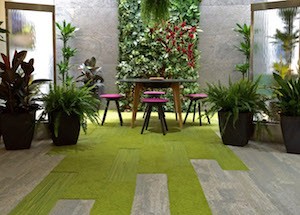
co working space 2To attract co-workers into a space, the look and feel of a building is important. Glass façades are incredibly popular in modern offices as they look attractive and let in plenty of natural light. But they can be a specifier’s worst nightmare, as they are not very thermally efficient, meaning internal temperatures can become freezing in the winter and boiling in the summer. Also, they’re quite tricky to mount a traditional radiator on!

Thankfully, trench heating can help with temperature control issues in floor-to-ceiling glass environments by creating a curtain effect. Its subtle design is flush with the floor and can be customised with dozens of material options, to ensure the heating solution adds to the design rather than detracting from it.

With the popularity of co-working only set to increase, specifiers need to be aware of the technologies available to help foster an environment which is comfortable, harmonious and conducive to productivity.


New research into the impact of biophilic design

Building Products Index Ltd Heating, Ventilation Leave a Comment

View the Jaga Entry on BPi

Visit the Jaga website

Ed SuttieEd Suttie, Research Director, BRE discusses new research into the impact of biophilic design

A building has a multitude of qualities that impact on health, wellbeing and ‘happiness’. From the outside of the building this will relate to aesthetics, vernacular, landscape, perceptions, style, form etc.

From inside the building it is more fundamental, as we interact and experience internal conditions such as daylight levels, air quality, acoustic quality, thermal comfort and aesthetic that directly impact on our health, wellbeing and happiness.

We spend 90% of our lives in buildings and our health and wellbeing is influenced significantly by the built environment. Our personal health and wellbeing (physical, mental and social) impacts on our ability to communicate, work, heal and learn. The benefits of focussing on human centred design to create more restorative environments is being researched more deeply now by BRE. This is so that our future buildings and interiors can be designed and specified to improve productivity and communication (office – and increasingly for many of us that includes a ‘home office’), recovery rates (hospital) and education outcomes (school), which is exciting.

In a typical office-based business 90% of the costs are associated with the staff, yet in the UK up to 60% of office workers don’t have sufficient access to daylight which has a negative impact on the health and wellbeing of occupants. The same is often true when we are working at home. Biophilic design offers an inspiring umbrella under which health and wellbeing qualities can be captured that impact on workplace environments[i]. Harvard professor Edward O Wilson’s book ‘Biophilia’[ii] concluded we have a genetic connection to nature, and hold a biological need for physical, mental and social connections with nature. Presence in natural environments can alleviate negative emotions such as anger, anxiety, depression and stress, whilst helping us to restore, feel calm and be inspired[iii]. Biophilic design brings us into contact with nature via a more human-centred approach.

Biophillic DesignBiophilic design acknowledges this genetic connection with numerous benefits to our health and wellbeing and efficiency. The scientific evidence for the positive influence of biophilic design, on the health and wellbeing of building occupants is growing. In an office environment this is shown as quantified improvements in productivity, wellness and a reduction in days absent due to illness. More than 130 million days are lost to sickness absence every year in Great Britain and working-age ill health costs the national economy £100 billion a year. A 1% reduction in absenteeism would convert to a saving, in lost days alone, of £1 billion to the economy. In addition a 15% increase in operational productivity enabled by the internal fit-out of your office adds further benefit.

Building owners and facility managers need to know what they can do within limited budgets to create restorative and occupant health driven environments, and the predicted return on investment. Here evidence is lacking, which was a key motivation for the deeper evidence of the BRE biophilic office project[iv]. The BRE and Oliver Heath Design, supported by a number of partners from green walls, lighting and flooring to colour, furniture and acoustics, have started a research project to deepen the evidence base for biophilic design and its positive impacts on office occupants. This will help realise the untapped potential in our existing buildings.

A live office refurbishment on the BRE Watford campus is providing robust indoor environment and occupant data.

Researchers are conducting a baseline year of pre-refurbishment and a year of post-refurbishment monitoring, evaluating the office environment for daylight, lighting, indoor air quality, acoustic, thermal and humidity comfort. Office occupants will undergo confidential health evaluations, questionnaires and surveys and will use wearable technology to monitor key health metrics.

Each of the project partners is using the office and its test facilities in the project to evaluate their products’ role in the health and wellbeing of office occupants and for wider biophilic design.

The project will show how quantified improvements in productivity and wellness can bring rewards for landlords, occupiers, developers and all those concerned with the office and wider built environment

This comprehensive and long-term study is unique in terms of scale and data capture. It will provide a firm foundation for guidance and adoption of measures in the facilities management and refurbishment sectors to promote health and wellbeing in offices.

However, you do not have to be involved in a major refurbishment or new build project to be able to reap the benefits of this project. For architects, specifiers and others involved in smaller projects, it will give guidance to help improve health and wellbeing through simple interventions such as maximising natural light or the addition of plants. Some may already be trying to do this, but do not have the evidence or support to enable them to convince their clients of the value of such an approach.

For more on the project as it develops throughout 2018 and beyond go to www.bregroup.com/biophilic. Studies and surveys of the existing occupants have already commenced, as has outline design thinking. We expect to commence refurbishment in the Autumn of this year, with a target date of completion of Spring 2019. We are planning a major international conference showcasing the building in May, details will be released on our website shortly.

[i] Human Spaces, ‘The Global Impact of Biophilic Design in the Workplace’, 2015

[ii] Biophilia – the human bond with other species. Edward O Wilson. July 1990 Harvard University Press ISBN: 0674074424

[iii] Van den Berg, A. E., Hartig, T., and Staats, H., ‘Preference for nature in urbanized societies: stress, restoration, and the pursuit of sustainability‘, Journal of Social Issues, pp79-96, Vol 63, No 1, 2007

[iv] The BRE biophilic office project is building robust evidence of the impacts of biophilic designed office refurbishment on occupants to produce guidance to enable more to take advantage of the benefits and to create biophilic designed, energising and restorative indoor spaces bregroup.com/services/research/the-biophilic-office/

Ready, set…EPC

Building Products Index Ltd Heating, Radiators Leave a Comment

View the Jaga entry on BPi

Visit the Jaga website

jaga-epc-20161014EPC Ratings, why does this matter? The government estimates that almost one-in-five commercial properties currently hold the lowest ratings of F or G. EPCs are legally required for all public and private buildings and assign an efficiency rating from A to G.  So, are you ready for the new rules?

The built environment has been identified by government as a major contributor to Greenhouse Gas (GHG) emissions, contributing around 34 per cent of the UK total.

Non-domestic buildings account for nearly 25 per cent of the UK’s overall carbon emissions and heat in buildings accounts for a substantial proportion of this. As more are built and refurbished, the installation of energy efficient, cost-effective products must be a top priority – especially if the UK is to meet the ambitious carbon reduction targets for 2020 and 2050.

So, are you ready for the new rules?

The regulations will first apply to new domestic and non-domestic lettings and lease renewals from April 2018, to be followed by all existing non-domestic leases by 1st April 2023.

However, savvy building managers are taking steps to not only meet this minimum standard but to exceed it in preparation for a likely future tightening of the regulations.

Here we take a look at the steps you can take to upgrade to your heating system and boost building energy efficiency ratings in the process.

New tech

 The latest heating technology can help you achieve some easy wins when it comes to energy efficiency and heat emitters should be a first port of call. When compared to other heating upgrades, such as replacing an old boiler, switching your radiators to more efficient models is relatively low cost and can be done fairly quickly.  Low-mass, low water content radiators contain a tenth of the water compared to a standard steel panel radiator, resulting in a faster response time and providing up to a 16 per cent reduction in energy costs. Buildings which are fitted with this technology also produce much lower carbon emissions due to the reduced energy used, helping designers and  engineers meet their carbon reduction targets.

Another innovative radiator technology is fan assisted DBE (Dynamic Boost Effect).

This improves airflow and boosts heat output, allowing Jaga radiators to work efficiently with sustainable low-flow temperature systems, such as heat pumps.

Heat pumps are estimated to reduce electricity use (and cost) for heating by around 50 per cent compared to electric resistance heaters. They are extremely efficient and, when utilised properly, can also provide excellent thermal comfort. With added support from the Renewable Heat Incentive (RHI) tariff payments for ground source and air source heat pumps, it seems inevitable that the uptake of these technologies will continue to grow steadily.

 Taking action now

 It can often be a challenge to keep on top of the latest energy efficiency regulations but the April deadline for MEES should be seen as a priority. Civil penalties of up to £5,000 will be imposed for breaches, with local authorities also serving compliance notices to ensure properties are brought up to standard.

Investment in a heading system upgrade will not only ensure your building remains compliant but can deliver energy cost savings that will last for years to come.


Jaga UK asks experts – What is next for the construction industry?

Building Products Index Ltd Heating Leave a Comment

View the Jaga entry on BPi

Visit the Jaga website

How must the construction industry adapt to create a successful future?

by Martin Townsend

Martin Townsend Image

It takes a unique question or experience to inspire a blog, and in this case, the question came from the team at Jaga.  I was asked to discuss the core trends which are currently dominating the future of the construction industry, and whilst any blog on this topic must come with a suitable number of caveats, I have endeavoured to outline my thoughts below.

This subject matter is enormous, and in many ways, the biggest challenge is deciding where to start.

In this case, I begin by considering the past. Whilst every former era of construction is confined to the rearview mirror of history, the lessons learnt during those periods continue to shape the present, and inform the future. One of the biggest construction trends right now is to re-evaluate the methodologies of the past. This is heavily influencing how we approach new and emerging technologies, whether that is with caution, or with full-throttle adoption.

These emerging technologies are many and varied, and are completely changing the face of the industry. Virtual reality and 3D printing have long since left the realms of science fiction to become invaluable tools for those working in construction and architectural design. Equally, we are seeing a cross-pollination of technologies across a raft of sectors – think car batteries moving into the realm of construction – which results in refreshing new ideas and ways of working.

However, for me, the most exciting change is subtler. Conversation within the industry has matured in-line with societal, and there is now an ever-increasing emphasis on the adaptability of spaces, buildings, communities, and neighbourhoods. These must now be designed to meet the rapidly developing needs of an aging population, along with a changing climate, to satisfy current and future demands on the spaces in which we work and live.

In order to facilitate these changes long term, there is also much discussion around how we can balance our rising population and evolving city scapes with the imperative conservation of our resources. There is a developing dialogue around how we can rethink the relationship between suppliers and end-users, and how that can translate into a greater understanding of the benefits of eco-friendly products and systems. I also very much anticipate a rise of the circular economy, whereby we drastically reduce waste whilst increasing well-being, a circumstance which will certainly change construction for the better.

Furthermore, we are seeing a shift in emphasis from quantity to quality. This is particularly relevant to housing developments, where consumers are far better informed than ever-before, and can conduct research on products and builds at the touch of a button. One example of this enforced transparency is consumer interest in long-term operating costs. Savvy buyers are now comfortable asking questions about factors such as the efficiency of a home’s heating system, green finance, or overall adaptability, and have the knowledge to back it up. A consumer led agenda of quality, through demand, rather than the supply side, is gradually becoming a reality.

This new level of transparency also enables a wider group of people to hold corporate groups to account, addressing sustainability issues and furthering public understanding of these. I see this in the conversations which I have daily – individuals involved in construction are beginning to realise that their brands have a responsibility beyond shareholder returns, and this is influencing how projects are developed and completed. Looking to the future, the graduates of today are just as interested in a company’s values and corporate social responsibility (CSR) as they are in performance on the stock exchange, a telling indicator of our future captains of industry.

Equally, as we become more international, there will be an expectation, or perhaps a need, for global governance to shape the construction agenda. In the current climate, it would be easy to stray into Trump or Brexit territory, but these are only a minor part of the story. The Paris Agreement, and the alignment of most (excluding the notable previous example!) high-level views of climate change, is a vital part of the future of construction. And, whilst a great level of volatility remains on the global stage, the increase of products and services being delivered on an international scale means that there is a rising need for consistency and commonality, and this should be driven by standards.

Related to this, is the changing way in which businesses collaborate. Collaboration has always been central to the construction industry, but to me at least, it is becoming more noticeable. This extends beyond collaboration between similar organisations, but also to those – potentially from completely different industries – who share a similar problem. Whilst this, to my mind, can only be a good thing, it’s vital that we develop and maintain governance models to ensure stakeholders can have confidence in what is being achieved, in a way that is not anti-competitive. This leads to interesting discussions around how legislation, such as competition laws originally put in place to protect companies, do not become barriers.

For those whose chosen profession is linked to the construction industry, it is perhaps one of the most exciting periods of the industry to be working in. If you are reading this from outside the sector, I hope this blog has given you pause for thought, and perhaps given you reason to re-evaluate the construction industry as one you may choose to join.Our once male dominated, and arguably, unsafe and unsanitary industry is evolving in front of our eyes. Top minds from top universities are gravitating to the sector, and the way we look at construction is shifting enormously, with innovative technologies, as well as new attitudes, hugely shaping the future.


1 2