Skip to content
BPindex — The Largest Building Products Directory in the UK

Delta Membrane Systems Limited

Valuable Insights to Flood Risks in Basements

Building Products Index Ltd Membranes, Waterproof Membranes, waterproofing Leave a Comment

View the Delta Membrane Systems entry on BPindex

Visit the Delta Membrane Systems website

Flood risks are not always a primary concern during the design process of waterproofing below-ground structures.  Designers often focus on other aspects, overlooking the potential hazards associated with flood risk.  However, considering flood risks from the outset is crucial for ensuring the long-term safety of occupants and durability of these spaces.
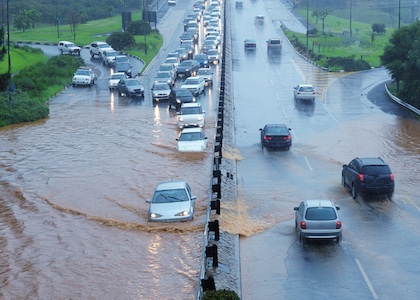
Kevin Dodds, Managing Director at Delta Membrane Systems Limited, provides guidance on the essential considerations to reducing risks in below ground structures.

Flood Risks in Basements?

Basements are highly susceptible to flooding because of their below-ground location. Recognising the potential dangers of water entering these spaces is crucial when planning or maintaining a basement.  It is important to evaluate the likelihood of a flood event, which can occur due to heavy rainfall, increased groundwater levels, or other local flooding events. Addressing these risks can help prevent costly water damage, structural problems, and health issues.
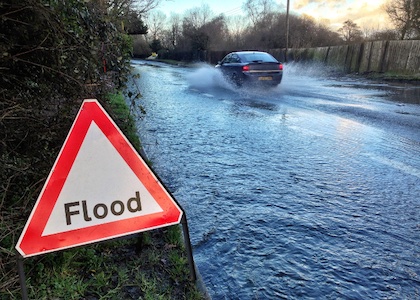
Safety First – Means of Escape

A “means of escape” from a basement is a safe and unobstructed route that allows occupants to leave the building and reach a place of safety in an emergency (for example, fire).  In England, the Building Regulations guidance in Approved Document B sets out requirements for escape from habitable basement rooms, which typically must be served by an appropriate protected escape route and/or a suitable emergency egress window or door, depending on the specific layout and fire strategy.

In a flood, however, the usual route of escape via the staircase may be cut off, preventing occupants from reaching safety above ground.

Where flood risk is credible, consider another way out/means as escape such as a secondary exit at a higher level or a suitably designed emergency egress window/lightwell. Plan for situations where escape isn’t immediately possible: A managed place of refuge with a means of communication may be appropriate, aligned with the building’s overall fire and flood strategy.

Practical Tips for Mitigating Flood Risks

To reduce the chances of basement flooding, implement appropriate PFR (Property Flood Resilience) measures.

Routine inspections and maintenance of drainage systems, sump pumps and take steps to ensure that waterproofing protection system is suitably maintained can significantly lower the risk of water entry into a property. Use of monitoring systems on pump stations for surface water and ground water can provide early warning of increased risk of flooding and ensure appropriate actions can be taken prior to a flood event.
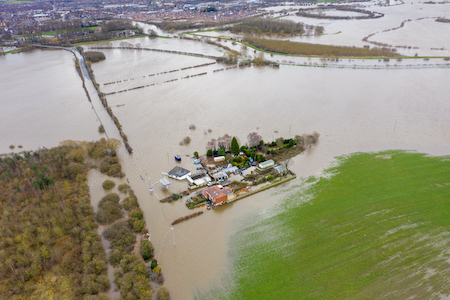
It should be recognised that it is not always appropriate to apply every possible property flood resilience (PFR) measure to a building. For example, where hydrostatic pressure during a flood could place the structure at risk, a controlled water-entry strategy may be preferable to full water exclusion.

Designers can influence flood performance at a variety of scales, from site planning through to component specification. It is vital that designers understand the range of strategies available to improve a structure’s flood resilience. Effective flood-resilient design can reduce exposure and vulnerability, limit damage, and support quicker recovery after a flood event. In practice, the strongest approaches is to plan for both water exclusion and managed water entry, depending on risk and context. The most cost-effective way to improve resilience is to implement appropriate measures as early as possible in the design process.

Flood Risk Assessment for Basements

Assessing site-specific flood risk is a critical early step in developing an effective design strategy.

Basements are particularly vulnerable to flooding due to their below-ground level position. When planning or maintaining basement spaces, it is essential to carefully assess potential flood risks. This includes evaluating the likelihood of water ingress during heavy rainfall, rising groundwater levels, or other local flooding events. Attention to these risks can help prevent water damage, structural issues, and potential health hazards.

The designer’s philosophy should set out what the PFR measures are intended to achieve and the principles that will guide the approach. A thorough risk assessment and a clear, robust design philosophy are essential when specifying a continuous system, as they will influence not only how the system is detailed and installed, but also the inspection, maintenance and any future repair or alteration requirements that ultimately affect the property owner.
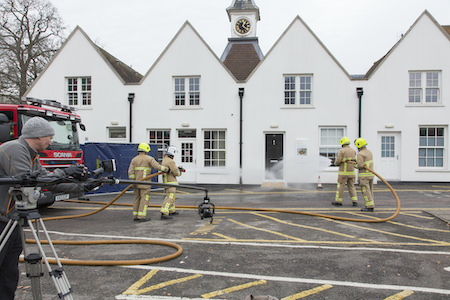
Flood-resilient design should be viewed as an opportunity for joined-up thinking to develop better, more integrated solutions. There is no one-size-fits-all approach to successful PFR: each type of flood event has distinct characteristics that influence the suitability of the chosen strategy.  A suitable solution should reflect the building type and materials, ground conditions, conservation requirements and property owner needs.

Always Happy to Help

We offer expert waterproofing/PFR design and manufacturing collaboration, with PI insurance covering all design support and construction of our protection systems. Our installations are guaranteed and backed by a nationwide network of Delta Registered Installers.

Delta’s Technical Team provides timely advice and support for your project needs. Contact us at 01992 523 523 or info@deltamembranes.com.


Double Award Win Celebrates excellence in UK structural waterproofing

Building Products Index Ltd Membranes, Waterproof Membranes, waterproofing Leave a Comment

View the Delta Membrane Systems Limited entry on BPindex

Visit the Delta Membrane Systems Limited website

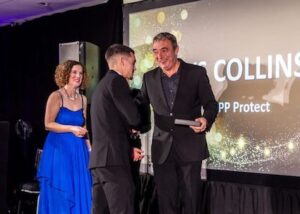
Delta Membrane Systems Limited was honoured with the ‘Sustainability’ and ‘The All Star’ Awards at The Property Care Association, Best Practice Awards ceremony this year.  This double win follows our double win in 2024.

We are pleased to announce our success at the Property Care Association Best Practice Awards, where we have received two prestigious awards!!

During a fantastic evening at the iconic Manchester United Football Club, Old Trafford, which brought together our industry’s top professionals, we were delighted to take home a winners trophy for the ‘Sustainability Award’, and ‘The All Star’, a remarkable triumph for everyone involved. These awards acknowledge the hard work, passion, and dedication of the Delta team.

Sustainability – Winner

Delta had entered their pioneering “HLA Plus”.  Delta’s HLA Plus is an advanced high-water level alarm offering real-time remote monitoring and notifications through the Delta Pumps App. The app features a user-friendly dashboard and numerous capabilities to safeguard pumping stations, ensuring continuous monitoring without subscription fees. The HLA Plus connects seamlessly to any new or existing system, providing both proactive and preventive functions. This smart technology is invaluable for property owners, facilities managers, service engineers, and waterproofing contractors.

The All Star – Winner

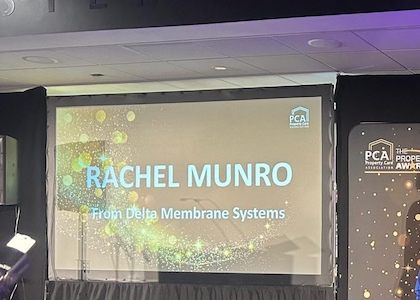
Delta nominated their Marketing and Communications Manager, Rachel Munro.  Rachel, brings a unique skill set to the industry, showcasing a bold commitment to innovation and excellence.  While construction roles are typically associated with on-site work, the industry’s success significantly relies on behind-the-scenes efforts.  Rachel excels in these areas, and she is also a prominent advocate for women in the waterproofing industry.

All winners, finalists, images & videos can be found here – https://www.property-care.org/events/2025-property-care-awards/

Commenting on the achievement, Delta MD, Kevin Dodds, said: “Delta’s commitment to innovation continues with the Delta HLA Plus, exemplifying our dedication to providing new and unique solutions.”

“The Property Care Association, Best Practice Awards are among the most prestigious in the UK. Winning these two awards demonstrates the exceptional work by our team at Delta Membrane Systems Limited.

“At Delta, we consistently strive to uphold integrity in all aspects of our business. We are committed to environmental stewardship and carefully manage our plant operations to ensure sustainable practices.”

“The introduction of new products holds significant importance, not only for the industry but also for Delta.”

He continued “We’re so proud of our achievements and in the competitive structural waterproofing market it is a challenge to stand out from the crowd – we have proved our ability to do just that!”.

“Congratulations to all, and let’s strive for continued success next year.”

Delta Launch Online Sump Pump Specification Guide

Building Products Index Ltd Cavity Drain Membranes, Membranes Leave a Comment

View the Delta Membrane Systems Limited entry on BPindex

Visit the Delta Membrane Systems Limited website

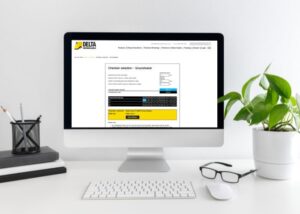
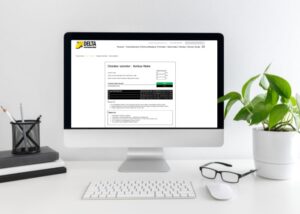
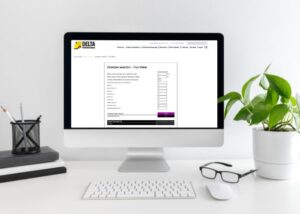
Delta Membrane Systems Limited, are delighted to announce the launch of their new Online Sump Pump Specification Guide, simplifying the process in identifying suitable sump pumps and storage capacities of chambers for groundwater, surface water and foul water packaged pumping stations.

Delta’s Online Sump Pump Specification Guides can be found at https://www.deltamembranes.com/product-categories/pump-calculators/.

Drainage capacity and sump pump performance is an essential element in determining the success of drainage and pump station design, to simplify the process we have created a tool which assists the process.

3 Easy Ways to Access Product Technical Information

 We’ve split our Sump Pump Specification Guide into three sections:

Simply input the technical information to the various fields of the Specification Guide and the Specification Guide will highlight a product suitable for the drainage requirements of your project.  Pump selection is based on optimum/ideal performance of the sump pump based on the pump’s performance curve.

From this, simply click on the product selected to access full product functions your design team and product team members need.  All products have links to clear and easily readable and downloadable install guides, product data sheets, CAD details, brochures, fabrication sheets and “how to” video guides.

Basement Drainage ‘sump pump systems’ should be engineered to cope with worst-case scenario of water ingress.  We’ve been providing customers with high-quality basement drainage solutions for nearly 30 years. In that time our friendly, knowledgeable team has been offering technical advice, free specifications, and a helpful flow calculation service to our customers.

There are lots of resources on Pump Station Design, but this step-by-step Specification Guide will provide you with the tools and strategies you need to create a reliable, data-backed approach for your project.  Knowing which pump(s) work best for your project can simplify how products are specified, giving you confidence knowing that you’re not simply guessing.

Whilst Delta’s new Sump Pump Specification Guide is a great feature, we’ll still be offering the same in-person services for which we are renowned for.  Delta’s team of Pump Specification Technicians will be on hand to assist and facilitate correct specification of sump pumps and packaged pumping stations.  Every product specification provided by the Delta team is based on technical requirements, engineering specifications, and other details that are specific to the particular project.

We are always Happy to Help

Do you have questions about a project, product, or application?  In an ever-changing industry where reduced risk and higher quality is required, you need a waterproofing design partner that is proactive and dedicated to help you keep up with new technologies and solutions to ensure your projects thrive. Whatever the needs of your business, you can rely on the #DeltaTeam to ensure you get the right advice, support, and practical help at exactly the right time to keep you ahead of the competition.

Contact: 01992 523 523

Email: info@deltamembranes.com

Website: www.deltamembranes.com

What is Radon and how can we protect our homes?

Building Products Index Ltd Waterproof Membranes Leave a Comment

View the Delta Membrane entry on BPindex

Visit the Delta Membrane brochures and guides

View the Delta Membrane gas protection systems

View the Delta Membrane gas protection waterproofing combined systems

Radon copyRadon occurs naturally in the environment.  Radon gas is created when natural radioactive uranium slowly decays and can be found in all rocks and soils.

Radon can be found everywhere in the United Kingdom, although certain parts of the UK will have higher concentration levels than others.  To check whether you are in a high Radon concentrated area visit https://www.ukradon.org/information/ukmaps.

This radioactive gas is, colourless, odourless and tasteless.

Radon is measured in becquerels per cubic metre of air (Bq m-3) and specialist equipment is required to detect it.

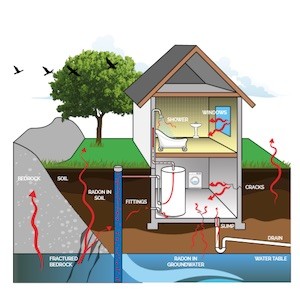
How_Radon_enters_your_home copyThe average level of Radon in UK homes is 20 Bq m-3.  For levels below 100 Bq m-3, individual risk remains relatively low and not a cause for concern. However, the risk to health increases as radon levels increase.

Radon can migrate into any building that is built over a source.

If Radon accumulates in a building, it increases the risk of lung cancer for occupants. Radon is the cause of 15% of lung cancers worldwide (World Health Organisation ‘WHO’ 2009) and the main cause of lung cancer in non-smokers and is responsible for over 1100 deaths in the UK every year.

Research published earlier this year has found that radon levels are increasing in buildings and homes due to the changes we are making to building efficiencies (such as energy efficiency). This in turn will lead to an increase in the number of lung cancer deaths attributable to radon exposure.

Technical solutions such as Ground Gas Protection Membranes incorporated into the design of buildings and structures can offer protection to occupants of homes built on contaminated lands and the harmful effects of radon.

Ground Gas Protection Systems can be used on new, retrofit and refurbishment construction although design considerations are more complex on retrofitted projects.

Forward thinking manufacturers, such as Delta Membrane Systems Limited, have sought to test all our products on their safety, reliability, high-quality and gas permeability.

Manufacturing flexibility has never been as important for the construction industry as it is today.  The permeability of gas through a membrane is a critical factor when it concerns the ability of the lifetime of a building or structure. 

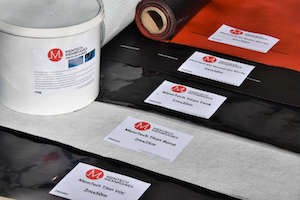
MemTech MembranesThrough extensive research we can state all our Cavity Drain Membrane Systems (CDMs) offer radon protection with a low permeability rate. 

Whilst, our MemTech range of Ground Gas Protection Membranes offer complete protection from Radon, Hydrocarbons, Methane, Carbon Dioxide and Volatile Organic Compounds (VOCs).

Thank you for reading our latest news!  If you would like to find out about structural waterproofing, damp proofing, ground gas protection systems, flood resilience or installing a Delta System we’re happy to help.  Give us a call on 01992 523 523 or email us at info@deltamembranes.com.