Skip to content
BPindex — The Largest Building Products Directory in the UK

EJOT

Export positivity as market turns increasingly global for EJOT Colorfast

Building Products Index Ltd Fastening Systems Leave a Comment

View the EJOT entry on BPindex

Visit the EJOT website

Typical of the cold store and industrial applications where Colorfast is being used, a recent project completed in Trinidad & Tobago.

An innovative roofing and cladding fastener developed by EJOT in the UK more than 30 years ago, and now on its third generation, is becoming increasingly popular with contractors around the world.

Specifications of EJOT Colorfast, which has become the go-to solution in the UK roofing and cladding sector where a colour-matched self-drilling fastener is required, are growing strongly in countries including Australia, New Zealand and the US, as well as in the Caribbean and southeast Asia.

As a typical example, in Australia and New Zealand alone, a steady increase in sales volumes of the FM Approved fastener range has been tracked, with the growth in cold storage applications and insulated panels helping to drive demand here.

In Australasia, an increase in sales volumes has been tracked, with the growth in cold storage applications and insulated panels helping to drive demand.

Feedback received by EJOT UK indicates that many contractors in locations like Australia are adopting new approaches to the design and installation of the building envelope in response to changing building standards, whilst also being able to achieve improved aesthetics and extended design goals.

According to Ben Gallant, Export Sales Manager at EJOT UK, the trend reflects a culture shift that is taking place in how buildings are constructed, with a greater adoption of insulated panels, driven by European influencers, an increased focus on adhering to globally recognised standards such as FM Approvals, and a need to demonstrate supply chain integrity.

Ben says, “If you take the Australasian market as just one example, things operate differently to Europe and the UK in terms of building technology, largely due to established ways of working. But the market is changing. The most recent updates in the building regulations give sustainability a much higher priority and that means specifiers are increasingly choosing insulated panels for the envelope, as well as seeking assurances on long term performance.”

Colorfast CF19 fasteners deployed on Hawke’s Bay Leisure Centre, New Zealand.

One of the factors in Colorfast’s growth may be the influence of contractors who have emigrated from Europe in recent years, taking with them to their newly adopted countries their ways of working and preferred products – which embraces EJOT’s brand strength and product ranges such as Colorfast.

It is a product that is becoming increasingly appealing to cope with the vast range in climatic conditions experienced in countries like Australia and New Zealand, whether in hot or cold locations. Many sites in regions like these present demanding conditions for the building envelope, amplified by the fact that the buildings serve a vast majority of the population who live and work in coastal areas.

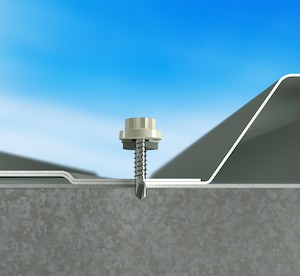
As in the UK, Colorfast is also helping contractors in other parts of the world to meet higher thermal standards due to the consistency of the seal above the sheet, maximising the insulation levels that the panels are designed to deliver within the building. Couple this with the head’s reliable UV stability to maintain lasting visual aesthetics and optional stainless steel screws for enhanced corrosion resistance, and it is a product with multiple benefits.

Inside EJOT UK’s Applitec Centre where the quality and performance of Colorfast fasteners is regularly tested.

“Our initiatives to highlight best practice, both for installation tools and correct procedures, are making an impression overseas as well as in the UK,” adds Ben. “For example, we are seeing contractors now making seal testing an integral part of rooftop inspection prior to any additional penetrations that may follow structural completion.

“We like to think being able to offer this kind of practical support makes a real difference, particularly for contractors who are new to Colorfast. They are the ones who can get into the seal testing routine more easily as they don’t have an old habit to break!

“The way we are set up also means that our overseas customers have a strong, direct relationship with the UK team, which gives us the ability to tweak Colorfast for certain customers and create bespoke versions. And, through our global logistics programme we are able to offer dependable supply despite the distance, as well as provide all the technical support, advice and guidance to help our customers succeed.”

Find out more about EJOT and the Colorfast range of building fasteners at www.ejot.co.uk.

EJOT Colorfast fasteners receive globally renowned FM Approved mark

Building Products Index Ltd Fastening Systems Leave a Comment

View the EJOT entry on BPindex

Visit the EJOT website

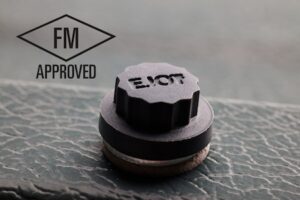
All the most widely used products in the EJOT Colorfast range of colour-matched self-drilling fasteners are now FM Approved, providing specifiers and contractors with another independently verified ‘stamp of approval’.

EJOT has secured FM approval for all the most widely used products in its Colorfast range of colour-matched self-drilling fasteners, providing specifiers and contractors with another independently verified ‘stamp of approval’ for the suitability of the range’s key products when used for fixing sandwich panels, or built-up envelope systems designed to the same standard.

It is a development that provides additional assurance when specifying screws for coloured roofing and façade sheets. Whilst Colorfast’s original metal parent product has long been FM Approved, this latest approval classifies the products in their own right.

The third party certification by FM Approvals, a division of American property insurance giant FM Global, confirms EJOT’s stated performance capabilities for the fasteners in line with the stringent requirements of an international standard that applies to fully tested systems. Under the scheme, every element of the building envelope’s proposed construction is assessed down to the smallest fasteners, which is why it represents the ‘gold standard’ for approvals.

Securing FM Approved status not only means that EJOT has successfully demonstrated Colorfast’s performance in testing, but that assessors are satisfied with how the product is manufactured, the quality of production systems and facilities, and what quality control procedures are in place to maintain consistency, as well as the marking procedures used for identification.

As a result, the standard is unambiguous in terms of which fasteners can be used in order to deliver an approved roof or façade. Where FM approval is a prerequisite on a building envelope project, an FM appointed engineer will make thorough checks to ensure the correct fasteners are being used – from checking approval verifications through to demanding an FM Approved logo on boxes or labelling.

Securing approval, however, is not only subject to successfully demonstrating the product’s performance in testing. The assessment process examines – through annual auditing – how the product is manufactured, the quality of production systems and facilities, and what quality control procedures are in place to maintain consistency, as well as the marking procedures used for identification.

Importantly, achieving the FM Approved mark for Colorfast screws supports EJOT UK’s rapidly increasing export market. Whilst it may not be widely sought currently by clients in the UK, FM Approvals certification is widely recognised and routinely required by specifiers and building inspectors in other countries, including the US, Australia and the south east Asia, where Colorfast sales are growing strongly.

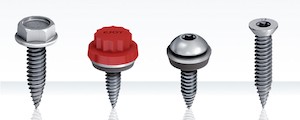
It also represents the latest stage in EJOT UK’s continuous development programme for Colorfast, which means the fastener continues to raise the bar after more than 30 years in the market. Now onto its third generation, Colorfast still outperforms other types of colour-matched screws thanks to its over-moulded nylon head design and the high quality of both the washers and screws, which are available in carbon steel and stainless steel for enhanced corrosion resistance.

Colorfast continues to raise the bar after more than 30 years in the market – now onto its third generation, it still outperforms other types of colour-matched screws thanks to its over-moulded nylon head design and the high quality of both the washers and screws, which are available in carbon steel and stainless steel for enhanced corrosion resistance.

Colorfast joins several other EJOT products for the building envelope that already have an FM Approved mark. These include the Opticore LS, the self-drilling fastener with self-coring integral nylon head that has become a first-choice solution for attaching membrane faced insulated sandwich panels to light steel sections, and the widely used EJOT JT2 and JF3 self-drilling fasteners. In 2022, a range of EJOT flat roofing fastening systems also became FM Approved, most notably the EcoTek tube-washer with FBS-R fastener combination and the TKR/TKE fasteners with the HTK 2G 50 tube-washer.

Details of all EJOT’s FM Approved fasteners are available on RoofNav, a complementary tool from FM Approvals that provides access to the most up-to-date FM Approved roofing products and assemblies.

Brian Mack, Technical Business Development Manager at EJOT UK said: “Securing the FM Approved mark for key products in the Colorfast range is another important stage in the development of this roofing and cladding mainstay, and one that gives additional assurance to the market in respect of its performance capabilities in application.

“The FM Approvals scheme is globally renowned, so this is a strategically significant step for EJOT too as we serve an increasingly international market with Colorfast, catering for projects where the building envelope must accommodate many different climatic conditions and performance goals.

“It is part of our continuous programme to provide customers with the required test evidence and certification they need to make the right choices for the building envelope fastener, whether that’s in the form of FM, ETAs (European Technical Assessments), CE marking or other approvals.

EJOT Colorfast has become the go-to solution for roofing and cladding installations where the head of the screws needs to be matched to the panels it is securing to optimise aesthetics.

Superior durability is achieved through the design and manufacturing process used to over-mould a nylon head, which is extremely UV-stable and can be matched to almost 400 colours in line with recognised colour matching systems.

These include all recognised colour matching systems such as RAL, NCS and Pantone, as well as the British Standards (BS) colour palette, the colour system on which Colorfast was first developed.

Find out more at https://www.ejot.co.uk/Colorfast_FM_Approval.

Constructionline Premier membership confirmed for EJOT and LIEBIG anchors

Building Products Index Ltd Fastening Systems Leave a Comment

View the EJOT entry on BPindex

Visit the EJOT website

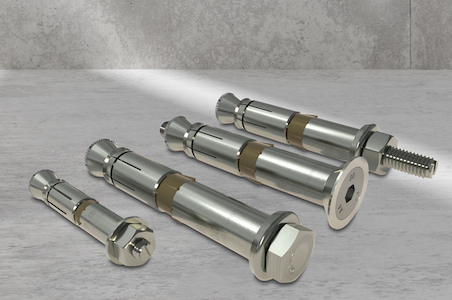
EJOT’s range of high performance concrete anchoring solutions, at the heart of which is its globally renowned LIEBIG heavy duty anchors, is now available for main contractors and public sector project teams to specify and procure with confidence through the Constructionline platform.

In being approved as a Constructionline Premier member by the industry-leading procurement and supply chain management service, EJOT has been verified to operate to the highest ethical and quality standards under the latest membership structure.

Membership to this highest level means EJOT has successfully complied with Constructionline’s enhanced assessment criteria in areas including environmental management, quality management and equal opportunities policies. As a result, buyers involved in major public sector building and infrastructure projects can find valid information on EJOT’s fastening systems, including its market-leading building envelope solutions and LIEBIG heavy duty anchors, in Constructionline’s supplier database.

Paul Papwoth, EJOT UK’s structural anchoring specialist said: “We’re really pleased to have been approved as a Constructionline Premier member because we know how important it is for buyers on major projects to have total confidence in their supply partners, particularly for safety critical applications like anchoring into concrete.

“As a global business we are dedicated to working to the highest quality standards, whether that’s in respect of our ISO registered manufacturing systems, environmental management or ethical considerations. This is coupled with the high technical standards for our EJOT and LIEBIG branded products, many of which are certified to internationally recognised standards including ETAs (European Technical Assessments), the UKCA mark and FM Approvals, to give procurement teams full confidence in our ability to meet their project goals.”

LIEBIG anchors are suited to heavy duty applications including anchoring structural steel in industrial buildings.

Originally created as a government department more than 20 years ago, Constructionline supports thousands of businesses across the public and private sectors by connecting buyers and suppliers. It increases opportunities for members like EJOT to access a wide range of procurement contracts and projects, while at the same time giving buyers access to a validated pool of high quality suppliers working to enhanced PAS 91 criteria.

The LIEBIG range of heavy duty anchors has been used globally since the 1980s in wide variety of applications. These include nuclear power facilities, military establishments, tunnels, bridges and other safety critical high load installations and applications.

In the UK, a number of significant recent infrastructure projects have benefited from LIEBIG anchors too. These include HS2, where LIEBIG Superplus BLS anchors provided a versatile solution to securely fix silos at one of the project’s concrete batching plants, and the construction of the Third River Crossing bridge in Great Yarmouth, where LIEBIG Ultraplus anchors were specified to attach the bridge’s lifting, holding and lowering mechanism.

The depth of the assessment and scrutiny involved in the Constructionline scheme means no part of a supplier’s business goes untouched. As part of EJOT’s Constructionline verification process, it submitted a variety of quality specific documentation, ranging from its ISO 9001:2015 certificate and ethical and equality policies, to information detailing the company’s Carbon Reduction Plan 2035 and the data to demonstrate its reduction efforts to date.

Find out more about EJOT UK and LIEBIG at www.ejot.co.uk.

Greater anchoring versatility through modular design

Building Products Index Ltd Fastening Systems Leave a Comment

View the EJOT entry on BPindex

Visit the EJOT website

LIEBIG Superplus BLS offers versatility thanks to its modular design and range to suit numerous anchoring applications.

Whilst there is no one size fits all approach to concrete anchoring, by adopting a modular approach to anchor design EJOT has made it possible to use a single product for multiple different purposes on the same project.

The LIEBIG Superplus BLS is renowned across the world for its heavy duty performance capabilities. But for many engineers and specifiers, the anchor’s appeal is equally due to its versatility. Through a modular design, one product can be tailored and specified to meet multiple different applications ranging from garage equipment installation to mechanical and electrical supports.

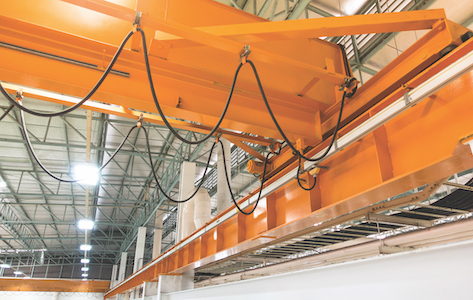
LIEBIG Superplus BLS is ideal for anchoring of Industrial cranes and heavy machinery.

The key to the versatility of Superplus BLS is the ability to choose different variants of the core parts of the anchor. The length and diameter of the threaded bolt and the distance sleeve can be sized within a wide range and the head styles can be chosen to suit the specific application requirements.

It all adds up to an application-specific anchoring solution that can be configured in a way that is normally associated only with 100% bespoke anchors, which are notoriously costly in small volumes and incur long lead times. From a “kN per £” perspective, this makes Superplus BLS amongst the most competitive concrete anchoring solutions available.

EJOT’s ability to provide this level of versatility with the Superplus BLS comes down to the way its UK manufacturing facility is set-up. LIEBIG anchors are assembled at its UK’s factory near Leeds, where production is designed with agility in mind to accommodate different volumes of anchors to meet customer needs at relatively short notice. And for UK customers, the additional benefit of local supply means less risk of international transport delays.

The design allows for its core elements, the threaded bolt and the distance sleeve, to be sized within a wide range and the head styles can be chosen to suit the specific application requirements.

A consistent modular design applies to all Superplus anchors in the range, as well as offering the platform for ‘specials’. Whichever option is chosen, they all feature the innovative self-undercutting cone with teeth to create the undercut as it is drawn upwards when torque is applied during installation. No special tools are needed for creating the undercut, which speeds up the fitting process and reduces the potential for errors.

The core Superplus BLS anchor consists of a threaded rod with integral hex head. This is designed for through-fix post-installed application scenarios where installation is through the in-situ baseplate. This suits many different applications extremely well, especially given that the product is available in Grade 8.8 carbon steel, zinc plated, or A4-80 stainless steel for additional corrosion-resistance.

Beyond the standard Superplus BLS options, the product’s versatility is further demonstrated in some of the recent ‘special variants’ created by EJOT. These include the LPA (Lightning Protection Anchor) where rebar is known to attract and transmit an electric current flow through as a means to direct the current to earth.

This high level of versatility, coupled with superior anchoring performance, ease of installation and flexibility to accommodate site circumstances, makes Superplus BLS a solution that fits with the construction industry’s ambitions to build more efficiently and to ever higher standards.

Find out more at https://www.ejot.co.uk/LIEBIG_BLS.

EJOT launches next generation BA Plus through-bolt range

Building Products Index Ltd Fastening Systems Leave a Comment

View the EJOT entry on BPindex

Visit the EJOT website

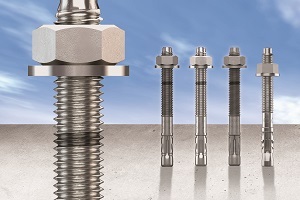
Throughbolt-RangeFastening technology specialist EJOT has upgraded its range of ETA-approved through-bolts – also known as anchor bolts or wedge anchors – with the launch of its new BA Plus range of Option 1 anchors, suitable for both cracked and non-cracked concrete applications.

The EJOT BA Plus range is a new generation of higher performing through-bolts which builds on the strengths of its established BA range to deliver additional benefits and new application potential. And, in addition to concrete, these torque-controlled expansion anchors are also suitable for installation in other hard base materials including natural stone.

The design of BA Plus allows the required installation torque to be achieved with 30-50% fewer revolutions than previously, and new M8 and M10 through-bolts can now be used for anchoring in to concrete which is up to 20mm thinner. The risk of on-site errors is minimised with a setting depth clearly marked to the thread and anchor length letter coding marked on every bolt head.

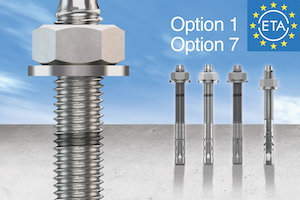
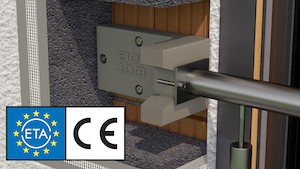
Throughbolt-Range-ETAThe BA Plus range provides through-bolts for all the most typical cracked and non-cracked concrete applications ≥ C20/25 up to the seismic Option 1 performance. Backed with the independent assurance of European Technical Assessments (ETAs), the range offers a dependable solution for numerous applications including steel structures, column base plates, heavy duty racking, cable racks, handrails and facades.

When specifying outside standard parameters EJOT provide on-site testing by a qualified EJOT engineerZinc plated, hot dip galvanized, and A4 stainless steel BA Plus through-bolts are available, providing a solution for a wide range of applications including harbours and tunnels where the highest level of resistance to corrosion is required. Its design ensures easy installation, with no risk of damage to the thread when the bolt is hammered into position and an embedded sleeve that expands reliably as the bolt is tightened to the required torque. The M10 and M12 options are available in two different anchorage depths for extra versatility.

Richard Bowhay, Sales Manager for Building Fasteners at EJOT UK said: “The BA Plus represents an important enhancement in the performance capabilities of our through-bolts and gives installers a reliable and highly secure anchor solution for every type of concrete application – backed by the third-party assurance of ETA approval. It demonstrates collectively, the objectives of our technical teams worldwide in their capacity to regularly assess if and how we can advance the performance of construction fixings to give architects and building owners total peace of mind, as well as improving efficiency for installers.”

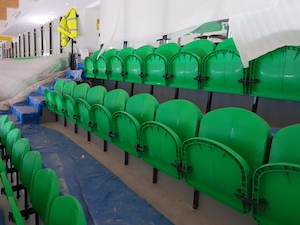
EJOT's Option 1 through-bolt range covers standard to seismic applicationsThe BA Plus range is complemented by EJOT’s new range of through-bolts for Option 7 non- cracked concrete applications, BAC-NC, which provides a class-leading anchor for many other applications including warehouse racking and stadium seating, backed by the third party assurance of an ETA.

Full details about the Option 1 BA Plus range and the Option 7 BA-C NC through-bolt are available at www.ejot.co.uk, where the new brochure can also be requested.

As a global leading in construction fastening solutions, the EJOT UK team offers a wealth of technical support and specialist guidance to specifiers and installers to ensure they can achieve the right result when anchoring into cracked and non-cracked concrete every time. To contact technical support, email EJOT UK via info@ejot.co.uk or call 01977 687040.

STRUCTURAL ANCHORING – FINDING THE RIGHT SOLUTION

Building Products Index Ltd Fastening Systems Leave a Comment

View the EJOT entry on BPindex

Visit the EJOT website

Selection of a structural anchor should be based on the performance needed for each application but how much is the process driven by previous specifications or brand?

Library-SiteThe variety of off-the-shelf anchors and fixings available to structural engineers has grown significantly in recent years through ever more complex designs, and there is also the option of bespoke solutions. Knowing what’s out there can be as much of a challenge – and few would dispute the possibility of specification changes on site.

“Engineers will commonly go through a technically approved route for design but the selection is often based on personal preference and previous experience rather than the unique parameters that each new application presents,” says Liebig specification specialist Paul Papworth.

“There are several reports from the Standing Committee on Structural Safety (SCOSS) that point to poor selection or design of fixings, as well as specification change. The problem running with previous designs is that the application criteria may not be exactly the same, so an in-depth check and some form of calculation is essential.”

To understand the factors driving the choice of anchor in the UK market, Liebig’s parent company EJOT worked with the New Civil Engineers Journal to carry out an industry-wide survey. The results point to many respondents favouring brand loyalty over application specifics, despite a number of routes to design.

Design tactics

shutterstock_57862405 copyMost respondents – 45% – use a mix of hand calculations, software and technical guides to aid their design but 40% prefer to use software as their only approach to design. None of the respondents use technical guides from manufacturers as their only source of information for design. However, the availability of technical guidance and support from manufacturers and calculation software are the biggest factors affecting the choice of solution. Proof of suitability through onsite testing and case studies are also key factors.
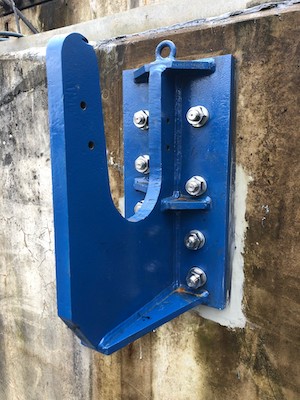
No second chances. Anchors in nuclear dockyard applicationPaul Papworth believes that manufacturers data should be sufficient for many standard design requirements such as an anchor that isn’t close to an edge, not located close to another anchor and in conventional concrete that has a prescribed compressive strength. It is when designs go outside the standard parameters that additional calculations should be essential. “The anchor should be designed and tested to European Technical Approval (ETA), so it should therefore be possible to compare different options from different manufacturers even without proprietary software,” explains Papworth. “However, some engineers maintain that using traditional concrete capacity design methodology that predates ETA, offers more flexibility where the application cannot be met by the ETA approach alone.”

Some projects demand that the right solution is fitted first time with no second chances to find an alternative. Papworth says that some manufacturers still use concrete capacity design data – or even data expanded beyond the ETA approach in their software so users need to be aware of how the designs are being evaluated and generated.

“As with any proprietary software, engineers need to verify the output using their own calculations,” he urges. Many respondents agreed with this call and one said: “Complex designs can be challenging to assess and often call for engineers to use hand calculations to check the design and interaction with other adjacent fixings too.

“Designers need to engage with anchor manufacturers with a more holistic approach from concept through to installation. This would ensure that the correct technology and the most cost-effective solution is identified, correctly designed and equally as important, correctly installed.”

Mechanical or resin?

Few respondents report getting the design right first time though – 19% of respondents said that it never happens, while 64% say that it does occasionally happen.

Resin bonded anchors are often a main solution that designers choose with 54% calling that their preferred option. 40% use mechanical fixings as their “go to” solutions. Undercut anchors were the least popular option with only 6% describing that method as their preferred option. The preferred fall-back was mechanical fixings with almost 43% saying this was their second option and 38% opting for resin bonded fixings as their fall-back.

“There is definitely less reticence to using resin fixings now –– but there will always be a strong preference to go for a mechanical fixing and the choice largely depends on specific performance demands. Resin anchors are unable to immediately take up the action load due to curing times and the higher risks associated with their reduced tolerance for installer error are also considerations,” says Papworth.

One respondent told NCE: “People often specify resin fixings but there is a good place for mechanical fixings too. There is no real logic for the mentality to choose one over the other.”

If the desired result isn’t achieved through the initial design, most respondents (47.5%) said that they would look again at the design or change the type of fixing (56%) rather than explore bespoke or non-standard options.

Bespoke Solutions

Lead times, absence of technical data and stock availability do not seem to be factors in driving designers away from bespoke solutions. Perceived cost and even lack of awareness that the option is even available seem to be the main issues here.

“Bespoke solutions come into play when the design and application parameters do not allow for a standard off the shelf solution to be used,” says Papworth. “Around 5% to 10% of applications lend themselves to a bespoke design. The perception that this carries a high price tag and long lead time puts designers off from exploring this route – and some don’t even know the option exists – but given the modular design of many high performance mechanical anchors it is no longer the case. By raising awareness, manufacturers can create demand by delivering what the customer needs rather than simply focusing on what can be produced in volume. Involving a manufacturer in the early stage of a design can save a significant amount of design and installation time, reduce material costs and increase safety.”

Specification changes on site
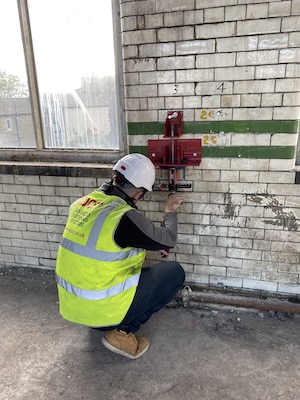
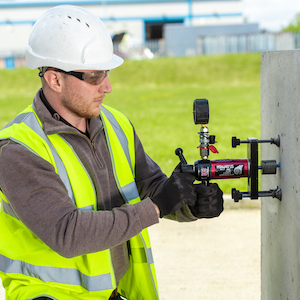
On site shear testing will substantiate calculations made off site.One respondent noted that careful specification can go out of the window once work moves onto site when contractors may use an alternative anchor on grounds of costs or buildability.

Papworth agrees: “The approach tends to be design-led until cost is factored in and that is often when changes in specification can occur.”

Product availability is the main factor driving changes to specification according to more than 47% of respondents, while a further 31% said that cost is a driver too.

Installation can also bring challenges and Papworth believes that more training is needed to avoid issues on site. “Designer error does happen but the major cause of failure is errors in installation and the problem can be amplified by change of specification” he says.

The Construction Fixings Association (CFA) has published guidance on this subject with procedures to avoid problems that are a knock-on of specification change.

According to Papworth, specification change is often an inevitability but using CFA guidelines can bring benefits. “It is also part of the anchor manufacturer’s role to support these guidelines and in doing so be able to contribute positively to the industry,” he adds.

Nonetheless, having a qualified engineer is critical to interpreting the performance requirements into the design and specification change often occurs without the designer being involved in the decision making.

“You may have an anchor that performs the same in published data for tensile and shear load but when it comes to the seismic qualification, the ability to perform close to the edge of concrete or in a fire load condition, they may be quite different,” explains Papworth.

“Resin anchors were seen as a problem solver 20 to 30 years ago and now it is just part of the toolbox. The development was driven by poor base materials as it doesn’t create the expansion forces typically associated with mechanical expansion anchors but they are simple to use.

“They can, however, bring their own problems in terms of things going wrong – it is essential that the fixing hole is clean and dry otherwise significant reduction factors have to be considered at the design stage. Mechanical anchor holes also have to be cleaned out but it is less critical compared to resin since they do not rely on adhesion.

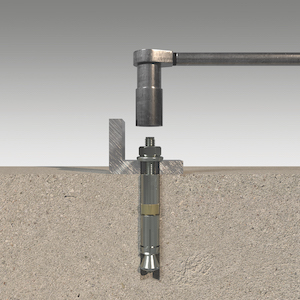
“All anchors, whether resin or mechanical, need to be correctly set using a torque wrench which is a crucial element of how an anchor performs but often overlooked at the point of installation.”

Papworth says that in some instances anchor manufacturers are even moving away from providing standard anchoring design software and moving towards providing whole application software, giving the option to design baseplate and anchor within the same package.

“I feel that it can unnecessarily complicate the design and add to whole application costs” he adds.

While there are many different approaches to design and many more solutions available on the market, it is more essential than ever that designers understand what they are trying to achieve before starting on the specification choice. According to Papworth, once the specification is set there needs to be greater governance to ensure this is followed through onto site too in order to achieve the best outcome.

The Liebig brand has for years been synonymous with quality, performance and ease of installation, gaining respect from specifiers and contractors alike. Many of the original flagship products remain at the forefront of today’s anchoring technology.

The survey gives an in-depth look across all factors of specification and selection of anchoring technology.

To view the survey results visit our website at https://www.liebig.co.uk/news/

Liebig offer a vast array of Anchoring products from off the shelf to complete bespoke solutions to ensure your engineering requirements are met and surpassed.

Contact us for application support, design advice and calculations or literature and technical assistance on Tel: 01977 687 040 or email us at: liebig@ejot.co.uk

Technical data sheets and brochures are available from our website here: https://www.liebig.co.uk/tech-specs/




Medium-heavyweight fixing assured in externally insulated walls with ETA-approved EJOT Iso-Corner

Building Products Index Ltd Fastening Systems Leave a Comment

View the EJOT entry on BPindex

Visit the EJOT website

Iso-Corner has recently gained European Technical Approval

An engineered, load-bearing fastening bracket from EJOT which allows a secure fix to be achieved for medium to heavy weight building elements in ETICS and other external wall insulation applications has secured ETA (European Technical Assessment) approval.

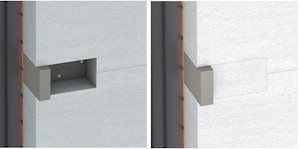
The newly awarded ETA for EJOT Iso-Corner confirms the engineered value of this solution which is moulded from high density polyurethane foam and can be easily cut on site with an electric saw to sit flush with the external insulation face. Structural strength and adaptability combine to provide a dependable supporting bracket option which offers a cantilever arm to length of between 80mm and 300mm.

The engineered quality of Iso-Corner is now rubber-stamped with an ETA

EJOT Iso-Corner is ideal for attaching building elements to a façade that is to be treated with an ETICS – external thermal insulation composite systems – or other external wall insulation solution. These could include elements such as railings and Juliet balconies, which require a secure attachment to the load-bearing external wall (substrate) – not the multi-layered external wall insulation system.

Iso-Corner is extremely versatile and suits all insulation depths

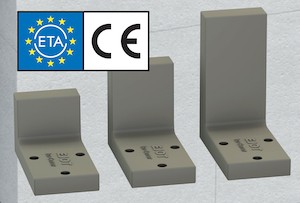
The EJOT Iso-Corner concept is simple. It is an L-shape installation angle, available in three sizes and has two installation surfaces so the building element can be fixed to the face or reveal/soffit, which is anchored in to the substrate of the building face. Once in place, the building element is then fixed to the Iso-Corner face with the EJOT Delta PT 100 screws, resulting in a perfectly coordinated fastening system. The Iso-Corner also reduces the risk of thermal bridging because it is manufactured from polyurethane foam.

Iso-Corner is part of a range of innovative mounting elements from EJOT designed to achieve safe, secure and long-term fastening solutions for ETICS / EWI applications. These include:

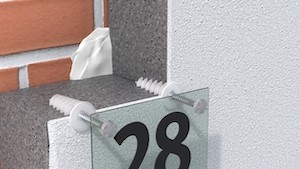
  • Iso-Spiral Anchor – this spiral-shaped plastic assembly anchor, complete with sealing washer and integrated threaded sleeve, provides a fastening solution for lightweight elements in ETICS facades, such as house numbers and external lights.
EJOT Spiral Anchor
Iso-Spiral Anchor
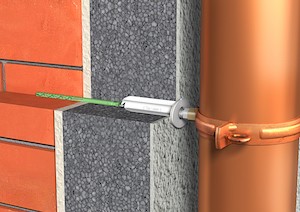
  • Iso-Dart – a fastening system formed of a façade anchor with plastic installation bush and sealing washer, which accepts common coarse threaded screws for securely attaching light to medium loads.
Iso-Dart anchors securely into substrates and accepts screws up to 9.0 mm
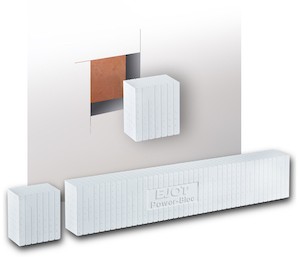
  • Iso-Bloc – a versatile, easy-to-cut block moulded from high density EPS, which is ideal for use as a backing to allow for thermal bridge-free attachments.
Iso-Bloc provides an easy to cut thermal bridge-free backing

As a global leading in construction fastening solutions, the EJOT UK team offers a wealth of technical support and specialist guidance to specifiers and installers to ensure they achieve the right result when mounting to ETICS facades.

For technical support and to find out more about the range of innovative EJOT fastener solutions visit www.ejot.co.uk, call 01977 687040 – or contact Mark Newell, Sales Engineer for ETICS fastening products at EJOT UK: m.newell@ejot.co.uk

EJOT fasteners secure clean, green future for Kärcher UK

Building Products Index Ltd Fastening Systems Leave a Comment

View the EJOT entry on BPindex

Visit the EJOT website

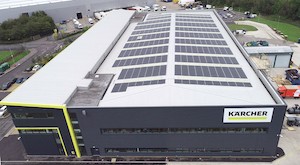
A new 300kW solar photovoltaic (PV) rooftop system which will provide clean energy to power the UK headquarters of Kärcher has been installed by Solar Perfect using high performance EJOT fasteners.

DCIM100MEDIADJI_0020.JPG

Nearly 1,000 solar modules from global energy solutions provider Q CELLS make up the PV system, which will provide Kärcher with 44 per cent of the annual electricity requirement at its Banbury site. It forms an array that will mitigate the effects of 3.19 tonnes of CO2 annually, and deliver enough solar electricity each year to meet the needs of 120 local households.

Over the next 25 years, this clean energy system is set to deliver significant energy and carbon savings for the market-leading high-pressure cleaning equipment manufacturer, which has made a commitment to help preserve the world’s natural resources across every element of its business operations.

Solar Perfect was consulted on the initial proposal and subsequently appointed to provide a complete design, manufacture and installation package. Working closely with Q CELLS, Solar Perfect managed the installation stage in just seven days with minimal on-site disruption and scheduling of deliveries to work around the limited availability of on-site storage space.

EJOFAST-Line-UpA team of five installers were tasked to fit 967 Q.PEAK-G4.4 310 Wp solar modules using 12,000 EJOT self-drilling screws. The EJOFAST® JF3-2-5.5 precision engineered fasteners used here are ideally suited to the attachment of solar PV rooftop systems, given their manufacture in A2 (grade 304) stainless steel to provide reliable long-term resistance to corrosion, excellent pull-out values and innovative drill point geometry to enable safe and efficient installation.

The new solar PV system installation also marks a second important contribution from the EJOT brand to the success of the Kärcher UK site. When the facility was built in 2016, a range of EJOT roofing and cladding fasteners were specified to ensure the building envelope was created to a high standard, and four years on these fixings are fully delivering on their promise.

DCIM100MEDIADJI_0004.JPG

Cathal Murphy, Managing Director at Solar Perfect said: “The Kärcher UK HQ project was a tremendous scheme to be involved with and one that perfectly demonstrates the long-term benefits of solar PV systems for the commercial and industrial sectors. Given this, it was vitally important that the fasteners we used to secure the modules to the roof structure could be relied upon for the whole design life, which is why we chose EJOT.

“EJOT continue to be a fantastic supplier of quality fixings. Kevin Rackley, in particular, is a great source of knowledge and always has a solution to our fixing requirements.”

The EJOFAST® JF3-2-5.5 self-drilling screws used for the Kärcher UK project are part of a wide range of solutions from EJOT to cater for every building envelope requirement. This includes a dedicated range of fixings for solar systems, roofing and cladding fasteners with coloured heads to meet aesthetic goals and specialist rainscreen fixings.

The green energy solution for Kärcher at Banbury was delivered via an innovative funding model – a Power Purchase Agreement (PPA) – arranged by renewable energy asset manager, Zestec, and their financing partner NextEnergy Solar Fund (NESF).

This supports UK businesses to adopt and embrace roof-mounted solar energy generation by enabling so-called ‘ host’ properties to benefit from immediate electricity and carbon reductions, with no capital outlay, in return for use of the airspace above the roof over a defined period. It is designed to be a hassle-free model from the client’s perspective as it puts responsibility for the installation and long-term maintenance in the hands of PV technology specialists.

Find out more about the range of EJOT fastener solutions at www.ejot.co.uk or call 01977 687040.

New EJOT Guides review Best Practice for installation of self-drilling fasteners

Building Products Index Ltd Fastening Systems Leave a Comment

View the EJOT entry on BPindex

Visit the EJOT website

From contractor to installer, whoever is purchasing building fasteners from within the project chain is linked to the overall investment of the complete building system. Modern technical fastening products are engineered components in their own right and when installed correctly they provide high strength load performance, safe and secure joints, environmental longevity and many other application benefits.

Setting a screw gun nosepice according to differing panel thicknessesThe demands that go hand in hand with today’s construction industry require manufacturers of all contributing components to be vigilant, knowledgeable and fully transparent.  As original fastening manufacturers EJOT is in a strong position to monitor such technical demands. Research and Development is key and with EJOT’s global market interests spanning sectors such as aerospace, automotive, seismic and nuclear construction, cross-pollination of technical knowledge can and has created cutting-edge solutions for many building and construction fastening products.

If knowledge is the cornerstone to specification, sharing knowledge is of course the responsibility of the manufacturer. With reference to the correct deployment of technical fasteners, ‘best practice’ also implies the need for contractors to see the entire installation process through, yet this can break down if everyone actively involved in the chain is not fully aware of the technical properties that a modern fastener is engineered to deliver.

Seeing first-hand such varying levels of technical awareness, EJOT UK has produced the first in a new series of video and printed guides. Here, the company’s technical wing ‘EJOT Applitec’, reviews best installation practices relating to self-drilling fasteners. The Yorkshire based manufacturer is keen to convey how vast choice of drive tools through to installation techniques can affect the end result and how combinations of torque, loading and installation speeds are absolutely vital.

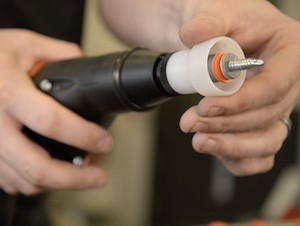
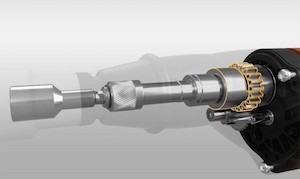
2 - This screw gun has a clutch mechanism to safeguard against over-drivingFor example, market-wide installation tools range from dry-lining guns through to impact drivers which are all compact and relatively inexpensive. Yet unlike professional screw guns, the general mechanics of these devices will often mean they can apply an unnecessary and uncontrollable amount of torque to fasteners that need to be installed to precise settings. Many of these tools have no clutch mechanism to safeguard against over-driving and whilst it may be possible to achieve a correctly installed fastener using such drivers, at best the installer is doing so by ‘guesswork’ – which simply cannot be relied upon across the installation of several thousand fasteners. The same concerns apply across the huge variety of fasteners and applications that the industry now demands. The clear risk here is that the original construction investment is at best diluted, with reputations and overall responsibilities in sharp focus should performance integrity be lost.

3 - EJOT's guide addresses aspects from correct installation speeds to washer compressionThe guide also illustrates how to achieve correct settings that relate directly to the different type of the materials being joined, the easiest way to achieve and determine successful application, and finally how to monitor safe and correct installation throughout the project’s schedule.

Brian Mack is Technical Business Development Manager for EJOT in the UK:

“The information we are producing here shows that we don’t just sell fastening products. The responsibility goes much further than that and we are working alongside other manufacturers to develop responsible technical information that supplements in greater detail the contributions we make collectively, to information circulated by recognised industry flag bearers such as the NFRC and the MCRMA”.

To further endorse the company’s commitment to Best Practice, EJOT UK has sponsored the NFRC’s industry-wide reference manual, known as ‘The Blue Book’. Managing Director Robert Hardstaff said:

“EJOT UK shares the NFRC’s philosophy of quality and excellence within the construction industry. We are therefore delighted that as NFRC Industry Technical Partner, our sponsorship will help to support this industry-wide platform for best practice.”

More information about accessing EJOT’s technical guide is now available at

https://www.ejot.co.uk/applitec-best-practice-screw-gun

New EJOT Guides review Best Practice for installation of self-drilling fasteners

Building Products Index Ltd Fastening Systems Leave a Comment

View the EJOT entry on BPindex

Visit the EJOT website

From contractor to installer, whoever is purchasing building fasteners from within the project chain is linked to the overall investment of the complete building system. Modern technical fastening products are engineered components in their own right and when installed correctly they provide high strength load performance, safe and secure joints, environmental longevity and many other application benefits.

The demands that go hand in hand with today’s construction industry require manufacturers of all contributing components to be vigilant, knowledgeable and fully transparent.  As original fastening manufacturers EJOT is in a strong position to monitor such technical demands. Research and Development is key and with EJOT’s global market interests spanning sectors such as aerospace, automotive, seismic and nuclear construction, cross-pollination of technical knowledge can and has created cutting-edge solutions for many building and construction fastening products.

3 - EJOT's guide addresses aspects from correct installation speeds to washer compressionIf knowledge is the cornerstone to specification, sharing knowledge is of course the responsibility of the manufacturer. With reference to the correct deployment of technical fasteners, ‘best practice’ also implies the need for contractors to see the entire installation process through, yet this can break down if everyone actively involved in the chain is not fully aware of the technical properties that a modern fastener is engineered to deliver.

Seeing first-hand such varying levels of technical awareness, EJOT UK has produced the first in a new series of video and printed guides. Here, the company’s technical wing ‘EJOT Applitec’, reviews best installation practices relating to self-drilling fasteners. The Yorkshire based manufacturer is keen to convey how vast choice of drive tools through to installation techniques can affect the end result and how combinations of torque, loading and installation speeds are absolutely vital.

2 - This screw gun has a clutch mechanism to safeguard against over-drivingFor example, market-wide installation tools range from dry-lining guns through to impact drivers which are all compact and relatively inexpensive. Yet unlike professional screw guns, the general mechanics of these devices will often mean they can apply an unnecessary and uncontrollable amount of torque to fasteners that need to be installed to precise settings. Many of these tools have no clutch mechanism to safeguard against over-driving and whilst it may be possible to achieve a correctly installed fastener using such drivers, at best the installer is doing so by ‘guesswork’ – which simply cannot be relied upon across the installation of several thousand fasteners. The same concerns apply across the huge variety of fasteners and applications that the industry now demands. The clear risk here is that the original construction investment is at best diluted, with reputations and overall responsibilities in sharp focus should performance integrity be lost.

Setting a screw gun nosepice according to differing panel thicknessesThe guide also illustrates how to achieve correct settings that relate directly to the different type of the materials being joined, the easiest way to achieve and determine successful application, and finally how to monitor safe and correct installation throughout the project’s schedule.


Brian Mack is Technical Business Development Manager for EJOT in the UK:

“The information we are producing here shows that we don’t just sell fastening products. The responsibility goes much further than that and we are working alongside other manufacturers to develop responsible technical information that supplements in greater detail the contributions we make collectively, to information circulated by recognised industry flag bearers such as the NFRC and the MCRMA”.

To further endorse the company’s commitment to Best Practice, EJOT UK has sponsored the NFRC’s industry-wide reference manual, known as ‘The Blue Book’. Managing Director Robert Hardstaff said:

“EJOT UK shares the NFRC’s philosophy of quality and excellence within the construction industry. We are therefore delighted that as NFRC Industry Technical Partner, our sponsorship will help to support this industry-wide platform for best practice.”

More information about accessing EJOT’s technical guide is now available at

https://www.ejot.co.uk/applitec-best-practice-screw-gun


1 2