Skip to content
BPindex — The Largest Building Products Directory in the UK

PVC-U windows

Sustaining the future – more than half of consumers want homes of the future to be built with environmentally-friendly materials

Building Products Index Ltd Doors, PVC-U, PVC-U, Windows Leave a Comment

View the Eurocell entry on BPindex

Visit the Eurocell website

New research has revealed that more than half of consumers believe it is important that their home is made using environmentally-responsible materials.

Choosing the right real estate property, house or new home in a housing development or community

Conducted by Eurocell plc, the UK’s leading manufacturer, distributor and recycler of PVC-U window, door, conservatory and roofline systems, the research looked into consumer attitudes towards sustainable building.When asked about their preferred sustainability features, consumers identified double/triple glazing as the most appealing (58%), followed by solar panels (35%), energy efficient appliances (34%) and the use of recycled and sustainable building products (22%).

One of the key drivers behind this trend is the implementation of sustainability features by developers, which are regularly being incorporated into housebuilding voluntarily rather than as a result of legislation.

Explaining this trend, Steve Marshall, Architect Director and Head of Housing at BDP commented: “Some of our local authority clients like to be seen as leading the way and pushing standards when it comes to sustainability. They need to be seen to be doing the right thing and as such will go above and beyond minimum requirements. It might take time for this to impact the standards that others build to, but this may happen as buyers start to ask why the council is offering something that private developers are not.”

Whilst housing developers are pushing this trend currently, a group of architects presented with these statistics believe that consumer and tenant demand is likely to be a driver for sustainable development in the future. Despite this increased awareness it was highlighted by the architects that, for homes to become more sustainable, consumers need more education on what sustainability actually means in housing.

Muswell Hill, LondonJames Roberts, Project Architect at SimpsonHaugh, said: “It comes down to what is tangible. People understand the concept of double glazing and smart meters, for example. However, if you look at the sustainability credentials of the materials used, or how air tight a home is, these are less tangible yet can have an equally significant impact on how sustainable a home is. As such, willingness to invest in some ‘sustainable design features’ is likely to increase as the public’s understanding of them does. Some they will already be investing in, without appreciating it.”

What’s clear is that sustainability means different things to different people across the housebuilding industry.  As such it is critical that the sector works to both understand, and meet, the expectations of future homeowners – especially as they become increasingly educated in this area.

You can see all of Eurocell’s findings from the survey in the Future Home Report which can be downloaded in full here https://www.eurocell.co.uk/whitepaper

A window into the future – consumers demand large, energy efficient windows with noise reduction features

Building Products Index Ltd Doors, PVC-U, PVC-U, Windows Leave a Comment

View the Eurocell entry on BPindex

Visit the Eurocell website

A report has found that consumers want the homes of the future to have windows that are energy efficient, large and noise reducing

Looking over the rooftops of Muswell in London N10 towards the distant skyscrapers of East London Docklands

New research has revealed the window design and features that consumers hope to see in their future homes. Consumers identified windows with higher energy efficiency (52%), ones that can shade against the sunlight (29%), frames made from sustainable materials (26%) and large floor to ceiling windows (23%) as the features or design trends that would be most appealing.

In addition to this, 29% of consumers said that smart windows, for example windows that can turn into a mirror, or be used as a smart screen, are also desirable, according to research conducted by Eurocellplc,the UK’s leading manufacturer, recycler and distributor of PVC-U window, door, conservatory and roofline systems.

These findings were presented to architects at leading studios Hawkins Brown, SimpsonHaugh and BDP, as well as property developer The High Street Group, to be analysed and garner expert insight. When talking about the future of windows, and what we can expect, Francesca Roberts, Hawkins Brown, commented:“It’s about careful placement of the windows and thinking about how light can be flooded into properties in all the right places. It’s not just about light either, you need to think about other factors, such as if the property is near a busy railway or a road and consider how this should impact the placement of windows.

“It’s about finding that sweet spot, through proper testing and analysis. The placement of windows should not be determined by rolling out a standard house type across a site, with the window placement being left to chance. Instead, what’s right for each plot should be considered.”

As well as design trends, consumers were asked about the key drivers for investing in new windows. 52% of consumers identified improving energy efficiency as the most common driver, whilst 38% said increasing natural light and 35% said noise reduction were key drivers.

With the research clearly highlighting how important both natural light and technology are to consumers, it is critical that the construction sector utilises this insight to inform product development and architectural decisions around windows as it works to build the homes required to address the current housing crisis in the future.

You can see all of Eurocell’s findings from the survey in the Future Home Report which can be downloaded in full here https://www.eurocell.co.uk/whitepaper

Assessing the viability of embedded technology in homes of the future

Building Products Index Ltd Doors, PVC-U, PVC-U, Windows Leave a Comment

View the Eurocell entry on BPindex

Visit the Eurocell website

Smart home assistants such as Amazon’s Alexa and Google Home Assistant are now widely used in homes across the UK. Coupled with the explosion in smart home devices – ranging from smart door bells to internet connected fridges – many home owners and renters are now envisaging a time where their smart devices won’t clutter their shelves and tables but will instead be embedded within the design of their homes.

Choosing the right real estate property, house or new home in a housing development or community

This ‘smart home’ aspiration was highlighted in a recent survey conducted by Eurocell plc. where more than half (53%) of respondents said they were interested in having technology-enabled products in the build of their home. A further 24% said they plan to invest in smart technology in their existing property in the near future, while 18% identified integrated technology as one of their top three design trends.

As consumers’ appetite for technology grows, it is likely that the desire amongst home owners or occupiers to see the homes of the future designed with technology in-built, will only get stronger. However, while consumer demand for a smart or internet connected home, is strong, the viability of such homes being constructed is less evident. When the survey responses were analysed by a panel of experts, concerns were raised around the practicalities of the construction sector responding to these consumer aspirations for a home with smart technology embedded within the design.

Architects at leading studios Hawkins Brown, SimpsonHaugh and BDP, as well as property developer The High Street Group, analysed the findings, with the panel being in agreement that, while smart homes will certainly continue to develop, making it an embedded design feature would not be the best use of budget. With technology evolving so quickly the panel highlighted that embedding technology in a home would likely mean that the systems embedded in the house would quickly become ‘dated’ compared to the latest smart tech advancements.

Assessing the consumer feedback Francesca Roberts, Hawkins Brown, commented:“Technology is changing so quickly, to the point that it’s hard to predict what the smart home will look like in 20 years’ time. So much technology these days is wireless anyway, so it doesn’t necessarily need embedding.” James Roberts, SimpsonHaugh, added: “Money is better invested in quality architectural design than on embedding fast changing technology.”

In addition to these concerns the survey found that, while many consumers expressed an interest in a smart home, few were willing to pay more for it as a design feature. Indeed only 20% of those who expressed a desire for a smart home were willing to pay more for a home that met this criteria.

As such, it is safe to conclude that whilst technology is desirable for home owners and consumers, the construction sector should carefully evaluate any future plans to respond to that demand.

You can see all of Eurocell’s findings from the survey in the Future Home Report which can be downloaded in full here https://www.eurocell.co.uk/whitepaper

Let there be (natural) light in the home

Building Products Index Ltd Doors, PVC-U, PVC-U, Windows Leave a Comment

View the Eurocell entry on BPi

Visit the Eurocell website

For many home owners and renters natural light is an increasingly key design aspect in making a property a home, with a focus on this design element stemming from increased consumer awareness around the importance of wellbeing. This is influencing all types of building design, leading architects, builders and developers to seek innovative approaches to boost natural light in the home.

The desire for more natural light was highlight in a recent survey conducted by Eurocell plc. 80% of respondents reported that they would like to increase the amount of natural light entering their home; 48% said they would pay more for a home with a greater amount of natural light; and 57% said they would be more likely to buy or rent a home if it had a high amount of natural light.

Architects at leading studios Hawkins Brown, Simpson Haugh and BDP, as well as property developer The High Street Group, discussed the findings, highlighting that regulation vs. design vs. cost is the main equation when it comes to natural light. This illustrates that, while everyone would like to have more light in their homes, external factors, such as cost and localised building constraints, cannot always be easily overcome to achieve the goal of maximising it in the home.

So how can housebuilders optimise the amount of natural light in the home, within the constrains that they often face? One approach is the WELL architectural standard. This framework aims to ensure that the designs of the buildings we live in advance human health and wellbeing. The standards are based on seven core concepts of health and hundreds of design features that should be considered.

Maximising the amount of natural light in the home is key to this, as most people feel happier and more uplifted in naturally bright spaces. By incorporating features such as utilising glass in the roof and having bigger windows, housebuilders can ensure that the homes they build meet the demands of the next generation of homeowners.

Over the coming years natural light will be increasingly important to homeowners and renters and those builders that take this into consideration will ensure that interest is generated in future developments and that those moving into the property are happy in their surroundings.

You can see all of Eurocell’s findings from the survey in the Future Home Report which can be downloaded in full here https://www.eurocell.co.uk/whitepaper

Eurocell leads the sector in sustainable doors and windows

Building Products Index Ltd Doors, PVC-U, PVC-U, Windows Leave a Comment

View the Eurocell entry on BPi

Visit the Eurocell website

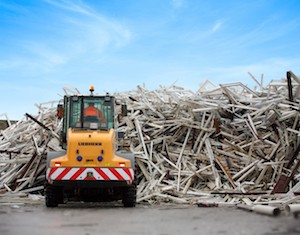
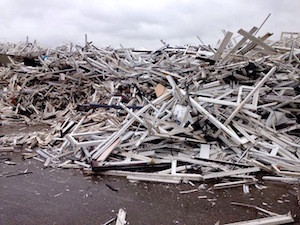
With plastic pollution possibly proving to be the biggest environmental issue of our time, Eurocell exemplifies commitment to sustainability and developing quality products from recycled material.

From a sustainability perspective, Eurocell’s PVC-U windows are already ahead. First, life expectancy of a PVC-U window is considerable. PVC-U windows have been given a 35-year minimum reference service life by the BRE, with minimal maintenance during this period.

Second, closed loop manufacture results in the plastic element PVC-U windows being re-used up to 10 times. With the 35-year life expectancy, that means the plastic can be used in manufacture for up to 350 years!

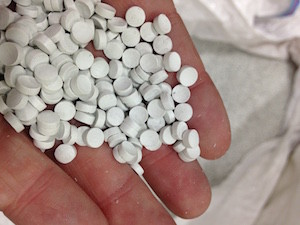
Better still, the re-use of PVC-U is an example of ‘upcycling’. Re-processing PVC-U imbues it with additional structural strength and, post-extrusion, results in recycled product being technically superior to those made from virgin material, because the process creates better dispersion of material elements.

For example, our innovative Modus window and door profile system features an intelligent six-chamber single-piece profile design consisting of circa 45% post-consumer recycled material. Modus achieves an A++ Window Energy Rating and U-value of 0.7, which is market-leading performance. Modus delivers a triple benefit to customers – top energy efficiency for lower heating bills, responsible use of materials/resources for sustainability and at lower cost than alternative window materials – timber and aluminium.

Another great example is our range of Cavalok cavity closers, predominantly used in the construction of new build housing. The closers – which are built into the completed wall structure – are made from 100% post-consumer recycled material for maximum material efficiency and are certified by the BBA.


All of this combines to make Eurocell a sustainability leader in its field and that’s why we have just been named Manufacturer of the Year at the highly regarded MRW National Recycling Awards.

NRA18_LOGO_AWARDS_WINNERTo find out more about our passion for sustainability and how Eurocell can assist in delivering buildings that are sustainable, healthy and warm, call the customer services team on 0800 988 7300, visit www.eurocell.co.uk/sustainability


Eurocell leads the sector in sustainable doors and windows

Building Products Index Ltd Doors, PVC-U, PVC-U, Windows Leave a Comment

View the Eurocell entry on BPi

Visit the Eurocell website

BP Index July 2018 Sustainability (1)With plastic pollution possibly proving to be the biggest environmental issue of our time, Eurocell exemplifies commitment to sustainability and developing quality products from recycled material.

From a sustainability perspective, Eurocell’s PVC-U windows are already ahead. First, life expectancy of a PVC-U window is considerable. PVC-U windows have been given a 35-year minimum reference service life by the BRE, with minimal maintenance during this period.

Second, closed loop manufacture results in the plastic element PVC-U windows being re-used up to 10 times. With the 35-year life expectancy, that means the plastic can be used in manufacture for up to 350 years!


BP Index July 2018 Sustainability (3)Better still, the re-use of PVC-U is an example of ‘upcycling’.
Re-processing PVC-U imbues it with additional structural strength and, post-extrusion, results in recycled product being technically superior to those made from virgin material, because the process creates better dispersion of material elements.

For example, our innovative Modus window and door profile system features an intelligent six-chamber single-piece profile design consisting of circa 45% post-consumer recycled material. Modus achieves an A++ Window Energy Rating and U-value of 0.7, which is market-leading performance. Modus delivers a triple benefit to customers – top energy efficiency for lower heating bills, responsible use of materials/resources for sustainability and at lower cost than alternative window materials – timber and aluminium.
BP Index July 2018 Sustainability (2)Another great example is our range of Cavalok cavity closers, predominantly used in the construction of new build housing. The closers – which are built into the completed wall structure – are made from 100% post-consumer recycled material for maximum material efficiency and are certified by the BBA.

All of this combines to make Eurocell a sustainability leader in its field, and to find out more about how Eurocell can assist in delivering buildings that are sustainable, healthy and warm, call the customer services team on 0800 988 7300 or visit www.eurocell.co.uk


Build to rent: the future is here

Building Products Index Ltd PVC-U, Windows Leave a Comment

View the Eurocell entry on BPi

Visit the Eurocell website

As the private rented sector grows apace, it’s bringing a new approach to new build, in terms of designing and maintaining dwellings. Being largely investor driven, there’s additional emphasis on lifetime costs and asset management – and Eurocell could prove a key partner in these.
According to the latest English Housing Survey figures, published in late January, 20% of households now rent privately, a figure that rises to 30% in London. The number of people in the private rented sector (PRS) has been rising since 2002, and has more than doubled since then.

The predictions are that this proportion will continue to rise with build-to-rent developments taking a larger and larger share of the PRS market. This is certainly the Government’s intention: its policies aim to discourage rogue landlords while encouraging purpose-built and professionally managed rental homes.

The demands of build-to-rent are quite different to those of build-to-sell and we already see this playing out in the way new developments are being procured and delivered. Build-to-rent developers and investors are interested in programmes of multiple developments, rather than one-off projects; elements of offsite manufacture and standardisation; a focus on design and quality; and a greater interest in whole life costs.

Big numbers

According to a 2017 report by Savills, commissioned by the British Property Federation (BPF), the PRS in the UK is worth over £1 trillion. However, 98% of the market is owned by small landlords who each have 10 properties or less.
Given the shortfall in housing in the UK, institutional investors are keen to invest in this sector. With a lack of property to buy, they are developing or financing their own build-to-rent schemes at an increasing rate.

At the latest Q4 2017 count by the BPF, there were 105,214 build-to-rent homes either complete, under construction or in planning. That compared to 95,918 in September 2017 and 69,825 in the first quarter of last year.

Another trend highlighted through the BPF’s figures, compiled by Savills, is that the number of large-scale developments are on the up. There were 34 planned developments of more than 500 homes each in September 2017, compared to 24 such developments in the first quarter of 2017.

City living

Though build-to-rent was born in London, it has quickly spread to other cities around the UK. Developers are looking for city centre sites with good transport links, close to mainline railway stations or metros.
Last month [January], Legal & General announced Brighton’s first ever build-to-rent development and the eighth city in which the insurance giant will build such a scheme. Its other sites are in Leeds, Bristol, Bath, Walthamstow, Birmingham and Salford representing around 2,000 homes and £1bn in investment.

Legal & General has even set up its own modular housing factory in Sherburn near Leeds.  Affordable housing provider RHP is set to be the factory’s first customer, although to date only a prototype house has been constructed.

The first offsite-manufactured homes for RHP – tiny, one-bedroom flats – could leave the factory in the summer. But there’s no news yet about Legal & General supplying its own projects.

Offsite will also feature in £5bn-worth of developments planned by Stanhope and Network Homes over the next five years, featuring a mix of tenures including build to rent. The developers have just announced that Laing O’Rourke will be their construction partner with parts of the building such as bathrooms and balconies manufactured at Laing O’Rourke’s Explore Industrial Park facility in Worksop.

For multi-development portfolios, it’s easy to see why standardisation is important. Economies of scale may allow the capital cost of products and packages to come down, and ongoing repair and maintenance will also be more efficient and cost effective if there are fewer parts and products to work with.

Whole life costs

Specifying homes that will become an asset for investors, rather than sold on to individual buyers does require a change in mindset. As well as finding ways to keep tenants there for longer to minimise void periods, elements of the building’s envelope and internal fit-out must be chosen with lifetime and life cycle implications in mind. Kitchens and bathrooms, floor and wall finishes, joinery and windows will all come under scrutiny.

This is still a difficult area. Often developers will be constructing a building and then selling it on to an investor within a few years, so the incentive to increase capital cost to reduce operational cost may not be there. However, property experts suggest that investors will be looking quite carefully at whole life costs when they make their investment decisions – whether the purchase is being made at day one or ten years down the line.

Sustainability will be important for build-to-rent homes, motivated by pragmatism rather than the desire to get a green rating such as BREEAM. The impact on tenants’ bills and comfort levels will influence decision on renewable technologies or improved insulation levels alongside the balance between capital investment and operation spending.

An emphasis on whole life costs and maintenance requirements means that the build-to-rent sector is reportedly leading the residential sector in the uptake of BIM (building information management). Used largely in the public sector, due to a Government mandate, BIM makes perfect sense in the PRS: knowing instantly where a window came from, how to get replacement parts or what maintenance regime it needs will save a huge amount of resource.

This emphasis on whole life costs and maintenance requirements isn’t about planned maintenance programmes and replacing kitchens every 25 years – it’s about taking a more holistic look at properties and making decisions that will boost value – which could be measured in financial and social terms – of the portfolio.

This is an approach that Eurocell whole-heartedly endorses. It’s important to look not only at initial cost but at cost in use: what maintenance will be required over a building element’s lifetime and how will that impact on the operational cost for the landlord and comfort of the homeowner.

In this context, energy efficiency is of major importance too. Not just because the environment is of interest: building managers and tenants are deeply focussed on running costs. Elements, such as windows, also must require little, if, any maintenance and they must offer high levels of energy efficiency.

Obviously, in this context, PVC-U window systems are a cost-effective and high-performing systems win for specifiers. PVC-U windows have been given a minimum reference service life (RSL) of 35 years by the BRE, with minimal maintenance during this period. First generation PVC-U windows – now 50 years old – are still performing strongly well beyond this. Glazing units, the most expensive part of a window, regardless of material, will fail long before the frame.

While PVC-U windows aren’t maintenance free – they will still need to be cleaned, and hardware and other items looked after – they are incredibly low maintenance and the cost-in-use burden is significantly less than other materials.

Modus goes into Orbit

BPI Index April 2018 PRS Orbit (1)A great example of this approach to value engineering lifetime costs and active asset management is Orbit Housing’s Fordham House in Stratford-upon-Avon, which aims to raise the bar for rented accommodation. Designed for key workers in the town, the 82-apartment block will provide enhanced protection against noise, a superior maintenance and repair strategy and additional facilities such as secure internal bike storage rooms.

Much of the budget for these above-and-beyond features has come from the specification of Modus PVC-U windows from Eurocell in place of the aluminium frames originally specified. “We saved a significant amount without compromising on the specification or the design”, says Orbit Commercial Director Adam Cooper. “And from a planner’s point of view, they look identical”.

BPI Index April 2018 PRS Orbit (2)Deeley Construction began work on the site, which sits on the corner of Birmingham and Clopton Roads, in January 2016 with the demolition of a disused office building. Construction of the foundations began in May that year, with the first tenants due to move into their new homes in September this year. Deeley’s parent company is one of three partners that form the scheme’s developer ABD Developments, and the site itself is owned by benevolent organisation Stratford Town Trust.

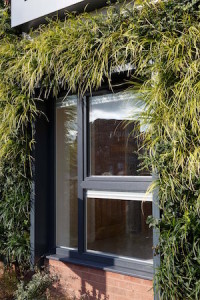
Constructed from dense concrete blocks with hollowcore flooring, the three- and four-storey building is clad in a mixture of curtain walling and green wall – sections of planted walls which will be automatically fed and irrigated. The Modus windows, supplied and installed by Unique Window Systems, are tilt-and-turn so that they can be cleaned internally, avoiding the potential hazard and traffic issues of accessing them from the elevations by the two busy roads.

Tenants will be required to keep their windows clean as part of their tenancy agreement. Details about how to operate and clean the windows, together with a function that allows tenants to report and photograph any problems with their apartments, will be available through a smartphone app, developed by Orbit.

With many tenants expected to come from expanding local hospitals, acoustic improvements were high on the menu of potential value-enhancing features. Orbit has beefed up the acoustic barriers between floors with a layer of insulation and screed with suspended ceilings added to the deep hollow concrete slab. It has also added fitted blinds within the reveals of the windows to provide an additional noise cushion for shift workers who need to sleep during the day.

“We did not need to increase the specification for the windows: the existing specification from Eurocell provided the level of acoustic protection that we needed”, says Cooper.

BPI Index April 2018 PRS Orbit (3)Coming with a 12-year guarantee, the Modus system is available in nine solid and woodgrain-effect colours, all of which are available with white internal finishes to create a light and airy living environment. A further range of more than 40 solid and woodgrain effect finishes is available to order, including colour both sides.

The Modus range achieves a U-value of 1.2 W/m² using 4/20/4mm sealed double-glazed units. This effective thermal performance is due to the 75mm six-chamber profile system used that also enables the range to achieve a U-value of 0.7 by installing triple-glazed units.

This led to Modus becoming one of the very first systems to achieve the BFRC Window Energy Rating (WER) of A++. This is only awarded to windows with an energy index value equal to or greater than +20; and Modus A++ designs include casement, reversible and tilt and turn.

Consisting of 50% post-consumer recycled PVC-U as standard, Modus has a smaller carbon footprint than products made or recycled outside of the UK. Eurocell achieves this by employing dual material extrusion technology (DMET) that layers post-consumer recycled and ‘virgin’ material simultaneously, so the recycled material is concentrated in the central core of the profiles where it cannot be seen once the door or window is installed.

Additional budget gained from savings on the window costs has also gone into upgrading the flooring material. Ceramic wood-effect flooring has replaced lino to provide a longer life and hence lower maintenance costs and down-time for Orbit.

A re-think of the building’s layout produced space for a substantial ‘spares room’ which will house items such as cookers and kitchen units. With all the apartments kitted out identically, this will enable faster repairs and reduce the time required to spruce up homes between tenancies.

Intelligent asset management has proven its worth in the infrastructure sector, and there’s no reason why it shouldn’t help the private rented sector as it builds momentum. To find out why Eurocell can help you manage investor expectations in terms of whole life costs, low maintenance and a value engineered approach to asset management; call the customer services team on 0800 988 7300 or visit www.eurocell.co.uk

Get Eurocell made to order foils in just seven days

Building Products Index Ltd Doors, PVC-U, PVC-U, Windows Leave a Comment

View the Eurocell entry on BPi

Visit the Eurocell website

BP Index March 2018 7-day MTO Foils (1)In response to strong demand for coloured PVC-U windows and doors, Eurocell offers fabricators a turnaround of seven working days for a wide range of foils. Customers can choose from 31 different colours and finishes for any window or door as a made-to-order item, secure in the knowledge they won’t be subject to the usual three- to four-week wait for made-to-order profiles.

BP Index March 2018 7-day MTO Foils (3)The available palette, the most comprehensive in the industry, allows the homeowner or end-user the choice of regular favourites Rosewood and Golden Oak or, for those of a more contemporary mindset, soothing and stylish greys such as Anthracite, Slate, Kensington and Hazy Grey. Both Anthracite and Hazy Grey can be ordered with a woodgrain or smooth finish option.

BP Index March 2018 7-day MTO Foils (4)Those who are keen to be at the forefront of design and trends can select in vogue colours such as Light Ivory, Anteak and Chartwell Green or two shades of perennially cool black, Ebony and Black Ash.

To find out more about this super slick service, either visit https://www.eurocell.co.uk/pvc-u-trade/colours/7-day-foils or call the customer services team on 0800 988 7300.


Get offsite InSite from Eurocell at Ecobuild 2018

Building Products Index Ltd Doors, PVC-U, PVC-U, Windows Leave a Comment

View the Eurocell entry on BPi

Visit the Eurocell website

Eurocell BPindex February 2018 Insite Ecobuild (2)Eurocell is promising to deliver a whole host of benefits to the timber frame and offsite construction sectors with the launch of its new InSite window solution. InSite will enable timber frame manufacturers to install fully glazed, fully finished windows into wall panels as part of the factory production process, thereby reducing on site disruption and labour costs while saving time on build programme schedules. The new system can be viewed at Ecobuild 2018 on stand G22.

There are also significant health and safety benefits with factory fitting and the reduction in manual handling, as well as an estimated 30% improvement in transportation yields because the windows are fully recessed, allowing panels to be stacked flush when loaded.

Eurocell BPindex February 2018 Insite Ecobuild (1)InSite comprises market-leading PVC-U window performance with an innovative fixing method that allows factory fitting of the window directly into the wall panel. Once the timber wall panel has been erected on-site, the windows are checked to ensure they are plumb and square and then simply secured to the first fix position by pushing the frame outwards to lock it into position. An intelligent design modification enables cills to be simply clipped on and mechanically secured once the windows are locked into position. The whole panel assembly can be made watertight within one day so interior trades can begin work immediately, saving time on programme.

As part of its development, the InSite system has been fully tested, including resisting wind load pressures well in excess of 200mph – significantly beyond the highest Category 5 hurricane winds rating (156mph+). Design calculations have been verified by independent timber frame structural engineers. Owing to the controlled nature of manufacture, the installed windows offer leading energy efficiency performance, with a U-value of just 0.8 W/m2 possible, a level that far exceeds current Building Regulations requirements.

A 10-year product guarantee* on InSite windows provides customer peace of mind, as does full product traceability, thanks to a simplified supply chain and centralised documentation.

Talking about the launch, Chris Coxon, Group Head of Marketing at Eurocell, said: “InSite is an engineered solution that gives off-site construction specialists an opportunity to increase efficiencies and quality at key stages of the manufacturing and building process, so they receive the benefits they promote to their clients and streamline the construction process further, resulting in a safer, faster build time.”

“Since there is no need to store windows on site there is no danger of damage or theft and the reduction in manual handling also significantly cuts the number of health and safety issues to be dealt with. Programme time is not affected by issues like scaffolding obscuring the installation of windows, especially as preparing InSite for external cladding and internal plastering can all be done from the inside. Similarly, site traffic is reduced because there are no window deliveries,” he adds.

Sounds appealing? Find out more by visiting www.eurocell.co.uk/insite or calling the Eurocell Customer Care Team directly on 0800 988 3049.

Ecobuild 2018 takes place between March 6th and 8th at the ExCel centre in London’s Docklands. Eurocell’s stand no. is G22. To register visit: https://www.ecobuild.co.uk/

* including 5 years on glazing units and two years on internal window hardware.

1 … 4 5 6 7