Skip to content
BPindex — The Largest Building Products Directory in the UK

Roofline systems

Making a house a home – considering wellbeing in the design of future homes

Building Products Index Ltd Doors, PVC-U, PVC-U, Windows Leave a Comment

View the Eurocell entry on BPindex

Visit the Eurocell website

stack of multiple people expressionNew research has revealed that four in five consumers believe the design of their home impacts their wellbeing, demonstrating the growing demand for homes designed to promote good health.

Conducted by Eurocell plc the UK’s leading manufacturer, distributor and recycler of PVC-U window, door, conservatory and roofline systems, looked into what building design features and factors impact people’s wellbeing.

When asked what top three factors contribute to consumers feeling good in their own home respondents identified the amount of natural light (48%), low noise levels (39%) and feeling safe and secure (37%). These were closely followed by access to outdoor space (36%) and the design and layout (35%). Furthermore, 78% said that feeling comfortable and secure in their home impacted their overall wellbeing.
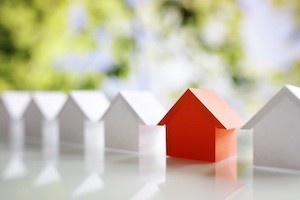
Searching for real estate property, house or new homeOne of the key drivers behind this trend is growing consumer awareness of the impact of the built environment on personal wellbeing. The benefits of homes with high levels of natural light are well established and include a positive impact on factors including health, happiness, productivity and mental wellbeing, with research also suggesting it can help reduce the effects of seasonal affective disorder.

As this consumer awareness continues to grow, the construction sector will have to respond by placing wellbeing at the centre of everything it does. This will influence all types of design, and will require architects, builders and developers to seek innovative approaches to wellbeing features within homes.

You can see all of Eurocell’s findings from the survey in the Future Homes Report which can be downloaded in full here https://www.eurocell.co.uk/whitepaper

Sustaining the future – more than half of consumers want homes of the future to be built with environmentally-friendly materials

Building Products Index Ltd Doors, PVC-U, PVC-U, Windows Leave a Comment

View the Eurocell entry on BPindex

Visit the Eurocell website

New research has revealed that more than half of consumers believe it is important that their home is made using environmentally-responsible materials.

Choosing the right real estate property, house or new home in a housing development or community

Conducted by Eurocell plc, the UK’s leading manufacturer, distributor and recycler of PVC-U window, door, conservatory and roofline systems, the research looked into consumer attitudes towards sustainable building.When asked about their preferred sustainability features, consumers identified double/triple glazing as the most appealing (58%), followed by solar panels (35%), energy efficient appliances (34%) and the use of recycled and sustainable building products (22%).

One of the key drivers behind this trend is the implementation of sustainability features by developers, which are regularly being incorporated into housebuilding voluntarily rather than as a result of legislation.

Explaining this trend, Steve Marshall, Architect Director and Head of Housing at BDP commented: “Some of our local authority clients like to be seen as leading the way and pushing standards when it comes to sustainability. They need to be seen to be doing the right thing and as such will go above and beyond minimum requirements. It might take time for this to impact the standards that others build to, but this may happen as buyers start to ask why the council is offering something that private developers are not.”

Whilst housing developers are pushing this trend currently, a group of architects presented with these statistics believe that consumer and tenant demand is likely to be a driver for sustainable development in the future. Despite this increased awareness it was highlighted by the architects that, for homes to become more sustainable, consumers need more education on what sustainability actually means in housing.

Muswell Hill, LondonJames Roberts, Project Architect at SimpsonHaugh, said: “It comes down to what is tangible. People understand the concept of double glazing and smart meters, for example. However, if you look at the sustainability credentials of the materials used, or how air tight a home is, these are less tangible yet can have an equally significant impact on how sustainable a home is. As such, willingness to invest in some ‘sustainable design features’ is likely to increase as the public’s understanding of them does. Some they will already be investing in, without appreciating it.”

What’s clear is that sustainability means different things to different people across the housebuilding industry.  As such it is critical that the sector works to both understand, and meet, the expectations of future homeowners – especially as they become increasingly educated in this area.

You can see all of Eurocell’s findings from the survey in the Future Home Report which can be downloaded in full here https://www.eurocell.co.uk/whitepaper

EASI-DEC ROOFLINE – THE ALTERNATIVE TO SCAFFOLDING

Building Products Index Ltd Roofing, Roofline Leave a Comment

View the Easi-Dec entry on BPi

Visit the Easi-Dec website

Easi-Dec roofline System (3)Easi-Dec, the working at height safety specialist, has supplied Everest with 72 Roofline systems to provide installation teams with a safe, efficient and cost effective solution for accessing roofline level when carrying out gutter, soffit and fascia replacements.

After working with scaffolding for several years, Everest investigated alternative working at height solutions. Having approached Easi-Dec about its Roofline system, the Everest
health and safety and purchasing departments received numerous product demonstrations with the Easi-Easi-Dec roofline System (2)Dec team visiting Everest branches and existing projects to highlight how the system can accommodate different types of properties. Impressed by the safe, easy to use and cost effective system, Everest placed an order for 72 Easi-Dec Roofline platforms.

The Easi-Dec Roofline system allowed trained operatives to erect the access equipment on the day of the installation and remove it upon completion, which caused less disruption to customers. The system removes the need to appoint external scaffold companies on some installations. Its individual platforms can also be used on window replacement contracts which offer further flexibility with the equipment.

 
Easi-Dec roofline System (1)“The Easi-Dec Roofline system is well known within our industry and it not only offers a cost effective solution, but it also does not compromise on safety,” says Andy Hunter, Health & Safety Executive at Everest. “We purchased a significant amount of Easi-Dec equipment, and as a result, we worked closely with the company to deliver 72 training sessions around the UK in a very short space of time.  The service was excellent and the delivery of the equipment and training ran without any issues.  It was an absolute pleasure to deal with all of the team at Easi-Dec and I could not recommend them highly enough.”

Easi-Dec Roofline is a modular system incorporating one or more Easi-Dec platforms linked securely with Easi-Dec Catwalk to form a continuous fully-guarded platform. It has been designed to provide simple, rapid access to roofline level by eliminating the time constraints of erecting scaffolding and can be set up in less than 30 minutes. The 8 metre Roofline system comprises 2 Easi-Dec platforms and a Catwalk. It features telescopic legs that provide height adjustment in 30mm increments and can even cope with sloping ground. With a comprehensive range of accessories the Easi-Dec Roofline offers numerous benefits and can overcome a wide variety of challenging access situations.

The Roofline system is available with a standard leg height of 3.3m -5.5m, with alternative leg lengths also available enabling workers to cover the majority of properties, ranging from 2.34m (typical bungalow) up to 6.8m (2 storey town house).

www.easi-dec.co.uk