Skip to content
BPindex — The Largest Building Products Directory in the UK

Heating controls

A new wave of future-fit homes supported by Wavin Indoor Climate Solutions (ICS)

Building Products Index Ltd Heating, Thermostat, underfloor heating Leave a Comment

View the Wavin entry on BPindex

Visit the Wavin website

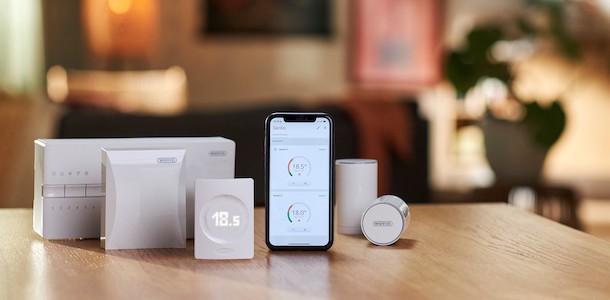
Wavin has launched a new single-source solution for indoor climate, including underfloor heating, thermostats and controls, mechanical ventilation, and heat interface units. With tailored systems to meet all the latest building standards for energy efficiency, indoor air quality, and ease of use in residential new builds.

 

The increasing consciousness of homeowners for energy efficient measures and changes to UK building regulations are changing the way homes are heated and ventilated. Wavin has just released its new research on how indoor climate solutions can add value for new homeowners. 93% of prospective buyers are concerned about energy costs and this sort of attitude has spurred on the need to know about energy performance measures included in a home on a new development. The question now is how to put this into practice and how developers can provide these requirements. Wavin’s indoor climate solutions can be the answer.

Key features of Wavin ICS:

  • Seamless integration of underfloor heating, MVHR, zone control, and heat interface units for heat network projects
  • Low maintenance and easy installation
  • Proven to deliver a more comfortable, healthier, and controllable living environment, with greater energy efficiency and lower carbon emissions

Martyn Neil, Wavin UK Commercial Director of ICS comments: “This is a real opportunity for developers to set themselves apart from the competition. Talking buyers through how their new home has been designed and constructed using the latest energy-saving heating and ventilation technology could be what it takes to tip interest into purchase”.

To find out more about Wavin indoor climate solutions and request a free consultation visit Wavin UK | Indoor Climate Solutions


THE BENEFITS OF BALANCING

Building Products Index Ltd controls, Heating Leave a Comment

View the Danfoss entry on BPindex

Visit the Danfoss website

Correct balancing of heating systems not only optimises heating system efficiency it also helps reduce heating costs for homeowners.

Hydronic balancing is the process of optimising the flow of water in a hydronic heating system by balancing the system pressure and so ensuring that water flows equally to individual radiators. This helps prevent over or under supply to radiators occurring. Apart from the discomfort factor an unbalanced system is less efficient, resulting in potentially higher fuel bills for already hard-pressed consumers.

If a customer complains of cold radiators some installers may consider increasing the pump speed or adjusting the boiler thermostat to a higher temperature setting. Although a seemingly quick fix compared with balancing this may not solve the problem and will increase the system’s energy consumption even further.

Basic principles

Tests conducted independently at the Salford University Energy House showed that without effective control and balancing boilers will operate in condensing mode for around 5% of the time, whereas with, it’s closer to 80% of the time. However, despite these efficiency benefits, and being considered best practice, balancing is sometimes neglected during the installation and commissioning of domestic heating systems. This could be down to lack of knowledge or confidence – or because of the time it can take using traditional methods. Whatever the reason, let’s start by looking at the method most installers will be familiar with – adjusting the lockshield valves on each radiator to ensure each radiator receives the correct flow of hot water to heat the space in which it is fitted. This process can be very time-consuming: firstly, air must be removed from the system by bleeding the radiators. The heating is then turned off and radiators left to cool down before the heating is turned back on. TRVs (if fitted) are then set to the fully open position, and the lockshield valves, by turning them anti-clockwise. The installer checks by touch which radiators get hottest quickest. Return valves on the hottest radiators will probably need to be restricted by 50% or 60% to start with, however, to balance a poorly designed system it may be necessary to close a valve more than 80%.

Learn how the RAS-B2 can increase comfort and reduce energy costs for homeowners here – https://youtube.com/watch?v=ZOVLiTjScmU&feature=shares

Dynamic solution

An accurate flow limiter with a pre-setting function is an alternative static balancing solution whereby the installer calculates the flow required for each radiator and adjusts to ensure the required amount of water is delivered. Although more accurate than a lockshield valve this form of balancing is only optimised for the coldest days (winter) when the heating system is operating at full (design) load. This means flow could be unnecessarily high on milder days (spring/autumn). If TRVs are fitted the room temperature can be controlled, but flow through the radiators will be the same, resulting in over-delivery and wasted energy.

A dynamic solution like the new Danfoss RAS-B2 functions as both a flow limiter and dynamic pressure valve. It limits flow through the TRV but does this independently of pressure fluctuations, so it is optimised for all days. The valve’s built-in differential pressure controller ensures that pressure drops over the valve remain at a constant level, which means flow through the valve is maintained at both full and partial loads.

Quick and easy balancing

As well as improved comfort, the RAS-B2 can enhance system efficiency as it ensures a lower return temperature (condensing boiler efficiency is best at below a return temperature of 55o C) and the pump can run at a lower speed and so consumes less electricity. Furthermore, because pre-setting of the desired flow is done on the RAS-B2 valve, rather than on the lockshield, installers could save up to two hours of working time and correctly balance a system in a fraction of the time it would normally take. And balancing can be made even easier by using the Danfoss Installer App when fitting RAS-B2 valves. This handy tool provides an interactive guide to calculating, recording and documenting the correct flow and subsequent setting for each radiator on a smartphone or tablet.

Discover more on how heating professionals can help consumers increase the efficiency of their heating systems here.

WHOLE HOUSE HEATING GUIDE FROM OMNIE

Building Products Index Ltd Heating, underfloor heating Leave a Comment

View the OMNIE entry on BPindex

Visit the OMNIE website

The latest Product Guide from OMNIE covers all aspects of underfloor heating as well as the manufacturer’s holistic range of heat pumps, controls, ventilation and hot & cold water distribution.  Indeed, these chapters reveal OMNIE’s philosophy of ensuring its five principal technologies work together in what it calls the Whole House System.

Omnie Brochure Cover 2(1)OMNIE offers underfloor heating solutions to suit all types of building, from new-build to refurb, from offices to churches: embracing screeded floors, timber suspended and batten, floating and low build-up/overlay, and even acoustic options.  Each of the floor types are covered in terms of imagery, heating performance and specifications while, for those that require more technical detail, a QR code is provided, which enables the reader to download data sheets and installation guides for each product.

Towards the end of the 114 pages are contact details outlining how to obtain help and support for architects and other specifiers, industry installers and homeowners, along with common questions and information on the RIBA-approved CPD courses.  Finally, ‘Starting your project’ explains how to get a quote and specification, placing an order and information on servicing and commissioning.

While UFH is accepted as optimising the performance of heats pumps, OMNIE can supply a full selection of air and ground source models, suitable for almost any building, irrespective of size, usage or heat loss characteristic. Then there are the advanced controls – including smartphone apps – and heat recovery ventilation systems available to ensure occupants not only enjoy efficiency and comfort but also a healthy indoor environment.

The beautifully presented A4 book features high-quality photography and technical drawings to support the various systems and the important fact that they are manufactured in an environmentally responsible way, using British-made component materials wherever possible – even the publication itself is made from carbon neutral paper.

Whatever your project parameters or your past experience of specifying Whole House Heating Systems, OMNIE has the product portfolio and expertise to help deliver a successful outcome.

The new Omnie Product Guide can be downloaded from the website – www.omnie.co.uk


FOR FURTHER INFORMATION, PLEASE CONTACT:

OMNIE, 18 APPLE LANE, SIDMOUTH ROAD, EXETER, DEVON, EX2 5GL.

TEL: 01392 363605       FAX: 01392 364871

EMAIL:     projects@omnie.co.uk       WEB:      www.omnie.co.uk


PRESS RELEASE ISSUED BY:  J. WARD TURNER PUBLICITY LTD.

WESTERHAM LODGE, WESTERHAM ROAD, KESTON, KENT. BR2 6DA.

TEL:  01689 854868    FAX:  01689 860246  EMAIL:   pr@wardturner.co.uk

Timeguard brings all your existing appliances into the Internet of Things

Building Products Index Ltd controls, Heating Leave a Comment

PrintView the Timeguard entry on BPindex

Visit the Timeguard website


Smat thinking -combined timing and FCU protction with WiFi controlAt its core, the Internet of Things (IoT) is simply about connecting devices over the internet and letting them talk to each other. You can install expensive smart home controllers, as long as your customers are keen to buy all the compatible devices to go with them…

It’s not surprising that where the IoT is most common, in Britain at least, is home heating and energy use, but do not confuse the roll out of free smart meters that just let people watch how fast they are burning their money with IoT devices that help them to do something about it.

FSTWIFITGV_Head_On_ClosedTimeguard has changed that. Appliances don’t need to be “WiFi ready” to be controlled from a phone any more. All you need to do is replace a fused spur or switch with one of Timeguard’s new FST WiFi units, and pair it with the home WiFi using the free Timeguard App. Then any space or water heater can become part of the Internet of Things. There’s even a weatherproof option to control outdoor heaters and lights.

The new devices put your customers in remote control of the biggest energy guzzlers, be it in their home, a shop or office, a rental property  or a whole accommodation block with shared WiFi access.


FSTWIFI_Settings_ScreenThe App enables them to set on and off times, add an extra ‘boost’ hour if needed, and just to check at-a-glance whether or not something is on or off. They can control multiple FST WiFi units from the App and allocate limited control over specific appliances to sub users such as family members, colleagues tenants etc.

And, of course, this ingenious  unit also provides essential fused spur protection for each appliance.

And, for you, its an easy fox because the Timeguard Fused Spur Timer WiFi is just a direct replacement for the old spur or switch.

www.timeguard.com