Skip to content
BPindex — The Largest Building Products Directory in the UK

Windows

Setting the record straight on PVC-U’s sustainability credentials

Building Products Index Ltd Doors, PVC-U, PVC-U, Windows Leave a Comment

View the Eurocell entry on BPindex

Visit the Eurocell website

Sustainability e-Book imageWith so much negative press around plastic dominating the headlines, there is a risk that all plastic gets tarred with the same brush. This assumption that all plastics are as bad for the environment as single use ones runs the risk of opportunities for a more sustainable future being missed. Because putting it simply, not all plastics are made equal.

This is particularly true when it comes to PVC-U, which is used as a durable building product for everything from window frames to conservatories. The common misconception is that like many plastics, PVC-U is non-recyclable. However this couldn’t be further from the truth.

In fact, PVC-U is actually a construction material that can have its lifetime significantly extended to help reduce waste. But, no doubt you are wondering, how can this be possible when everything you hear about plastic is so negative? The answer to this can be found in science.

Getting to know PVC-U

PVC-U is made of two core ingredients; polyvinyl chloride and ethylene. The polyvinyl chloride comes directly from salt while ethylene is a by-product of oil. This is unplasticized, meaning that it doesn’t contain plasticized chemicals. Instead, to make it hard and durable, impact modifiers and filers are used.

As a result of these modifiers, the scientific behaviour of the plastic changes, meaning that for the first 4-5 times PVC-U is recycled, it actually gets stronger by up to 6%.

This means that PVC-U can be re-processed and used to manufacture products of equal quality, creating an ‘upstream’ recycling process. This recycling process is one that every PVC-U product can go through up to ten times, meaning that the lifespan of the average PVC-U product can be extended from 35 years to 350.

Not all plastics are equal

As a result of this recyclability, tarnishing PVC-U with the same brush as the single-use plastics that pollute our oceans, is likely to undermine attempts to improve sustainability across the construction sector. And by dispelling this myth we will be better positioned to ensure that the 5.6million PVC-U window frames that end up in landfill every year are recycled instead!

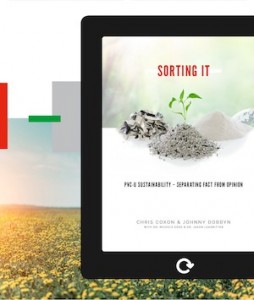
To find out more about PVC-U’s sustainability credentials you can download our latest eBook: ‘Sorting It: A guide to PVC-U Sustainability – Separating fact from fiction’ here.


Making a house a home – considering wellbeing in the design of future homes

Building Products Index Ltd Doors, PVC-U, PVC-U, Windows Leave a Comment

View the Eurocell entry on BPindex

Visit the Eurocell website

Download a copy of the future homes report

New research has revealed that four in five consumers believe the design of their home impacts their wellbeing, demonstrating the growing demand for homes designed to promote good health.

Conducted by Eurocell plc, the UK’s leading manufacturer, distributor and recycler of PVC-U window, door, conservatory and roofline systems, looked into what building design features and factors impact people’s wellbeing.

When asked what top three factors contribute to consumers feeling good in their own home respondents identified the amount of natural light (48%), low noise levels (39%) and feeling safe and secure (37%). These were closely followed by access to outdoor space (36%) and the design and layout (35%). Furthermore, 78% said that feeling comfortable and secure in their home impacted their overall wellbeing.

Searching for real estate property, house or new homeOne of the key drivers behind this trend is growing consumer awareness of the impact of the built environment on personal wellbeing. The benefits of homes with high levels of natural light are well established and include a positive impact on factors including health, happiness, productivity and mental wellbeing, with research also suggesting it can help reduce the effects of seasonal affective disorder.

As this consumer awareness continues to grow, the construction sector will have to respond by placing wellbeing at the centre of everything it does. This will influence all types of design, and will require architects, builders and developers to seek innovative approaches to wellbeing features within homes.

You can see all of Eurocell’s findings from the survey in the Future Homes Report which can be downloaded in full here https://www.eurocell.co.uk/whitepaper

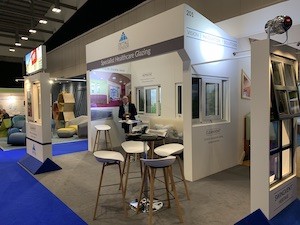
Crittall Fendor exhibited at another successful Design in Mental Health exhibition at the Ricoh Arena in Coventry.

Building Products Index Ltd Steel, Windows Leave a Comment

View the Crittal entry on BPindex

Visit the Crittal website
IMG_0289 2 IMG_0296 2


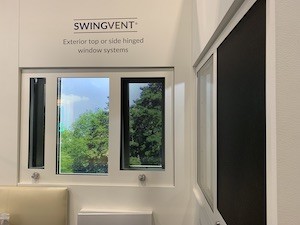
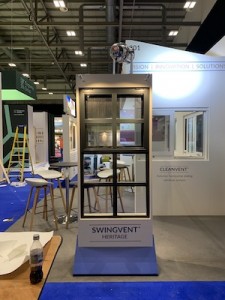
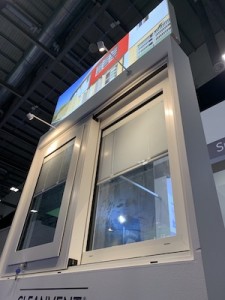
The stand featured a large and fully functioning variety of best selling healthcare windows, including AlphaLine, SwingVent and CleanVent. Crittall Fendor also launched its new SwingVent Heritage window.

SwingVent Heritage was developed following demand for a window that combined the iconic Crittall steel exterior, with an anti-ligature window to be used in healthcare projects.

IMG_4153 2 IMG_0291


The new development window proved a great success, with much admiration for the sample of display.

The event was attended by a record number of people, with a multitude of influential seminars and talks taking part throughout the two day event.

Making a house a home – considering wellbeing in the design of future homes

Building Products Index Ltd Doors, PVC-U, PVC-U, Windows Leave a Comment

View the Eurocell entry on BPindex

Visit the Eurocell website

stack of multiple people expressionNew research has revealed that four in five consumers believe the design of their home impacts their wellbeing, demonstrating the growing demand for homes designed to promote good health.

Conducted by Eurocell plc the UK’s leading manufacturer, distributor and recycler of PVC-U window, door, conservatory and roofline systems, looked into what building design features and factors impact people’s wellbeing.

When asked what top three factors contribute to consumers feeling good in their own home respondents identified the amount of natural light (48%), low noise levels (39%) and feeling safe and secure (37%). These were closely followed by access to outdoor space (36%) and the design and layout (35%). Furthermore, 78% said that feeling comfortable and secure in their home impacted their overall wellbeing.

Searching for real estate property, house or new homeOne of the key drivers behind this trend is growing consumer awareness of the impact of the built environment on personal wellbeing. The benefits of homes with high levels of natural light are well established and include a positive impact on factors including health, happiness, productivity and mental wellbeing, with research also suggesting it can help reduce the effects of seasonal affective disorder.

As this consumer awareness continues to grow, the construction sector will have to respond by placing wellbeing at the centre of everything it does. This will influence all types of design, and will require architects, builders and developers to seek innovative approaches to wellbeing features within homes.

You can see all of Eurocell’s findings from the survey in the Future Homes Report which can be downloaded in full here https://www.eurocell.co.uk/whitepaper

Sustaining the future – more than half of consumers want homes of the future to be built with environmentally-friendly materials

Building Products Index Ltd Doors, PVC-U, PVC-U, Windows Leave a Comment

View the Eurocell entry on BPindex

Visit the Eurocell website

New research has revealed that more than half of consumers believe it is important that their home is made using environmentally-responsible materials.

Choosing the right real estate property, house or new home in a housing development or community

Conducted by Eurocell plc, the UK’s leading manufacturer, distributor and recycler of PVC-U window, door, conservatory and roofline systems, the research looked into consumer attitudes towards sustainable building.When asked about their preferred sustainability features, consumers identified double/triple glazing as the most appealing (58%), followed by solar panels (35%), energy efficient appliances (34%) and the use of recycled and sustainable building products (22%).

One of the key drivers behind this trend is the implementation of sustainability features by developers, which are regularly being incorporated into housebuilding voluntarily rather than as a result of legislation.

Explaining this trend, Steve Marshall, Architect Director and Head of Housing at BDP commented: “Some of our local authority clients like to be seen as leading the way and pushing standards when it comes to sustainability. They need to be seen to be doing the right thing and as such will go above and beyond minimum requirements. It might take time for this to impact the standards that others build to, but this may happen as buyers start to ask why the council is offering something that private developers are not.”

Whilst housing developers are pushing this trend currently, a group of architects presented with these statistics believe that consumer and tenant demand is likely to be a driver for sustainable development in the future. Despite this increased awareness it was highlighted by the architects that, for homes to become more sustainable, consumers need more education on what sustainability actually means in housing.

Muswell Hill, LondonJames Roberts, Project Architect at SimpsonHaugh, said: “It comes down to what is tangible. People understand the concept of double glazing and smart meters, for example. However, if you look at the sustainability credentials of the materials used, or how air tight a home is, these are less tangible yet can have an equally significant impact on how sustainable a home is. As such, willingness to invest in some ‘sustainable design features’ is likely to increase as the public’s understanding of them does. Some they will already be investing in, without appreciating it.”

What’s clear is that sustainability means different things to different people across the housebuilding industry.  As such it is critical that the sector works to both understand, and meet, the expectations of future homeowners – especially as they become increasingly educated in this area.

You can see all of Eurocell’s findings from the survey in the Future Home Report which can be downloaded in full here https://www.eurocell.co.uk/whitepaper

CRITTALL WINDOWS FEATURES AGAIN AT SILVER GILT WINNING SHOW GARDEN AT RHS CHELSEA FLOWER SHOW

Building Products Index Ltd Steel, Windows Leave a Comment

View the Crittall entry on BPindex

Visit the Crittall website

IMG_6089For the second year running, Witham-based Crittall Windows has had one of its iconic steel framed windows featured at a Silver Gilt Medal winning show garden, at this May’s world-famous RHS Chelsea Garden Show.

A Crittall Corporate W20 window, glazed using glass created by artist Wendy Newhofer, was a distinctive feature in the Warner’s Distillery Garden, designed by Helen Elks-Smith and built by Bowles and Wyer, and which won the prestigious Silver Gilt Medal.

IMG_7055The RHS explains: “This sheltered garden provides a relaxed space for socialising and engaging with family and friends. Central to the design is an impressive sheltered courtyard referencing the pastoral setting of Falls Farm,
the heart of Warner’s Gin Distillery in rural Northamptonshire.”

The show garden’s designer Helen Elke-Smith comments:
“We were looking for a window which reflects and complement our design for The Warner’s Distillery Garden, We found that Crittall windows suited this style well.

IMG_5853“We love the lightness of the design which contrasts well with the stronger elements within the garden, referencing modern design aesthetics, but with a nod to the earlier, mid-20th Century modern movement.”

At last year’s show, a minimalist style Crittall window was a striking feature in Hay Joung Hwang’s ‘Eco-City garden, which also was a winner of the Silver Gilt Medal.

Designed with modern living in mind, Crittall Windows’ doors and screens provide a sense of space, light, understated beauty, clean lines, subtle detailing and excellent technical properties. The window this year for the
garden sponsored by Warner’s Distillery, was supplied and installed by Crittall.

IMG_0070 2Crittall Corporate W20 windows and doors are unrivalled for their versatility and extensive range of sections, which allow the designer to create many styles, including elaborate composite windows.


A window into the future – consumers demand large, energy efficient windows with noise reduction features

Building Products Index Ltd Doors, PVC-U, PVC-U, Windows Leave a Comment

View the Eurocell entry on BPindex

Visit the Eurocell website

A report has found that consumers want the homes of the future to have windows that are energy efficient, large and noise reducing

Looking over the rooftops of Muswell in London N10 towards the distant skyscrapers of East London Docklands

New research has revealed the window design and features that consumers hope to see in their future homes. Consumers identified windows with higher energy efficiency (52%), ones that can shade against the sunlight (29%), frames made from sustainable materials (26%) and large floor to ceiling windows (23%) as the features or design trends that would be most appealing.

In addition to this, 29% of consumers said that smart windows, for example windows that can turn into a mirror, or be used as a smart screen, are also desirable, according to research conducted by Eurocellplc,the UK’s leading manufacturer, recycler and distributor of PVC-U window, door, conservatory and roofline systems.

These findings were presented to architects at leading studios Hawkins Brown, SimpsonHaugh and BDP, as well as property developer The High Street Group, to be analysed and garner expert insight. When talking about the future of windows, and what we can expect, Francesca Roberts, Hawkins Brown, commented:“It’s about careful placement of the windows and thinking about how light can be flooded into properties in all the right places. It’s not just about light either, you need to think about other factors, such as if the property is near a busy railway or a road and consider how this should impact the placement of windows.

“It’s about finding that sweet spot, through proper testing and analysis. The placement of windows should not be determined by rolling out a standard house type across a site, with the window placement being left to chance. Instead, what’s right for each plot should be considered.”

As well as design trends, consumers were asked about the key drivers for investing in new windows. 52% of consumers identified improving energy efficiency as the most common driver, whilst 38% said increasing natural light and 35% said noise reduction were key drivers.

With the research clearly highlighting how important both natural light and technology are to consumers, it is critical that the construction sector utilises this insight to inform product development and architectural decisions around windows as it works to build the homes required to address the current housing crisis in the future.

You can see all of Eurocell’s findings from the survey in the Future Home Report which can be downloaded in full here https://www.eurocell.co.uk/whitepaper

Assessing the viability of embedded technology in homes of the future

Building Products Index Ltd Doors, PVC-U, PVC-U, Windows Leave a Comment

View the Eurocell entry on BPindex

Visit the Eurocell website

Smart home assistants such as Amazon’s Alexa and Google Home Assistant are now widely used in homes across the UK. Coupled with the explosion in smart home devices – ranging from smart door bells to internet connected fridges – many home owners and renters are now envisaging a time where their smart devices won’t clutter their shelves and tables but will instead be embedded within the design of their homes.

Choosing the right real estate property, house or new home in a housing development or community

This ‘smart home’ aspiration was highlighted in a recent survey conducted by Eurocell plc. where more than half (53%) of respondents said they were interested in having technology-enabled products in the build of their home. A further 24% said they plan to invest in smart technology in their existing property in the near future, while 18% identified integrated technology as one of their top three design trends.

As consumers’ appetite for technology grows, it is likely that the desire amongst home owners or occupiers to see the homes of the future designed with technology in-built, will only get stronger. However, while consumer demand for a smart or internet connected home, is strong, the viability of such homes being constructed is less evident. When the survey responses were analysed by a panel of experts, concerns were raised around the practicalities of the construction sector responding to these consumer aspirations for a home with smart technology embedded within the design.

Architects at leading studios Hawkins Brown, SimpsonHaugh and BDP, as well as property developer The High Street Group, analysed the findings, with the panel being in agreement that, while smart homes will certainly continue to develop, making it an embedded design feature would not be the best use of budget. With technology evolving so quickly the panel highlighted that embedding technology in a home would likely mean that the systems embedded in the house would quickly become ‘dated’ compared to the latest smart tech advancements.

Assessing the consumer feedback Francesca Roberts, Hawkins Brown, commented:“Technology is changing so quickly, to the point that it’s hard to predict what the smart home will look like in 20 years’ time. So much technology these days is wireless anyway, so it doesn’t necessarily need embedding.” James Roberts, SimpsonHaugh, added: “Money is better invested in quality architectural design than on embedding fast changing technology.”

In addition to these concerns the survey found that, while many consumers expressed an interest in a smart home, few were willing to pay more for it as a design feature. Indeed only 20% of those who expressed a desire for a smart home were willing to pay more for a home that met this criteria.

As such, it is safe to conclude that whilst technology is desirable for home owners and consumers, the construction sector should carefully evaluate any future plans to respond to that demand.

You can see all of Eurocell’s findings from the survey in the Future Home Report which can be downloaded in full here https://www.eurocell.co.uk/whitepaper

Historic Yale buildings renovated with Crittall

Building Products Index Ltd Steel, Windows Leave a Comment

View the Crittall Windows entry on BPindex

Visit the Crittall Windows website

Crittall steel windows have been specified for a major renovation and upgrade at the heart of Yale University’s New Haven Campus in Connecticut, USA.

GHY0CP The Hall of Graduate Studies on the campus of Yale University, in New Haven, Connecticut.

The Ivy League university’s former Hall of Graduate Studies is to become a new Center for the Humanities bringing together in one central location some 16 hitherto disparate departments to create greater scope for collaborative working among students and scholars.

The buildings, originally constructed between 1930 and 1932 in a Collegiate Gothic style characteristic of Yale, were designed by architect James Gamble Rogers. They enclose two courtyards with, as their centrepiece a 14-storey tower.

Crittall was contracted to replace the windows in the tower and Berkeley profiles were specified including both windows and doors.

It had been the intention of Boston-based architects AnnBeha to retain and refurbish the original windows in the other buildings facing onto the quadrangle, but it was later decided that it would be more cost-affective to replace them altogether and Crittall’s Berkeley profiles were again selected for this task.

The windows specified are dual- rather then double-glazed. The outer pane for the Yale contract is a leaded glass panel chosen to replicate the original appearance of the neo-gothic elevations. This is then backed by an inner, standard pane in order to improve weather tightness and thermal performance.

In total, Crittall will supply windows for more than 2,700 openings on the site.

“We are delighted to become involved once more with a Yale development that blends state-of-the-art education facilities with the historic character of this seat of learning,” said Crittall Managing Director, Russell Agar.

This is latest Yale contract for Crittall, one of the world’s leading designers and manufacturers of steel windows and doors. In 2017 Crittall supplied the fenestration for two new residential colleges built on a seven-acre site at New Haven.

www.crittall-windows.co.uk

Let there be (natural) light in the home

Building Products Index Ltd Doors, PVC-U, PVC-U, Windows Leave a Comment

View the Eurocell entry on BPi

Visit the Eurocell website

For many home owners and renters natural light is an increasingly key design aspect in making a property a home, with a focus on this design element stemming from increased consumer awareness around the importance of wellbeing. This is influencing all types of building design, leading architects, builders and developers to seek innovative approaches to boost natural light in the home.

The desire for more natural light was highlight in a recent survey conducted by Eurocell plc. 80% of respondents reported that they would like to increase the amount of natural light entering their home; 48% said they would pay more for a home with a greater amount of natural light; and 57% said they would be more likely to buy or rent a home if it had a high amount of natural light.

Architects at leading studios Hawkins Brown, Simpson Haugh and BDP, as well as property developer The High Street Group, discussed the findings, highlighting that regulation vs. design vs. cost is the main equation when it comes to natural light. This illustrates that, while everyone would like to have more light in their homes, external factors, such as cost and localised building constraints, cannot always be easily overcome to achieve the goal of maximising it in the home.

So how can housebuilders optimise the amount of natural light in the home, within the constrains that they often face? One approach is the WELL architectural standard. This framework aims to ensure that the designs of the buildings we live in advance human health and wellbeing. The standards are based on seven core concepts of health and hundreds of design features that should be considered.

Maximising the amount of natural light in the home is key to this, as most people feel happier and more uplifted in naturally bright spaces. By incorporating features such as utilising glass in the roof and having bigger windows, housebuilders can ensure that the homes they build meet the demands of the next generation of homeowners.

Over the coming years natural light will be increasingly important to homeowners and renters and those builders that take this into consideration will ensure that interest is generated in future developments and that those moving into the property are happy in their surroundings.

You can see all of Eurocell’s findings from the survey in the Future Home Report which can be downloaded in full here https://www.eurocell.co.uk/whitepaper

1 … 9 10 11 12 13 14