Skip to content
BPindex — The Largest Building Products Directory in the UK

Airflow

CS LOUVRES PROVIDE AIRFLOW AND RAIN DEFENCE FOR A SUSTAINABLE DATA CENTRE

Building Products Index Ltd Louvres Leave a Comment

View the Construction Specialities entry on BPindex

Visit the Construction Specialities website

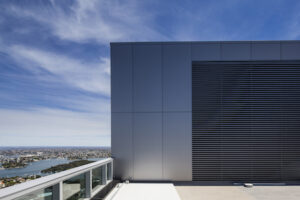
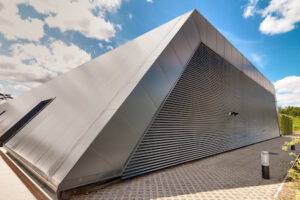
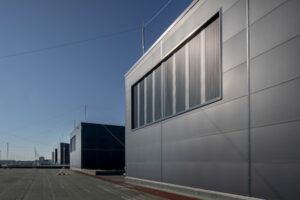
Construction Specialties’ (CS) rain defence louvres are providing airflow and maximum rain defence for one of the largest data centres in Europe.
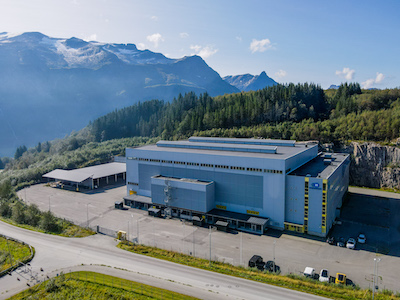
Following a successful acquisition of Hydrokraft AS in 2022, Arkon Energy has started the development of additional infrastructure, aiming to harness the facility’s total capacity potential. Located in Glomfjord, Norway, the centre runs entirely on eco-friendly, economical hydroelectric power.

The focal point of the project was the implementation of a rain defence louvre system that would not only provide efficient intake airflow but also withstand the significant wind load requirements typical of this region. The louvre system had to be both functional and aesthetically pleasing, blending well with the existing envelope design. An additional consideration was selecting a finish that would ensure longevity without impacting cost or lead times.
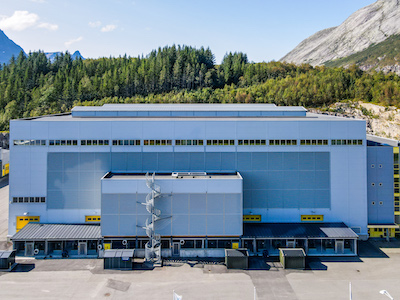
After a thorough consultation process, the RSH-5700 horizontal bladed rain defence louvre from CS’ architectural range was selected. This model offered the ideal balance of performance (class A 3 up to 3.5 m/s), cost-effectiveness, and visual appeal for customer’s requirements. The final finish choice was a standard polyester powder coat in matt RAL 7035, closely matching the facility’s cladding panels. The finish was warranted for 20-years (subject to a regular maintenance schedule), following an assessment based on site’s location.
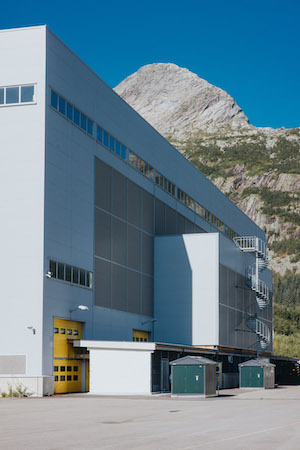
The modular nature of the RSH-5700 louvre system facilitated ease of installation, a crucial factor given the project’s scale and location. Its robust design ensured durability and longevity, vital in a region prone to high wind loads. Installed at the building’s front, the system covers approximately 580m2, serving as the primary airflow intake. This solution effectively met the dual challenge of high-level performance and architectural integrity.

For further project information visit: https://www.c-sgroup.co.uk/blog/arkon-energy-data-centre-glomfjord-norway/
An accredited CPD presentation on Design and Specification of Performance Louvres.

Building Products Index Ltd Louvres Leave a Comment

View the Construction Specialities entry on BPindex

Visit the Construction Specialities website

A ‘Helping Buildings to Breathe’ CPD by Construction Specialties (CS), accredited by the CPD Certification Service, has been developed for architects and contractors who want to gain an understanding of how to specify the right ventilation louvre for their building, to ensure both functional and aesthetic requirements are met.


The CPD explains why louvres are used on buildings and how their design may impact on the airflow and rain defence performance they provide. Weather louvre testing methodology and resulting classification are also discussed, to help specifiers easily compare louvre solutions available in the marketplace and choose products to suit the building’s needs.


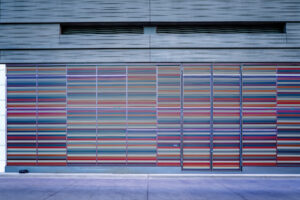
Finally, the presentation looks at various louvre design options available to achieve a desired effect on the façade and integrate louvres with other building elements.

CS has been manufacturing and selling louvres globally for nearly 70 years and offers a wide range of solutions from high performance rain defence models to simple screening louvres.

The CPD presentation can be delivered in person, or via a webinar. For further information and to book visit: https://www.c-sgroup.co.uk/resources/cpd-seminars/a-breath-of-fresh-air-the-design-and-selection-of-performance-louvres/

A newly accredited CPD on ‘Helping Buildings to Breathe’

Building Products Index Ltd Louvres Leave a Comment

View the Construction Specialities entry on BPindex

Visit the Construction Specialities website

A ‘Helping Buildings to Breathe – The Design and Specification of Performance Louvres’ CPD by Construction Specialties (CS) has been recently accredited by the CPD Certification Service. The presentation has been developed for architects and contractors who want to gain an understanding of how to specify the right ventilation louvre for their building, to ensure both functional and aesthetic requirements are met.


The CPD explains why louvres are used on buildings and how their design may impact on the airflow and rain defence performance they provide. Weather louvre testing methodology and resulting classification are also discussed, to help specifiers easily compare louvre solutions available in the marketplace and choose products to suit the building’s needs.

Finally, the presentation looks at various louvre design options available to achieve a desired effect on the façade and integrate louvres with other building elements.


CS has been manufacturing and selling louvres globally for nearly 70 years and offers a wide range of solutions from high performance rain defence models to simple screening louvres.

The CPD presentation can be delivered in person, or via a webinar. For further information and to book visit: https://www.c-sgroup.co.uk/resources/cpd-seminars/a-breath-of-fresh-air-the-design-and-selection-of-performance-louvres/


CS LOUVRES FIND A HOME AT THE UK’S LARGEST ENGINEERING CAMPUS

Building Products Index Ltd Louvres Leave a Comment

View the Construction Specialities entry on BPindex

Visit the Construction Specialities website

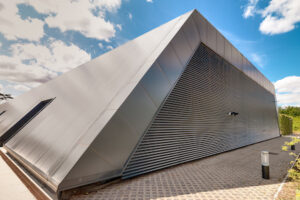
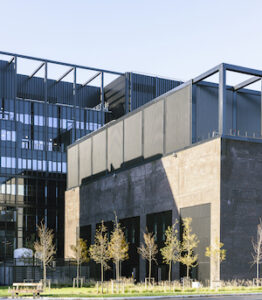
The £420m Manchester Engineering Campus (MECD) benefits from a range of Construction Specialties’ (CS) architectural louvres providing excellent airflow and long-lasting protection from wind-driven rain.

The engineering campus will be home to a community of 8000 students and staff. With the University of Manchester committed to environmental sustainability, a green approach to the design was paramount with the project targeting BREEAM ‘Excellent’.

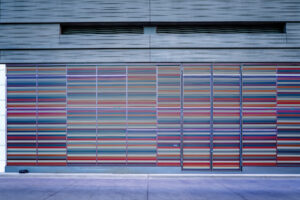
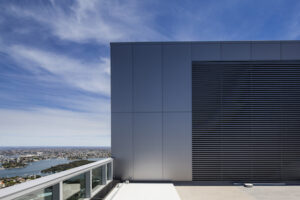
For the largest building on the campus, 80,000m2 the MEC Hall, CS louvres were specified for the rooftop plant areas to provide both natural ventilation and smoke clearance ventilation. A custom clip in louvre, powder coated in RAL 9005 Black, complemented the vertical grid of metal slats on the façade. In active louvre areas bird guards and motorised uPVC volume control dampers were installed behind louvres, while non-active areas thermally-insulated blanking panels were fitted. On the sides facing internal hall atriums, CS SLA-I screening louvres, powder coated to blend in with the wall colours, were installed in inverted configuration to hide the louvres and dampers from view.

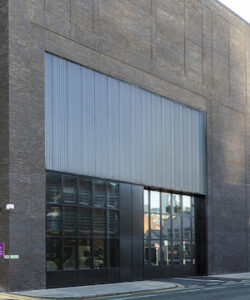
Linked to the MEC Hall by a second floor walkway, the Upper Brook Street Building (Engineering Building B) houses a large teaching lab and lecture hall. CS supplied its high performance rain defence model RSV-5700 and double louvred doors for this building. The louvre modules were fabricated with a glazing frame to allow easy integration within the curtain walling system.

Featuring a complex, extruded aluminium blade profile with multiple draining channels, arranged in vertical orientation, RSV-5700 is a high-performance louvre designed to provide maximum defence against wind-driven rain penetration. Independently tested to EN 13030, RSV-5700 offers class A rain defence up to 3.5m/s core velocity, combined with a class 3 ‘good’ airflow rating.

The custom clip louvre was also specified for the new build extension to the Grade II listed Oddfellows Hall and RSV-5700 system was installed in 3 elevations of the York Street Building.

The specification and installation of CS’ architectural louvres will ensure the buildings can boast striking aesthetics and functionality whilst supporting the sustainability strategy of the campus.

For further project information visit: https://www.c-sgroup.co.uk/blog/manchester-engineering-campus-mecd-manchester-uk/

The Airflow Air Academy is an NICEIC Approved Training Centre

Building Products Index Ltd Fan, Ventilation Leave a Comment

View the Airflow entry on BPi

Visit the Airflow website

Bircan Tulga Photography 2016You can train to become an NICEIC accredited ventilation installer at the Airflow Air Academy in High Wycombe. The 500m2 state-of-the-art training facility uses the very latest in ventilation and building management technologies to showcase the health and financial benefits of using energy efficient ventilation products that perform when installed.

NICEIC Ventilation Installer training sessions take place twice a month in the Air Academy with Airflow’s accredited instructor. During the two-day training scheme, you will learn about:

  • The importance of effective ventilation in the home
  • The current UK Building Regulations affecting residential ventilation
  • The four main ventilation systems outlined in the Building Regulations, including:
    • Intermittent extract fans
    • Passive Stack Ventilation
    • Continuous Mechanical Extract Ventilation systems (both decentralised MEV and centralised MEV)
    • Mechanical Ventilation with Heat Recovery (MVHR)
  • Why you should consider installed performance
  • How to correctly install, commission and test a system

Acceptable alternative means of ventilating a property that you may come across in the field will also be discussed during the course of the training scheme.

You will also undergo a practical test where you will test and balance a typical residential Mechanical Ventilation with Heat Recovery system in-line with best practice and in accordance with Approved Document F1: Means of Ventilation of the 2010 Building Regulations.

Bircan Tulga Photography 2016When you’ve successfully completed the NICEIC Ventilation Installer course, the qualification you’ll receive provides you with significant added value to your credentials. This will highlight your competency and skill to prospective clients; reassuring them of your quality as a ventilation installer.

Once the two-day training session is completed, you are then eligible to join the NICEIC Competent Persons scheme – the only scheme of its type with a £25,000 guarantee. The scheme is designed to offer a safety net to clients that if the work undertaken is substandard, then it will be rectified through NICEIC’s Platinum Promise; adding further reassurance to prospective clients that the work you’ll undertake will be quality.

Click the link to learn more about the NICEIC Ventilation Training scheme as well as all the training services on offer with Airflow:

https://www.airflow.com/training


How to provide on-demand commercial ventilation without the upfront cost

Building Products Index Ltd Fan, Ventilation Leave a Comment

View the Airflow entry on BPi

Visit the Airflow website

DIGITAL CAMERA

When designing a new ventilation system for your commercial premises, one of the many aspects that need to be considered is the ongoing running costs of the system. Whilst a BMS (Building Management System~) offer the building manager the ability to control the building’s ventilation and remotely monitor the system’s performance, they can add significant cost to the ventilation system’s initial outlay. There is, however, an alternative that still grants the building manager and the occupants of the building demand-based ventilation without the large upfront cost of a BMS – a VAV System.

A Variable Air Volume (VAV) system can be used in conjunction with market leading commercial MVHR systems such as Airflow’s Duplexvent range. They enable the occupants and the building manager the ability to adjust the level of ventilation to different rooms or zones of the building based on localised changes in demand.

With air pollution making the news for the wrong reasons coupled with a drive towards increased energy efficiency it is key that you have a ventilation system that gives the occupants a healthy and comfortable indoor air environment whilst remaining energy efficient and cost effective.

Airflow - VAV DamperIntuitive VAV Dampers work by communicating directly with the MVHR system to adjust the system’s ventilation swiftly based on changes in ventilation demand. When combined with humidity or CO2 sensors, a VAV system can automatically respond to changes in room or zonal occupancy, independent to the other areas of the building.

This differs from many centralised MVHR systems that don’t use demand-based control. With these systems, the ventilation rate remains the same in each room regardless of occupancy level. This leads to one of two things:

  • Either the room is being unnecessarily over-ventilated, which is wasting energy and increases ongoing energy bills of the premises, or
  • Busy areas are not receiving enough ventilation and as a result, those in the room are breathing unhealthy air that can affect concentration and productivity levels and in worse cases can worsen respiratory issues. Furthermore, there is the chance that damp and mould can develop within the room, which as well as affecting the health of those inside the area, can damage the fabric of the building itself.

Whilst this functionality can be found within a quality BMS they can add significant cost to the development. By using a VAV system, you gain the level of control and responsive ventilation you’d normally receive through a BMS without the initial outlay that goes with it. With spending being increasingly held to account, why would you pay more when you can get a system that offers the same level of performance for less?

To learn more about Airflow’s VAV Damper System, visit: https://www.airflow.com/VAV-Dampers

Understand how MVHR can improve quality of life and save money in social housing settings

Building Products Index Ltd Fan, Ventilation Leave a Comment

View the Airflow entry on BPi

Visit the Airflow website

Low income families are typically more affected by air pollution with children most at risk. The UK currently has over 40,000 deaths a year linked to poor air quality costs the economy billions a year. With indoor air pollution often 50% worse than outdoors and can contain up to 900 different pollutants it is imperative that a suitable system is installed to improve the health of the occupants as well as protecting the fabric of the home itself.

Mechanical Ventilation with Heat Recovery (MVHR) is the process of continually preheating filtered, incoming fresh air from outside by warming it with the outgoing waste air which is created by kitchens, bathrooms, utility rooms etc. Once the warmth is transferred, the now warm, clean air is the supplied to the living areas such as living rooms and bedrooms.

The following example will show the cost benefit of having a MVHR system installed in the property. This example assumes that both properties are 300m2 in size.

House A House B
Uses extract and trickle vents to ventilate the property. It has 2 air changes an hour and uses gas heating to warm the property Uses an MVHR unit with 71%* heat recovery. It has an air change rate of 320m3/hr (89 l/sec), assuming no infiltration and uses gas heating to warm the property
Heat loss from infiltration at 2 ach 14,164 kWh per year at a cost of £0.0359 per kWh = £508.49 per year Heat loss due to ventilation at 320m3/hr at 7677kWh with 71% thermal efficiency = 2226 kWh. With a cost of £0.0359 per kWh = £79.92 per year
Cost of running a bathroom and kitchen fan operating at 1 hour per day at 0.05kW = £2.08 per year MVHR with two fans running, operating 24 hours a day at 693 kWh = £104.70 per year
Total ventilation energy cost = £510.57 per year Total ventilation energy cost = £184.62 per year

Additional saving with 80% thermal efficiency = £16.54

Additional saving with 90% thermal efficiency = £34.90

All new Airflow domestic MVHR units have a thermal efficiency of 90% or greater so you stand to see up to a £355 per year reduction in your energy bills.**

*Domestic Building Services Compliance Guide Section 8 specifies a minimum thermal efficiency of 70%

**assuming a kWh price of £0.0359

An ideal MVHR system to be used in social housing settings is the Adroit

DV96-Adroit-_insideAirflow Adroit MVHR units can be set up during the commissioning process to limit the tenants’ access to the control system. This removes the issue of tenants changing the ventilation rates for the property as well as them switching the unit off, guaranteeing effective ventilation always takes place within the property; protecting the health of both property and tenants. Your tenants, however, will still be able to tailor their ventilation around their daily routine through selecting the relevant ventilation profile to suit their needs.

As landlords, you would be able to remotely monitor the performance of the unit and be notified of when maintenance, such as changing the air filters, is required and in turn prolong the lifecycle of your Adroit unit.

Furthermore, in our Adroit DV50 and DV80 models, you can have these installed above the entrance to the property, so maintenance can be undertaken to the unit without disturbing the tenant.

You can learn more about the benefits MVHR brings to social housing developments in this short video: https://www.youtube.com/watch?v=d8fMprlKHos

Meet the solution to your commercial ventilation needs

Building Products Index Ltd Fan, Ventilation Leave a Comment

View the Airflow entry on BPi

Visit the Airflow website

Airflow is proud to announce that we have introduced a new outdoor line to supplement our hugely successful Duplexvent Rotary MVHR range: the Duplexvent Rotary-N.

rotary-range-2016_06

The Duplexvent Rotary-N are all-purpose rooftop units that can improve the indoor air quality of various different commercial premises such as schools, restaurants, office blocks and warehouse whilst protecting the health of those working within the building as well as the fabric of the building itself. The compact design of the Rotary-N allows for a discrete installation and helps you to maintain an aesthetically pleasing design of the premises.

The Duplexvent Rotary-N helps to reduce the property’s energy costs thanks to its highly efficient rotary heat exchanger that can recover otherwise wasted heat energy and use it to pre-warm the incoming filtered, supply air. This means that the building’s heating isn’t warming the workplace as much as normal and in turn can reduce the energy bills of the property. This brand new range comes in 7 different models and is able to extract from 1550m3/hr (431 l/sec) to 16700m3/hr (4639 l/sec) with impressive sound levels from just 34dB(A).

Following on from the launch of our new Duplexvent Rotary-N range of commercial MVHR units, Airflow have also expanded our range of the existing Duplexvent Rotary range of compact, indoor commercial MVHR units with rotary heat exchangers.

With 7 units from you to choose from, there’ll be something to meet your ventilation needs. They are ideal for schools, offices and halls and will improve the quality of air circulating through property. The Rotary range can supply up to 16700m3/hr (4639 l/sec) from an unnoticeable 34dB(A).

All Duplexvent Rotary and Rotary-N units can filter out small airborne pollutants such as pollen or dust thanks to the unit’s ability to be fitted with G4, M5 or F7 air filters. This helps to maintain a healthy indoor air environment for those within the building. By maintaining a healthy indoor air environment, you protect from indoor air pollution, which research shows can affect productivity, concentration levels and in worst cases even cause severe health problems.

All units have 85% thermal efficiency thanks to the highly efficient rotary heat exchanger. Duplexvent Rotary units can be fitted with G4, M5 or F7 filters. The units adhere to the current ErP Ecodesign Directive requirements including the stricter, draft 2018 regulations. Furthermore, they help you achieve Passive House approval, thanks to their extremely low SFP values of less than 0.45W per m3/hr. Each model has T2 level insulation, an integrated web server and a sophisticated yet user friendly control system.

For more information, visit www.airflow.com or contact info@airflow.com

Don’t Forget about Ventilation

Building Products Index Ltd Ventilation Leave a Comment

View the Airflow entry on BPI

Visit the Airflow Website

AirflowLogo Blue&Red PMS286+185 Version2


Avoid Toxic Home Syndrome

  • 70% of our time is spent indoors
  • We invest in Heating systems and Insulation, but forget about the Ventilation. All three go hand in hand

Why is Ventilation Important

  • A typical family of 4 produces up to 16 litres (28 pints) of moisture a week.

Causes of Poor Ventilation

  • Washing and Drying indoors
  • Bathing
  • Pollen, Dust Mites
  • Paint
  • Cooking
  • Cleaners, VOC’s

Effects of Poor Ventilation

  • Condensation
  • Bed Bugs
  • Allergies
  • Dampness and Mould
  • Asthma, Respiratory problems

Why is this happening?

  • As we renovate, refurbish and restore older dwellings, we are reducing natural ventilation (leakage) and insulating them to a higher level.
  • New Buildings are constructed to a higher standard of regulation, more effectively sealed and unable to “breath”
  • Moisture, airborne pollutants and particulates cannot erscape the envelope resulting in

TOXIC HOME SYNDROME

Build tight, Ventilate right

  • Implement ventilation measures and choose to live with better Indoor Air Quality for you and your family.
  • Protect the fabric integrity of your home by combatting harmful elements that can degrade the value of your investment
  • Save energy by adopting a balanced approach to Heating, Insulation and Ventilation technologies.

A Balanced Home Environment is a healthier, energy efficient home for both the occupants and the dwelling.

Visit: http://www.myhealthmyhome.com