Skip to content
BPindex — The Largest Building Products Directory in the UK

thermal efficiency

Future Proofing: Energy Efficiency with H+H Aircrete

Building Products Index Ltd Blocks, Concrete Leave a Comment

View the H+H entry on BPindex

Visit the H+H website

To meet the demands and regulations of an environmentally sustainable future, take a ‘fabric first’ approach.

Sustainable standards are more important than ever. The growing consciousness concerning the environment is reflected in modern building regulations, such as the Future Homes Standard, expected to come into effect this year.

As we know, not all materials are created equal in terms of conserving energy and regulating temperatures in a building. At H+H, we support a “fabric first” philosophy. This means that we believe thermal efficiency should be built into the fabric of a house, so it remains effective for the lifetime of the building. Choosing aircrete ensures the building will benefit from high energy efficiency for years to come.

Thermal efficiency and U-values

Aircrete has a low rate of heat transfer through a structure (U-value) and is highly thermally efficient. The temperature in buildings constructed with aircrete is well regulated, keeping the heat in during cold winter months and the heat out on hot summer days. This reduces the energy used to control the temperature with systems such as central heating, resulting in a lower carbon footprint for the building.

One standard being encouraged in the move towards an energy efficient future is Passivhaus. Passivhaus is a voluntary standard for energy efficiency, which reduces the building’s ecological footprint. To achieve Passivhaus certification, a build must be airtight, and have an extremely low U-value.

H+H aircrete can be used for airtight construction, and its high thermal performance helps to meet stringent Passivhaus requirements, making it an ideal choice for energy-efficient building projects seeking the Passivhaus stamp of approval.

New standards of energy efficiency regulations are expected this year in the Future Homes Standard (FHS), which based on the current information available, we anticipate H+H aircrete will surpass.

Compatibility with heat pumps

Another key expectation set out in the Future Homes Standard is the requirement for new homes to be ‘zero-carbon ready’, meaning no work will be necessary to allow them to achieve zero carbon emissions when the electricity grid is fully decarbonised.

To achieve this objective the government encourages the use of heat pumps as the primary source of heating for houses as they are efficient and low carbon, and are less expensive to run than alternative electric heating systems.

Heat pumps work most efficiently if the home is well insulated. Constructing a building’s fabric with products that have a high U-value, indicating they are not very thermally efficient, can hinder the effectiveness of a heat pump. This is far from ideal, particularly given the significant initial investment required to install a heat pump. Aircrete’s high thermal efficiency makes it an ideal material for constructing homes that incorporate heat pumps, allowing them to perform to their full potential.

Long term thermal efficiency

While houses built today must have a minimum life expectancy of just 60 years, H+H aircrete has a lifespan of over 100 years.

This longevity means the benefits of aircrete, specifically its thermal efficiency, will last long into the future, continuing to require reduced heating and cooling demands for decades, making it a sustainable choice for future-proof construction.

Choosing aircrete for construction projects contributes to energy savings, supporting long-term sustainability goals. As we move towards a future where energy efficiency is paramount, materials like aircrete will play a crucial role in shaping buildings that are not only comfortable and cost-effective to maintain but also kind to the environment.

To find out more visit www.hhcelcon.co.uk or contact us on 01732 886444 or email info.uk@hplush.com
SUSTAINABLE BUILDING WITH MASONRY

Building Products Index Ltd Blocks, Concrete Leave a Comment

View the H+H entry on BPindex

Visit the H+H website

Jenny Smith-Andrews, Head of Marketing at aircrete specialist H+H UK Ltd outlines the sustainability arguments for masonry buildings

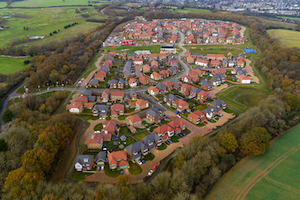
Caddington Woods LUTON Nov 2020 11H+H has always seen itself as a manufacturer that supports sustainable building – but over time, the definition of the term and priorities for the building industry have shifted. It is good therefore to see some consensus emerging on the objectives for sustainability and how each industry can meet them. H+H supports the principles set out in the UN Sustainability goals and is committed to supporting this agenda.

Reducing carbon

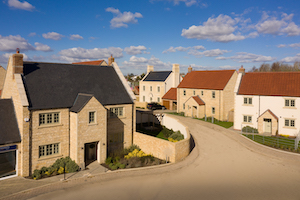
Church Farm Rode -50-EditThe first, and increasingly urgent, priority is to reduce carbon emissions. When it comes to housebuilding that means a focus on reducing the energy demand of our homes. Home heating alone contributes around 19% of the total CO2 produced in England each year so it is logical that building regulations and the Future Homes Standard are looking to increase further the thermal efficiency of new buildings.

Aircrete has a part to play in this agenda. With its inherent thermal efficiency and very effective airtightness, the material has always been a good choice for energy efficient homes. In fact, H+H was involved well over a decade ago in the development of prototype zero carbon homes.

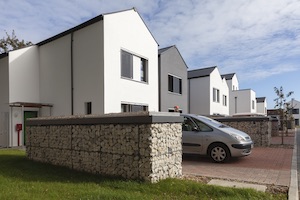
Cameron Close Passivhaus copyMore recently, aircrete has been used as the foundation of low energy homes for social housing schemes where fuel costs are a primary concern and Passivhaus designs offer a practical solution.

When it comes to revisions to Building Regulations Part L, aircrete is well suited to the newer, more stringent standards and a familiar cavity wall construction will meet all the revisions currently planned.

Operational zero carbon is only one part of the story, however, and attention is increasingly focused on embodied carbon. Moving to net zero manufacturing is challenging and requires the whole supply chain to be working to the same goal.

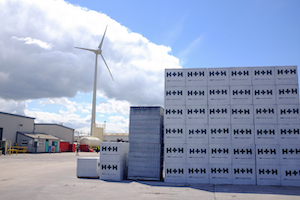
pollington blocks and wind turbineH+H has published its roadmap to zero carbon, outlining a journey that will decarbonise its manufacturing and transport processes. However, even in this objective there can be a degree of interpretation and different measurement techniques.

Our response is to use robust lifecycle analysis methods including all the manufacturing, in use and post-use phases of construction. It is essential to develop commonly agreed standards for calculation to provide a level playing field and ensure that all manufacturers are basing their claims on equivalent data sets.

In its planned journey to zero carbon by 2050, H+H is relying on science-based targets to provide a benchmark against which to measure progress.

A Sustainable future

Low carbon construction is the focus at the moment, but at the same time, lifespan and resilience of new homes must form part of a sustainability strategy.

There is little point in reducing manufacturing carbon if the resulting building only lasts for a few decades and then needs to be entirely replaced. There is an increasingly significant school of thought suggesting that the most sustainable building is one that will last a very, very long time.

Coping with extreme weather conditions

And during its lifetime, the building will need to withstand the extremes of a changing climate. In its June 2021 Assessment of UK Climate Risk, the Committee for Climate change cited overheating and flooding as the two most significant risks for the housing sector.

H+H would point to the 150-year lifespan, inherent resilience and thermal mass characteristics of aircrete to further support its position as a material with a secure future in modern, sustainable housing.

For further information on H+H, its products and its sustainability criteria, go to www.hhcelcon.co.uk

Glazing Vision Offers a Free Comprehensive Guide to Specifying Glass for Rooflights

Building Products Index Ltd Roofing, Rooflights Leave a Comment

View the Glazing Vision entry on BPindex

Visit the Glazing Vision website

Mulroy_Uplands_14 copyThe development of glass manufacturing technology over the last 60 years has fed ambitious architectural uses of glass.

In turn, the increased consumption of glass by the construction industry has seen the development of new products and glass types.


The Hawthorns Pre-Prep SchoolTo help specifiers make the right decision, Glazing Vision has produced a comprehensive guide covering the use of glass in rooflights including:-

  • Types of glass
  • Performance
  • Thermal efficiency
  • Light transmission and solar gain
  • Building regulations and standards
  • Design and delivery
  • Operation and useful life

20181025_124628This is the latest in a series of whitepapers and guides provided by Glazing Vision, with more set to be published in the near future.

You can download Glazing Vision’s free Guide to Specifying Glass in Rooflights here.

OU8B3604

Permadoor – Composite doors – by popular demand!

Building Products Index Ltd Doors Leave a Comment

View the Permadoor entry on BPI

Visit the Permadoor website

Composite doors are increasingly popular and are set to stay that way. Permadoor, the UK’s original composite door manufacturer, explains why.

There’s little doubt that composite doors have been the success story in our industry over the last decade, in spite of any slowdown brought about by recession. According to a recent industry report*, annual sales of composite doors increased by an estimated 13% (compared with the total number of doors only by 7.1%). This trend will only continue, with sales volumes of composite doors expected to increase by more than 22% over the next three years.


There are many reasons why composite doors are popular, not least because of their upmarket feel and look, the excellent choice of colours and styles available, as well as their durability and thermal efficiency. They are seen as a high performance product – one that doesn’t warp or swell, and doesn’t require painting or regular maintenance. This makes them particularly attractive for both the social housing and new build applications. It is also important to note that 15% of all composite doors sold in the UK are currently specified fire doors, which is also a growth area as safety regulations around the requirement for fitting fire doors in properties are enhanced.

Permadoor offers a range of fire doors that have been successfully tested to BS476 (Parts 22 and 31). The range is available in GRP and thermoplastic and is ideal for use in all situations where Building Regulations require a fully approved FD30 or FD30S fire doorset.

The growing popularity and demand for composite doors is no doubt increased by the outstanding opportunity they provide to personalise a quality, high specification door through the extensive range of colours, styles, hardware and glazing options available.

More to offer

As the UK’s very first composite door manufacturer, Permadoor has substantial experience of this market. It offers two composite door ranges – GRP and thermoplastic – to suit different needs. Both come with a wide selection of styles, glazing and hardware options, all backed by the highest levels of quality and workmanship.

Each doorset is a high quality product, not least because of its robust sandwich structure. The thermoplastic range has an innovative solid board inner core faced with low maintenance PVC-U and edge banded. This and the colour match between the frame and door sets Permadoor apart from other composite door manufacturers. The GRP range has a strong through coloured GRP facing with a composite inner frame and high insulation foam core.

Quality with flexibility and choice

All our doors are manufactured to customers’ specific requirements, making each door unique. Each and every one is checked for size, specification and quality before delivery to ensure they are correct. The quality of these doorsets is evident with their solid build and quality finish and their pleasing and reassuring noise when closing.

Both the GRP and thermoplastic composite door ranges offer quality and choice, with traditional and contemporary styles to complement rural and urban properties in a choice of colours and finishes. All our doors come complete with a full multi-point locking system with anti-bump cylinder, keeps and handles while a full choice of hardware is available to order.

We are a Secured by Design licence holder and all our doorsets are fully compliant with the latest building regulations and standards. Our comprehensive portfolio of PAS 24 and Secured by Design products have successfully completed rigorous testing by suitably qualified and recognised third party certification authorities.

Find out more

You can find out more about the Permadoor range of composite doors and the comprehensive service and support that we offer on our website www.permadoor.co.uk or by calling us on 01684 595200.

 *Source: The 2014 Annual PVC Window Industry Report in the UK & Republic of Ireland 

© D&G Consulting 2014