Skip to content
BPindex — The Largest Building Products Directory in the UK

H+H UK Ltd

Britain’s Housing Ambitions Depend on Small Builders

Building Products Index Ltd Blocks, Concrete Leave a Comment

View the H+H UK Ltd entry on BPindex

Visit the H+H UK Ltd website

Phil Knight, Head of Private Housebuilding at H+H UK Ltd gives his thoughts on the importance of SME builders and what the government can do to halt their decline.

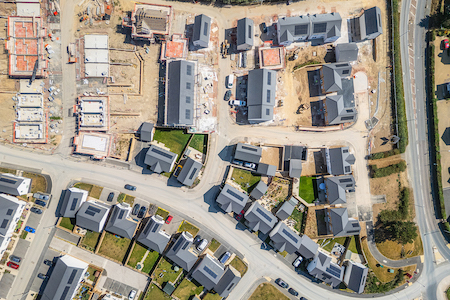
Today, SMEs account for just 10% of all new homes built in England – down from around 40% in the 1980s. That decline is not just a problem for small builders; it’s a problem for the nation. Without a thriving SME sector, it is difficult to see how the government can deliver homes at the scale and quality the country needs.

The value of small builders

SMEs bring something different to a housing market dominated by large housebuilders: agility, creativity and a deep connection to place. They broaden the capacity of the industry and help accelerate delivery in areas where demand is greatest.

Small builders are rooted in their communities. They can take on difficult, smaller brownfield land that the volume housebuilders overlook. They use local suppliers, employ local trades, and support apprenticeships—keeping money, skills, and jobs within the regional economy. This “multiplier effect” strengthens local economies and fosters community identity.
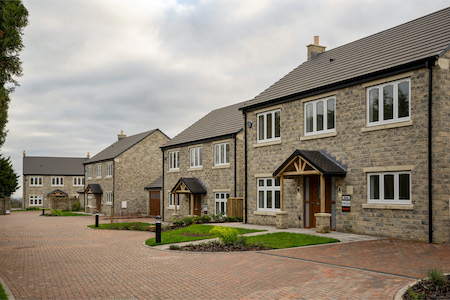
SMEs are also just as keen as the volume housebuilders to support innovation. Able to move faster in terms of revisiting their designs, SMEs may have the freedom to trial new materials and methods and are often keen to respond quickly to environmental and design challenges.

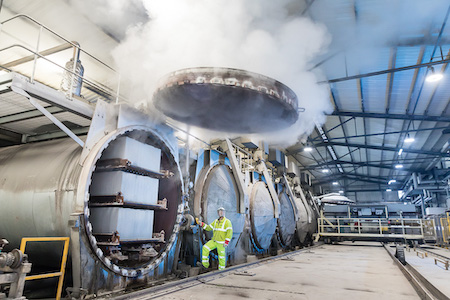
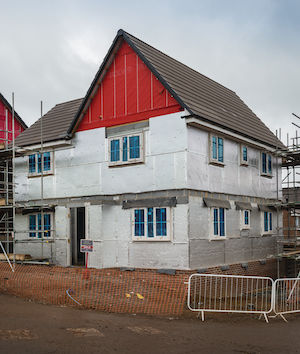
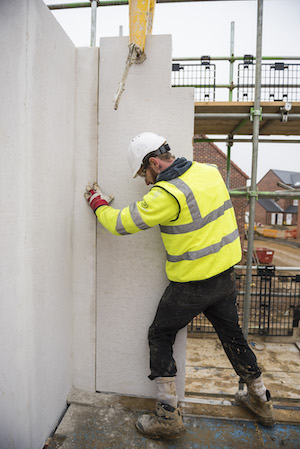
At H+H, we’ve seen this first-hand. Our Vertical Wall Panels – an offsite-manufactured, aircrete-based system designed to speed up construction and improve thermal performance – were initially developed for the volume housebuilders. Yet we are also seeing the smaller regional builders adopting this innovative approach. Their willingness to experiment helps drive improvements across the industry.

Innovation and environmental progress

Encouraging SME growth is not only about numbers; it’s also about quality and sustainability. Smaller firms are often at the forefront of embracing low-carbon technologies, modern methods of construction, such as Vertical Wall Panels, and energy-efficient design. With the built environment central to the UK’s net zero ambitions, the government will not meet its environmental goals without the commitment of SME housebuilders.

The barriers holding SMEs back

Despite their importance, SME housebuilders face a range of challenges that prevent them thriving. The planning system remains the single biggest barrier. According to the Home Builders Federation’s Housing Market Intelligence Report 2025, over 90% of SMEs identify planning delays as a major challenge.

Large developers can weather these delays by switching resources to other sites. Smaller firms, often reliant on a single live project, do not have that luxury. The result is lost time, lost income, and, too often, lost businesses.
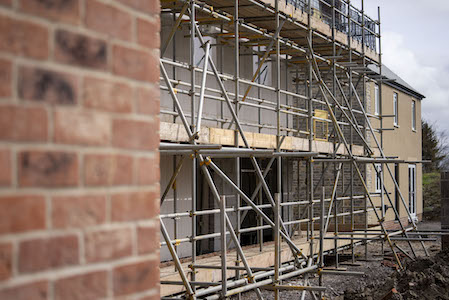
Access to finance remains another persistent problem. Many lenders view small development projects as higher risk, particularly when Section 106 (S106) affordable housing obligations are uncertain. When Registered Providers are unwilling to acquire small numbers of affordable homes with say, fewer than 30 units, SMEs can find themselves unable to secure the project finance needed to get started. Without intervention, this dynamic will continue to choke off supply.

Labour shortages add yet another layer of difficulty. The construction sector faces an ageing workforce and an urgent need for new entrants. Yet the current apprenticeship funding structure makes it difficult for smaller companies to bring in trainees. Rising minimum wages and National Insurance contributions have not been matched by reforms to the Apprenticeship Levy, leaving SMEs to absorb the costs. If we are serious about sustaining the skilled workforce required for housebuilding, apprenticeship funding should be reviewed and expanded.

Signs of progress – but not yet enough

There are reasons for cautious optimism. The government’s *Planning and Infrastructure Bill* aims to simplify and speed up development, and the Ministry of Housing, Communities and Local Government has announced a package of measures to support SME builders. These include streamlined planning for smaller developments, eased Biodiversity Net Gain requirements for sites of up to nine homes, and new exemptions from the Building Safety Levy for medium-sized projects.

Homes England has also pledged to release more land exclusively for SMEs and to pilot a *Small Sites Aggregator* to bring together underused brownfield land.

These are positive steps, but implementation remains slow. With fewer than four years to meet its 1.5 million homes target, the government simply cannot afford to wait.

A call to action

If the government is serious about its pledge to be the party of “builders, not blockers,” it must act decisively to rebuild the SME housebuilding sector. That means:

  • Accelerating planning reform to make smaller projects viable and predictable.
  • Improving access to finance, including flexible support for sites affected by S106 and affordable housing challenges.
  • Reforming apprenticeship funding to encourage more people to enter the industry.
  • Reintroducing targeted first-time buyer support to stimulate demand and restore confidence in local markets.

Reversing the decline of small housebuilders will not be easy, but it is essential. The UK cannot build more homes, better homes, or greener homes without the ingenuity, local focus, and commitment of SMEs. Supporting them is not about favouring developers—it’s about ensuring that every community has a chance to grow.

If the government wants to deliver 1.5 million homes, it must start by building a future in which small builders can once again thrive.

For more information on H+H visit Visit the H+H UK Ltd website
Aircrete foundations for energy efficient homes

Building Products Index Ltd Blocks, Concrete Leave a Comment

View the H+H entry on BPindex

Visit the H+H website

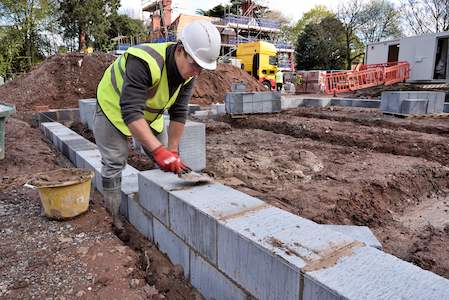
Whether masonry or timber frame, every house can benefit from an aircrete foundation.

A foundation distributes the weight of a building to the ground so needs to be of the highest quality and reliability to provide stability.

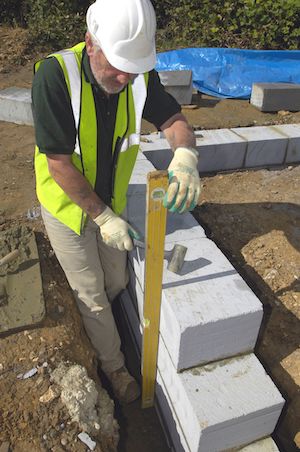
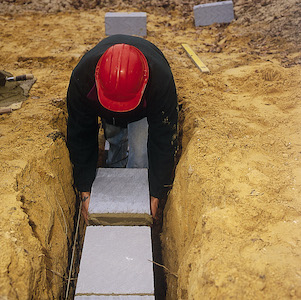
Aircrete is a popular material for building foundations for the wide-ranging benefits it offers as a groundworks solution. Its light weight and fast build-speed enable a building’s foundations to be constructed quickly, easily and cost-effectively.

Advantages of aircrete foundation blocks

Celcon Foundation Blocks can support both solid and cavity wall constructions along with timber and steel-framed systems. These aircrete blocks, manufactured by H+H, are available in a range of face sizes and thicknesses to ensure the foundation is at least as wide as the thickness of the wall being supported.

  1. Thermal performance

Aircrete’s material properties make it highly thermally efficient. This enhances a dwelling’s energy efficiency by reducing heat lost into the ground while reducing the need for additional insulation.

Achieving Part L of the building regulations is easy with Celcon Blocks because of the low U-values they achieve. In fact, Part L recommends using aircrete foundation blocks where aircrete is being used in the construction of external walls to ensure continuity of insulation levels within the building fabric.

In addition, the raw materials used in the production of Celcon Blocks give them excellent resistance to sulfate attack and frost damage.

  1. Speed

Weighing just one third of an equivalent dense aggregate block, Celcon Foundation Blocks are easier to handle and faster to lay, improving productivity.

Celcon Blocks can easily be cut with a hand saw meaning off-cuts can often be incorporated into the build, reducing wastage.

In addition, only a single leaf of blockwork needs to be laid to form the foundations, as opposed to cavity construction which requires two leaves of blockwork and concrete infill. This means works can be completed in less time, reducing labour costs.

  1. Approved method

Celcon Foundation blocks are approved by the British Board of Agrément (BBA) for use below DPC.

There are also health and safety benefits from handling lighter blocks. Although no specific weight limits are given in legislation, use of the heavier blocks should be subject to a risk assessment and a safe system of work established following the guidance of HSE Construction Information Sheet No. CIS77 ‘Preventing injury from handling heavy blocks’.

H+H products for the construction of foundations

H+H aircrete Foundation Blocks are available in Standard Grade (3.6N/mm2) and High Strength Grade (7.3N/mm2) to support buildings up to three storeys.

The blocks are available in two face sizes, 325 x 215mm and 440 x 215mm. The 440mm face size block is available in three thicknesses: 275mm, 300mm and 355mm.

H+H Standard Grade and Solar Grade aircrete blocks can also be used below the DPC for both the internal and external leaves of cavity foundations. For applications where a higher compressive strength is required, such as the foundations of three and four storey buildings, H+H’s High Strength and Super Strength Grade blocks should be used.

Full technical details for Celcon Foundation Blocks can be viewed on H+H’s website.

Why locally made aircrete blocks make sense

Building Products Index Ltd Blocks, Concrete Leave a Comment

View the H+H Ltd entry on BPindex

Visit the H+H Ltd website

Buying British should be a strong ethical choice as UK factories are some of the safest in the world.

For decades, the UK has led the way in placing worker welfare at the centre of its manufacturing sector. Long before ethical sourcing became a global concern, the UK had already established rigorous safety standards and clear accountability. That legacy continues today, making locally manufactured products a responsible and reliable choice.

A key turning point came with the introduction of the Health and Safety at Work Act in 1974. At the time this was a milestone in legislation to protect the safety of workers. Rather than relying on a mix of industry-specific rules, the Act created a broad, adaptable framework that put responsibility firmly on employers to protect the health, safety and welfare of their employees.

Supported by an independent regulator (now part of the Health and Safety Executive) this single piece of legislation paved the way for modern Health and Safety management across the manufacturing sector.

Over the years, additional regulations have been added, addressing areas such as machinery standards, manual handling and chemical safety. The result is a continuing decrease in the incidence of work-related accidents in UK factories.

Although many countries have since followed suit, comparative data shows the UK remains ahead of the curve: 90% of UK workplaces routinely carry out health and safety and risk assessments, significantly higher than the European average of 77%.

When viewed globally, the contrast becomes even clearer. Accident rates in UK manufacturing are consistently among the lowest in the world, lower than many European nations and well below those recorded in countries with sizeable industrial sectors, including the United States.

While no factory can ever eliminate risk entirely, the UK’s combination of strong legislation and deeply embedded safety culture delivers a level of protection that few regions can match.

For anyone sourcing building materials, worker welfare should be part of the decision-making process. In complex international supply chains, it can be difficult to understand the conditions under which products are made. Choosing UK-manufactured materials removes that uncertainty. For housebuilders, this means supporting both the domestic economy and a manufacturing sector that takes its duty of care seriously.

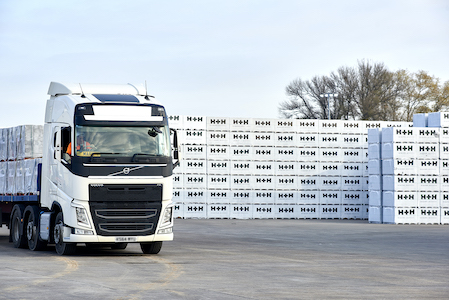
This is one of the reasons H+H continues to invest in its UK production facilities. H+H Celcon Blocks used in British housebuilding are manufactured domestically at its site in Kent and two plants in East Yorkshire. Buying locally made aircrete not only supports regional employment but also ensures that the blocks used on projects are produced within one of the safest manufacturing environments in the world.

Keeping workers safe isn’t just an internal responsibility for employers; it’s an ethical choice for customers too. By selecting British-made products, housebuilders can help uphold the highest standards of safety and contribute to a supply chain that values people as much as performance.

To find out more about H+H, visit hhcelcon.co.uk

Sources:
HSE comparative statistics – https://www.hse.gov.uk/statistics/european/
International Labour Organization – https://ilostat.ilo.org/topics/safety-and-health-at-work/

H+H celebrates British manufacturing and the value of local supply

Building Products Index Ltd Blocks, Concrete Leave a Comment

View the H+H entry on BPindex

Visit the H+H website

H+H has always backed British manufacturing – and for housebuilders, the reasons are more practical than patriotic.

With over 75 years of investment in UK manufacturing, H+H has long believed in the value of building locally. Now, as a proud member of Made in Britain, the company is celebrating that commitment – and highlighting why British-made materials make business sense for housebuilders.

In recent years, the vulnerability of international supply chains has been exposed. Global events – from the pandemic to political instability – have shown how quickly overseas logistics can falter, affecting availability, quality and cost certainty. For a sector that depends on reliable delivery and consistent standards, short supply chains are not just a preference but a necessity.

Fewer surprises
When products are manufactured close to site, there’s less risk of disruption. Shorter supply chains mean fewer links in the chain – and fewer opportunities for delay. Local manufacturing brings peace of mind that materials will arrive when needed, supporting smoother build programmes.

Closer communication
Working with UK suppliers allows housebuilders to build stronger relationships with their partners. At H+H, direct communication with customers means any issues can be resolved quickly and transparently, ensuring every project runs more efficiently.

Greater agility
Construction schedules are rarely linear. Weather, demand and regulatory changes can all affect build rates. With factories based in the UK, H+H can respond faster to fluctuating site needs – something international suppliers simply can’t match.

Supporting local skills
Choosing UK-made materials helps sustain employment and apprenticeships within the construction industry. Through initiatives like H+H’s apprenticeship training scheme, the company is investing in the next generation of skilled workers, ensuring the knowledge and experience that underpin quality British manufacturing continues to thrive.

Trading with confidence
The UK’s manufacturing standards are among the most rigorous in the world – from quality control to health, safety and financial regulation. Housebuilders working with local manufacturers can be confident that products meet stringent performance and compliance requirements.

For H+H, joining Made in Britain is more than a badge of honour. It’s a recognition of the resilience, transparency and trust that come from producing high-quality building materials right here at home.

When housebuilders choose products made in the UK – like Celcon Blocks, manufactured at H+H’s plants across the country – they’re not just reducing risk. They’re supporting a supply chain that’s built to last.

To find out more about H+H visit: Visit the H+H website

Meeting the Future Homes Standard with H+H aircrete

Building Products Index Ltd Blocks, Concrete Leave a Comment

View the H+H entry on BPindex

Visit the H+H website

H+H’s unwavering commitment to energy-efficient building solutions and a fabric first approach aligns neatly with the aims of the Future Homes Standard.

A fabric first approach will be fundamental to meeting the requirements of the 2025 Future Homes Standard, for which the government published its consultation on 13th December 2023. Backed by a commitment to energy efficiency and reducing the carbon emissions of new homes, the consultation on the Future Homes Standard suggests u-Value for walls remains at 0.18W/m2K and that new homes will use low-carbon heating and be ‘zero-carbon ready’.

This methodology prioritises minimising heat loss by ensuring the building envelope meets the highest standards. To put it simply: housebuilders will need to pursue a fabric first approach by specifying high performing fabric materials from the outset.

Project 80

H+H is proud to have been involved in Project 80, a pioneering development by Midlands Heart Housing Association, which showcases homes already built to the Future Homes Standard using aircrete. These homes, monitored and evaluated for performance, demonstrated a 70% carbon reduction when combining heat pumps and PV panels in masonry structures.

Insights gleaned from Project 80 are invaluable, offering a blueprint for achieving an impressive 80-90% carbon emissions reduction. Increased insulation, enhanced window specifications, improved airtightness, and strategic education on effective heating and ventilation are just some of the strategies identified.

H+H’s participation in Project 80 is a testament to its dedication to a fabric first approach. H+H aircrete blocks contribute to the construction of energy-efficient, airtight buildings, enhancing the performance of technologies like underfloor heating and air source heat pumps. These innovations were integral to the success of the first 12 homes in Project 80.

H+H fabric first projects

H+H has a track record of working collaboratively to help developers achieve ever higher fabric performance standards, including projects which also employ Modern Methods of Construction. For example, the Cameron Close Passivhaus development for Southern Housing and the Norton Farm development for Bromsgrove District Housing Trust.

For the Cameron Close development of 16 semi-detached Passivhaus homes on the Isle of Wight, H+H worked with the scheme’s developer on the application of Thin-Joint blockwork. In this instance, H+H’s 200mm thick Celcon Plus Blocks have been used to construct Thin-Joint aircrete, load-bearing walls. Apart from accelerating the construction process, the Thin-Joints play a role in enhancing the residences’ airtightness, thereby improving their overall energy efficiency.

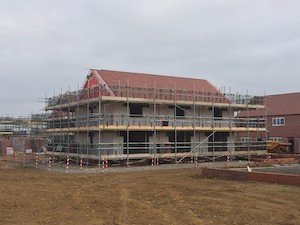
At the Norton Farm development, H+H’s Vertical Wall Panels have been used to speed the construction of the building’s energy efficient fabric. H+H’s Vertical Wall Panels, part of its i-House MMC system, have been used to construct 164 units.

The Vertical Wall Panels are manufactured in aircrete to the storey height of a standard house. Use of the Vertical Wall Panel system on this project enables the external brick or rendered-block facade to be taken off the critical path. More importantly, the Vertical Wall Panel system is a key element in creating an insulated, airtight building envelope.

As we approach the 2025 Future Homes Standard, adopting a fabric-first construction philosophy, supported by materials like aircrete, will pave the way for sustainable, low-carbon housing.

Call us to discuss your housing project on 01732 880111 or email iot@hhcelcon.co.uk. www.hhcelcon.co.uk

SUSTAINABILITY AND THE 40-YEAR MORTGAGE

Building Products Index Ltd Blocks, Concrete Leave a Comment

View the H+H UK Ltd entry on BPindex

Visit the H+H UK Ltd website
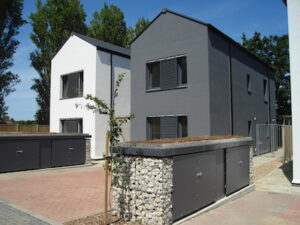
Jenny Smith-Andrews, Head of Marketing at aircrete manufacturer H+H, outlines the arguments for a building method that focuses on the long term.

Passivhaus
Aircrete makes the perfect structure for certified Passivhaus homes

The arguments around what constitutes sustainable building practice continue to shift focus. Back in 2007 the emphasis was on zero carbon in use for new homes. In 2022 much more attention is being placed on embodied carbon and the race is on for manufactures to decarbonise their businesses.

Both objectives are hugely important, of course, and H+H has demonstrated its ability to deliver on the first and now has a robust plan to deliver on the second.  However, we would argue that there is an important third: the need to consider the long term.

It has always seemed strange to me that there is so little attention paid to how long a building should be expected to last. Most guidelines seem to anticipate a sixty year design life but surely this is insufficient?

Replacement rates

Modern Method
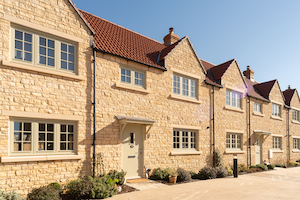
Stone clad to suit the local style, these houses are based on modern Thin-Joint construction

In the UK we demolish about 9,000 homes per year. If we continue to replace the current housing stock at this speed, we would need every house built today to last not sixty years but several hundred.

This is not new information, but in this context it is odd that lightweight housebuilding systems are encouraged, based on their ability to meet speed of build and energy efficiency standards, with no apparent focus on longevity.

The crunch may come with the financial model. With house prices in 2021 averaging £198,000, mortgage finance is essential for most first-time buyers, and the length of available mortgage terms is rising.

Mortgage terms and housing durability

Low carbon home
this new home, built with underfloor heating and an air source heat pump is a glimpse of the future.

The English Housing Survey finds that 45% of first-time buyers in 2018-2019 had a mortgage of 30 years or longer and 40-year mortgages are becoming increasingly common. 2021 saw one company launching a 40-year fixed term mortgage.

What this essentially means is that to be attractive to buyers your home needs to be pretty sure to have a service life comfortably longer than a normal mortgage term.

Not surprisingly, H+H has always argued that masonry homes, designed to last for one hundred plus years, are the best long-term option in terms of financial security.  We would also argue that the most sustainable homes are surely those which last a very, very long time.

Meeting the immediate

078 H+H
a modern material to last for centuries

Right now, with the pressure to increase the volume at which we build new homes, the priority for builders is to ensure that familiar building methods can meet current building standards.

The latest collaborative project to involve H+H aircrete is Project 80, a research project designed to demonstrate how masonry building methods will meet the Future Homes standard, requiring a reduction of 75% – 80% over current building regulations.

Sustainable building – a holistic view

The arguments around what constitutes sustainable building will continue and the wisest course is surely not to focus on one performance aspect in isolation but to consider the bigger picture and take a holistic view.

For H+H this means building energy efficient homes whose creation involves the minimum possible immediate environmental impact and which will continue to provide a resilient, dependable asset for generations.

To find out more about aircrete from H+H, visit our website at www.hhcelcon.co.uk

SUSTAINABLE BUILDING WITH MASONRY

Building Products Index Ltd Blocks, Concrete Leave a Comment

View the H+H entry on BPindex

Visit the H+H website

Jenny Smith-Andrews, Head of Marketing at aircrete specialist H+H UK Ltd outlines the sustainability arguments for masonry buildings

Caddington Woods LUTON Nov 2020 11H+H has always seen itself as a manufacturer that supports sustainable building – but over time, the definition of the term and priorities for the building industry have shifted. It is good therefore to see some consensus emerging on the objectives for sustainability and how each industry can meet them. H+H supports the principles set out in the UN Sustainability goals and is committed to supporting this agenda.

Reducing carbon

Church Farm Rode -50-EditThe first, and increasingly urgent, priority is to reduce carbon emissions. When it comes to housebuilding that means a focus on reducing the energy demand of our homes. Home heating alone contributes around 19% of the total CO2 produced in England each year so it is logical that building regulations and the Future Homes Standard are looking to increase further the thermal efficiency of new buildings.

Aircrete has a part to play in this agenda. With its inherent thermal efficiency and very effective airtightness, the material has always been a good choice for energy efficient homes. In fact, H+H was involved well over a decade ago in the development of prototype zero carbon homes.

Cameron Close Passivhaus copyMore recently, aircrete has been used as the foundation of low energy homes for social housing schemes where fuel costs are a primary concern and Passivhaus designs offer a practical solution.

When it comes to revisions to Building Regulations Part L, aircrete is well suited to the newer, more stringent standards and a familiar cavity wall construction will meet all the revisions currently planned.

Operational zero carbon is only one part of the story, however, and attention is increasingly focused on embodied carbon. Moving to net zero manufacturing is challenging and requires the whole supply chain to be working to the same goal.

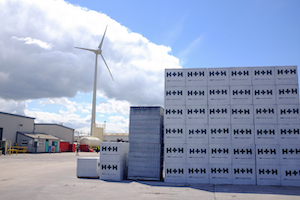
pollington blocks and wind turbineH+H has published its roadmap to zero carbon, outlining a journey that will decarbonise its manufacturing and transport processes. However, even in this objective there can be a degree of interpretation and different measurement techniques.

Our response is to use robust lifecycle analysis methods including all the manufacturing, in use and post-use phases of construction. It is essential to develop commonly agreed standards for calculation to provide a level playing field and ensure that all manufacturers are basing their claims on equivalent data sets.

In its planned journey to zero carbon by 2050, H+H is relying on science-based targets to provide a benchmark against which to measure progress.

A Sustainable future

Low carbon construction is the focus at the moment, but at the same time, lifespan and resilience of new homes must form part of a sustainability strategy.

There is little point in reducing manufacturing carbon if the resulting building only lasts for a few decades and then needs to be entirely replaced. There is an increasingly significant school of thought suggesting that the most sustainable building is one that will last a very, very long time.

Coping with extreme weather conditions

And during its lifetime, the building will need to withstand the extremes of a changing climate. In its June 2021 Assessment of UK Climate Risk, the Committee for Climate change cited overheating and flooding as the two most significant risks for the housing sector.

H+H would point to the 150-year lifespan, inherent resilience and thermal mass characteristics of aircrete to further support its position as a material with a secure future in modern, sustainable housing.

For further information on H+H, its products and its sustainability criteria, go to www.hhcelcon.co.uk

AIRCRETE: BUILDING FOR THE FUTURE

Building Products Index Ltd Blocks, Concrete Leave a Comment

View the H+H entry on BPindex

Visit the H+H website

sh2192-0061To date, aircrete from H+H has delivered over 8,000 MMC homes in the UK, making it one of the most widely used materials for the Modern Building agenda. Jenny Smith-Andrews, Head of Marketing at H+H looks at the MMC solutions on offer.

There is no denying that the building industry, and particularly the housebuilding sector, in this country is extremely conservative: slow to adopt new methods and systems. Government clearly understands this. The degree of its intervention, in terms of overt encouragement and financial incentives is marked.

Whether it is any Government’s business to dictate to private sector organisations how they make their product is debatable, but the objective is laudable: to deliver better quality homes, faster, and H+H is well positioned to help its customers reach MMC targets.

sh2182-010Aircrete benefits from being a material widely used across Europe where housebuilding is a very different industry. Hugely popular for its robust, durable and thermally efficient characteristics, aircrete plays its part in the development of modern construction methods delivering high-performance homes.

In the UK, H+H aricrete is fundamental to three Modern Methods of Construction.  Our Thin-Joint blockwork provides a fast and accurate means of building exterior walls – meeting the criteria to be rated an MMC category 6.

sh2182-002Put together into a packaged offer combining Thin-Joint exterior walls with ground floors, upper floors and partitions, our Rå Build solution gives the entire weatherproof structure as a single, fast system.

Neither of these offers is new, both have been widely used in Europe for decades. However, in the UK, both have struggled to gain widespread adoption.  We certainly see more interest, given the focus on implementing Modern Methods, but for many, Modern means “offsite”. Our Celcon Elements, particularly when used as part of the i-House system, provide the answer that is gaining ground fastest.

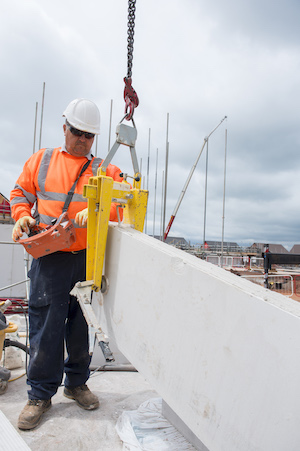
Celcon Elements are storey-high panels of aircrete. Craned into place and fixed with Thin-Joint mortar, Elements allow the entire ground floor wall structure to be completed on site in just hours.

Barratt Longford Park Oct 16Elements, by the way, are not new either, so H+H has a track record of high-performing housing developments across Europe to reassure the UK market of the practicality of this building method.

Elements really come into their own when used as part of a system-build solution, and H+H worked in partnership with Roofspace Solutions to develop i-House™. This combines aircrete walls with prefabricated first floors and roof structures, installed by a dedicated contracting team.  Most suitable for large volume standard house designs, the entire building fabric can be completed within five days on site.

Celcon Elements with craneIn promoting our options for Modern Methods of Construction, H+H is highlighting a common misapprehension around the term MMC. There is no prescription as to the material used or the method of build. To qualify as a Modern Method of Construction, the solution needs to meet the objectives for building faster, more efficiently and to high tolerance. I-House meets the MMC definition at category two.

We know that our industry has a preference for aircrete – a trusted and popular material. 8,000 homes built with Modern Methods based on aircrete is a demonstration that this material is ready for the 21st century building agenda.

Sustainability and Significant Cost Savings with Celcon Foundation Blocks in Shrewsbury

Building Products Index Ltd Blocks, Concrete Leave a Comment

View the H+H UK entry on BPindex

Visit the H+H UK website

H+H_Logo_w_payoff_Green_CoatedH+H Celcon Foundation Blocks have been used in a new residential development in Shrewsbury. Sweetlake Meadow is well under construction, where a total of 175 new homes with two, three, four and five bedrooms are being delivered.

Shropshire based developer SJ Roberts Construction Ltd wanted to make sustainability a key priority for the project. It was their aim to make the new houses as environmentally friendly as possible, with enhanced thermal properties to reduce the cost of heating for the homeowners at Sweetlake Meadow.

IMG_0804Company Buyer Oliver Heighway explained: “The sustainability of H+H’s Aircrete Blocks speak for itself and aligns well with our inherent focus on ecological benefits: from sourcing of materials through to whole lifetime costs to the end user with reduced energy running costs.

“We’ve worked closely with H+H UK for many years and have established a good working relationship. Communication has always been a key part of this relationship, especially given previous supply issues with Aircrete products.

IMG_0819“Specifying H+H Ltd Celcon Foundation Blocks was therefore an easy decision, with guaranteed allocation from the manufacturer and stock locally, H+H can fulfil supply requirements through a number of avenues, which is imperative given time constraints of any development.”

Aircrete is often overlooked as a foundation material due to misconceptions about its load-bearing properties, however H+H Foundation Blocks are capable of comfortably supporting a three-storey residential building. Constructing foundations with aircrete can also deliver significant savings for the contractor.

An independent Cost Comparison Study by property and construction consultancy firm Calfordseaden found that simply changing the foundations to aircrete could reduce total build costs for a typical UK semi-detached three-bedroom property by almost 25%.

IMG_0770This is achieved through aircrete’s naturally quicker build speed which leads to reduced labour costs and the solid construction means that fewer materials are needed.

As the UK’s largest manufacturer of aircrete, H+H is able to provide full technical support throughout the lifetime of a project for specifiers and contractors. To find out more, visit the H+H website: www.hhcelcon.co.uk.