Skip to content
BPindex — The Largest Building Products Directory in the UK

Waterproofing Systems

Specifying Pumping Systems: Newton Waterproofing’s Newest RIBA-Approved CPD

Building Products Index Ltd waterproofing Leave a Comment

View the Newton Waterproofing entry on BPindex

Visit the Newton Waterproofing website

Written by Warren Muschialli

We are thrilled to announce the launch of our new RIBA-Approved CPD training for specifiers, ‘Specifying Pumping Systems for Below-Ground Waterproofing Projects‘. 

Pumping Systems CPD: An Industry First

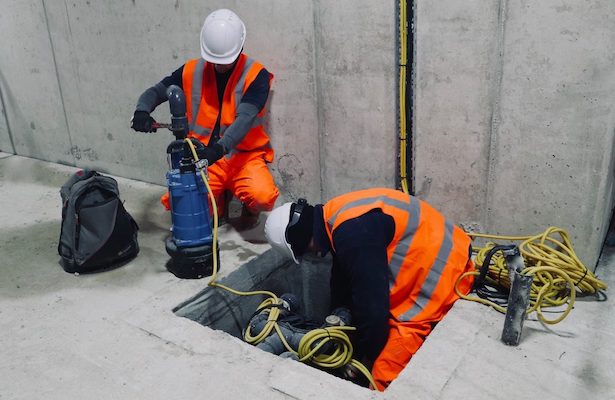
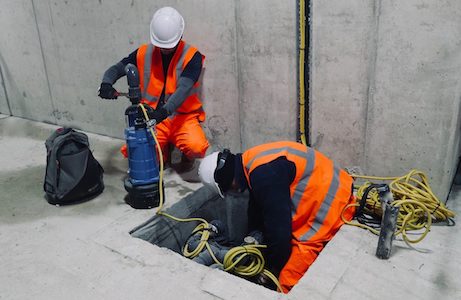
A key component of Type C cavity drain waterproofing, pumping systems provide a safe method for water to exit a building. For architects and specifiers working on projects involving below-ground spaces, understanding the intricacies of sump pump system design and specification is essential.

Furthermore, our new RIBA-approved Specifying Pumping Systems CPD represents a first of its kind within the industry. It is the only CPD that focuses specifically on the correct specification and integration of pumping equipment for below-ground waterproofing projects.

Professionals in the construction industry have long recognised that pumps are critical to effective cavity drainage system design. However, no RIBA-accredited CPD has previously explored pump design, specification, and maintenance in such practical detail.

By addressing this knowledge gap, the Specifying Pumping Systems CPD empowers specifiers’ with best practice guidance. In turn, this helps specifiers correctly select and integrate pumping systems into the overall below-ground waterproofing design.

Specifying Pumping Systems for Below-Ground Waterproofing Projects

Our newest CPD covers a comprehensive understanding of pump technologies and best practices in pump selection for various applications. Specifically, this includes:

  • A deep dive into the specification considerations for below-ground pumping systems
  • The fundamental principles of pump operation, types of pumps, and the essential criteria for routine pump maintenance
  • The critical role of sump pumps within Type C waterproofing systems
  • Common risks associated with below-ground pump installations and how to mitigate them through correct system design

In addition, approval from RIBA shows the CPD has been independently assessed for technical accuracy, educational value, and relevance to the specifier. This gives the specifier confidence that the focus of the presentation is on construction best practice and technical waterproofing guidance.

Schedule Your Free CPD Today

As a result of our new CPD, we now offer a portfolio of six RIBA-approved CPD seminars. We deliver each presentation flexibly, whether in person at your office, online via webinar, or at our Newton Training Centre in Kent.

To arrange your free, RIBA-approved CPD, please contact our CPD Co-ordinator James Newton with your preferred dates. Alternatively, fill out the contact form at the bottom of this page.

Lastly, complement your knowledge of pumping systems and waterproofing design with one of our other RIBA-approved CPDs. We have presentations that focus on all forms of waterproofing, including ‘A Designers Guide to Type C Waterproofing to British Standard 8102:2022‘.

Book your CPD today

A Landmark Reborn

Building Products Index Ltd waterproofing Leave a Comment

View the Radmat entry on BPindex

Visit the Radmat website

PermaQuik Hot-Melt Waterproofing from Radmat plays a key role on The Whiteley redevelopment in London’s Queensway.

Architect: Foster + Partners | Main Contractor: Laing O’Rourke

Radmat products used:

EshaFlex 370 Waterproofing System

PermaQuik Hot Melt System

ReadySeal Liquid Applied Waterproofing Membrane

MedO Green Roof System

ProTherm G XPS X 300 and ULTRA Insulation Board

RockFace A2 Non-combustible Upstand Board

FOAMGLAS T3+ Insulation

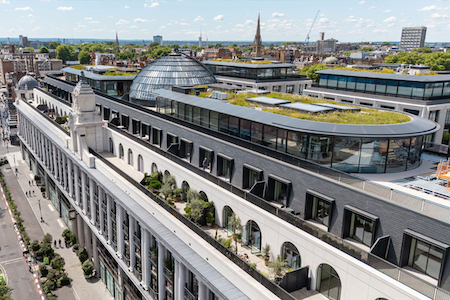
The Whiteley redevelopment marks a major chapter in the transformation of Bayswater and Queensway, bringing life back to one of London’s most historically significant shopping landmarks. Originally opened in 1911, and later expanded in 1925, the Grade II listed Whiteley building had suffered from decades of ad hoc alterations that obscured its architectural heritage. Now, under the stewardship of Foster + Partners and Laing O’Rourke, the site is undergoing a remarkable regeneration – one that balances restoration with innovation, and heritage with contemporary needs.

At the heart of the project is a deep respect for the original architecture by John Belcher and John James Joass. The Queensway façade is being carefully restored, reinstating original features such as the cupola and upper floor glazing. The landmark’s historic grandeur is being revived not only in form but also in function, with the development poised to become a dynamic destination for both locals and visitors.

More than a refurbishment, The Whiteley has been reimagined as a world-class mixed-use development, offering 139 high-spec residences, 20 shops, cafes and restaurants, a luxury cinema, a premium gym, and the UK’s first Six Senses hotel and spa. Above the retail base, the development introduces a wide variety of residential layouts – including 1 to 4-bedroom apartments, duplexes, corner units and penthouses – many of which feature terraces or balconies. Each has been designed to harmonise with the building’s historic character while delivering contemporary comfort and quality.

The scheme centres around a newly created public courtyard, accessed via a reinstated retail arcade at the original entrance. This courtyard forms the social heart of the development, lined with eateries and shops, and enlivened by the presence of the cinema and leisure spaces. This carefully orchestrated public realm enhances pedestrian movement and draws light and activity into the building, fostering a renewed sense of place along Queensway.

Sustainability and ethical sourcing are at the core of the design. The Whiteley aspires to a BREEAM ‘Excellent’ rating, with strict criteria for materials including timber, stone, glass, and marble — ensuring the building sets new benchmarks for environmental responsibility in historic retrofits.

To ensure the refurbishment lasts for decades, Radmat’s PermaQuik Hot-Melt Monolithic Waterproofing System was installed with a 40-year guarantee and BBA Certification for the “design life of the building on which it is incorporated.” Coupled with with Radmat’s Protherm G XPS X 300 SL insulation and EshaFlex bitumen membranes the construction team was confident that the podiums, terraces, green roofs and main roof areas would be durable and leak-free. Considering the building comprises 1 million sq feet it was essential for the roofs to be completely watertight.

In the harder to access heritage balconies, ReadySeal Liquid Applied Waterproofing Membrane was applied to ensure the balconies also remain secure to water ingress.

Crucially, the development has been designed to support and uplift the wider neighbourhood. Its blend of residential, retail, hotel and leisure use encourage constant footfall and diverse interactions across all hours of the day. The Six Senses hotel is conceived not just as an international destination, but as a hub for the local community – with open-access amenities like its bar, restaurant and wellness spaces helping to strengthen local identity and connection.

In sum, The Whiteley is not just a redevelopment – it is a reawakening of a London icon. Through architectural sensitivity, urban integration, and a forward-looking design ethos, it repositions Queensway as a vibrant and sustainable district once more. Radmat’s PermaQuik Hot Melt Monolithic Waterproofing system will ensure the building’s structure and roof areas will remain secure for many years to come.


Contact Details
For more information please call 01858 410372, email, or visit the Radmat website.

Pumping Systems CPD: An Industry First

Building Products Index Ltd waterproofing Leave a Comment

View the Newton Waterproofing entry on BPindex

Visit the Newton Waterproofing website

Written by Warren Muschialli

We are thrilled to announce the launch of our new RIBA-Approved CPD training for specifiers, ‘Specifying Pumping Systems for Below-Ground Waterproofing Projects‘. 

A key component of Type C cavity drain waterproofing, pumping systems provide a safe method for water to exit a building. For architects and specifiers working on projects involving below-ground spaces, understanding the intricacies of sump pump system design and specification is essential.

Furthermore, our new RIBA-approved Specifying Pumping Systems CPD represents a first of its kind within the industry. It is the only CPD that focuses specifically on the correct specification and integration of pumping equipment for below-ground waterproofing projects.

Professionals in the construction industry have long recognised that pumps are critical to effective cavity drainage system design. However, no RIBA-accredited CPD has previously explored pump design, specification, and maintenance in such practical detail.

By addressing this knowledge gap, the Specifying Pumping Systems CPD empowers specifiers’ with best practice guidance. In turn, this helps specifiers correctly select and integrate pumping systems into the overall below-ground waterproofing design.

Specifying Pumping Systems for Below-Ground Waterproofing Projects

Our newest CPD covers a comprehensive understanding of pump technologies and best practices in pump selection for various applications. Specifically, this includes:

  • A deep dive into the specification considerations for below-ground pumping systems
  • The fundamental principles of pump operation, types of pumps, and the essential criteria for routine pump maintenance
  • The critical role of sump pumps within Type C waterproofing systems
  • Common risks associated with below-ground pump installations and how to mitigate them through correct system design

In addition, approval from RIBA shows the CPD has been independently assessed for technical accuracy, educational value, and relevance to the specifier. This gives the specifier confidence that the focus of the presentation is on construction best practice and technical waterproofing guidance.

Schedule Your Free CPD Today

As a result of our new CPD, we now offer a portfolio of six RIBA-approved CPD seminars. We deliver each presentation flexibly, whether in person at your office, online via webinar, or at our Newton Training Centre in Kent.

To arrange your free, RIBA-approved CPD, please contact our CPD Co-ordinator James Newton with your preferred dates. Alternatively, fill out the contact form at the bottom of this page.

Lastly, complement your knowledge of pumping systems and waterproofing design with one of our other RIBA-approved CPDs. We have presentations that focus on all forms of waterproofing, including ‘A Designers Guide to Type C Waterproofing to British Standard 8102:2022‘.

The Francis Crick Institute – guaranteed waterproofing products for a state-of-the art facility

Building Products Index Ltd waterproofing Leave a Comment

View the Radmat entry on BPindex

Visit the Radmat website

Architects: HOK and PLP Architecture
Main Contractor: Laing O’Rourke
Radmat Products used:
PermaQuik PQ6100 Hot Melt Bitumen Membrane
PQ2017 Reinforcing fabric
PQ2061Detailing Membrane
EshaFlex 370 FireSafe SBS modified bituminised cap sheet
Radmat 370 RootSafe bitumen-based waterproofing membrane, with anti-root treatment
Protherm XPS X MK Water Flow Reducing Layer
ProTherm G XPS X 300SL Insulation

Europe’s largest biomedical research facility

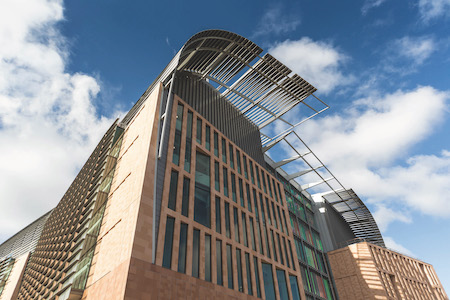
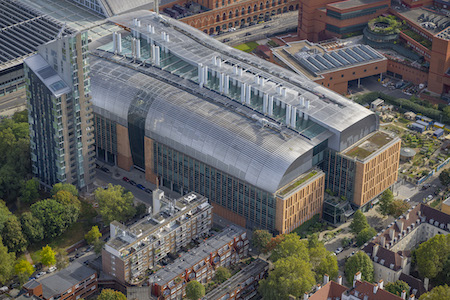
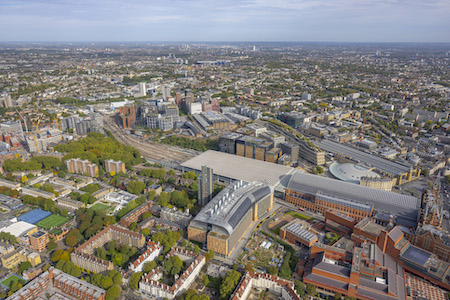
The Francis Crick Institute in Kings Cross, London is a state-of-the-art biomedical research facility that exemplifies innovative design and complex engineering. Completed in 2016, the institute was developed as a collaboration between major research organisations, including Cancer Research UK and University College London (UCL), with the aim of advancing scientific understanding of health and disease. Designed by HOK and PLP Architecture and constructed by Laing O’Rourke, the building spans 980,000 square feet and houses specialised laboratories and collaborative spaces for over 1,500 scientists.

David King, HOK’s lead architect on the project, remarked, “The Crick is a building designed to break down traditional research barriers. Its architecture promotes the interdisciplinary work needed to tackle some of the biggestchallenges in health and disease today.”

Five years ago, the Crick’s Clinical Research Director, Peter Ratliffe was awarded the Nobel Prize in Physiology or Medicine, alongside William Kaelin and Gregg Semenza, for the discovery of how cells sense and adapt to oxygen availability.

This design philosophy was crucial in developing a building that meets both the technical requirements of a research facility and the collaborative aspirations of a leading scientific institute. The Francis Crick Institute’s design incorporates a range of features that support its mission of interdisciplinary scientific research. The Institute stands as a massive and intricately designed facility. It spans 980,000 square feet (91,000 square meters) and rises to 46 meters (151 feet) in height across 12 floors, including six above ground and six below ground, housing labs, collaborative spaces, and administrative areas. Its open layout encourages collaboration, a core philosophy of the institute. The building is equipped with highly specialised laboratories, including those for bioinformatics, genomics, and imaging, with strict vibration control and containment measures essential for sensitive research. The lab spaces are flexible and modular, designed to be easily reconfigurable to meet research needs, and the open lab structure fosters knowledge sharing and collaboration between different research teams.

Sustainability at its core

Sustainability is a core element of the building’s design, incorporating energy-efficient systems, extensive natural lighting, rainwater harvesting, and brown roofs, all aimed at reducing the building’s environmental footprint. The building integrates communal spaces, such as atriums, open staircases, and lounge areas, to

encourage spontaneous interaction among scientists from different disciplines. The architecture is distinguished by a curving roof with natural timber accents, which enhances the building’s visual impact while helping it blend into the surrounding landscape. Positioned near St. Pancras International, the institute also benefits from strong transportation links, facilitating collaboration with scientists globally.

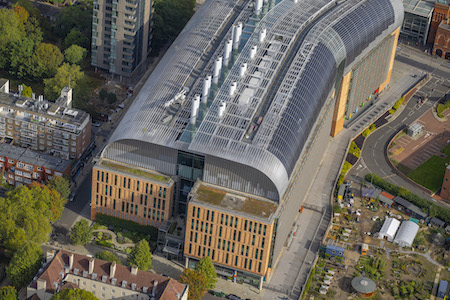
The unique shell structure is reinforced with a steel frame and concrete, providing the strength necessary for roofs to manage stormwater and support biodiversity. The building incorporates brown roofs, where wildflowers and plants can grow and bat boxes that encourage wildlife, support local biodiversity, manages stormwater, and reduces runoff. Additionally, the roof is designed with energy-efficient materials that help regulate internal temperatures, reducing heating and cooling costs. The roof not only serves as a visual element but also contributes significantly to the building’s sustainability and environmental integration, helping the building achieve a BREAMM excellent accreditation.

Integral to the roof structure is the waterproofing. Radmat’s PermaQuik Hot-Melt Monolithic Waterproofing System ensured a watertight seal with a 40-year guarantee and BBA Certification for the “design life of the building on which it is incorporated.” The PermaQuik waterproofing system ensured the maiin roof areas, terrace and brown roof will remain watertight for its lifetime. ProTherm G XPS X 300 SL insulation was installed above the waterproofing.

The Francis Crick Institute stands as a model of innovative design in biomedical research, merging cutting-edge architectural features with functional research space. By integrating sustainable design elements with state-of-the-art labs, flexible workspaces, and collaborative areas, the building fosters the interdisciplinary research necessary to tackle complex health challenges. Its unique roof design, along with other environmental features, enhances both the aesthetic appeal and ecological footprint of the building, making the Francis Crick Institute a key milestone in the future of scientific research facilities. Radmat’s PermaQuik Hot Melt Waterproofing system will ensure the roof structure’s integrity for many years to come.

For more information visit scan the QR code or visit https://radmat.com/products/permaquik/ or contact sales@radmat.com

Case study – Unicorn Packing Centre, a much needed roof refurbishment project.

Building Products Index Ltd Waterproof Membranes, waterproofing Leave a Comment

View the Soprema entry on BPindex

Visit the Soprema website

View Soprema UPC case study video

Unicorn Packing Centre (UPC), Stockport

ROOFING CONTRACTOR: Holloway Cook

Sq. M: 3,200 sq. m.

SECTOR:  Commercial

PRODUCTS: Soprema Elastocol 600 Bitumen Primer. Sopravap Stick ALU S16, Sopratherm G, Soprema Soprastick Venti FF, Sopralene Flam 250 AF

Soprema ensures the safe delivery of a much-needed roof refurbishment at a busy and prestigious packing centre in Manchester.

In the dynamic refurbishment landscape, the Unicorn Packing Centre (UPC) in Stockport, Manchester, stands as a testament to innovation, quality and transformative power of Soprema’s advanced roofing solutions.

Photo credit: Holloway Cook

Leading contracting firm, Holloway Cook, approached Soprema to design and deliver a solution which would restore and modernise this 50-year-old building, to ensure it was functional for the busy and essential contract packing facility, based in the North West.

Product Specification

The scope of works undertaken by Halloway Cook encompassed the meticulous removal of existing roof coverings, and the installation of a new roof structure.

Photo credit: Holloway Cook

The existing bitumen roof was experiencing leaks, and the fire performance rating was causing concern for the client. Central to the refurbishment was the specification and installation of Soprema’s cutting-edge and BBA-certified bituminous waterproofing membrane, renowned for its high quality, excellent resistance and superior service life.

Scope of Works

Once the existing roof system had been removed, Halloway Cook first installed Soprema’s Elastocol 600 bitumen primer to the existing structural metal deck, before Sopravap Stick S16 self-adhesive modified bitumen membrane was laid as a vapour control layer (VCL). Contractors then installed Sopratherm G Glass Tissue warm deck roof installation, prior to the Soprelene Flam 250 AF polyester-reinforced cap sheet as the top layer.

Speaking of why Soprema were specified, Dave Raw, Business Development Manager at Holloway Cook, said: “We have used Soprema products in the past and we know the exceptional quality and ease of installation of the waterproofing systems. Soprema’s products are always readily available, which means timely execution of projects.”

Photo credit: Holloway Cook

The UPC site was still occupied during refurbishment works, so downtime had to be kept to a minimum. Thanks to the ease and speed of application of Soprema’s bituminous system, the project completed within the six-month timeframe and on budget, demonstrating efficient project management and adherence to the established timeline.

Dave Raw added: “Providing that extra peace of mind for us and the end client, Soprema’s robust warranty and 25-year guarantee gave assurance for the longevity and performance of the roofing system.”

Project Challenges

As with any ambitious project, challenges inevitably surfaced. The UPC is an operational industrial site, and the team had to ensure the building remained watertight throughout the winter months; a task made all the more challenging due to the busy access routes frequently used by heavy goods vehicles (HGVs). Navigating the intricacies of a landlocked site and providing safe access to the roof presented additional hurdles. Moreover, striking a balance between the needs of factory engineers and operational efficiency required adept management.

Thanks to transparent communication and collaboration between Soprema and Holloway Cook, their experienced and knowledgeable teams were able to tackle these challenges head-on.

Continued Dave: “Soprema made these tasks easy to overcome, thanks to their insightful and supportive technical team, who were on-hand at any time, including for site visits. All operatives were trained in the Soprema waterproofing system and knew how to safely execute the project whilst maintaining installation to a high standard.”

Thanks to correct product specification, industry experience and technical expertise, the UPC roof refurbishment was delivered successfully.

Building Safety Act: Are You Specifying Compliant Waterproofing Solutions?

Building Products Index Ltd Waterproof Membranes, waterproofing Leave a Comment

View the Newton Waterproofing entry on BPindex

Visit the Newton Waterproofing website

Written by Warren Muschialli

The introduction of the Building Safety Act (BSA) in England, arguably the most important regulatory change in construction since the 1980s, has significantly impacted the industry.

The new requirements of the Building Safety Act have implications for all buildings, and do not just apply to higher-risk, high-rise buildings. This includes the requirement for keeping up-to-date information about how a building has been designed, built, and managed – a ‘Golden Thread of Information’ that is stored digitally for the entire life of the building.

The BSA also creates a new Building Safety Regulator (BSR), responsible for:

  • Overseeing the safety and performance systems of all buildings (not just high-rise structures).
  • Monitoring the performance of the building control sector, to ensure standards are met.
  • Setting building standards.
  • Regulating construction products for the UK.

Furthermore, specifiers, including architects, now face new responsibilities and potential liabilities regarding the performance of the building materials that they specify.

This shift necessitates a more meticulous approach to product selection, particularly when it comes to waterproofing solutions. Here’s how the Building Safety Act impacts your role as a specifier and how Newton Waterproofing can empower you to meet the Act’s stringent requirements.

New Obligations and the Importance of Compliant Waterproofing

The BSA introduces a new regulatory framework emphasising building performance. A key aspect of this framework is the concept of dutyholders, each with specific obligations throughout a building’s lifecycle.

The new dutyholder roles apply to those involved in procuring, planning, designing, managing, and undertaking building work, and are relevant to all building work covered by the 2010 Building Regulations – not just higher-risk buildings.

Specifiers are now most likely to be appointed as the ‘principal designer’ dutyholder under the Act, endowing them with responsibility for ensuring the building materials they specify comply with relevant regulations. They are also required to ensure they have competence (the necessary skills, knowledge, experience and behaviour) to carry out the design and building work they are engaged to do.

However, if a specifier thinks they may not have the required competence, or the design is outside the scope of their PI cover, they should ensure another organisation with the necessary competence is appointed as a designer to perform the role.

These requirements for competence, compliance and liability must therefore be considered when designing waterproofing solutions. Non-compliant waterproofing systems can pose significant risks, not just in terms of water ingress but also potentially impacting the future health and safety of the occupants of a below-ground area of a building.

Therefore, specifying compliant waterproofing solutions is not just about optimal building performance; it’s about mitigating potential future risk for building occupants, managing liability, and ensuring conformity with all requirements laid out under the Act.

Achieving Specifier Confidence: Newton Waterproofing’s Commitment to Building Safety Act Compliance

We understand the challenges specifiers face in the post-BSA landscape. That’s why we offer a comprehensive range of accredited waterproofing solutions that fully comply with the Act’s requirements.

Our commitment to assisting specifiers with their Building Safety Act compliance is reflected in several key aspects:

Rigorous Product Testing: All our waterproofing products undergo rigorous testing by independent laboratories, ensuring they meet the performance standards outlined in the Act and relevant British Standards.

Third Party Verification: Our products hold all necessary certifications, providing specifiers with the confidence that they are selecting solutions that demonstrably meet the Act’s requirements.

Expert Support: Our team of waterproofing specialists is here to guide you through the product selection process. We can provide detailed information on the performance characteristics and compliance certifications of our waterproofing systems.

Professional Indemnity Cover: Both the Newton approved contractor network and the Newton design team hold the necessary PI cover, as well as the necessary skills, knowledge, experience and qualifications to provide competent and compliant waterproofing designs.

Whether you are specifying our products or appointing Newton and our approved contractors as a competent designer, you can gain peace of mind knowing you are meeting the Building Safety Act’s stringent requirements. This not only mitigates potential liabilities but also contributes to the overall safety and performance of the buildings you specify.

Navigate the Building Safety Act with Confidence with Newton Waterproofing

The Building Safety Act represents a significant change for the construction industry. However, by working with a trusted supplier like Newton Waterproofing, you can navigate these changes with confidence.

We offer a complete range of compliant waterproofing solutions backed by rigorous testing and certifications. Our team of experts is also here to support you in selecting the most suitable waterproofing system for your project requirements.

Contact Newton Waterproofing today to discuss your next project and ensure you are specifying Building Safety Act compliant waterproofing solutions.


The Leading Experts in High-Profile Listed and Historic Building Waterproofing Projects

Building Products Index Ltd Waterproof Membranes, waterproofing Leave a Comment

View the Newton Waterproofing entry on BPindex

Visit the Newton Waterproofing website

Listed and Historic Building Waterproofing Project Video

Written by Warren Muschialli

When it comes to high-profile waterproofing projects, Newton Waterproofing is the name that stands out. With our extensive range of products as well as our history and expertise, we have become the go-to company for waterproofing solutions in both commercial and domestic properties across the UK.

Whether it’s a new-build project or an existing structure, we have the perfect solution to tackle any size of project, with the ability and know-how to meet the complexity of listed building requirements making us the ideal choice for preserving historical structures while providing effective waterproofing solutions.

We can provide waterproofing systems and solutions that are ideally suited for meeting listed building requirements and have been used to treat properties such as the British Museum, the Royal Courts of Justice, and the Houses of Parliament.

Fire Resistant Tunnel Waterproofing at the British Museum
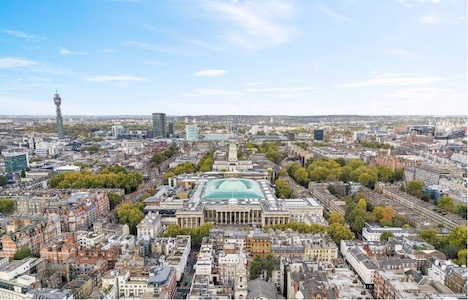
Earlier this year we worked on a project to address water ingress in the tunnels beneath the Grade 1 listed King Edward VII Galleries, part of the British Museum complex in London.

The water ingress was causing concern about the quality of air supplied to the gallery, so Newton collaborated with Arti Structural Waterproofing and Oldroyd to develop a unique membrane system that would protect against both water ingress and fire. This allowed the tunnels to be reinstated as the primary air supply to the galleries, with the team proposing a system that met all requirements for waterproofing and fireproofing a Grade 1 listed building.

The solution involved cleaning and repairing the tunnel walls and floors before installing the flexible, cement-based HydroCoat 107 Elastic 2K as a primary Type A barrier, sealing any existing leaks where a Type C system was not feasible. Following this, the unique Oldroyd Xtf membrane provided a full Type C cavity drain membrane system to the walls and floors – cavity drain membrane systems are widely accepted in listed structures due to their maintainability and reversibility.

The Oldroyd Xtf membrane used in this project is exclusive to Newton and produced by specialist manufacturer Oldroyd in Norway using environmentally friendly raw materials. It is also tested according to the EN 13501-1:2007+A1:2009 standard for fire classification of construction products and building elements, achieving a B-s2.d0 fire rating.

Additionally, CDM 520 eco Floor was used beneath the floor build-up, providing maximum drainage capacity to the pumping system for any ingressing water.

The project faced challenges such as high humidity levels and the prospect of fitting fire-rated membranes in extremely constrained spaces, all while ensuring effective installation around existing services which could not be removed.

Despite these challenges, Newton and Arti completed the project successfully over ten weeks, delivering a waterproof, fireproof, and maintainable solution. The client now has a system that meets their requirements and will be regularly serviced by Arti Structural Waterproofing.

Waterproofing the Royal Courts of Justice

Newton Specialist Basement Contractor Stonehouse were tasked with waterproofing the Judges’ Robe Rooms in the below-ground vaults at the Grade 1 listed Royal Courts of Justice to create a Grade 3 habitable space. This project followed their successful waterproofing of the vaulted bird beak Victorian arches in the same building.

To waterproof the intricate vaulted areas, Stonehouse installed a full Type C waterproofing system utilising Newton CDM 508 Mesh membrane, which required careful detailing and expertise to ensure proper installation. The membrane was carefully lapped, sealed and fixed using different specialist plugs depending on whether the membrane was applied to the vault spring and above, or on the vertical plane.

The Newton CDM System is our Type C water management system that captures and diverts any water ingress down to the BaseDrain drainage channels for safe removal away from the property. For this project, a direct plaster finish was applied onto the meshed membrane for a high-quality finish in keeping with the structure’s listed status.

The result of Stonehouse’s installation was the creation of a Grade 3, completely dry and habitable internal environment, ensuring that it would be suitable for its intended purpose.

The installation also conformed to Listed Building requirements by designing a maintainable and reversible system that also retained the building’s unique design characteristics.

Waterproofing the Houses of Parliament

Newton Waterproofing was chosen to provide a waterproofing solution for the Houses of Parliament in London. The project required both external and internal waterproofing systems, as well as a polyurea roofing system.

Our self-healing HydroBond 403 Plus membrane was used externally to provide a waterproof barrier around the new-build basement extension to the iconic Grade 1 listed London landmark. Internally, our CDM 508 and CDM 520 membranes were applied from floor to ceiling as part of the Newton CDM System for providing a full cavity drainage solution.

The finished structure also received a polyurea coating and additional drainage membrane on the roof deck of the basement.

The result is a fully compliant and guaranteed waterproof basement that provides durable protection against water ingress through the combination of multiple types of waterproofing.

The Leading Experts in Waterproofing Solutions

The Newton team has proven time and again that we are the leading experts in waterproofing solutions for high-profile projects.

Our extensive range of products and expertise make us the go-to company for both commercial and domestic properties across the UK, and with our ability to meet the complexity of listed building requirements, we have successfully preserved historical structures while providing effective waterproofing solutions.

How Can Newton Waterproofing Help You?

We are dedicated to providing high-quality waterproofing services throughout the UK, and our team of experienced professionals and specialist contractors have the expertise to tackle even the most challenging projects. We adhere to industry standards and use proven methods, ensuring long-lasting results and peace of mind, so contact us today to get started.

 

Don’t Miss Newton Waterproofing at the Kent Construction EXPO

Building Products Index Ltd waterproofing Leave a Comment

View the Newton Waterproofing entry on BPindex

Visit the Newton Waterproofing website

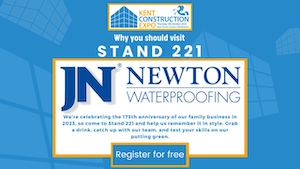
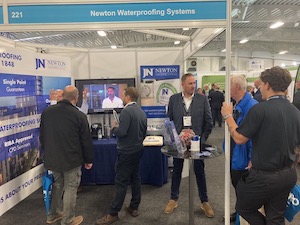
Newton Waterproofing will be exhibiting and sponsoring at this year’s Kent Construction EXPO.

Held on the 5th of October, the exhibition is the largest gathering of construction industry professionals, contractors and suppliers in the South East, and delivers a multi-track conference programme, over 150 exhibitors, and an invaluable opportunity for networking and innovation.

Now in its 175th year and with a nationwide network of contractors, award-winning sustainability initiatives and bespoke design services, Newton Waterproofing supplies specialist products across the whole of the UK via its dedicated delivery fleet, including internal and external ‘Type A’ waterproofing products, integral ‘Type B’ waterproofing products, internal ‘Type C’ cavity drain waterproofing products, advanced pump options, and a wide range of damp proofing solutions.

Its products are matched with a network of Newton Specialist Basement Contractors (NSBCs) to offer fully guaranteed installations and maintenance services.

Newton Waterproofing Managing Director Warren Muschialli comments: “We’re delighted to be exhibiting at this year’s Kent Construction EXPO, and to be this year’s delegate bag sponsor for the event as well. The exhibition is sure to provide fresh insights into current construction industry challenges, opportunities, emerging technologies, practices and innovations, and is not only a chance for visitors to learn more about Newton Waterproofing and what we do, but also for us to network with potential customers and prospects.

“If you’re interested in learning about the leading construction waterproofing products and services we have to offer, be sure to pay us a visit at the exhibition, where a member of our team will be happy to help.”

The Kent Construction EXPO takes place on Thursday 5th October at the Kent Event Centre in Detling, Maidstone.

Written by Warren Muschialli

Newton Drives Continued Development With Specialist Waterproofing Training

Building Products Index Ltd waterproofing Leave a Comment

View the Newton Waterproofing entry on BPindex

Visit the Newton Waterproofing website

Professional development is an ongoing process, and as the UK’s leading supplier of waterproofing systems, Newton Waterproofing consistently works to help architects and developers achieve the next step.

The company offers a range of training initiatives covering all aspects of waterproofing in accordance with the British Standard 8102:2022, that aim to expand knowledge and skills in waterproofing practices.

Newton Waterproofing’s Managing Director, Warren Muschialli, comments: “At Newton, we deliver long-term value to trainees and continually raise the standard of work through various means, such as our partnerships. To help our growth, we partner with some of the leading waterproofing manufacturers around the world, enabling us to offer the highest quality training direct from our supply partners, as well as access to the best products in the industry.”

Additionally, the Newton School of Waterproofing accommodates all audiences, offering individuals and organisations a bespoke experience.

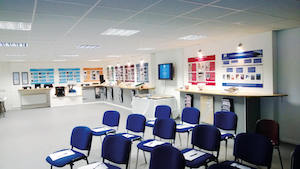
The Newton establishment is equipped with dedicated training facilities, including a pump room with full pump installations for trainees to practice on, and an outdoor spray area to learn how to correctly apply liquid waterproofing products.

Newton’s training areas also have full-size cross-sections of both a Type C Newton CDM System and a Type A Newton HydroBond System, showing a visual representation of how these products work in conjunction with each other.

With a powerful team of technical experts, Newton have the means to frequently deliver their four RIBA Approved, double points CPDs to architects, engineers and construction professionals across the country.

All four presentations can be moulded to individual requirements. Their newest and most favoured CPD on “Waterproofing Design Strategies to the New British Standard 8102:2022” has been specifically designed to educate construction professionals on the most important updates to the 2022 version of the British Standard.

Throughout this CPD, you can expect a 45-minute seminar plus a Q&A, delivered either at your office, as an online webinar, or at Newton’s training facility in Tonbridge, Kent.

For more information, call 01732 280 635 or visit www.newtonwaterproofing.co.uk

Newton Waterproofing Delivers Comprehensive Gas Protection Solution

Building Products Index Ltd waterproofing Leave a Comment

View the Newton Waterproofing Systems entry on BPindex

Visit the Newton Waterproofing Systems website

Newton Waterproofing Systems, the UK’s leading independent designers and suppliers of guaranteed waterproofing systems, stock a range of products that combine effective waterproofing and gas protection.

Combining Waterproofing and Gas Protection Below Ground

RSS_Type_A_403_HydroBond-GB_Jun19_04Newton has a range of products that meet the necessary standards for use as protection against below-ground gases, including the third-party certified HydroBond 403 Plus GB, which provides resistance to radon, methane, carbon dioxide and hydrocarbons.

Suitable products must always be paired with sensible design however, and the most effective combined gas and waterproofing designs combine multiple forms of protection, and always include a Type C cavity drain membrane system.

When either vented to external air or positively pressurised the Newton CDM system can also contribute to gas resistant designs.

Speak to our Technical Team at tech@newtonwaterproofing.co.uk.

Industry-Leading Ground Gas Barriers

APG-Logo-web-980With a commitment to delivering comprehensive gas protection solutions, Newton is proud to have partnered with innovative and market-leading Scottish manufacturer A. Proctor Group and can now supply their range of high-performance ground gas barriers across the UK.

These include the reinforced gas barriers Protech GM Super and Protech VOC Flex, both of which have been BBA certified and protect against radon, methane, and carbon dioxide.

Visit our website to find out more: www.newtonwaterproofing.co.uk.

Proud Partners

NewtonWaterproofing2“A. Proctor Group has been developing their portfolio for many years, and in the 1990s grew to include a range of ground gas protection membranes.

Today, Newton is proud to be partnered with an innovative company that can provide well-designed systems to prevent hazardous gases and contaminants in the ground from causing harm to occupiers of a property, as well as performing the function of a damp-proof membrane.”

  • Warren Muschialli, Managing Director at Newton Waterproofing

For the right gas proofing help and advice with your next project, contact Newton Waterproofing on 01732 360 095 or email tech@newtonwaterproofing.co.uk.

1 2