Skip to content
BPindex — The Largest Building Products Directory in the UK

Waterproof Membranes

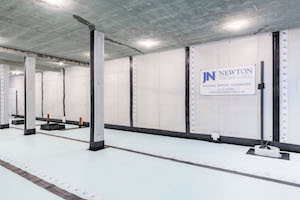
Get Full Waterproofing Installation Protection with Newton Specialist Basement Contractors

Building Products Index Ltd Waterproof Membranes, waterproofing Leave a Comment

View the Newton Waterproofing entry on BPindex

Visit the Newton Waterproofing website
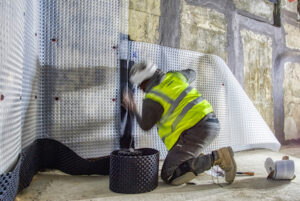
When carrying out waterproofing installations, it’s essential that they are installed and guaranteed by trained and approved waterproofing contractors, ensuring ultimate peace of mind for the end user.

It’s why Newton Waterproofing’s Specialist Contractors (NSBCs) are equipped to provide meaningful insurance-backed guarantees for their waterproofing installations.
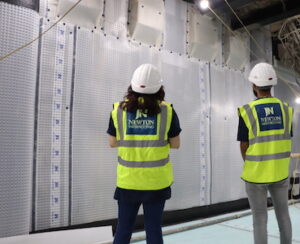
 

Newton Waterproofing Managing Director Warren Muschialli comments: “All NSBCs adhere to strict criteria and are required to demonstrate quality workmanship and provide assurances for their work, resulting in a scheme that provides unsurpassed technical excellence. As such, our NSBCs can take responsibility for both the design and the installation of a waterproofing system, meaning that they will give meaningful, insured installation guarantees for their work.”

When delivering a waterproofing project, Newton’s NSBCs hold their own Professional Indemnity Insurance and CSSW (Certificated Surveyor in Structural Waterproofing) accreditation, meaning that they can act as the waterproofing designer and take design liability for the waterproofing element of the project.
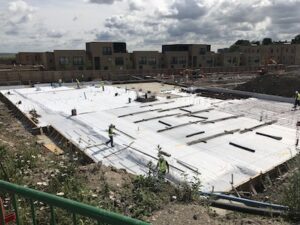
In addition, all Newton Specialist Contractors can provide separate, high-quality installation guarantees, supported by their insurer and which protect clients from the risk of potential defects in the installation of the waterproofing.

That these guarantees are supported by insurance is key, as the client is protected even if the cost of a repair is beyond the financial means of the contractor.

Thanks to their dedicated teams and insurance offerings, NSBCs are therefore able to offer support for every waterproofing project, from design to installation, and even through to post-installation servicing and maintenance.
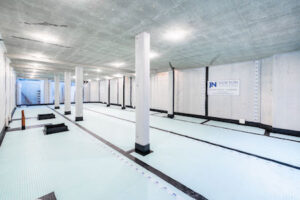
Warren continues: “Newton is dedicated to providing our customers with the information required to make informed decisions about the types of guarantees available for their waterproofing project. Because NSBCs are part of the Newton approved network, they can offer a certain level of service – their design will be protected thanks to Professional Indemnity Insurance, and their installation will be protected thanks to installation insurance. Customers can therefore benefit from a full service and from the peace of mind that comes from knowing that our NSBCs are fully trained and protected.”

Visit www.newtonwaterproofing.co.uk

Delta Amphibia Pre & Post Applied Membrane Awarded BBA

Building Products Index Ltd Waterproof Membranes Leave a Comment

PrintView the Delta Membranes entry on BPindex

Visit the Delta Membranes website

View the Delta Membranes brochures

Visit the Delta Membranes video suite

BBA Award for Delta Amphibia, Pre- Post Applied Membrane

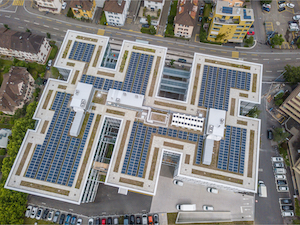
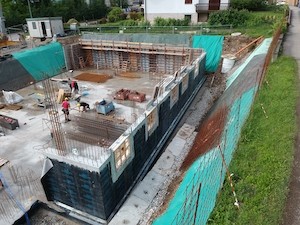
DCIM/100MEDIA/DJI_0040.JPG

We are proud to announce that our Amphibia, a pre- and post- applied fully bonded waterproofing membrane with reactive core, this hydro-reactive, self-healing, self-sealing multi-layer waterproofing system which can be applied on vertical and horizontal areas of new construction has been awarded BBA Certification, rubberstamping Delta’s rigorous approach to product specification and assessment.
Agrément Certificates ensure products and systems that have passed a series of comprehensive assessments – including laboratory tests, on-site evaluations, quality management checks and inspections of production.

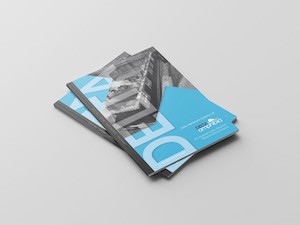
Perfec_Bind_Amphibia_BrochureCertification includes:

•  factors relating to compliance with Building Regulations where applicable
•  factors relating to additional non-regulatory information where applicable
•  independently verified technical specification
•  assessment criteria and technical investigations
•  design considerations
•  installation guidance
•  regular surveillance of production
•  formal three-yearly review.

BBA certification is a mark of quality, safety and reliability and is recognised by building control, government departments, architects, local authorities, specifiers, and industry insurers.

Delta Amphibia – Pre- Post Applied Waterproofing Membranes

Perfec_Bind_Amphibia_InstallKey factors assessed included:

  • Resistance to water and water vapour — the system provides an effective barrier to the passage of water under hydrostatic pressure and water vapour from the ground.
  • Resistance to mechanical damage — the system will accept the limited foot traffic and loads associated with installation.
  • Durability — under normal service conditions and when suitably protected, the system will provide an effective barrier to the transmission of liquid water and water vapour for the design service life of the structure in which it is incorporated.

NHBC Standards 2018

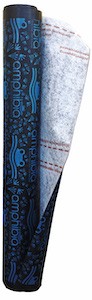
Amphibia rotolo + ScatolaIn the opinion of the BBA, Delta Amphibia, if installed, used, and maintained in accordance with this Certificate, can satisfy or contribute to satisfying the relevant requirements in relation to NHBC Standards, Chapter 5.4 Waterproofing of basements and other below ground structures.

Where Grade 3 (BS 8102:2022, Table 2) waterproofing protection is required, and the below ground wall retains more than 600 mm (measured from the top of the retained ground to the lowest finished floor level).

In the opinion of the BBA, the system is suitable for use on existing structures when installed and used in accordance with this Certificate and NHBC Standards for Conversions and Renovations, taking account of other relevant guidance within this document on the suitability of the substrate to receive the system, and where necessary, the relevant Chapters of NHBC Standards.

BS 8102:2022

Delta Amphibia satisfies all grades of waterproofing in accordance with BS 8102:2022, Table 2 as Type A, Barrier Protection System in accordance with section 8, Type A (Barrier) Protection – Sub Section 8.2.4, Active Core Liners and Table 3, Waterproofing Barriers.

CE marking

The Certificate holder has taken the responsibility of CE marking the system, in accordance with harmonised European Standard BS EN 15814:2011.
For more information on our Amphibia Membranes visit our website at www.deltamembranes.com.

What is cold applied liquid roofing/waterproofing?

Building Products Index Ltd Membranes, Waterproof Membranes Leave a Comment

View the Delta Membranes entry on BPindex

Visit the Delta Membranes website

View the Delta Membranes case studies

View Delta Membranes interactive video guides

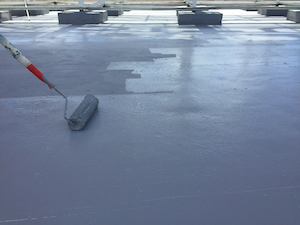
What is cold liquid applied roofing waterproofingAs the name implies, cold applied liquid roofing/waterproofing is the use of a liquid waterproofing system without the requirement of heat.

Waterproofing roofs (whether it’s a flat roof or podium deck) is one of the most important structural requirements of any building. A watertight roof performs a vital function in protecting a structure.

When water starts to stand on a roof, not only can it lead to structural damages, it can also reduce the roof’s lifespan.  In the roofing industry, ponding water refers to water that has stood flat on a roof for longer than 2 days following precipitation.  Ponded water on roofs can also be a breeding ground for micro-organisms and other bacteria. This can be particularly problematic where the roof is protecting a hospital or school.  Flat roofs are a regular feature on public and commercial properties such as schools, hospitals, leisure centres, warehouses and factories.

Cold Liquid Applied WaterproofingLiquid waterproofing systems or cold liquid roofing are a great cost-effective method for waterproofing both new and existing roofs.

Simple to install and long-lasting, there is little doubt that the introduction of liquid waterproofing has been one of the most innovating advances in the industry.

Cold liquid waterproofing is simple and ready to use, at once forming an effective barrier to water and humidity.

Due to cold liquid roofing’s easy to apply nature, it is suitable to a wide variety of uses.  Applied with a simple brush, it easily allows reach to the almost inaccessible of areas, meaning that critical areas for the overall quality of the waterproofing are continuously and completely covered, guaranteeing the total protection for surfaces.

Benefits

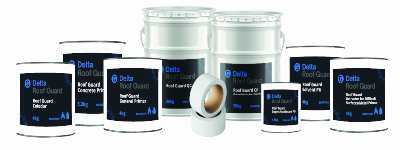
Roof Guard Group ShotsCold liquid applied roofing is significantly faster, safer and less labour intensive to apply than conventional roofing materials.

Cold applied roofing, requires no torches, burners, or other heating equipment during application, posing no fire risks.  A cold applied liquid waterproofer cures to form an elastomeric waterproof membrane. Practically bonding directly to a substrate, providing a seamless, UV-stable continuous system, able to contour any roof shape for intricate detailing.

Why cold applied liquid systems?

Cold applied liquid waterproofing systems are engineered to supply a fast curing, long-lasting, flexible, elastomeric solution.

Other benefits include:

  • Excellent adhesion to all kinds of surfaces
  • Chemical resistant
  • High resistance to extreme temperatures
  • Completely seamless waterproofing
  • No heat or special equipment needed

Delta provides a comprehensive Technical Support Service for architects, designers, engineers, specifiers and contractors, with guidance on product selection, design advice and installation guidance. Your building is one of your most valuable assets which needs to be protected to ensure its long-term durability. You need to be confident that you have made the right choice for your investment from the very start.

A Technical Approach to waterproofing design – podium decks, buried roofs, balconies, and terraces

Building Products Index Ltd Membranes, Waterproof Membranes, waterproofing Leave a Comment

View the Delta Membrane entry on BPindex

Visit the Delta Membrane website

View Decks, Terraces and Green Roof Technical Drawings

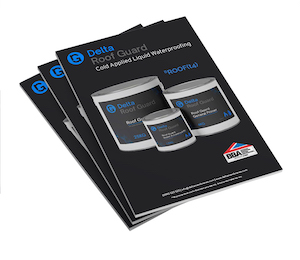
View the Delta Roof Guard brochure

As a structure’s first line of defence to water ingress, a waterproofing design should offer long-term value, maximum performance, and a pragmatic design approach.

1. all items together copyAs with most, if not all structural waterproofing projects, selecting an appropriate waterproofing system is crucial in project success.  Waterproofing design spans many disciplines, when designing an appropriate waterproofing system, a waterproofing design specialist will always take into consideration the end use of a space to ensure they have designed a suitable solution that will meet both standards and user requirements along with functionality.

A Waterproofing Designer’s philosophy defines what they wish to accomplish in the design of their waterproofing system and which principles they will use to do so.  Identifying a robust and suitable design philosophy is an important aspect when designing a continuous system, as this will not only directly impact in how users install the system but also in future maintenance which will directly impact on the property owner.

Focus should be on a life-cycle oriented design, addressing life-cycle concepts and methods, deterioration and damage evaluation, life-cycle performance indicators, inspection and maintenance procedures all implemented to work in harmony.

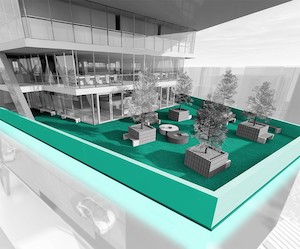
Podium DeckThere are many common pitfalls when it comes to designing a waterproofing system for podium decks, buried roofs, balconies, and terraces.  Products do not fail!  When failures occur, it is due to the design and build philosophy not being correct.  The devil is in the detail – all waterproofing elements must be considered at the construction design stage to be durable and effective.

Delta Roof Guard cold applied liquid waterproofing systems are engineered to provide a fast curing, flexible, elastomeric solution for roofs, podium decks, terraces, balconies, walkways, and car parks.

Delta Roof Guard waterproofing systems are certified Broof (t4), complying with the regulations on resistance and safety on flat roofs, mitigating fire risk.

Delta Roof Guard CP and QC practically bonds directly to substrates, providing a seamless, UV-stable membrane that does not delaminate.  Due to it’s flexible nature Delta Roof Guard follows the contours of any roof shape allowing for intricate detailing.  Once cured, Delta Roof Guard achieves a seamless finish with no joints or breaks. Offering rapid curing even in winter months!

Delta Roof Guard also comes with a comprehensive range of primers, all able to aid the adhesion of the liquid applied membrane system to the relevant substrates.

Roof_Guard_Triple_BrochureDelta Roof Guard cold liquid waterproofing is lightweight, has great elasticity, meaning that it will absorb structural movements, whilst compensating for shrinkage or expansion due to changes in temperature.  The ease and speed of application makes Delta Roof Guard Cold Liquid Waterproofing the perfect partner for complex roofing projects.

This cost-effective cold liquid water proofer is suitable for new or existing roof projects without the requirement for mechanical restraint, welding or torching, negating any fire risk during application.

Delta Roof Guard cold-applied liquid roofing is ideal for projects where there is a restriction of hot works.  Seamless in nature, with a fast speed of application, Delta Roof Guard is an ideal choice for roofs with multiple penetrations or limited spaces such as balconies.

Delta Roof Guard work perfectly on large, flat commercial roof areas or small residential roof areas.

Delta Roof Guard has been independently tested and its performance verified, having approvals from the British Board of Agrément (BBA).

ESSENTIALS you should be looking for from your product:

  • Elasticity
  • Breathability
  • Workability
  • Fire Resistance

This is an incredible product, to discover more about the Delta Roof Guard range, why not contact our trusted technical team who will help find the best solution for your project.

Built in Protection – Delta MS 500 Fire Retardant, Type C Cavity Drainage System

View the Delta Membrane entry on BPindex

Technical Drawings – MS Fire Type C Drained Protection – Delta Membranes

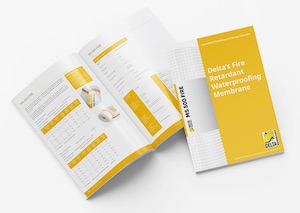
Brochures & Installation Guides – Delta Membranes

Delta Fire Retardant Cavity Drain System (Type C) – Delta Membranes

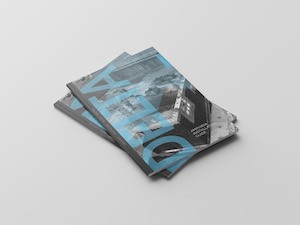
Perfect_Binding_Brochure_Mockup_6 copyFire-retardant materials have a critical role to play in keeping modern buildings safe. However intense the fire, fire-retardant materials offer occupants of a building, valuable time for means of escape.

What is a Fire Retardant?

A fire retardant is a substance that is used to slow down or stop the spread of fire or reduce its intensity. This is commonly accomplished by chemical reactions that reduce the flammability of fuels or delay their combustion.

8 copyWhat is the Difference Between Fire Retardant and Flame Retardant?

Fire retardant and flame retardant both work to prevent fires, in occurrence of fires, it assists to stop the spread and help to reduce the amount of damage caused by flames. Both are invaluable to protecting homes and structures and provide extra time to for residents to safely evacuate a building in the event of a fire.

Fire retardant testing

Fire retardant materials, are measured on the degree to which a product contributes to the spread and growth of a fire, ways to measure this include:

  • How easily the product ignites
  • The amount of heat released when it burns
  • How fire spreads on its surface
  • The way in which it disintegrates as it burns
  • The quantity and nature of smoke released

4 copyThese parameters contribute to the performance ratings, within the Euroclass system. Most building materials sold on the European market must be assigned a file indicating its fire resistance based on a Euroclass rating system. There are 7 Euroclasses of reaction to fire performance for construction products which extend from A1 to F

Delta Membrane Systems Limited believes it is a fundamental design approach that all occupied structures regardless of height or where there may be challenges in exiting the premises (regardless of height), should be constructed from materials which are fire-retardant.

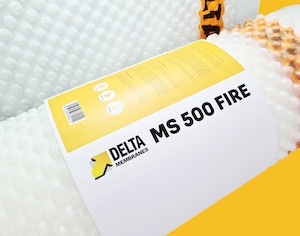
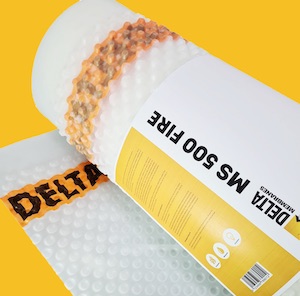
April 2021, saw the introduction of the Delta MS 500 Fire Retardant System.  This innovative Type C Waterproofing Membrane not only complies with BS 8102:2009 “Code of Practice for the Protection of Structures Below Ground” but also achieves a Euroclass rating of B-S2, d0 in accordance with EN 13501-1:2018.

In addition to fire tests carried out on the Delta MS 500 Fire Retardant System, Delta sought approval from the BRE (Building Research Establishment) for a further certification approval providing 3rd party independent certification.

Our Design and Build Philosophy is quality driven, working with architects and trades alike, putting at the forefront construction considerations to ensure buildability, functionality, and maintainability. The result of this single approach is a consistent, complete, and quality design that is hard to equal. Whatever the needs of your project, you can rely on our Technical Team of Waterproofing Professionals to ensure you get the right advice, support, and practical help at exactly the right time. Email info@deltamembranes.com or call us on 01992 523 523.

Newton Latent Defects Guarantee is the Ultimate in Waterproofing Insurance

Building Products Index Ltd Waterproof Membranes, waterproofing Leave a Comment

View the Newton Waterproofing entry on BPindex

Visit the Newton Waterproofing website

Latent defectsNewton Waterproofing, the UK’s leading independent designer and supplier of guaranteed structural waterproofing systems, now offers Latent Defects Insurance – and it is the only such policy available through a UK waterproofing supplier.

With experience of more than 170 years, the family-run business based in Tonbridge has been providing clients with an unrivalled service for decades. Now, the Newton Latent Defects Insurance will provide customers with the ultimate protection.

Newton Waterproofing’s MD Warren Muschialli said: “In 2019, the construction insurance guarantees market underwent significant change, with a number of insurers withdrawing from the sector. Early in 2020, there was a further reduction in the number of rated insurers able to provide insurance for waterproofing.

“By its very nature, waterproofing is a risky business and it’s very tough to find good guarantees in the waterproofing sector.

“A lot of companies will provide self-guarantees but there is no insurance provided, while others will provide warranties that are not insurance-backed.

“But with our Newton Latent Defects Insurance we have managed to provide a unique policy which is backed by an A-rated, UK-based insurer.”

Peace of Mind Guaranteed

135 Golders Green Road NW11 8HG 18 June-3With a policy term of up to 12 years, the Latent Defects Insurance is available on qualifying projects which use multiple Newton waterproofing products to achieve a minimum score of 3.0 on the Newton Waterproofing Index (NWI). The NWI is a unique specification tool that provides specifiers and designers with a scoring system to accurately assess the level of risk and potential success involved in any waterproofing design.

The application for the guarantee is made via the installer directly to Newton’s A-rated insurer, and for the first two years of the policy the responsibility for repairing any leaks and defects lies with the installing contractor. Once this period has expired, all repairs are the responsibility of the insurer.

Newton’s Specialist Contractors have been specifically audited to ensure that they meet the necessary requirements to be able to provide the guarantee, while Newton’s waterproofing solutions and products have also successfully passed a rigorous auditing process to ensure that they are of sufficient quality to support the guarantee.

“Instead of a 10-year policy term we are offering a 12-year option which gives us a competitive edge,” said Warren. “No other waterproofing supplier in the UK can provide this level of protection and this is the best waterproofing guarantee on the market from a UK insurer that you can get.

“It comes through us and is backed by us – we are the broker’s client so the specifier knows that we will take responsibility for the waterproofing.”

Newton provide the best waterproofing systems for all structures, from new and existing domestic properties to large-scale commercial developments. For the right waterproofing help and advice with your next project, contact Newton Waterproofing on 01732 360 095 or email info@newtonwaterproofing.co.uk.

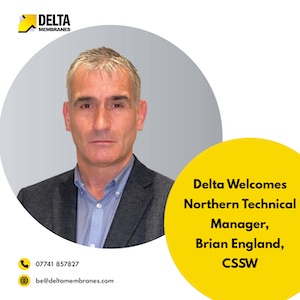
Delta Welcomes Northern Technical Manager, Brian England, CSSW

Building Products Index Ltd Waterproof Membranes Leave a Comment

View the Delta Membranes entry on BPindex

Visit the Delta Membranes website

On Monday 2nd November 2020 Delta is proud to announce and welcome Brian England, CSSW as Delta’s Northern Technical Manager.

delta membranes - Brian Image-01 copyBrian is an outstanding addition to the Technical Team and will bring a wealth of knowledge and experience with him. Brian will be responsible for Northern sales team leadership, driving customer service, developing new business relationships, promoting services, and overseeing projects to ensure overall customer satisfaction, along with contributing to product research and development as well as waterproofing design consultant duties.

Brian joins the Delta team from Safeguard Europe where he was Area Manager for many years having been with Safeguard for almost 25 years and progressing his career within the waterproofing sector. Brian is an accomplished professional with diverse experience across the sector.

Brian - email and phone AD copy“I am thrilled to be joining the #DeltaTeam and have always admired their vision and drive. I am looking forward to being a part of the team that continues to propel that vision into the future. I look forward to hitting the ground running and meeting Delta’s Northern customers, © 2019 Delta Membranes All Rights Reserved many of whom I have had the privilege of meeting at various industry events such as the Property Care Association. Please feel free to reach out to me with any questions, booking site visits or if you would like a CPD seminar. My aim is to help you achieve project success.”

Brian England – 07741 857827 – be@deltamembranes.com

Kevin Dodds, Director commented “We’re extremely excited to welcome Brian to our team at Delta. I had the privilege to work with Brian back in the day when we both had less grey hair. Brian has a great blend of knowledge and experience, along with his savvy design ethos, strong work ethic, excellent people skills and a passion for providing the best customer care. Our success is really a reflection of the character of the people that we have here at Delta, Brian will no doubt fit into the company culture effortlessly. Join me in welcoming Brian to the team”.

Delta Membrane Systems Limited takes care of your waterproofing strategy from start to finish, including technical advice and guidance, correct product selection, approval of drawings, site inspections and on-going site support.

What does BS 8579 tell us about the fire performance requirements of balconies and terraces?

Building Products Index Ltd Waterproof Membranes, waterproofing Leave a Comment

View the Radmat entry on BPindex

Visit the Radmat website

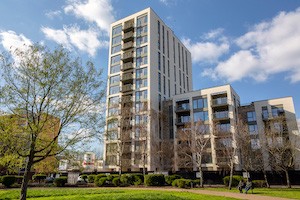
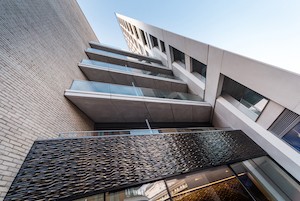
Redclyffe-Road_JONL0196The 31st August 2020 was an important day for the external envelope industry.  It was the day that BS 8579:2020 Balconies and Terraces was published.  Why is this document so important you may ask?  Put simply, even though it is only guidance it is being looked at as THE document that unlocks the confusion over exactly what a balcony is, providing a clarification of exactly what type of balcony is a ‘specified attachment’ within Approved Document B Regulation 7.


If you haven’t had a chance to read this important new British Standard yet the answers are;Chelsea-Creek-1

  • Projecting open balconies, projecting enclosed balconies, recessed open balconies and recessed enclosed balconies are all balconies; whether thermally broken or cantilever.
  • Recessed open terraces, recessed enclosed terraces and access terraces are all roofs.
  • Terraces are roofs, but have a slightly different requirement depending on their distance from the boundary. But require a Broof(t4) fire exit route.


Not any clearer?  The simple way to remember the requirements are “if it’s over air it’s a balcony”, “if it’s over heated space it’s a roof”.

KTH96R Urban regeneration of industrial wasteland at King's Cross, Borough of Camden, London, England, U.K.

So, if it’s classed as a roof on a relevant building to demonstrate compliance with the requirements of Approved Document B the installed roof system must be either tested to BS EN 13501-5 and classified as either Broof(t4), Croof(t3), Droof(t4), Eroof(t4) or Froof(t4) depending on the distance from the boundary, or have a surface finish as defined by Commission Decision 2000/553/ EC of 6 September 2000; loose laid gravel with a thickness of at least 50 mm or a mass ≥ 80 kg/m2 (minimum aggregate size 4 mm, maximum 32 mm),sand/cement screed to a thickness of at least 30 mm, or cast stone or mineral slabs of at least 40 mm thickness.  However, in reality, most specifications are defaulting to a requirement of Broo(t4). But this still means you can use a BS EN 13501-1 Class E insulation board within the build-up, unless insurers require otherwise.

If it’s classed as a balcony (built over air) the entire build-up, apart from the waterproofing membrane, must be constructed of materials achieving fire performance class A1 or A2-s1,d0 to BS EN 13501-1, something called ‘non-combustible’.  This includes the insulation board and surface finished, but the roof membrane which is exempt under Regulation 7(3)(g).

Basement Waterproofing: How to Install a Basement Drainage System

Building Products Index Ltd Waterproof Membranes, waterproofing Leave a Comment

View the Delta Membranes entry on BPindex

Visit the Delta Membrane website:

Type C waterproofing system (cavity drainage)

Basement drainage and protection

Gas protection and waterproofing

If using a Type C waterproofing system (cavity drainage) to waterproof a basement, cellar or any below ground structure, a basement drainage system will be required to manage the evacuation of any water ingress which breaches the integrity of the structure.

Cavity Drainage ProductsThe principle of a Type C waterproofing system is to manage and control water ingress.  A basement drainage system will work with the Type C waterproofing system to keep the environment dry.

For the majority of projects, the two systems need to work together – a Type C system without suitable drainage will not keep a basement, cellar or below ground structure dry and a basement drainage system without a Type C system will not adequately keep a basement, cellar or below ground structure dry.

A basement drainage system is made up of four key components, a sump pump, drainage channel, a high-water level alarm and battery back-up.  On occasion the requirement for sump pump, high-water level alarm and battery back-up will not be required if there is a natural drainage to the structure, but this will be specified by the Waterproofing Design Consultant to that specific project.  With structural waterproofing solutions not one system fits all.

Basement Drainage Channels

Basement 2Drainage channels are water collection conduits designed to control water ingress.  These channels are installed around the perimeter of a basement, cellar or below ground structure. They feature a number of holes (preformed holes) that allow any water from the Type C cavity drainage system to enter the channel, then drain into a sump pump (submersible pump station) or suitable discharge point.

Once collected in the sump chamber, the groundwater can then be pumped to a safe evacuation point, often referred to as a ‘sump pump system’.

Drainage channels are available with or without upstands, and are supplied in durable straight lengths, the use of T-junctions, corner pieces, straight connectors, jetting eyes, end caps and access ports.

When designing basement drainage and channels, consideration should always be given to future maintenance. As with all drainage systems, it must be maintainable!

Basement Protection

A high-water level alarm and battery back-up are beneficial to the end user (homeowner).

A high-water level alarm will alert the homeowner when there is a potential fault with the sump pump system or if the sump pumps require a service.

A battery back-up will keep pumps running in the event of mains power failure.

val des portas 6 - Basement waterproofingInstalling basement drainage channels

Drainage channels are embedded into a preformed recess/gully at the floor wall junction of the structural slab.

When correctly installed, groundwater drainage channels will work with the Type C cavity drainage system to mitigate any hydrostatic water bearing against the structure (basement/cellar).

We recommend one sump pump system should be installed for each 50 linear meters of channel; the length of each channel running to the sump should not exceed 25m.

Basement drainage specialists

If you have any questions about basement, cellar or below ground structure drainage then contact our friendly technical team for free advice on 01992 523 523 or email info@deltamembranes.com

The Importance of Active Leak Stopping

Building Products Index Ltd Waterproof Membranes Leave a Comment

View the Delta Membranes entry on BPindex

View Delta Membranes applications

View Delta Membranes latest news

View Delta Membranes case studies

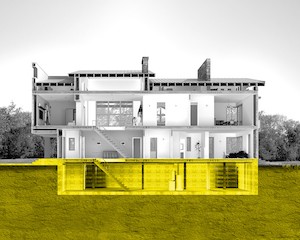
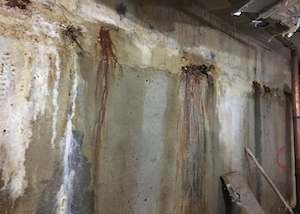
For anyone in a non-technical sense to fully appreciate the nature and risks associated with water ingress in below ground structures, we invite you to read this paper to gain an understanding of substructure waterproofing and the importance of remedial action. Potential consequences of active leaks are numerous, from cost for remedial works to reduction in building life cycle.

Sources of external water such as a high or rising water table, river, extreme weather, tidal changes, poorly drained soil, defective drains can all result in water penetration of a structure at below ground level.

North London luxury residenceThis penetrating water may have enough pressure and strength to ingress a structure, even one which is presumed to have been adequately waterproofed.

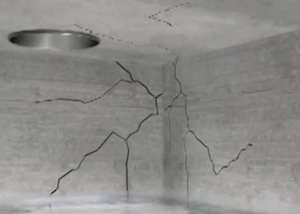
Basements and other below ground structures can leak both during and after construction. Any construction below ground will always be subject to groundwater.   Groundwater will try and will seep through cracks and joints in all construction. Joints (from movement to floor/wall junctions) will always require attention when waterproofing and these are common pitfalls in project fails.

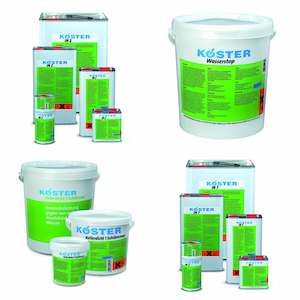
Koster_2_IN_1-1There are often miscommunications and understanding of definitions of waterproofing. It is often presumed one waterproof system is enough to ‘waterproof’ a below ground structure, leading to a misconception that the structure is impervious to ground water.

Waterproofing design should always be undertaken by a Waterproofing Design Specialist, someone with a CSSW or equivalent qualification and to be designed to meet British Standard BS 8102:2009. A Waterproofing Design Specialist will always design a waterproofing system to reduce risk, this system will combine the project requirements with best practice. The successful choice, design and construction of a waterproofing scheme rely on heavily on communication between the manufacturer, design team, installer, contractor and owner – a better understanding of advice and practicalities encourage Best Practice and ultimately openness, transparency and accountability.

Stopping Active Water LeaksRemedial work to active leaks in construction, which is exposed, are relatively easy to find and fix. If the construction is not exposed and finishing’s are in place, these leaks are difficult to find but not impossible. Use of a thermal imaging cameras/borescopes/moisture meters or visual inspections are usually enough to locate these leaks.

Depending on the leak itself will depend on the remedial work required. It is important to understand the waterproofing options available and how these will have a cost and time implication to a project.

Join Georgia Burbridge, CSSW on Tuesday 26 May at 11 am for her live presentation on “Active Leak Stopping”. To register for this online live seminar, just email Rachelm@deltamembranes.com.  Rachel will respond with a link, meeting ID and password. On the day, simply click on the link provided and join the presentation.

1 2 3 4 5