Skip to content
BPindex — The Largest Building Products Directory in the UK

Waterproof Membranes

Newton’s Online RIBA-Approved CPD Video

Building Products Index Ltd Waterproof Membranes, waterproofing Leave a Comment

View the Newton Waterproofing Systems entry on BPindex

Visit the Newton Waterproofing Systems website

Newton waterproofingCalling all Architects and Specifiers! Here at Newton Waterproofing Systems, we offer an online RIBA-approved CPD video that you can watch for free from your office or at home, at any time that is convenient to you.

Freely available to those who request it, our 18-minute long CPD video is presented by our Commercial Director Toby Champion, who has over 20 years’ experience in the UK waterproofing industry. The video is based on our top-rated, RIBA approved CPD seminar on ‘Structural Waterproofing Design Strategies to BS 8102:2009’ and will cover the following topics:

– The different forms of structural waterproofing systems available in the UK market.
– How to achieve the different environmental grades that are outlined within British Standard 8102:2009, the ‘Code of Practice for protection of below ground structures against water from the ground.’
– How combination waterproofing systems are specified for below ground environments on both new-build and existing structures.

If you are interested in accessing our online CPD, please email our Training Coordinator, Becky Woodley, on training@newtonwaterproofing.co.uk.

Once you and your colleagues have watched the video, you simply need to send your names and email addresses to us and we will provide you with your training certificates as proof of your efforts.

Delta adjusting and adapting to the “New”

Building Products Index Ltd Waterproof Membranes Leave a Comment

View the Delta Membrane entry on BPindex

Visit the Delta Membrane website

Meet the Delta Membrane team

View the Delta Membrane online CPD 

We are continuing to operate through the lockdown, surprisingly there are still lots of projects which require critical equipment, such as our drainage systems to ensure homes are maintained during this unprecedented period.

Delta Office 2018We are committed to providing a service that’s as close to ‘business as usual’ and our #TechnicalTeam have adjusted incredibly well to working remotely.  Surprisingly Delta has received an increase in online traffic.

We’re at the helm of shifting all things waterproofing online.  To help keep your projects moving, we have now introduced real time software to enable our Technical Team to offer Video Conferencing, CPD Seminars, Training Workshops, document exchange and to ensure we maintain our approachability and the ability to collaborate with your entire team, no matter where they are.

Our #TechnicalTeam can support you with:

  • Waterproofing Design
  • Flood Resilience, Resistance and Recoverability Design
  • Ground Gas Protection Design
  • Ground Gas Protection and Waterproofing Design
  • Specifications
  • Correct Product Selection
  • Best Practice Guidance
  • RIBA and CIWEM Accredited CPD Seminars
  • Training and Guidance.

There are currently some exiting ideas being discussed on Delta’s platforms, as we step into and become accustomed to our new reality.

Saving lives during the COVID-19 pandemic, is top of everyone’s agenda at present and we all must do what we can to support the Government, our NHS, colleagues, family members and the Delta Community.

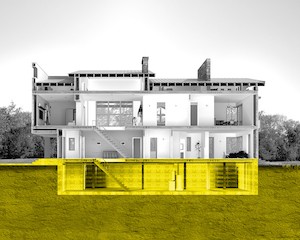
building section 3d rendering

At this time of uncertainty, we’d like to thank you, our customers for your continued understanding as we work hard to maintain ‘business as usual’.

We will continue to post on our social channels, so please follow us and we’ll share some things to lift your spirits, whilst keeping to best practice advice and guidance.  Our online CPD is available on our website, as are our “how to” video guides.   We are planning on taking this opportunity to broaden our Brochure Suite with the introduction of new materials and to roll our new products – watch this space!

Set your shoulders, lift your chin – we’ve got this.

Stay well

Chris, Kevin, David & Brian

Delta Directors


What is Radon and how can we protect our homes?

Building Products Index Ltd Waterproof Membranes Leave a Comment

View the Delta Membrane entry on BPindex

Visit the Delta Membrane brochures and guides

View the Delta Membrane gas protection systems

View the Delta Membrane gas protection waterproofing combined systems

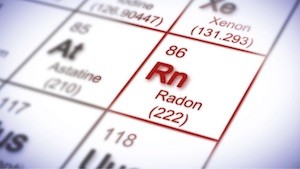
Radon copyRadon occurs naturally in the environment.  Radon gas is created when natural radioactive uranium slowly decays and can be found in all rocks and soils.

Radon can be found everywhere in the United Kingdom, although certain parts of the UK will have higher concentration levels than others.  To check whether you are in a high Radon concentrated area visit https://www.ukradon.org/information/ukmaps.

This radioactive gas is, colourless, odourless and tasteless.

Radon is measured in becquerels per cubic metre of air (Bq m-3) and specialist equipment is required to detect it.

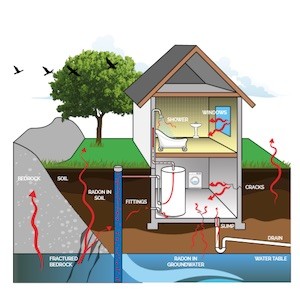
How_Radon_enters_your_home copyThe average level of Radon in UK homes is 20 Bq m-3.  For levels below 100 Bq m-3, individual risk remains relatively low and not a cause for concern. However, the risk to health increases as radon levels increase.

Radon can migrate into any building that is built over a source.

If Radon accumulates in a building, it increases the risk of lung cancer for occupants. Radon is the cause of 15% of lung cancers worldwide (World Health Organisation ‘WHO’ 2009) and the main cause of lung cancer in non-smokers and is responsible for over 1100 deaths in the UK every year.

Research published earlier this year has found that radon levels are increasing in buildings and homes due to the changes we are making to building efficiencies (such as energy efficiency). This in turn will lead to an increase in the number of lung cancer deaths attributable to radon exposure.

Technical solutions such as Ground Gas Protection Membranes incorporated into the design of buildings and structures can offer protection to occupants of homes built on contaminated lands and the harmful effects of radon.

Ground Gas Protection Systems can be used on new, retrofit and refurbishment construction although design considerations are more complex on retrofitted projects.

Forward thinking manufacturers, such as Delta Membrane Systems Limited, have sought to test all our products on their safety, reliability, high-quality and gas permeability.

Manufacturing flexibility has never been as important for the construction industry as it is today.  The permeability of gas through a membrane is a critical factor when it concerns the ability of the lifetime of a building or structure. 

MemTech MembranesThrough extensive research we can state all our Cavity Drain Membrane Systems (CDMs) offer radon protection with a low permeability rate. 

Whilst, our MemTech range of Ground Gas Protection Membranes offer complete protection from Radon, Hydrocarbons, Methane, Carbon Dioxide and Volatile Organic Compounds (VOCs).

Thank you for reading our latest news!  If you would like to find out about structural waterproofing, damp proofing, ground gas protection systems, flood resilience or installing a Delta System we’re happy to help.  Give us a call on 01992 523 523 or email us at info@deltamembranes.com.

Building materials for safer future

Building Products Index Ltd Waterproof Membranes 1 Comment

View the Delta Membrane entry on BPindex

Visit the Delta Membrane website

Delta Membrane cavity drain systems type C waterproofing

David J Symes, Delta’s Technical Director gives thought to fire safety following the findings of the Hackitt Report

The Grenfell Tower fire in 2017 was the deadliest structural fire in the United Kingdom for almost 20 years.  Since the Grenfell Tower tragedy, fire has been under public inquiry.  May 2018 saw Dame Judith Hackitt present to Parliament and challenge construction, that an urgent and comprehensive review of our building regulations and fire safety was required with immediate effect.

In the wake of 72 people losing their lives, Dame Hackitt called for wholesale culture change in the construction industry and a regulatory system that assigned responsibility and held people to account.

In all, her report contained 53 recommendations and she warned at the time that the industry should not be allowed to pick and choose which to implement; there should be no compromises with people’s safety ever again.

What are Building regulations, and why are they so important?

160127_TheFusion-GalliardHomes_018_HighBuilding regulations ensure that new buildings, renovations, extensions and conversions both in domestic and/or commercial structures are going to be safe, healthy and high-performing.  Regulations also cover specific topics within the built sector: structural integrity, fire protection, accessibility, gas safety, electrical, energy performance, acoustic performance and protection against falls.

Standards which are particularly aimed at basements and below ground structures are: protection against the ingress of water, protection against contamination (including methane, carbon dioxide, volatile organic compounds (VOCs) and radon gas), ventilation, drains, along with others.

Building regulation approval is required for the construction, adaptation and extension of all basements and below ground structures.

How do you apply for Building Regulation approval?

Applying for building regulation approval is a relatively straightforward process.  Application can easily be made to [your] local building control team by email or via their online portal.

The Basement Information Centre offers a comprehensive guidance and in-depth analysis on all building regulations related to basement construction, I would strongly recommend this publication to anyone seeking a valuable resource (www.https://www.basements.org.uk/TBIC/Building-Legislation/Building-Regulations.aspx).

DoPEuroClass Fire Resistance Rating

Reaction to fire, often called the EuroClass system gives building products a classification.  The ‘Reaction to fire’ classes tests three properties of the building material: spread of fire, smoke intensity and burning droplets. Most building materials sold on the European market must be assigned a file indicating its fire resistance based on a EuroClass rating system.  There are 7 EuroClasses of reaction to fire performance for construction products which extend from A1 to F.  I would strongly recommend any designer, specifier or constructor to check the source of products you are planning to specify, use or install.  All manufacturers should be able to provide you with their Product Fire EuroClass rating, CE Mark Certification and Declarations of Performance (DoP) as a minimum.

Fire Safety –The Importance of Fire-Resistant Construction Materials

Fire 3It is essential for building products to meet a variety of performance requirements. Depending on the type of material and its intended application, specific fire performance properties are tested.

The Building Research Establishment (BRE) offer a wide range of fire resistance testing (from British to European fire test standards) for construction industries for the purpose of complying to UK Building Regulations or for European Classification and CE Marking.

Fire 2Delta undertook this service many years ago.  In fire testing our products we can have a better understand how they perform during a fire.  The benefits of these fire resistance assessments allow us to share with designer’s test data to ensure safe future construction.


Fire Resistant Design Considerations in Basements/Below Ground Structures

Fire_Regulations_Important considerations should be given when designing a basement or below ground structure on how it will behave during the event of fire. Whilst a basement is not counted when assessing the numbers of storeys of a property for fire resistance and means of escape, it should be factored into design and be a key consideration. Typically, 30 minutes fire resistance is required for a two-storey house over a basement, which increases to 60 minutes where the number of storeys is four or more.

Designers should consult the relevant approved documents to check requirements related to their specific design and for other housing types.

Fire separation between a basement and upper storeys is required if the height of the top floor is more than 4.5 metres above the lowest external ground level. This situation is only likely to occur in two-storey dwellings if the basement floor level is less than 1.2m below the external ground level or located on a very sloping site.

The walls and floor between garages and houses also require 30 minutes fire separation which also applies if located in a basement.

Ground floor flats or maisonettes with a basement level and direct main entrances require no fire separation over and above typical fire separation between apartments.

Means of escape

Habitable rooms in basements require a safe means of escape.  The maximum distance that people must travel, from any point in a building to a place of safety, is usually termed the “travel distance”.  A safe means of escape from a basement could be provided by the main staircase of a structure, provided it is protected and connected to a final exit. Alternatively, escape can be provided by an additional stair offering an alternative final exit.  Escape through windows is permissible if designed to permit escape as defined by the building regulations.

It is worth noting that non-habitable rooms in basements, such as kitchens, utility rooms and bathrooms can be classed as inner-rooms and depending upon the layout of the structure may not require separate means of escape.

It is permissible to exit into gardens or courtyards, provided they have an exit to a place of safety or are greater in area than the height of the structure.

Thank you for reading our article, if you have a question or would like to find out about structural waterproofing or installing a Delta Membrane System, we are happy to provide CAD drawings and information relating to waterproofing and gas proofing solutions in accordance with British Standard 8102:2009, and 8485+A1:2019 give us a call on 01992 523 523 or email info@deltamembranes.com.

 

Reliable BBA Approved Waterproofing products from Delta Membrane Systems Limited

Building Products Index Ltd Waterproof Membranes, waterproofing Leave a Comment

View the Delta Membrane entry on BPindex

Visit the Delta Membrane website to view:

Koster product details

Latest News

Case studies
NB 1 Grey

We are delighted to announce the achievement of the British Board of Agrément (BBA) certification for NB 1 (19/5619i1).  Koster NB 1 is a mineral coated waterproofing slurry containing crystallising and capillary-plugging agents. It can be used for waterproofing against ground moisture and for non-pressurized and pressurized water.   NB 1 Grey is characterized by its excellent resistance to pressure and abrasion as well as chemical and sulphate resistance.

Spray_Application_of_Koster_NB_1_001 copy“The BBA’s certification of Koster NB 1 is a significant milestone for this excellent product,

the symbol of quality and reassurances in our structural waterproofing solutions.  We believe that this will provide Specifiers, Architects, Engineers and Contractors alike with even greater confidence when specifying Koster NB 1 into their structural waterproofing projects.

NB_1_Spray_Applied copyWe shall continue to lead the field in structural waterproofing and hope to continue our progress by having more products certified by the British Board of Agrément”.

Christopher Burbridge, Delta’s Managing Director


Who is the BBA and what is BBA Approval?

Soffit Application of NB1 and SB Bonding emulsion with Repairmortar filletsThe British Board of Agrément (BBA), is the UK’s major authority for the evaluation and certification of construction products.  For manufacturers (such as Delta) to achieve BBA Approval for a product, the product must go through rigorous laboratory tests, on-site evaluations and thorough manufacturing assessments.  If the product successfully meets all the criteria it is awarded BBA Approval and Agrément Certificate.

Why is BBA product Approval so important?

Koster_NB_1_BBA_QR_Code copyBBA Approval is an independent assurance that a product will perform as the manufacturer claims it will.  The BBA’s reputation for robust testing gives the NHBC, builders, specifiers, local authorities, and others within the industry reassurance that a product is of a consistent quality, will perform and will last.  As the British Board of Agrément say “BBA products won’t let you down!”

Our current BBA Certificates (00-3742 and 18/5509) covers Approvals for Delta MS 20, MS 500, FM, PT and Koster Deuxan 2C. Also Delta’s Memtech M1 Gas Barrier and Memtech R1 Gas Barrier Certificate number 16/5367.

Impact of the Fire Regulation Changes on Roofing Systems

Building Products Index Ltd Insulation, Waterproof Membranes, waterproofing Leave a Comment

View the Radmat entry on BPindex

Visit the Radmat website

_©Jon Lucas_Bloomberg_4392On 21stDecember 2018 the Government of England and Wales brought into force revisions to the Building Regulations aimed at preventing a repeat of the Grenfell Tragedy.  Unfortunately, the nature of the release of the Amendments, and the requirement for reader to insert information into the existing Building Regulation’s has led to some misinterpretation of the revised regulations (which have now been re-published in full).

What is clear is that the Government of England & Wales now require that materials which become part of an external wall, or specified attachment, are of European Classification A2-s1, d0 or A1, classified in accordance with BS EN 13501-1:2007+A1:2009 entitled “Fire classification of construction products and building elements” on high-rise buildings that contains flats, as well as hospitals, residential care premises and student accommodation above 18 metres. These products are widely referred to as ‘non-combustible’.

What is also clear is that the requirement for ‘non-combustible’ products does not extend to roofing systems as they are covered by a specific statement in regulation 7(3) Paragraph (2) does not apply to:

(b)any part of a roof (other than any part of a roof which falls within paragraph (iv) of regulation 2(6)) if that part is connected to an external wall’.
and
(g) membranes

ProTherm Rockface build upWhere the requirement for ‘non-combustible’ materials does apply is in regulation 2(6)(a)(iv) any part of a roof pitched at an angle of more than 70 degrees to the horizontal if that part of the roof adjoins a space within the building to which persons have access, but not access only for the purpose of carrying out repairs or maintenance;.  However, there remains a requirement for clarification of this statement, which the roofing sector is currently seeking from MHCLG as flexible roof waterproofing materials are not ‘non-combustible’.  They are manufactured to meet the relevant fire test standards contained in Approved Document B section B4 (BS 476-3 and BS EN 13501-5:2005+A1). The does not apply statement in regulation 7(3)(g) membranes would seem to confirm the waterproofing does not need to be ‘non-combustible’ but the other elements of the roofing system such as deck and insulation will need to be.

A second area requiring clarification is regulation 2(6)(b)(i) a balcony attached to an external wall;.  Traditional balcony construction projects from the building, as it is were an attachment to the external wall.  But modern construction includes for ‘balcony over balcony’ construction and ‘balcony over habitable space’ construction.  It is the general belief of the roofing sector that the requirement for ‘non-combustible’ material does impact ‘balcony over balcony’ construction, but that a ‘balcony over habitable space’ construction is not affected as it is actually a flat roof due to the requirement for waterproofing and insulation and is therefore covered under Approved Document B section B4.

The last area requiring clarification is regulation 2(6)(a)(ii) any decoration or other finish applied to any external (but not internal) surface forming part of the wall;.  Whilst it is clear that a flat roof is exempt from the non-combustible requirements of the regulations there remains a question about high parapet walls as they form the internal face of the external wall.  It is the belief of the author that the ‘non-combustible’ requirements of the regulations do apply to the detailing of the roof at this point and the insulation and substrate should meet European Classification A2-s1, d0 or A1.

A point of note in closing, in Scotland the Technical Handbooks change the height of building impacted by the regulation changes to those above 11 metres.

Forging the way ahead for Blue Roofs

Building Products Index Ltd Roofing, Waterproof Membranes, waterproofing Leave a Comment

View the Radmat entry on BPindex

Visit the Radmat website

The management of rainfall within the built environment is an important task for the construction industry, with correct and sympathetic source control and attenuation being key to Sustainable Urban Drainage System (SuDS) design.

SuDS demands that water falling across a development site is not simply channelled into storm water drains and discharged into the local river. Instead the drainage is designed to mimic that found in nature where water is attenuated, treated and infiltrated through natural processes. In many cases the Environment Agency is involved in limiting the site discharge through a Limited Discharge Consent Notice, which may be related to the natural drainage rate of 5 litres per second per hectare of site, or lower.

Managing inner city and urban areas

A modern method of source control and attenuation is the Blue Roof, where the roofing system is explicitly designed to attenuate rainwater rather than drain it as quickly as possible, as in traditional roof drainage design.

Blue Roofs can significantly contribute to the SuDS requirements within a development by collecting and temporarily retaining rainfall (for a maximum of 24 hours) within the roof finishes before discharging at a controlled rate. This is particularly beneficial on constrained sites, such as in urbanised areas, or brown field sites, where the use of underground tanks are difficult and/or costly.

A Radmat Blue Roof can be installed at either roof or podium level above the waterproofing membrane or the water flow reducing layer (WFRL) in a PermaQuik or ParaFlex FD inverted application or above an EshaFlex warm roof application. The Radmat Blue Roof will be designed to attenuate water for no more than a 24-hour period from the end of the maximum designed rainfall event. The discharge rate will be calculated to allow the roof to be half empty of attenuated water in a 12-hour period.

Case study: The Forge, Redclyffe Road – London

©-JonLucas-Redclyffe-Road_MainTelford Homes acquired The Forgein 2014.The site was formerly a bus depot bounded on two sides by existing residential developments. Radmat was engaged together with RMA Architects to design a roofing scheme which would meet the strict attenuation and flow rate requirements imposed by Newham Council. The scheme comprises residential apartments, clustered around communal courtyards, accessed off a new public street with substantial public realm enhancement.  The new buildings range from three to five storeys with a 14-storey focal building.

©-JonLucas_Redclyffe-Road_overviewChallenge 1:Meeting the strict run off requirements imposed by the council across a geographically restricted site with reduced height zones. Due to the geographical restrictions of the site and close proximity to neighbouring properties, below ground attenuation had to kept to a minimum leaving the roofs and high level podiums as the key attenuation strategy. Radmat’s Blue Roof scheme had to be redesigned a number of times to meet the stringent attenuation targets even utilising the ‘fingers’ of the roof to maximise the available space.

Challenge 2:High Thermal Requirement, need to attenuate and create Amenity Spaces at roof level. Because the development had to meet high thermal standards and provide as much amenity space to residents as possible while at the same time providing extensive attenuation – the system build ups were considerable and therefore design heights at ©-JonLucas-Redclyffe-Road_tiersthresholds and parapets were compromised in some areas. A series of inverted PermaQuik hot melt Blue Roofs were specified to provide a robust waterproofing and were supported by BBA certification for both blue roofing applications and an independent durability statement for the design life of the building. In the most challenging areas Radmat proposed its ProTherm Quantum Vacuum Insulated Panel system which enabled the area to meet the thermal requirement in 80% less space compared to standard insulants, while still meeting the attenuation demands. Systems were finished with Radmat’s MedO Green Roofing systems – both fully vegetated blankets for areas overlooked by apartments and seeded biodiverse roofs surrounding the PV panels creating ecological diversity to the main roofs.

Telford Homes chose Radmat Building Products for the following reasons:

  • Proven track record as a key account partner both manufacturer and Roofing Contractor
  • Radmat’s unique key account service which included scheme evaluation by inhouse architects,bespoke CAD drawings, blue roof calculations
  • Products developed for the application including multiple depth blue roof geocells and BBA certified Vacuum Insulated panels to achieve the thermal performance in the limited space
  • Systems supported by BBA certification specifically certifying the Blue Roof components and a worked up design so that swift NHBC sign off could be achieved.

Products used in Radmat Blue Roof System:

PermaQuik PQ6100 Hot Melt waterproofing system to main areas

Radmat Geocells, water flow outlet and orifice restrictors of multiple heights and dimensions

ProTherm G insulation 0.13 w/m2k

ProTherm Quantum Pure to overcome reduced height thresholds

Green roofs consisting of pre-grown sedum blanket for overlooked areas and wildflower seeds around PV panels of main roofs

For more information about Radmat Blue Roof systems visit:

https://radmat.com/category/product-data/blue-roof/


Waterproofing: Factors to consider when choosing building materials

Building Products Index Ltd Waterproof Membranes, waterproofing Leave a Comment

Delta MembraneView the Delta Membrane entry on BPi

Visit the Delta Membrane website

There is a wide choice of structural waterproofing materials available in the market and it can be difficult to determine the best option for your project.


BBAWe understand the complexity and competitiveness of the industry and the challenges this brings for manufacturers seeking to improve margins, reduce costs and improve predictability. Whether you’re involved in the specification, procurement and/or installation, we understand the challenges you face including managing financial risks, efficient delivery, or meeting legislative or environmental requirements.

Deuxan_2C_BBA_CertificateWhen researching waterproofing materials, you will notice that the price differs widely from manufacturer to manufacturer.  Rule of thumb – it is not always advisable to look for the cheapest!

Choose waterproofing materials that will serve you well.  With potentially heavy consequences (from hefty fines to imprisonment) for using or specifying products in the UK that do not meet the mandatory legal requirements, it is strongly advisable to check the source of products you are planning to specify, use or install.


All manufacturers should be able to provide you with their CE Mark certification and Declarations of Performance (DoP) as a minimum.

Product Credibility

DoP-Terraxx-17-001-02-1A BBA Agrément Certificate relates to the quality and performance of a product.  Many manufacturers undertake costly and comprehensive assessments of their products, which include laboratory tests, on-site evaluations, quality management checks and inspections of production.  If they meet these requirements, they are awarded a BBA Agrément Certificate.

CE Marking is a compulsory legal requirement.  By placing a CE mark on a product, the manufacturer is declaring, conformity with all the legal requirements needed to achieve CE marking status. The manufacturer is thus ensuring validity for that product to be sold throughout the EEA (European Economic Area).

Regulation (EU) No. 305/2011 (Construction Products Regulation, or CPR) of the EuropeanParliament and of the EuropeanCouncil is a regulationthat lays down harmonised conditions for the marketing of construction products.  Regulation EU No. 305/2011 requires all Cavity Drain Membranes/Cavity Membranes hold the CE Mark and have a DoP.  Responsibility for ensuring CE Product marking lies with the EU based manufacturer, importer or distributor of that product.


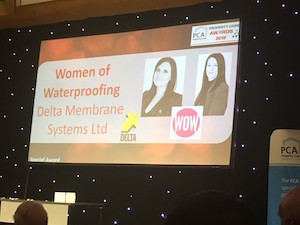
We are delighted to announce Women of Waterproofing have won a PCA Best Practice Award ‘Special Award for Initiative’.

Building Products Index Ltd Waterproof Membranes, waterproofing Leave a Comment

View the Delta Membrane entry on BPi

Visit the Delta Membrane website

PCA Best Practice Awards 2018 2The deserving winners of the 2018 PCA Best Practice Awards were announced on Friday 15 June at the Slate, University of Warwick.

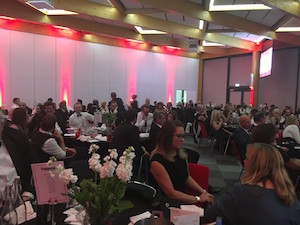
The PCA Best Practice Awards brought together 160 members, contractors, designers and experts for a glamorous evening of celebration, recognition and networking.

After review by the panel of expert judges, Women of Waterproofing won in recognition of them ‘overcoming challenges in an innovative way, offering a solution to ensuring that we are attracting, recruiting and retaining talented women into the full range of roles and at all levels within the structural waterproofing industry and demonstrating engagement with a range of third parties.’

ABOUT DELTA MEMBRANE SYSTEMS LIMITED

Women in Waterproofing PCA Best Practice AwardsImproving the diversity of the people we employ is important to Delta Membrane Systems Limited. We recognise that it is not only right to ensure that people of all genders and backgrounds are able to access fulfilling careers in the waterproofing sector; but that as a business, we fully reflect the society we serve.

As part of Delta Membrane Systems Limited’s commitment to diversity and inclusion, we are working hard to increase the representation of female CSSW qualified Waterproofing Design Specialists.

Our diversity and inclusion strategies include offering unconscious bias CSSW Training at our facilities in Epping, Essex and within our diversity and inclusion five-year plan offering Waterproofing Design Specialist Apprenticeships.

Women_of_Waterproofing_Logo copyWe have also undertaken a range of initiatives aimed at tackling the gender gap, including supporting and sponsoring the Women of Waterproofing Networking Group and unconscious bias training for all staff members across our business.

Christopher Burbridge, Delta’s Managing Director, discusses his pride in the Women of Waterproofing winning this Award: “Leading a business to success can be a tough challenge and as such we are keen to showcase the dedication, expertise and sheer hard work of our team. I would like to wish Georgia and Rachel the best of luck for the future and congratulate them on their win in this prestigious awards programme.”

PCA Best Practice Awards 2018 5David J Symes, Delta’s Technical Director concluded, “Both Georgia and Rachel joined Delta from diverse backgrounds to Structural Waterproofing. Both Rachel and Georgia have adapted to their roles and the environment with grace and dedication. We wish them every success as role models for welcoming more females into a male dominated sector”.

Kevin Dodds, concluded “We are incredibly proud to support the Women of Waterproofing. For Georgia and Rachel to have achieved such recognition is an incredibly accomplishment of their efforts. We will continue to support the Women of Waterproofing in all that they do”.

Follow us on Twitter @WOWNetworkGroup or join our LinkedIn Group at https://www.linkedin.com/groups/8658144


Delta Membranes Case Study – Fernroyd, Bowden

Building Products Index Ltd Waterproof Membranes, waterproofing Leave a Comment

View the Delta Membrane entry on BPi

Visit the Delta Membrane website

Problematic Residential Basement 2 copySPECIFICATION

NBS Specification J40 (Clause 290) Flexible Sheet Tanking/ Damp Proofing.

BS 8102:2009 Type C Drianed Protection.

SYSTEM COMPONENTS

  • Koster Polysil TG500 Anti Lime Coating/Surface Primer,
  • Delta MS 500,
  • Delta PT Delta, Problematic Residential Basement 5 copy
  • MS 20 Perimeter drainage channel
  • Delta Dual V3 Sump Pump

 Overview

The scope of the project was to renovate a problematic damp residential basement to create a habitable dry living space. The property is a magnificent Victorian detached residence, built around 1850.  The accommodation is extremely versatile and extends to around 5569 sq ft.  The property’s extensive basements consisted of: hallway, three chamber rooms, storeroom and wine cellar. The Victorian property in a sought after setting, in Altrincham, Manchester.

Problematic Residential Basement 3 copyAltrincham’s bedrock consists mainly of Keuper Waterstone (a type of sandstone). The project required sympathetic renovation, the property retaining a wealth of impressive original features including deep skirting boards, cornicing’s, mouldings, windows and shutters. Timberwise’s team were called upon to investigate the damp issues and to suggest remedial options which would incorporate BS 8102:2009.

All basements should be constructed (or retrofitted) to cope with groundwater levels up to the full retained height of the basement.  Structural waterproofing preserves the integrity of a structure whilst ensuring the usefulness of the building for present and future use.

Methodology

Problematic Residential Basement 4 copyWhere specified all basement waterproofing projects carried out by Timberwise are designed and installed in accordance with the current British Standard BS8102:2009 “The Code of Practice for Protection of Below Ground Structures against Water from the Ground”. The Delta Cavity Drain Membrane System was installed allowing water to continue to penetrate through the wall where the flow could be controlled within the air gap between the Cavity Problematic Residential basement 6 copyDrainage Membrane and the wall. Perimeter drainage channel manages the flow of the water through to a suitable drainage point or sump pump. Prior to installation of the Type C Cavity Drain Membrane, an application of Koster Polysil TG 500 anti-lime surface primer was applied to all new concrete surfaces. When new concrete forms there is a risk of excess free lime and mineral salts leaching out during the curing process. When a cavity drainage system is used in this type of application, a pre-treatment of the concrete is used to reduce the risk of free lime build up and blocking of the drainage cavity and perimeter channel.

Problematic Residential basement 7 copyVentilation Systems

The Waterproofing Design Specialist recommended that adequate ventilation and heating must be specified in the overall basement conversion in accordance with Part F of the Building Regulations.

Sump Pump System

A Delta PowerMaxx battery back-up and AlertMaxx2 Wi-Fi enabled alarm was installed to complement the system. A Delta Dual V3 sump pump system was installed to keep the area underneath the building dry and to prevent it from flooding. The sump pump’s job is to pump the water out of the pit and away from the building so the basement stays dry.

Case study review

Timberwise transformed what was a damp unused basement into a dry habitable living area. The customer was left fully satisfied with the end result. Having installed the system Timberwise provided the customer with a 10 year guarantee giving long term peace of mind.

1 2 3 4 5