Axis Doors Improve Access at Stratford Garden Centre

Building Products Index Ltd automatic, Doors 1 Comment

View the Axis entry on BPi

Visit the Axis website

Stratford GC (1)Stratford Garden Centre have improved customer flow and access by building a new exit area to accommodate the tills away from the hustle and bustle of the entrance. This meant they needed new doors and they naturally turned to their regular supplier, Axis Automatic Entrance Systems, who had previously installed Stanley Automatic Doors throughout the centre.

The new Stanley Dura-Glide SLD features bi-parting automatic doors sliding over glazed screens with infra red sensors linked to the Stanley MC521 Pro Controller and Eco Pro dynamic user interface. This new generation controller is completely re-engineered for the Stanley Duraglide SLD & SLH models and includes a

“soft-start” “soft-stop” motor driving circuit for smooth normal opening and recycling.

Stratford GC (16)The door engineer can set door functions very easily, including door and motor type, handing, speed, hold-open delay, troubleshooting and much more via a Windows mobile handset although the control panel can also be set manually. The system will collect and store performance data including an operating cycle counter and event and error reporting while displaying the current operating state.

The display unit can be discretely mounted on either the jamb or a nearby wall and provides an electronic alternative to manual switches. All basic door functions of rotary and toggle switches, up to six positions, can be controlled as well as setting programmed schedules for enhanced operating mode changes based on the day of the week, time of day, etc.

The Dura-Glide 2000 Series is the industry standard for smooth, reliable operation in every application from high-traffic retail locations, like garden centres, to upscale professional and institutional settings. Door packages are manufactured to suit individual requirements and installed by ADSA Authorised Technicians (Automatic Door Suppliers’ Association) as per the guidelines of EN16005 (formerly BS7036:1996 – Code of Practice for safety at powered doors for pedestrian use).

Stratford GC (18)Back in 2004, Paul Southern and his niece and her husband, Helen and Gwyn Lloyd bought an old bedding plant nursery 3 miles south of Stratford upon Avon and re-opened as Stratford Garden Centre in 2006. Over the succeeding years this family business has grown to its current 7 acres and 24,000 square feet of indoor retail space with plans to increase that by a further 9,000 square feet. The mix of horticulturally and retail trained staff, together with a popular restaurant, food shop and shopping courtyard have earned them an excellent local reputation enhanced by their independence and entrepreneurial flair.

They are very pleased with the new layout keeping both the old entrance and the new exit free flowing and less cluttered and encouraging customers to move further around the store and experience more of what they have to offer. Helen Lloyd said “ Once again Axis have given us an excellent product backed up by their knowledgeable and flexible service to help us create the solution we had planned.”

For more information call Axis on 01604 212500, visit www.axisautomatic.com or email sales@axisautomatic.com

Solid Wood Floors + Underfloor Heating – One Solution From A Single Point Of Supply

Building Products Index Ltd Flooring, Solid Wood Floors Leave a Comment

View the Junckers entry on BPi

Visit the Junckers website

Introducing Leveldek from Junckers

Multi-purpose hall in use. Highgate Shool, London, United Kingdom. Architect: Architype Limited, 2016.

Multi-purpose hall in use. Highgate Shool, London, United Kingdom. Architect: Architype Limited, 2016.

Traditionally, timber floor finishes and heating systems are specified separately and supplied and installed by different companies. Junckers Leveldek offers a versatile levelling system, underfloor heating and a solid hardwood floor finish from a single point of supply.

Junckers has teamed up with one of the main heating component manufacturers to offer a combined solid hardwood floor and heating system which achieves the best fit in terms of ease of installation and efficiency.

The Junckers Leveldek system is a fully integrated solid hardwood floor and heating system. Any of the 22mm or 20.5mm thick floor boards from Junckers’ full range of finishes may be used, so there is a floor to suit any taste and style of interior.

Junckers hardwood floors have for many years been recognised as the only solid hardwood floors which are so stable that they are guaranteed for use with underfloor heating. This is something that architects, the flooring and heating industries have known for the last 30 years or so. It is fair to say that almost any type of underfloor heating may be used with Junckers floors. However, heating designs vary enormously with different ways of supporting the pipes and insulating the floor, and careful planning is needed when coordinating heating and flooring trades on site. There can also be some significant efficiency and running cost differences between one system and another.

Energy Efficiency and Fast Warm Up

A Junckers Leveldek floor system is able to achieve the greatest energy efficiency and fastest warm-up time because of the unique way the heating pipes
are supported directly beneath the floor boards. The heating panels are insulated and reinforced, and have aluminium heat diffusion plates. They are pushed upwards against
the underside of the floor boards by the support saddles and this close contact gives the best heat output possible. This also means that the Leveldek heating pipes cannot sag or move, so the heating will give the same reliable efficiency for its whole life. The design of the Leveldek system means that the response time and heat output can be calculated accurately, so the heating engineer can be sure that the predicted performance will be what the client will actually get.

The heating panels and battens are supported above the subfloor, therefore it is very easy to include other services beneath the floor prior to installation of the hardwood floor boards.
Junckers Leveldek works perfectly when a sprung floor is needed because the heating panels will flex along with the whole floor system.

Leveldek – Many Solutions in One

There are many ways the Junckers Leveldek system can be used. It is based upon one of Junckers’ established levelling systems, so the subfloor can be a screed, concrete slab, block and beam or other type of base; flat or not. This makes it perfect for residential and non-residential new build as well as refurbishment projects.  When used with solid SylvaSport beech flooring, the system provides a sprung floor to EN 14904, which means that it is suitable for sports, dance and activity halls and meets the requirements or Sport England and Sport Scotland.

Environment and Sustainability Considered

As well as providing an energy efficient heating system the materials which are used for Junckers floors are from sustainable certified sources, are fully recyclable and manufactured to the highest environmental standards. Even the energy which is used to power the flooring factory is produced from waste wood from flooring manufacture.

Fully Guaranteed

Junckers long experience and unique reputation means that Junckers is able to offer a full guarantee for the system under the Junckers Lifetime Warranty Scheme with a 25-year guarantee for the flooring and installation, 10 years for the heating pipes and insulated panels and 2 years for all electronic components.


Junckers

Unit A, 1 Wheaton Road, Witham, Essex CM8 3UJ

Tel 01376 534 700 www.junckers.co.uk

sales@junckers.co.uk

Twitter/Instagram: @junckersfloors

Choosing PIRs

Building Products Index Ltd LED Lighting Leave a Comment

View the Timeguard entry on BPi

Visit the Timeguard website

Don’t set yourself up for PIR failure, says Timeguard

Timeguard ceiling mounted PIR detector“What’s the cheapest PIR you’ve got, mate”. That was overheard at a wholesale counter within earshot of a visiting Timeguard representative who only stopped spluttering when he heard the ‘right’ reply from the man behind the counter. “What’s it going to be used for?”. Phew!

PIR detectors are not all the same, but they are typically mounted on ceilings or high on walls – places that are hard to get to if they fail or need constant readjustments.

Branded quality is always the safest option, but even the you need to make sure you get the specification right. So here are just 3 key questions to help them to help you get the balance between price and performance right:

  1. What type of lights and what load?

These days the job will almost always be LED lighting, so make sure they know to pick a PIR detector that is specifically tested with and rated for LED loads.

We’ve been saying for years how important this is. LED lights have a strong inrush current and it is that which the PIR should be rated for, not the subsequent low running current.  You shouldn’t need to do the maths, the specification should already state what LED loading is acceptable – if not steer clear.  We think it’s always wise to add at least 10% for good measure).

The huge difference between ratings for the same PIR detector for halogen and LED still comes as quite a surprise to some people. For instance, our new mini linkable PIR, is rated for 1000W max. halogen and 250W max. LED.

  1. Is it going to be a straightforward stand-alone automatic switch?

If you are looking at very high LED ratings, for a single PIR to switch several lights, double check the spec. For instance, our top-selling 360o ceiling mounted detector has a maximum LED load of 150W, but we rate it for a maximum of 10 separate LED 10W lamps (100W). Yet we are happy to rate – and guarantee – it for 5 sets of LED lamps above 10W, right up to the 150W limit. This is because due to their physical size lower wattage LED lamps (GU10 type lamps) commonly have very simple circuitry with surge protection and power factor correction omitted, this puts a massive strain on whatever is switching/controlling them.

Looking for a big rating might also mean that a big area is to be lit. So perhaps a single PIR detector will not be able to give the comprehensive detection field needed.  Would multiple PIRs be better?

Timeguard mini PIR and plig in slave_lowresMaybe it would be easier – and less expensive – to be able to link a master and several slaves together? When these come fitted with cables and standard RJ11 plugs and sockets, huge amounts of time can be saved on both installation and set up.  The ingenious Timeguard linkable concept makes wiring simple because up to 5 slaves are linked by pre-fitted plug-in wires that stay hidden behind a suspended ceiling. Simples.

  1. Where’s it going?

Will the detector be surface mounted on a wall, flush mounted in a standard ceiling aperture, or would a corner bracket help? How important are looks to the end user?

Do you need the option to mask part of the detector?  What’s the room being used for and do they really need presence detection around desks or areas where people sit fairly still? If it’s going to be within reach of passers by and ‘keen’ building occupants, do you need to ensure that the controls are tamper proof?

Timeguard tamper proof PIR

Indoors or out? Check the IP rating. If outdoors, might it be easier to replace old and corroded lights with an all-in-one floodlight with integral PIR detector designed to withstand the British climate. Check out the corrosion-free Timeguard coastal range.

All this might give you cause to rethink. Branded quality is still the best assurance of fit-and forget  quality. No-one wants to have to go back and change a failed PIR detector.

Altro create a relaxing environment for playful Dachshunds

Building Products Index Ltd Flooring, Resin, Rubber, Safety Leave a Comment

View the Altro entry on BPi

Visit the Altro website

Altro Cantata, Altro Whiterock Satins

Pigglefairy Puppies -Altro Cantata-20Pigglefairy Puppies, based near Kings Lynn, are council-licenced breeders of Kennel Club registered miniature Dachshunds. The kennel where the dogs slept was five years old, and was starting to look tired. It needed a refit but owner Debbie Casemore wanted a solution that would not stress the dogs. She also needed a quick turnaround to make sure the dogs were able to return to the kennel quickly.

Debbie said: “I wanted the best for the dogs, and hygiene is so important for their welfare. I wanted an easy to clean floor and wall solution that would have no edges or crevices for the dogs to chew on. It also had to be quick to fit so the dogs could go back to their routine.”

CT_Pigglefairy Puppies-Altro Cantata-Altro Whiterock Satins-07Altro Cantata was chosen to provide an easy to clean floor that would be quick to install. Altro adhesive-free floors are installed without adhesive, which is a benefit when adhesive smells can cause stress. Altro Whiterock Satins in ‘Fawn’ was chosen as an easy to maintain and hygienic solution that looked good.

Debbie continued: “The colours of Altro Cantata and Altro Whiterock Satins are nice and neutral, and look really professional and clean.”

Altro Cantata and Altro Whiterock Satins were installed by Simon Johnson at Simply Interiors.

Pigglefairy Puppies-Altro Cantata-Altro Whiterock Satins-09Simon said: “Since Altro adhesive-free floors were launched, it is now makes up approximately 80% of our safety flooring jobs. The speed for clients and ourselves has proved invaluable! Altro Cantata is a great addition to the range.”

Altro Cantata is a decorative, adhesive-free floor that creates maximum impact with minimum downtime. Using our award-winning adhesive-free installation method, it can be welded and walked on the same day, and at the end of its life can be removed easily, allowing it to be reused or recycled. It is ideal for busy public spaces where disruption needs to be minimal, plus there are no associated adhesive odours. Altro Cantata’s 16 soft-look shades, which range from subtle naturals to beautifully vivid, enable you to set the desired tone yet it also has the durability needed for medium to high traffic areas.

Altro Whiterock Satins provides a stain-resistant, wipeclean surface. Available in a range of solid, satin-finish shades – from subtle pastels through to vivid brights – Altro Whiterock Satins can be used where aesthetics are important.

Enhanced security offer for mental health glazing

Building Products Index Ltd Steel, Windows Leave a Comment

View Crittall Windows on BPi

Visit the Crittall Windows website

CleanVent outward_opening_CleaningPane_sliding window 50pc(2)Crittall Fendor is strengthening its position as the manufacturer of the largest range of specialist mental health fenestration in Europe with its CleanVent Window which has been enhanced by the addition of a Slipper Clutch mechanism.

The CleanVent is an external sliding window system designed to provide a maximum amount of natural light and ventilation.  With security considerations uppermost in mental health installations the CleanVent allows the glazing to be cleaned quickly and easily behind the security mesh – something that presents widespread problems in other manufacturers’ products.

The CleanVent can be either inward or outward opening which has the advantage of providing an external opening vent on ground floor windows meaning it can be cleaned without disrupting the patient. When installed at higher floor levels an internal opening vent provides ease of access that keeps maintenance costs to a minimum.

The flush frame offers no ligature points and is supplied with anti-ligature hardware as standard. Health and safety concerns mean that it should not be possible for a patient to be able to attach a ligature – a wire or cord – to any part of the window in a bid to cause self-harm.

An additional feature is the Slipper Clutch, an anti-ligature dial-shaped handle specially designed to withstand misuse in addition to normal wear and tear. When the opening vent is at its fullest extent it cannot be deliberately forced open further.  The mechanism is engineered to ‘slip’ repeatedly no matter how often it is turned and will only re-engage and operate normally if it is turned back in the opposite direction.

CleanVent windows are available in steel and aluminium depending on the level of security required. They have been tested by the NHS for both medium and high security use and can be supplied in single, double, triple and acoustic-glazed options.

SMARTPLY DRYBACKER GREATLY REDUCES DRYLINING INSTALL TIME

Building Products Index Ltd Timber Leave a Comment

View the Medite Smaptply entry on BPindex

Visit the Medite Smartly website

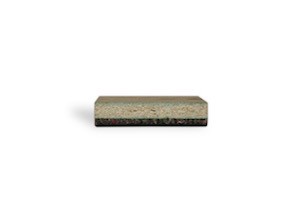
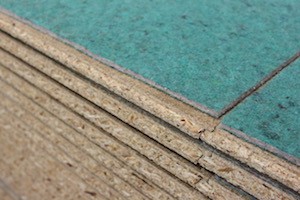
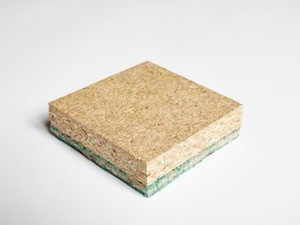
IMG_3086SMARTPLY DRYBACKER, an innovative factory-prepared oriented strand board (OSB), has greatly reduced the time spent on the latest big build project for drylining contractor SD Plastering.

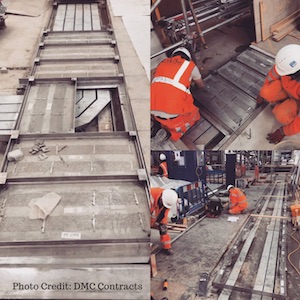
The project, based in Surrey Quays, Canada Water, London has seen 280 commercial and residential units take shape over the past two years with an additional 160 to follow on.

IMG_3094Specially designed to speed up install times whilst adding strength to partitions, SMARTPLY DRYBACKER was chosen to provide support for heavy fixtures and fittings secured through the plasterboard.

The product features a pre-cut recess in the rear of the panel, designed to accommodate ‘C’ shaped metal studs meaning the panel will fit snugly to most commercially available drylining systems. The pre-sized modular format and factory cut groove mean there is no requirement for cutting or modifying on site eliminating excess dust and noise.

IMG_3095“Pre-rebating the product means that we increase the usability to the installer, doing away with time spent cutting and sizing the product on site,” says David Murray, Innovation Manager at MEDITE SMARTPLY.

“Our aim when creating this product was the same as all of our innovation projects; to solve the problems encountered everyday by end users. With SMARTPLY DRYBACKER we identified the need to cut down time adjusting and cutting panels on site, which can cause unnecessary hold ups in construction projects.”

IMG_3097SMARTPLY DRYBACKER is the first of its kind to be factory prepared in this manner, and contractors are reaping the reward.

“The fact that the boards do not require cutting on site is a really important benefit for us. It saves my teams and I a lot of time cutting the panels down, then rebating individual slots in each board. As a result, we also have less power tools on site, which reduces cause for concern around health and safety,” says Simon Dixon, Managing Director at SD Plastering.

IMG_3099“As you can imagine, cutting that amount of board on site also creates a lot of dust. The elimination of the need to cut the boards removes this extra hazard, further reducing risk to our workers.”

“We needed enough board to fit out 280 units, so if a product can save us five minutes on each board installed then we can save ourselves a matter of days over an entire project, which makes us and our clients very happy.  It’s for those reasons that we’ll be using SMARTPLY DRYBACKER again when we push for the next stage of the project this year.”

IMG_3101With reduced installation time, reduced dust, reduced noise and reduced use of power tools on site, SMARTPLY DRYBACKER certainly is the superfast, heavyweight champion.

For more info, please visit www.mdfosb.com

Ready, set…EPC

Building Products Index Ltd Heating, Radiators Leave a Comment

View the Jaga entry on BPi

Visit the Jaga website

jaga-epc-20161014EPC Ratings, why does this matter? The government estimates that almost one-in-five commercial properties currently hold the lowest ratings of F or G. EPCs are legally required for all public and private buildings and assign an efficiency rating from A to G.  So, are you ready for the new rules?

The built environment has been identified by government as a major contributor to Greenhouse Gas (GHG) emissions, contributing around 34 per cent of the UK total.

Non-domestic buildings account for nearly 25 per cent of the UK’s overall carbon emissions and heat in buildings accounts for a substantial proportion of this. As more are built and refurbished, the installation of energy efficient, cost-effective products must be a top priority – especially if the UK is to meet the ambitious carbon reduction targets for 2020 and 2050.

So, are you ready for the new rules?

The regulations will first apply to new domestic and non-domestic lettings and lease renewals from April 2018, to be followed by all existing non-domestic leases by 1st April 2023.

However, savvy building managers are taking steps to not only meet this minimum standard but to exceed it in preparation for a likely future tightening of the regulations.

Here we take a look at the steps you can take to upgrade to your heating system and boost building energy efficiency ratings in the process.

New tech

 The latest heating technology can help you achieve some easy wins when it comes to energy efficiency and heat emitters should be a first port of call. When compared to other heating upgrades, such as replacing an old boiler, switching your radiators to more efficient models is relatively low cost and can be done fairly quickly.  Low-mass, low water content radiators contain a tenth of the water compared to a standard steel panel radiator, resulting in a faster response time and providing up to a 16 per cent reduction in energy costs. Buildings which are fitted with this technology also produce much lower carbon emissions due to the reduced energy used, helping designers and  engineers meet their carbon reduction targets.

Another innovative radiator technology is fan assisted DBE (Dynamic Boost Effect).

This improves airflow and boosts heat output, allowing Jaga radiators to work efficiently with sustainable low-flow temperature systems, such as heat pumps.

Heat pumps are estimated to reduce electricity use (and cost) for heating by around 50 per cent compared to electric resistance heaters. They are extremely efficient and, when utilised properly, can also provide excellent thermal comfort. With added support from the Renewable Heat Incentive (RHI) tariff payments for ground source and air source heat pumps, it seems inevitable that the uptake of these technologies will continue to grow steadily.

 Taking action now

 It can often be a challenge to keep on top of the latest energy efficiency regulations but the April deadline for MEES should be seen as a priority. Civil penalties of up to £5,000 will be imposed for breaches, with local authorities also serving compliance notices to ensure properties are brought up to standard.

Investment in a heading system upgrade will not only ensure your building remains compliant but can deliver energy cost savings that will last for years to come.


Jaga UK asks experts – What is next for the construction industry?

Building Products Index Ltd Heating Leave a Comment

View the Jaga entry on BPi

Visit the Jaga website

How must the construction industry adapt to create a successful future?

by Martin Townsend

Martin Townsend Image

It takes a unique question or experience to inspire a blog, and in this case, the question came from the team at Jaga.  I was asked to discuss the core trends which are currently dominating the future of the construction industry, and whilst any blog on this topic must come with a suitable number of caveats, I have endeavoured to outline my thoughts below.

This subject matter is enormous, and in many ways, the biggest challenge is deciding where to start.

In this case, I begin by considering the past. Whilst every former era of construction is confined to the rearview mirror of history, the lessons learnt during those periods continue to shape the present, and inform the future. One of the biggest construction trends right now is to re-evaluate the methodologies of the past. This is heavily influencing how we approach new and emerging technologies, whether that is with caution, or with full-throttle adoption.

These emerging technologies are many and varied, and are completely changing the face of the industry. Virtual reality and 3D printing have long since left the realms of science fiction to become invaluable tools for those working in construction and architectural design. Equally, we are seeing a cross-pollination of technologies across a raft of sectors – think car batteries moving into the realm of construction – which results in refreshing new ideas and ways of working.

However, for me, the most exciting change is subtler. Conversation within the industry has matured in-line with societal, and there is now an ever-increasing emphasis on the adaptability of spaces, buildings, communities, and neighbourhoods. These must now be designed to meet the rapidly developing needs of an aging population, along with a changing climate, to satisfy current and future demands on the spaces in which we work and live.

In order to facilitate these changes long term, there is also much discussion around how we can balance our rising population and evolving city scapes with the imperative conservation of our resources. There is a developing dialogue around how we can rethink the relationship between suppliers and end-users, and how that can translate into a greater understanding of the benefits of eco-friendly products and systems. I also very much anticipate a rise of the circular economy, whereby we drastically reduce waste whilst increasing well-being, a circumstance which will certainly change construction for the better.

Furthermore, we are seeing a shift in emphasis from quantity to quality. This is particularly relevant to housing developments, where consumers are far better informed than ever-before, and can conduct research on products and builds at the touch of a button. One example of this enforced transparency is consumer interest in long-term operating costs. Savvy buyers are now comfortable asking questions about factors such as the efficiency of a home’s heating system, green finance, or overall adaptability, and have the knowledge to back it up. A consumer led agenda of quality, through demand, rather than the supply side, is gradually becoming a reality.

This new level of transparency also enables a wider group of people to hold corporate groups to account, addressing sustainability issues and furthering public understanding of these. I see this in the conversations which I have daily – individuals involved in construction are beginning to realise that their brands have a responsibility beyond shareholder returns, and this is influencing how projects are developed and completed. Looking to the future, the graduates of today are just as interested in a company’s values and corporate social responsibility (CSR) as they are in performance on the stock exchange, a telling indicator of our future captains of industry.

Equally, as we become more international, there will be an expectation, or perhaps a need, for global governance to shape the construction agenda. In the current climate, it would be easy to stray into Trump or Brexit territory, but these are only a minor part of the story. The Paris Agreement, and the alignment of most (excluding the notable previous example!) high-level views of climate change, is a vital part of the future of construction. And, whilst a great level of volatility remains on the global stage, the increase of products and services being delivered on an international scale means that there is a rising need for consistency and commonality, and this should be driven by standards.

Related to this, is the changing way in which businesses collaborate. Collaboration has always been central to the construction industry, but to me at least, it is becoming more noticeable. This extends beyond collaboration between similar organisations, but also to those – potentially from completely different industries – who share a similar problem. Whilst this, to my mind, can only be a good thing, it’s vital that we develop and maintain governance models to ensure stakeholders can have confidence in what is being achieved, in a way that is not anti-competitive. This leads to interesting discussions around how legislation, such as competition laws originally put in place to protect companies, do not become barriers.

For those whose chosen profession is linked to the construction industry, it is perhaps one of the most exciting periods of the industry to be working in. If you are reading this from outside the sector, I hope this blog has given you pause for thought, and perhaps given you reason to re-evaluate the construction industry as one you may choose to join.Our once male dominated, and arguably, unsafe and unsanitary industry is evolving in front of our eyes. Top minds from top universities are gravitating to the sector, and the way we look at construction is shifting enormously, with innovative technologies, as well as new attitudes, hugely shaping the future.


Get off-site InSite from Eurocell at Ecobuild 2018

Building Products Index Ltd PVC-U, Windows Leave a Comment

View the Eurocell entry on BPi

Visit the Eurocell website

Eurocell BPindex January 2018 Insite Ecobuild LEAD IMAGEEurocell is promising to deliver a whole host of benefits to the timber frame and off-site construction sectors with the launch of its new InSite window solution. InSite will enable timber frame manufacturers to install fully glazed, fully finished windows into wall panels as part of the factory production process, thereby reducing on site disruption and labour costs while saving time on build programme schedules. The new system can be viewed at Ecobuild 2018 on stand G22.

There are also significant health and safety benefits with factory fitting and the reduction in manual handling, as well as an estimated 30% improvement in transportation yields because the windows are fully recessed, allowing panels to be stacked flush when loaded.

Eurocell BPindex January 2018 Insite Ecobuild (1)InSite comprises market-leading PVC-U window performance with an innovative fixing method that allows factory fitting of the window directly into the wall panel. Once the timber wall panel has been erected on-site, the windows are checked to ensure they are plumb and square and then simply secured to the first fix position by pushing the frame outwards to lock it into position. An intelligent design modification enables cills to be simply clipped on and mechanically secured once the windows are locked into position. The whole panel assembly can be made watertight within one day so interior trades can begin work immediately, saving time on programme.

Eurocell BPindex January 2018 Insite Ecobuild (2)As part of its development, the InSite system has been fully tested, including resisting wind load pressures well in excess of 200mph – significantly beyond the highest Category 5 hurricane winds rating (156mph+). Design calculations have been verified by independent timber frame structural engineers. Owing to the controlled nature of manufacture, the installed windows offer leading energy efficiency performance, with a U-value of just 0.8 W/m2 possible, a level that far exceeds current Building Regulations requirements.

A 10-year product guarantee* on InSite windows provides customer peace of mind, as does full product traceability, thanks to a simplified supply chain and centralised documentation.

Talking about the launch, Chris Coxon, Group Head of Marketing at Eurocell, said: “InSite is an engineered solution that gives off-site construction specialists an opportunity to increase efficiencies and quality at key stages of the manufacturing and building process, so they receive the benefits they promote to their clients and streamline the construction process further, resulting in a safer, faster build time.”

“Since there is no need to store windows on site there is no danger of damage or theft and the reduction in manual handling also significantly cuts the number of health and safety issues to be dealt with. Programme time is not affected by issues like scaffolding obscuring the installation of windows, especially as preparing InSite for external cladding and internal plastering can all be done from the inside. Similarly, site traffic is reduced because there are no window deliveries,” he adds.

Sounds appealing? Find out more by visiting www.eurocell.co.uk/insite or calling the Eurocell Customer Care Team directly on 0800 988 3049.

Ecobuild 2018 takes place between March 6th and 8th at the ExCel centre in London’s Docklands. Eurocell’s stand no. is G22. To register visit: https://www.ecobuild.co.uk/

* including 5 years on glazing units and two years on internal window hardware.

The Airflow Air Academy is an NICEIC Approved Training Centre

Building Products Index Ltd Fan, Ventilation Leave a Comment

View the Airflow entry on BPi

Visit the Airflow website

Bircan Tulga Photography 2016You can train to become an NICEIC accredited ventilation installer at the Airflow Air Academy in High Wycombe. The 500m2 state-of-the-art training facility uses the very latest in ventilation and building management technologies to showcase the health and financial benefits of using energy efficient ventilation products that perform when installed.

NICEIC Ventilation Installer training sessions take place twice a month in the Air Academy with Airflow’s accredited instructor. During the two-day training scheme, you will learn about:

  • The importance of effective ventilation in the home
  • The current UK Building Regulations affecting residential ventilation
  • The four main ventilation systems outlined in the Building Regulations, including:
    • Intermittent extract fans
    • Passive Stack Ventilation
    • Continuous Mechanical Extract Ventilation systems (both decentralised MEV and centralised MEV)
    • Mechanical Ventilation with Heat Recovery (MVHR)
  • Why you should consider installed performance
  • How to correctly install, commission and test a system

Acceptable alternative means of ventilating a property that you may come across in the field will also be discussed during the course of the training scheme.

You will also undergo a practical test where you will test and balance a typical residential Mechanical Ventilation with Heat Recovery system in-line with best practice and in accordance with Approved Document F1: Means of Ventilation of the 2010 Building Regulations.

Bircan Tulga Photography 2016When you’ve successfully completed the NICEIC Ventilation Installer course, the qualification you’ll receive provides you with significant added value to your credentials. This will highlight your competency and skill to prospective clients; reassuring them of your quality as a ventilation installer.

Once the two-day training session is completed, you are then eligible to join the NICEIC Competent Persons scheme – the only scheme of its type with a £25,000 guarantee. The scheme is designed to offer a safety net to clients that if the work undertaken is substandard, then it will be rectified through NICEIC’s Platinum Promise; adding further reassurance to prospective clients that the work you’ll undertake will be quality.

Click the link to learn more about the NICEIC Ventilation Training scheme as well as all the training services on offer with Airflow:

https://www.airflow.com/training