The importance of specifying the right access hatch

Building Products Index Ltd Access Hatches, Access Ladders Leave a Comment

View the Bilco UK entry on BPindex
Visit the Bilco UK website

Specifying the most suitable roof access hatch for your upcoming project will ensure the highest standards of safety, efficiency and compliance.

Whether working on a residential or commercial development, considering the requirements and frequency of access at the outset of the project will guarantee the hatch delivers the highest standards of functionality and safety for its entire lifecycle.

Tom Brandon, Specification Sales Manager at Bilco UK, shares his expertise on three essential factors, which should be taken into consideration to ensure a successful specification.


  1. Determining the purpose of your access hatch

Whether for leisure, domestic or commercial sector buildings, all roof access hatches are designed to allow safe and permanent access to a roof area.

However, roof hatches vary in size and functionality, so it is essential to determine the dimensions of your space and the purpose for which your access hatch will be used.

The access hatches required will differ depending on how it will be used – for example, is it going to be used regularly by personnel for maintenance reasons, or does it need to provide a safe means of access in the event of an emergency?

Another key consideration for roofing contractors when assessing which access hatch is right for their project is whether tools and equipment will need to be transferred through the access hatch.

If an individual accessing the roof will be carrying large tools for regular maintenance, then a large access hatch that is larger than 915mm x 915m will be required.


  1. Ladder specification

Ladders are another key element for providing secure access to the roof area, so installing the correct roof access hatch and ladder combination is vital to ensure the method of access is as safe as possible.

As with a roof access hatch, space and purpose need to be considered in order to make an informed choice regarding which ladder system is best suited to meet the needs of the building.

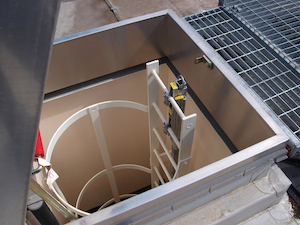
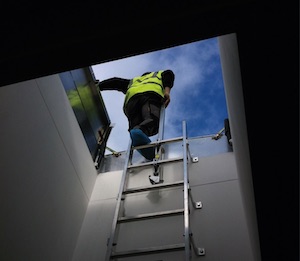
For a small roof access hatch, which has internal dimensions of 915mm x 915mm, a fixed vertical ladder would be the most suitable option.

However, in instances where access space is limited, a retractable ladder would not be recommended due to the wide ladder angle causing hindrance to movement as an individual moves closer to the hatch.

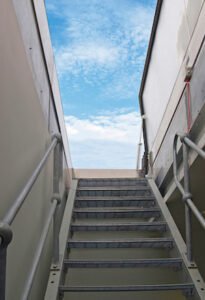
Alternatively, where frequent access to the roof area is required for maintenance personnel, tools and equipment, a companionway ladder should be chosen in combination with a more elongated access hatch. The companionway ladder is a 75 degree angled, rigid ladder, which provides permanent access to a roof hatch of up to 2440mm.

A larger access hatch and retractable ladders should be considered for buildings such as hospitals and schools, where a clear pathway must be maintained underneath the hatch at all times.

In accordance with Manual Handling Requirements, the ladder system should be easily operated with one hand, enabling an individual to maintain three points of contact with the fixed ladder at all times.

Additionally, it should be taken into consideration that a minimum head clearance of 120mm is required, and, in accordance with BS4211-7.2, that the maximum single climb is no more than three metres.

Additional requirements to consider during the initial specification stages include calculating the height of the floor to the underside of the roof access hatch, to ensure the ladder is not too long or short.


  1. Additional safety considerations

To ensure that each requirement has been successfully met, professionals should consider the specification of additional safety measures.

If the ladder is to be mounted externally to provide access to a roof, it must be fitted with a safety cage and guard rail to ensure safe and secure access.

Designed to sit below a roof access hatch, at heights above 3 metres, a safety cage is required. Manufactured in aluminium to meet BS4211: 2005 + A1: 2008, these additional safety features prevent individuals from falling backwards or sidewards and ensure compliance with Building Regulations.

Additional protection can be achieved with the specification of Bilco UK’s unique Ladder Up® Safety Post. The telescopic post mounts permanently to the top two rungs of any fixed ladder, providing a secure handhold and enabling the user to enter or exit the opening in an upright and balanced position.

For advice on how to specify the correct ladder, visit: www.bilcouk.co.uk/news/specifying-ladders

For further information on specifying the right roof access hatch for your upcoming project, download Bilco UK’s free guide: www.bilcouk.co.uk/files/downloads/choosing-the-right-access-hatch-bilco.pdf

Soundproofing solutions for the complete building envelope from Soprema

Building Products Index Ltd Sound Proofing Leave a Comment

View the Soprema entry on BPindex

Visit the Soprema website


As per section E of The Building Regulations, in new builds and residential buildings, the upper floors, external walls, masonry dividing walls, and internal stud walls must be properly soundproofed, with the airborne sound resistance being at a minimum level of 40dB and impact sounds levels at a maximum of 62dB (With an exception for any wall that has a door in it and the walls that surround en-suite bathrooms).

Soundproofing buildings is not only a regulatory requirement, it’s also an important factor in ensuring that the building’s occupants can enjoy a peaceful and tranquil environment, whether in residential buildings, schools, hospitals, offices, or other types of buildings.

Soprema offers a wide range of acoustic insulation and soundproofing solutions, specially designed for ceilings, walls, floors, and even pipes, ensuring complete peace of mind that the building has been soundproofed to the regulatory standards:

TECSOUND – high-density, synthetic soundproofing membrane designed for increasing airborne noise insulation with low surface mass, soundproofing against airborne noise in ceilings and lightweight roofs and reduction of impact noise in laminated floors. In the industrial field TECSOUND membrane can be used in applications ranging from soundproofing of cabins to acoustic insulation of machine-rooms, cowling of engines, gutter pipes and sound-damping of metal sheets amongst others.

TECSOUND SY – self-adhesive version of TECSOUND membrane

TECSOUND FT – soundproofing composite including a porous felt and the TECSOUND synthetic membrane to be used in different construction elements both horizontal and vertical

TECSOUND 2FT – soundproofing composite including TECSOUND synthetic membrane placed between two porous felts to be used in different construction elements both horizontal and vertical

TECSOUND FT55AL – Soundproofing composite made of TECSOUND synthetic membrane, finished with porous felt and aluminium foil designed for sound-insulating pipes

TECSOUND TUBE S – acoustic insulation for water, rain and drainpipes in buildings

TECSOUND S BAND – synthetic tape made of TECSOUND membrane, with a built-in self-adhesive layer enabling it to be applied straight onto metals structures subject to vibrations

VELAPHONE FIBRE 22 – thin under floor impact noise soundproofing material

In addition to our soundproofing range, Soprema UK have introduced two sound absorption product ranges. The products are designed to reduce internal excessive noise levels, allowing us to design an acoustic ambience which is fit for purpose based on specific acoustic guidelines.

Our sound absorption offering consists of two products:

PURE-KUSTIK – sound absorption boards consisting of polyester fibre with a high recycled material content (> 60 %).

FIBRO-KUSTIK – Wood wool sound absorption boards used on walls and ceilings, especially in areas where robustness and long-term product endurance is required.

These ranges feature various visual design characteristics and have proven very popular in markets including the Far East, throughout Europe as well as the Middle East.

If you would like to learn more about each product, please visit our Acoustic Insulation and Soundproofing page.

You can also contact us directly to speak with our dedicated acoustics and soundproofing technical experts about our solutions and how they can be applied in your projects:

W: www.soprema.co.uk
E: techsupport@soprema.co.uk
T: 0330 058 0668

KLAUS Multiparking – The semi-automatic TrendVario systems make parking a pleasure

Building Products Index Ltd Parking Systems Leave a Comment


View the Double Parking Systems entry on BPindex

Visit the Double Parking Systems website

Visit the Klaus Multiparking website

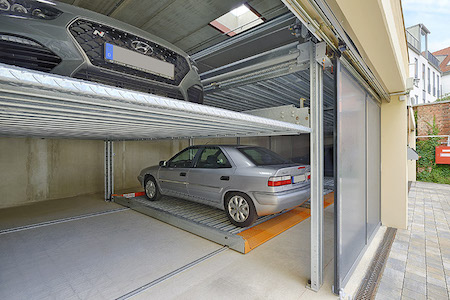
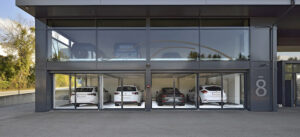
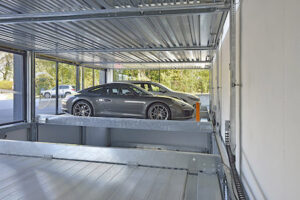
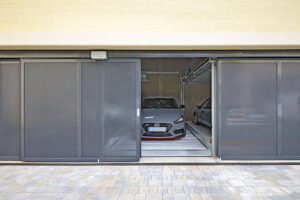
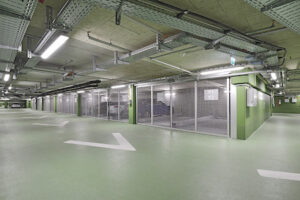
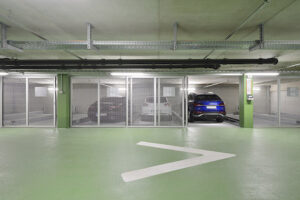
Our semi-automatic TrendVario parking system combines efficiency with convenience. The users simply drive their vehicle into the system zone – the TrendVario takes care of the rest. A semi-automatic parking system allows more parking spaces to be used on up to three levels for both horizontal and vertical parking – with or without a pit. Compared to a double parker, it increases the number of parking spaces by around 30 per cent in the same area. This modular system is freely configurable and can accommodate taller cars than a standard parker. In addition, our semi-automatic parking systems can be combined and driven through and on. They also protect the parked vehicles against vandalism and theft thanks to locked gates.


A newly accredited CPD on ‘Helping Buildings to Breathe’

Building Products Index Ltd Louvres Leave a Comment

View the Construction Specialities entry on BPindex

Visit the Construction Specialities website

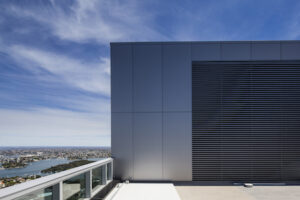
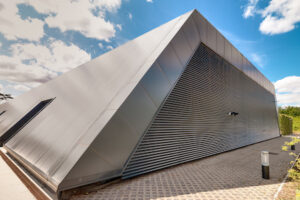
A ‘Helping Buildings to Breathe – The Design and Specification of Performance Louvres’ CPD by Construction Specialties (CS) has been recently accredited by the CPD Certification Service. The presentation has been developed for architects and contractors who want to gain an understanding of how to specify the right ventilation louvre for their building, to ensure both functional and aesthetic requirements are met.


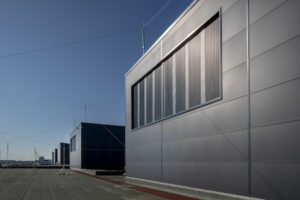
The CPD explains why louvres are used on buildings and how their design may impact on the airflow and rain defence performance they provide. Weather louvre testing methodology and resulting classification are also discussed, to help specifiers easily compare louvre solutions available in the marketplace and choose products to suit the building’s needs.

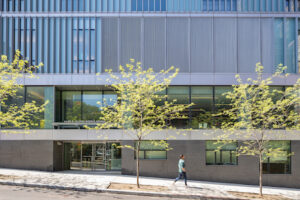
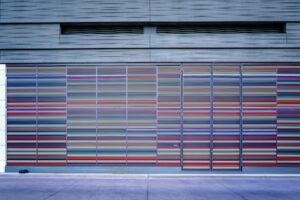
Finally, the presentation looks at various louvre design options available to achieve a desired effect on the façade and integrate louvres with other building elements.


CS has been manufacturing and selling louvres globally for nearly 70 years and offers a wide range of solutions from high performance rain defence models to simple screening louvres.

The CPD presentation can be delivered in person, or via a webinar. For further information and to book visit: https://www.c-sgroup.co.uk/resources/cpd-seminars/a-breath-of-fresh-air-the-design-and-selection-of-performance-louvres/


High Level Thinking: ACO and Aquality Design Blue Roof Playground at Madani Girls’ School

Building Products Index Ltd Drainage, Surface water drainage Leave a Comment

View the ACO entry on BPindex

Visit the ACO website

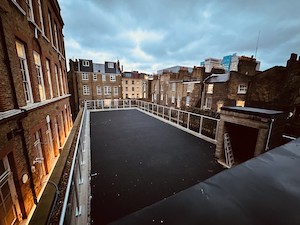
Set within a purpose-built Grade II listed Victorian building, Madani Girls’ School is based in the borough of Tower Hamlets and the suburbs of inner-city London. With a mission to deliver a high-quality teaching and learning experience for its pupils, the school embarked on a project to extend and add a new library, IT suite and sports hall to its facility.

Given the nature of the site the only practical place to cite these new facilities was in the existing playground, and in order not to lose valuable outdoor play space, the decision was made to convert the roof space of the new building into a playground for the pupils. A key challenge facing the project was satisfying Tower Hamlets Council’s planning conditions in relation to surface water management. Namely, this was ensuring that the surface water will discharge at an appropriate rate to prevent downstream flooding.

 Warming up to the task

Owing to the prohibitive site, the project team had already identified that a blue roof would be an ideal way of managing the surface water whilst also allowing multi-functional use of the roof space for the new building. However only preliminary calculations and an outline feasibility of the blue roof had been presented at planning.

To this end, Plumbsa Plumbing Ltd the subcontractors designated to work on the roofing and plumbing of the project, turned to surface water management specialists ACO Building Drainage and Aquality, stormwater management professionals, to help solve the issue.

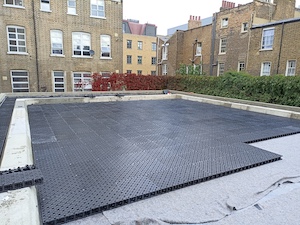
Aquality undertook the hydraulic design and calculations and partnered with ACO Building Drainage to provide the ACO RoofBloxx geocellular tank, roof outlets, and blue roof flow control to provide a complete blue roof attenuation system.

To demonstrate the versatility and strength of the ACO RoofBloxx system, a porous asphalt playground was built over the top of the tank. Rainwater is designed to filter through the porous surface into the storage void. Alongside this, to ensure pupils had an aesthetically pleasing and biodiverse area to enjoy, an extensive green roof was incorporated around the perimeter of the roof.

Demonstrating the flexibility of blue roofs

 Ali Adan from Plumbsa Plumbing Ltd said: “After discussions with the teams at ACO and Aquality, we were very pleased with the end result of the ACO RoofBloxx blue roof. It goes to show that even in some of the most difficult projects, rainwater can be managed with sustainability and amenity in mind, and SuDS principles can be followed. Not only did ACO and Aquality help with the consultation and hydraulic specification, but installation was also quick, simple and cost-effective.”

The Madani Girls’ School’s blue roof now works to prevent flooding whilst also retaining valuable outdoor space for students to enjoy and use for learning. For more about ACO Building Drainage and the ACO RoofBloxx system, please visit: https://www.aco.co.uk/products/roofbloxx

Carbon neutral solution for premium Sydney office tower

Building Products Index Ltd Ventilation Leave a Comment

View the Lindab entry on BPindex

Visit the Lindab website

When Australian HVAC supplier, ACS, were given the opportunity to provide an indoor climate solution for a project committed to carbon neutrality, their first thought was to contact Lindab for support.

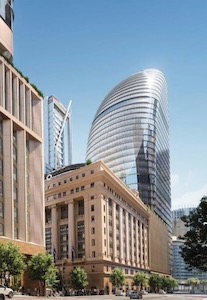
Metro Martin Place North Tower was set to be a striking addition to the Sydney skyline and achieve new levels of occupant comfort in premium office space. The client was an early adopter of chilled beam technology in other premises and positive feedback from staff informed their choice for the new building.

Carat chilled beams from Lindab are highly valued in high-end office buildings for their excellent user comfort in addition to being Eurovent certified for energy efficiency however, to establish if the ultimate deliverables would meet the client’s aspirations, comprehensive further testing was needed.

Lindab tested to successfully prove that the required design conditions could be realised and to evaluate performance in possible scenarios such as extreme weather conditions.

What makes Carat so effective is the unique cold-rolling process used to manufacture the heat-carrying profiles. The process fully encapsulates the water-carrying copper pipes within two thin aluminium heat absorbing sheets. The copper pipe is metallurgically united with the aluminium, ensuring optimised heat transfer. This manufacturing process not only produces a highly effective heat exchanger, it does so with relatively little material.

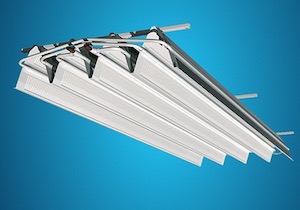
Lindab Carat- Passive radiant chilled beam

The Carat H-84 proposed for the project weighs just 5 kg per metre but provides up to 260 W of cooling per metre, representing over 50 W of cooling per kg of material. This translates to an extremely high ‘cooling density’ for a passive device.

Lindab also addressed the issue of packaging and transportation of the product by nesting goods in pairs and loading them onto crates made of sustainable timber. This has contributed to the relatively low use of materials and transport, contributing towards the low carbon goals.

The fact that Carat can demonstrate relatively low usage of materials and transport would suggest that it is a good candidate to realise carbon neutrality. This has been investigated further via The Footprint Company, via Dr Caroline Noller.

The Footprint Company complete an embodied carbon assessment of the Carat beam, in addition to alternative beam solutions being considered for the project and were able to show that Lindab beams have approximately 50% lower embodied carbon than the competitor alternative and full offset for carbon neutrality could be achieved for a relatively small cost.

The assessment also highlighted opportunity for Lindab to further reduce embodied carbon through an increase in recycled materials. Subsequently, Lindab have re-confirmed the use of more recycled material and TFC have generated an updated Carbon Product Declaration for the products.

ACS were able to provide a satisfactory solution with a proposal to purchase carbon offsets as necessary to offer the products are net zero.

Metro Martin Place North Tower, Sydney

The project demonstrates how Lindab continues to provide industry leading systems by testing and developing products and technology. And further to this, it shows the commitment Lindab have to their core value of helping customers achieve success in reaching their goals and their mission to improve indoor air quality for a better climate.

EUROCELL’S FUTURE HOMES READY MODUS SYSTEM CONTINUES TO LEAD THE MARKET

Building Products Index Ltd Doors, PVC-U, PVC-U, Windows Leave a Comment

View the Eurocell entry on BPindex

Visit the Eurocell website

With the introduction of the Future Homes Standard (FHS) just two years away, national housebuilders have been working closely with Eurocell to enable them to achieve energy efficiency and carbon reduction targets.

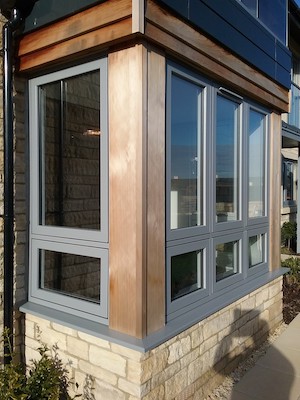
The development work has been designed to successfully integrate Eurocell’s Future Homes ready Modus as a fully integrated window and door system. Modus continues to lead the market as the ‘go to’ solution for energy efficient performance with U-values as low as 0.7, aesthetics, value, and sustainability.

The proven and commonly specified Modus system has been the new build preferred choice for some time. Modus’ compelling attributes of unrivalled contemporary style, exceptional thermal performance, and cost effectiveness, are being utilised in conjunction with the housebuilding sector as the regulatory landscape changes.

Energy efficient and sustainable

The innovative technical design of Modus has a triple-seal option to achieve superb thermal, air tightness and noise reduction performance. The unique 75mm six-chamber profile system delivers optimum energy efficiency performance and can achieve a U-value as low as 0.7 with triple-glazed units.

Removing the need for complex and expensive glazing specification, Modus is helping to lower the cost of driving the net zero carbon agenda for specifiers, housebuilders, and homeowners.

To further support sustainability objectives, all Modus main profiles features a minimum of 36%* post-consumer recycled PVC-U as standard which helps to achieve a lower carbon footprint than products made or containing recycled material sourced from outside of the UK. The system deploys cutting-edge dual material extrusion technology (DMET) which layers post-consumer recycled and ‘virgin’ material simultaneously with high precision.

The recycled material is concentrated in the central core of the profiles, where it is completely invisible in an installed window or door.

Value-added options

The standard rebate, slim rebate and fully flush sash styles offered by Modus means a wide range of contemporary design aesthetics and colour options are available to architects and main contractors to satisfy both progressive and traditional design styles.

In combination with slimmer sight lines, the aesthetics of Modus provide specifiers with an alternative to aluminium and timber products.

Ian Kernaghan, Head of Products, Design & Development at Eurocell, added: “Modus is already a proven, highly effective, and popular integrated window and door solution. It combines fantastic thermal performance, a broad spectrum of design options, full Part Q compliance, and built-in sustainability through the inclusion of recycled material as part of its manufacture.”

To find out more about the Modus range, please get in touch 03301 731 621, enquiries@eurocell.co.uk.

*Average % recycled material of main profiles content varies by component from 36% to 72%

Achieve the highest standards of quality, reliability and safety with Bilco UK

Building Products Index Ltd Access Hatches, Access Ladders Leave a Comment

View the Bilco UK entry on BPindex

Visit the Bilco UK website

According to recent figures from the Health and Safety Executive (HSE), falls from height were the main type of fatal accident for workers between 2021/2022.

Architects can mitigate the potential for falls from height by specifying compliant roof safety products at the beginning of a building’s design to provide maximum protection for contractors when working at height.

Bilco UK’s portfolio of roof safety solutions includes:

Fixed vertical ladders

Fixed vertical ladders can be utilised across a diverse range of commercial and residential applications and can be installed on the exterior of a building or internally with a roof access hatch or smoke vent.

Manufactured from corrosion-resistant aluminium to meet the requirements of BS4211: 2005 + A1: 2008, the Bilco UK TYPE BL industrial Fixed Vertical Ladder is available in standard sizes for floor to ceiling heights of 2 – 6 metres.

If the ladder is to be mounted externally to provide access to a roof, it must be fitted with a safety cage and guard rail to ensure safe and secure access.

If designed to sit below a roof access hatch, at heights above 3 metres, a safety cage is required. Manufactured in aluminium to meet BS4211: 2005 + A1: 2008, these additional safety features prevent individuals from falling backwards or sidewards and ensure compliance with Building Regulations.

Additional protection can be achieved with the specification of Bilco UK’s unique Ladder Up® Safety Post. The telescopic post mounts permanently to the top two rungs of any fixed ladder, providing a secure hand-hold and enabling the user to enter or exit the opening in an upright and balanced position.

Companionway ladders

For permanent access via a roof hatch where the rise is less than 3 metres, companionway ladders provide the highest standards of safety and compliance.

 Manufactured from aluminium to meet BS EN ISO 14122-03 2001 + A1 2010, BS 4211-2005+A12008 and BS 5395 Part 3, the Bilco UK TYPE BL-COMP companionway ladder is manufactured in four height ranges up to 3 metres.

BilGuard® 2.0

The BilGuard® 2.0 Fixed Roof Hatch Railing System provides a permanent means of fall protection around the top of roof hatch openings and has been developed to exceed OSHA Fall Protection Regulations (29 CFR 1910.23). The aluminium rail construction and non-penetrating attachment allows quick and easy installation on new or existing roof access hatches and smoke vents with capflashing. The self-closing and latching gate feature ensures the opening is protected at all times.

Bilco UK can assist architects in successfully meeting the unique requirements of their project, whilst providing maximum fall protection and compliance.

For further information on its complete range of roof access solutions, visit: www.bilcouk.co.uk or call 01284 701696.


Taktis panels demonstrate scale and capability at Middle Eastern oil and gas company

Building Products Index Ltd Fire Alarm Control Panels, Fire Protection Leave a Comment

View the Kentec entry on BPindex

Visit the Kentec website

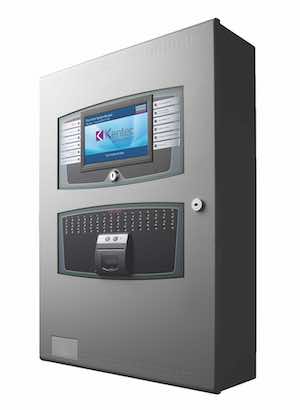
More than 40, 4- and 16-loop Taktis fire detection panels, manufactured by leading life safety systems manufacturer, Kentec Electronics, are helping a Middle Eastern oil and gas company to protect critical national infrastructure in the region.

Khayber Fire and Security Systems WLL, a turnkey contractor of fire and security systems based in the Kingdom of Bahrain, is responsible for the design, supply, installation, testing and commissioning of the project’s fire protection, fire and gas detection systems.

Khayber is a Kentec Installation Partner (KIP), and therefore benefits from additional training and resources that support installations to realise the full potential that the highly-advanced Taktis panel offers.

The ongoing installation project features 41 panels, of which 32 are a part of one ring network. In the next stage of the project Khayber is working with Kentec to utilise Vizulinx, a fire alarm management solution that facilitates the integration of the Taktis system with the plant DCS via Modbus signals. This enables site managers to monitor and control fire detection systems remotely, in real time through the DCS graphic.

The Taktis 16L provides up to 144 zone indications, supports more than 2,000 detection devices and can network up to 127 panels, making it ideal for the very largest sites. Furthermore, its scalable nature provides the highest level of future-proofing and networking possibilities.

The Khayber Fire and Security Systems WLL Team working on the project confirms the company has completed numerous projects in the region utilising Kentec panels, in all cases with their clients fully satisfied:

“This project is vast in scale and critical in its protection of nationally vital assets and infrastructure. While the project did not originally specify Taktis, we were able to convince stakeholders that the 4- and 16-loop Taktis panel has the required capabilities and scale to be the right system for the project.”

Kevin Swann, MD of Kentec, says this project is one of Taktis’ most globally significant installations:

“With more than 60 buildings, linked to several thousand devices, the fire protection system is one of the world’s largest and most complex. Our thanks go to the team at Khayber for their detailed understanding of the Taktis system’s features and benefits, and dedication to such an important installation.”


TERRABASE RUSTIC RESIN BOUND SURFACING REJUVENATES PATHWAYS FOR HISTORIC VILLA HÜGEL, GERMANY

TERRABASE RUSTIC RESIN BOUND SURFACING REJUVENATES PATHWAYS FOR HISTORIC VILLA HÜGEL, GERMANY

Building Products Index Ltd Resin Bound Surfacing Leave a Comment

View the Addagrip entry on BPindex

Visit the Addagrip website

View the Terrabase Rustic product range

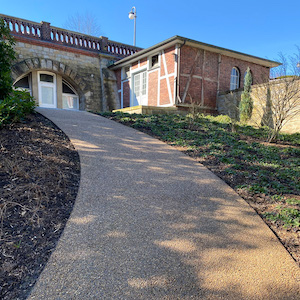
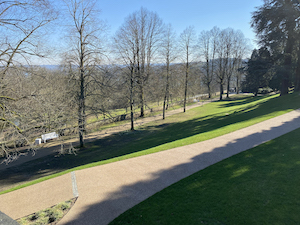
Addagrip Terraco is incredibly pleased that its patented resin bound porous surfacing system Terrabase Rustic has been selected for this prestigious restoration project in the historic Villa Hügel – marking the first installation of this minimum dig product in Germany.

Villa Hügel is a 19th century mansion in Essen, Germany, set in 28 acres of parkland overlooking the River Ruhr. Built in 1873 as a residence for the Krupp family, Villa Hügel is now open to the public. It is owned by the non-profit Alfried Krupp von Bohlen und Halbach Foundation.

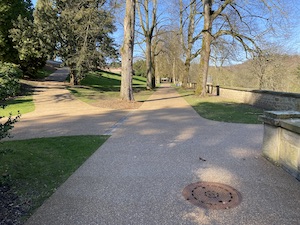
The redesigned south terrace of Villa Hügel, which is laid out in two levels, is based on historical plans by the architectural firm Förder-Landschaftsarchitekten and covered a total area of around 27000 m², including around 2300 m² of park paths with Terrabase Rustic resin bound permeable paving.


In the first construction phase, all paths on the ground level area of the upper terrace garden were restored with a water-bound natural stone path surface based on historical plans.

The same path surface was also planned for the lower second construction phase. However, due to the steep slopes of some stretches of path (some with 14-22% slopes), alternative surfaces were sought for these sections and for a main path intended for heavy vehicles. This was to alleviate concerns over washouts due to rain or damage by heavy machinery, which would have resulted in increased maintenance costs.

As few different path materials as possible needed to be used to achieve uniformity. A visual correspondence to the water-bound path surfaces was also desired. Therefore, materials had to be found that combined the design and technical requirements.

SURFACING REQUIREMENTS


The client required a low-maintenance product that could be driven over (by vehicles up to 3.5 tonnes), allow for easy drainage, and be suitable for steep gradients of up to 22%. The product should visually approximate a water-bound path surface, meet heritage requirements, and provide a seamless, jointless surface.

The aggregate, colour and installation quality had to meet the requirements of the overall architectural design and heritage conservation.


After considering various water-bound options, including a water-bound path surface with stabiliser and a resin-bound surface treatment with EP-reactive resin, the patented Addagrip Terrabase Rustic resin-bound permeable system in a 6-10 mm aggregate mix of Rustic Oak was selected and installed by Addagrip approved contractor KUTTER Spezialstraßenbau GmbH & Co. KG .

Terrabase Rustic is a low maintenance product that can be driven over, provides excellent porosity to aid drainage and is suitable for steep gradient changes. It offers a natural rustic looking finish that is seamless and provides excellent slip resistance.